
Calculate the Perfect Product Mix for Your Craft Fair Booth
Successful craft fairs aren’t about bringing the most products. They’re about bringing the right products.
Use the Craft Fair Inventory Planner before buying blanks, creating inventory, or booking your next event. A balanced product mix can help you reduce waste, improve profits, and create a better shopping experience for customers.
As you attend more events, track your sales data and refine your inventory strategy based on what your audience actually buys.
Use the Craft Fair Inventory Planner
Not sure how many products to bring? Use our Inventory Planner to instantly calculate the ideal product mix and estimate your potential booth revenue.
What Does the 40/40/20 Product Mix Formula Mean?
One of the most common mistakes new vendors make is bringing too many products from a single category.
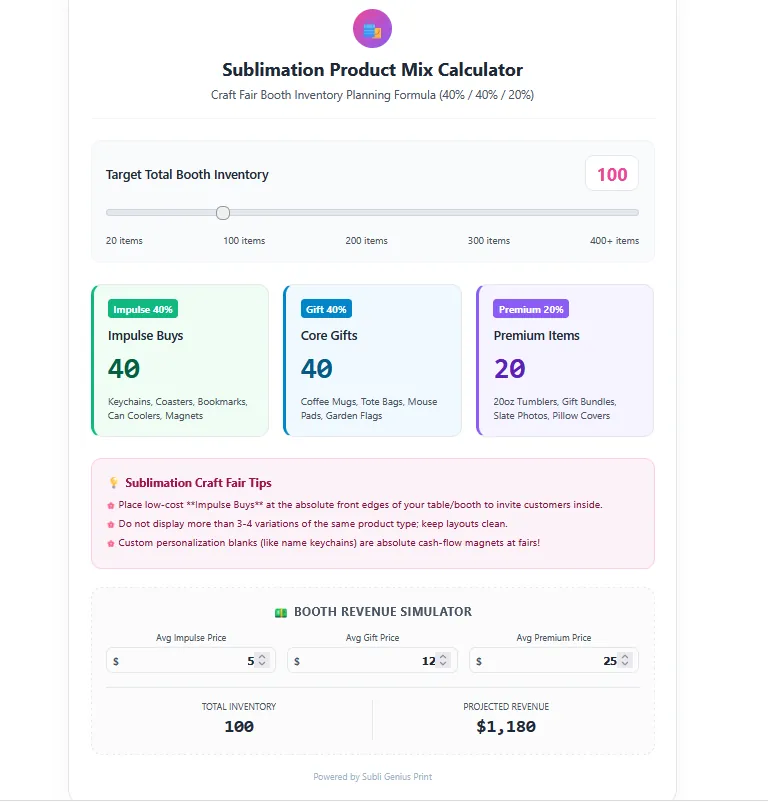
Instead of guessing, this planner uses a simple inventory allocation strategy:
- 40% Low-Cost Impulse Products
- 40% Mid-Range Gift Products
- 20% Premium Products
This creates a balanced booth that appeals to different types of shoppers while reducing inventory risk.
40% Low-Cost Impulse Products
Impulse products are affordable items customers can purchase without much hesitation.
Examples include:
- Keychains
- Car coasters
- Bookmarks
- Can coolers
- Magnets
These products help generate frequent sales throughout the day and often increase average order value.
40% Mid-Range Gift Products
This category typically generates the majority of booth revenue.
Examples include:
- Mugs
- Tote bags
- Mouse pads
- Garden flags
- Personalized gifts
These products attract shoppers looking for practical gifts without spending premium prices.
20% Premium Products
Premium products generate larger profits per sale.
Examples include:
- 20 oz tumblers
- Personalized tumblers
- Gift bundles
- Seasonal collections
- Specialty sublimation items
You may sell fewer premium products, but each transaction contributes more revenue.
How Many Products Should You Bring to a Craft Fair?
The ideal inventory size depends on the event.
Small Craft Fairs
Typical attendance:
- Local church fairs
- School events
- Community markets
Suggested inventory:
- 40–75 products
Medium Craft Fairs
Typical attendance:
- Weekend craft shows
- Regional handmade markets
Suggested inventory:
- 75–150 products
Large Holiday Craft Fairs
Typical attendance:
- Multi-day events
- Christmas markets
- High-traffic festivals
Suggested inventory:
- 150–300+ products
If you’re unsure, start smaller and track what sells before investing heavily in inventory. Once you know your product mix, the placement and size calculator helps you nail down exact design dimensions for each item before you start producing inventory.
Example Craft Fair Inventory Plans
50 Product Booth
- 20 impulse products
- 20 gift products
- 10 premium products
100 Product Booth
- 40 impulse products
- 40 gift products
- 20 premium products
200 Product Booth
- 80 impulse products
- 80 gift products
- 40 premium products
The calculator automatically generates these allocations for you.
How to Estimate Potential Booth Revenue
Revenue depends on:
- Product pricing
- Event attendance
- Booth location
- Product demand
- Seasonal timing
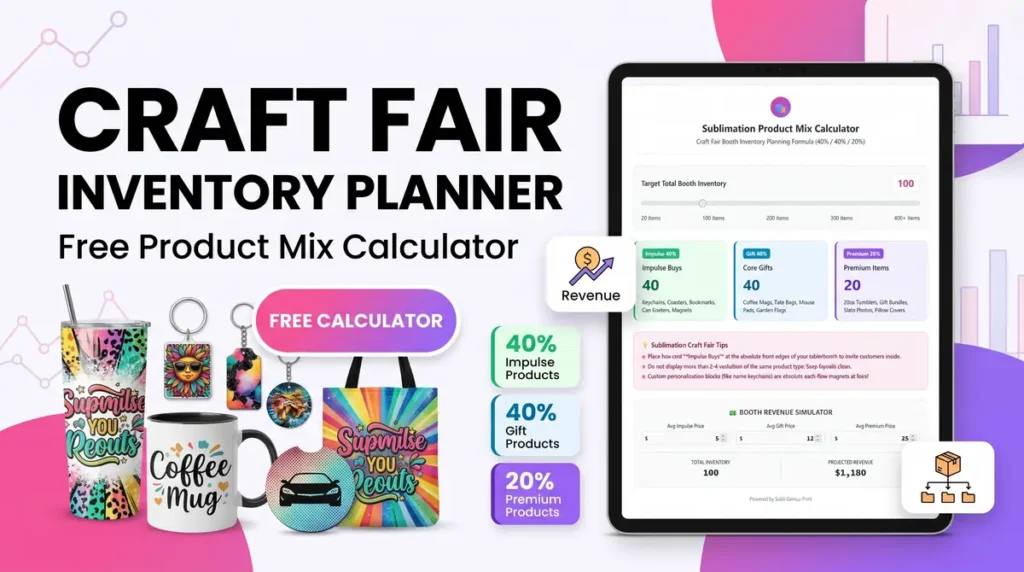
The planner includes a revenue simulator that allows you to enter average selling prices for each product category.
For more accurate pricing calculations, use our:
- How to Calculate Sublimation Profit Margins
- Sublimation Profit Margin Calculator
These resources help you determine realistic profit targets before attending an event.
Common Inventory Planning Mistakes
Bringing Too Many Premium Products
Premium products generate strong margins but often sell slower.
A booth filled entirely with expensive items may struggle to convert casual shoppers.
Ignoring Impulse Purchases
Many craft fair sales come from small purchases.
Keychains, coasters, and other affordable items often generate the highest sales volume.
Producing Too Much Inventory
Many new vendors overestimate demand.
Track actual sales data and adjust future inventory based on results.
Offering Too Many Product Categories
A focused booth usually performs better than a booth trying to sell everything.
Instead of offering 15 different product types, focus on a handful of proven sellers.
Before a big event, it’s worth a quick review of common sublimation printing mistakes so a production error doesn’t eat into your booth inventory at the last minute.
Best Sublimation Products for Craft Fairs
If you’re still deciding what products to make, start with proven craft fair sellers:
- Tumblers
- Mugs
- Car coasters
- Keychains
- Tote bags
- Seasonal ornaments
- Personalized gifts
For a complete breakdown, read: Best Sublimation Products for Craft Fairs
Related Sublimation Business Resources
Continue building your sublimation business with these guides:
- Sublimation Business Guide
- How to Calculate Sublimation Profit Margins
- Sublimation Profit Margin Calculator
- Sublimation Startup Costs
- Best Sublimation Products for Craft Fairs
- Best Sublimation Niches in 2026
- Seasonal Sublimation Sales Calendar
Frequently Asked Questions
How many products should I bring to a craft fair?
Most first-time vendors do well with 75–150 products, depending on event size and expected attendance.
What products sell fastest at craft fairs?
Keychains, car coasters, mugs, can coolers, and personalized gifts are among the most consistent sellers.
What is the best inventory mix for beginners?
A balanced 40/40/20 product mix works well for most beginners:
- 40% impulse products
- 40% gift products
- 20% premium products
How do I estimate craft fair revenue?
Estimate the average selling price of each product category and multiply it by your planned inventory. The planner automatically performs this calculation.
Should I bring custom products to a craft fair?
Yes, but avoid products that require extensive on-site design work. Many sellers collect custom orders and fulfill them after the event.