How to Make Any Material Sublimation-Ready (Coatings, Sprays & Hacks)

If you’ve ever tried sublimation on materials like wood, cotton, or plastic, you’ve probably noticed one thing it doesn’t work the way you expect.
That’s because sublimation printing only bonds properly with polyester or polymer-coated surfaces. But here’s the good news: you can still use many non-compatible materials by applying the right coatings or workarounds.
In this guide, you’ll learn exactly how to make almost any surface sublimation-ready using coatings, sprays, and practical techniques that actually work.
What Makes a Material Sublimation-Ready?
A material becomes sublimation-ready when it can:
- Handle high heat (350–400°F)
- Allow sublimation ink to bond at a molecular level
- Have a polyester or polymer-coated surface
If a material doesn’t meet these conditions, the ink won’t transfer properly or it will fade quickly.
To understand the full process, you can review this beginner sublimation printing guide.
Quick Answer: How Do You Make Materials Work for Sublimation?
You can make most materials sublimation-ready by adding a polyester coating, using sublimation sprays, applying heat transfer vinyl (HTV), or using transfer films that act as a printable layer.
Best Methods to Make Any Material Sublimation-Ready
1. Sublimation Coating Sprays
This is the most popular method for DIY projects.
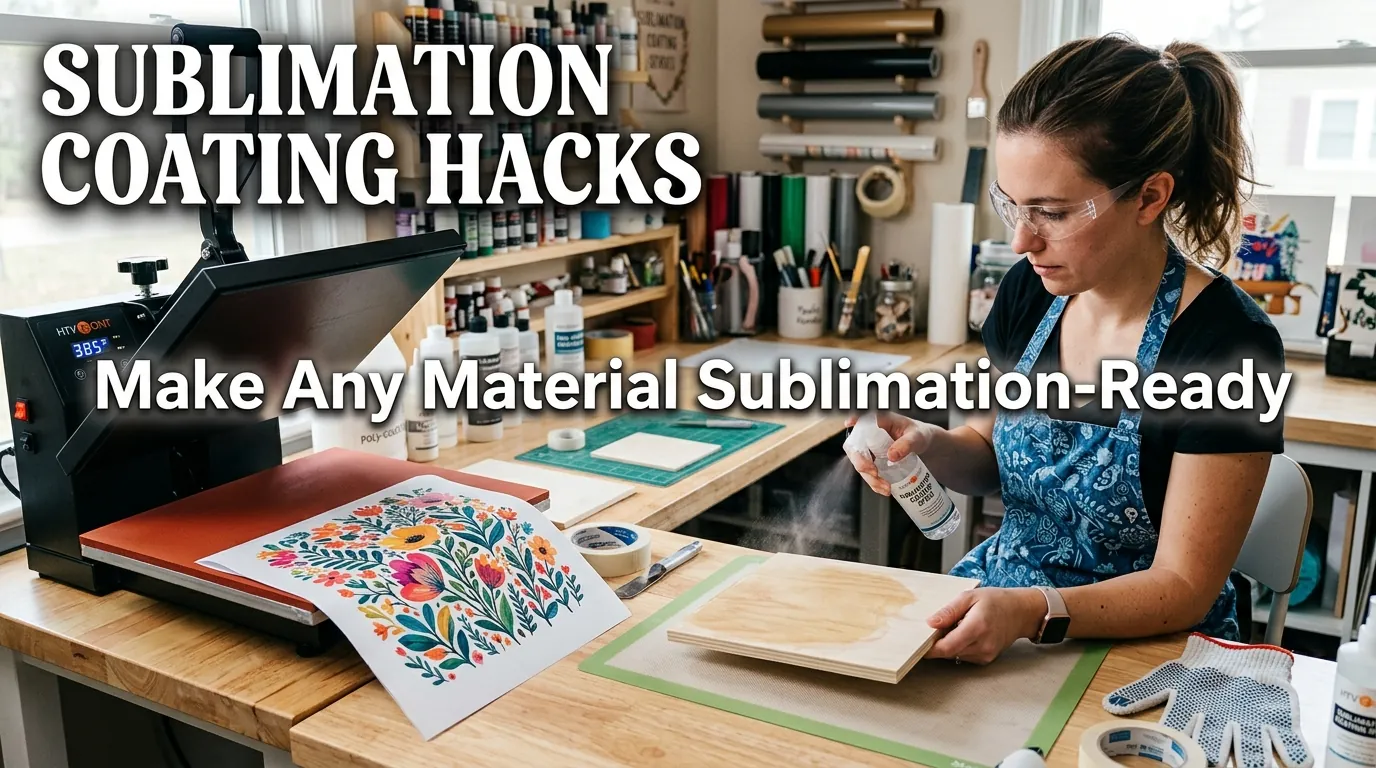
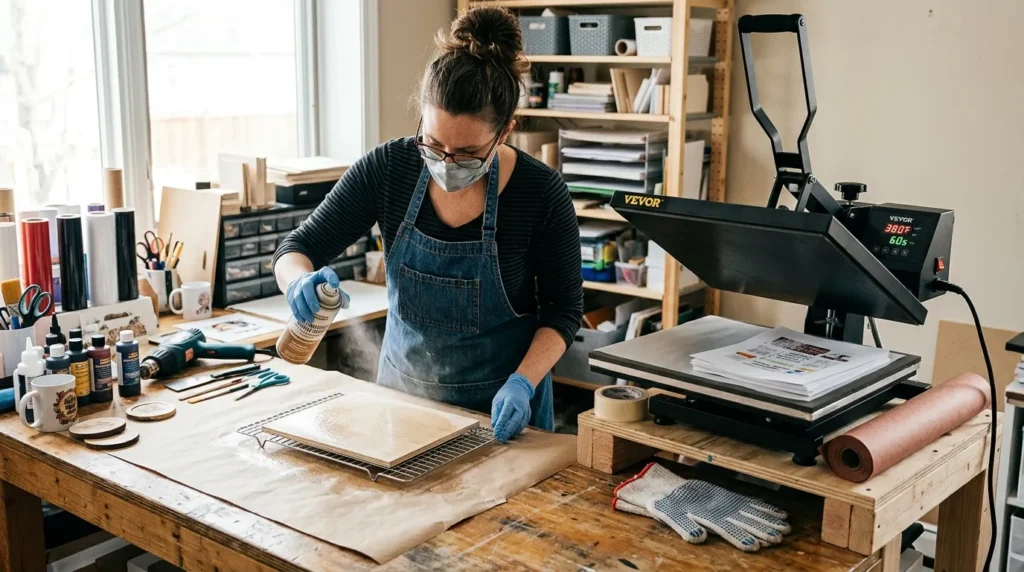
Coating sprays create a thin polyester layer that allows sublimation ink to bond during heat pressing.
Best for:
- Wood
- Glass
- Metal
- Ceramic
- Some plastics
How to use:
- Clean the surface thoroughly
- Apply an even coat of spray
- Let it dry completely
- Heat press your design
Pros:
- Easy to apply
- Works on many surfaces
- Affordable
Cons:
- Durability varies
- Requires proper drying time
2. Polycrylic (Budget-Friendly Coating)
Polycrylic is a water-based protective finish that works surprisingly well for sublimation.
It creates a smooth layer that mimics a polymer coating.
Best for:
- Wood crafts
- MDF boards
- DIY projects
How to apply:
- Apply 2–3 thin coats
- Let each layer dry fully
- Lightly sand between coats
For a deeper breakdown, see this polycrylic for sublimation guide.
Pros:
- Low cost
- Easy to find
- Great for beginners
Cons:
- Not as durable as factory coatings
3. Sublimation HTV (For Cotton & Dark Fabrics)
Sublimation doesn’t work on cotton but HTV solves that problem.
It acts as a polyester layer on top of the fabric.
Best for:
- Cotton shirts
- Dark garments
- Mixed fabrics
How it works:
- Apply HTV to the fabric
- Press it onto the surface
- Sublimate on top of the HTV
Pros:
- Works on almost any fabric
- Good color results
Cons:
- Adds a layer (not fully embedded like polyester)
4. Sublimation Transfer Films
Instead of coating the surface, you print onto a film and apply it.
Best for:
- Plastic
- PVC
- Signage materials
Advantages:
- No need for coating
- Works on heat-sensitive materials
Limitations:
- Adds an extra layer
- Not true sublimation bonding
If you’re working with plastic, check this sublimation on plastic guide.
5. Pre-Coated Sublimation Blanks (Best Results)
This is the easiest and most reliable option.
These products are already treated with a polymer coating.
Examples:
- Sublimation mugs
- Metal panels
- Coated tumblers
- Glass blanks
Explore compatible options in this sublimation blanks and substrates guide.
Pros:
- Professional results
- High durability
- No prep required
Cons:
- Higher cost
Material-by-Material Guide (What Works Best)
Wood
- Use polycrylic or coating spray
- Avoid bare wood
Glass
- Must be coated or pre-treated
- Use flat surfaces for best results
Metal
- Works best when polymer-coated
- Ideal for photo panels
Cotton
- Requires sublimation HTV
- Not suitable for direct sublimation
Plastic
- Use coated products or transfer films
- Avoid raw plastic
Silicone
- Requires coating or film
- Results may vary
Common Mistakes When Using Sublimation Coatings
Avoid these issues to get better results:
- Applying thick, uneven coatings
- Not allowing proper drying time
- Using low heat or incorrect settings
- Skipping surface cleaning
- Expecting non-coated materials to work directly
If your prints look dull or uneven, follow this sublimation troubleshooting guide.
Pro Tips for Better Results
- Always test on a small sample first
- Use light, even coats for better bonding
- Maintain consistent heat and pressure
- Choose high-quality blanks when possible
- Avoid rushing the curing process
Frequently Asked Questions
Can I make any material sublimation-ready?
Not all materials work perfectly, but many can be adapted using coatings, sprays, or transfer methods.
Do sublimation sprays really work?
Yes, but results depend on application quality and curing time.
Is polycrylic good for sublimation?
Yes, it’s a budget-friendly option for wood and DIY surfaces, though less durable than factory coatings.
Can I sublimate on plastic without coating?
No, raw plastic does not bond with sublimation ink and may melt under heat.
Final Thoughts
Sublimation doesn’t have to be limited to polyester.
With the right coatings, sprays, and techniques, you can expand your projects to wood, glass, cotton, and even some plastics. The key is understanding how sublimation bonding works and choosing the right method for each material.
Start simple, test your process, and build from there.