
50/50 Cotton-Polyester Sublimation Problems: Causes and Fixes

You pull a shirt off the heat press and the design looks lighter than what you saw on screen. A few washes later, it looks lighter still. If you’re working with a 50/50 cotton-polyester blend, that’s not something you did wrong. It’s how the fabric behaves.
Sublimation ink only bonds with polyester. On a 50/50 shirt, half the fibers accept the ink and half don’t. Once you understand that one fact, most of the confusion around this fabric starts to make sense.
How Much Polyester You Actually Need
100% polyester gives the strongest, most consistent results. If you can’t use pure polyester, a 65/35 poly-cotton blend is a workable middle ground.
A 50/50 blend is marginal: it will take some color, but expect a softer, faded look. Below 50% polyester, sublimation stops working in any meaningful way.
If you’re new to how the process works before diving into blend percentages, start with what is sublimation printing.
Why 50/50 Blends Cause Problems
Sublimation ink turns into a gas under heat and bonds directly with polyester molecules. Cotton fibers don’t have the same molecular structure, so the ink has nothing to bond with there.
On a 50/50 shirt, the polyester fibers pick up color and the cotton fibers stay essentially blank.
There’s a second factor that gets left out of most explanations. Sublimation ink contains binders that keep the dye particles in suspension during the transfer.
Those binders are built to interact with polyester. They don’t hold onto cotton fibers the same way, which is part of why cotton areas end up looking dull even where some ink does land.
This isn’t a settings problem. No combination of temperature, time, or pressure will make cotton fibers behave like polyester fibers.
Clearing Up a Common Mix-Up: Blend Ratio vs. Fabric Color
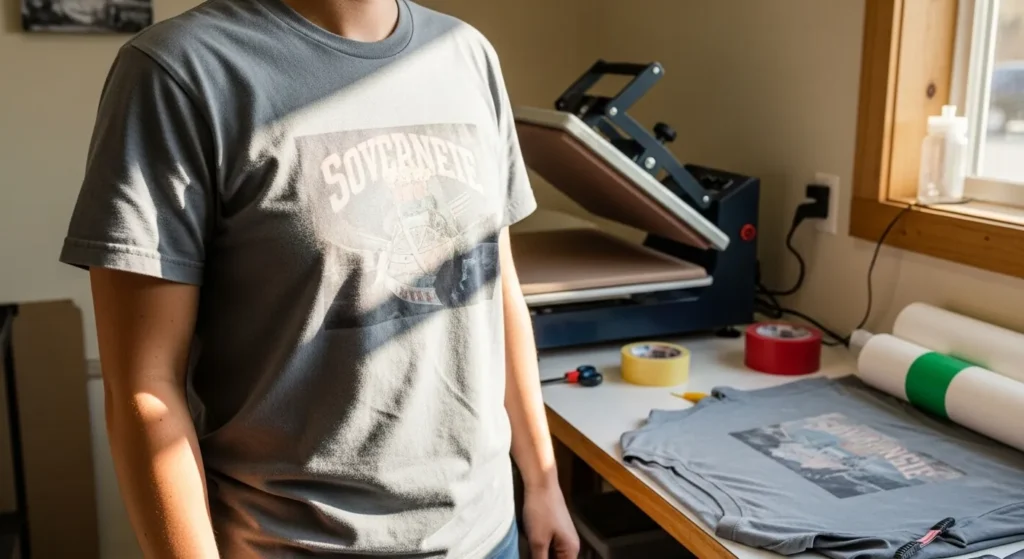
These are two separate limitations, and it’s easy to blur them together. A 50/50 blend fades because of fiber content, regardless of what color the shirt is. Sublimation not showing up on dark fabric is a different issue entirely: sublimation ink is translucent, so it needs a light or white base to show true color. For related planning, see Why Is Sublimation Paper Sticking to My Tumbler? Causes & Fixes.
You can have a white 50/50 shirt that still comes out faded because of the fiber mix. You can also have a 100% polyester shirt in navy or black where a design barely shows up, for a completely different reason. If you want the details on that second problem, see sublimating on dark shirts.
Common Symptoms and Their Causes
Here’s what shows up in practice, and why each one happens.
Faded or washed-out colors
Only the polyester half of the fibers hold dye. Even with perfect settings, a 50/50 shirt won’t match the vibrancy of 100% polyester.
Uneven or patchy prints
Fiber distribution isn’t perfectly uniform across a woven blend. Some areas of the shirt end up with slightly more polyester exposed at the surface, so color can look inconsistent from one section to another.
Ink bleeding or shadowing
Excess heat pushes more ink into gas form than the fabric can absorb. On a blend, the cotton fibers don’t take that extra ink, so it spreads instead, creating soft edges or ghosting around the design.
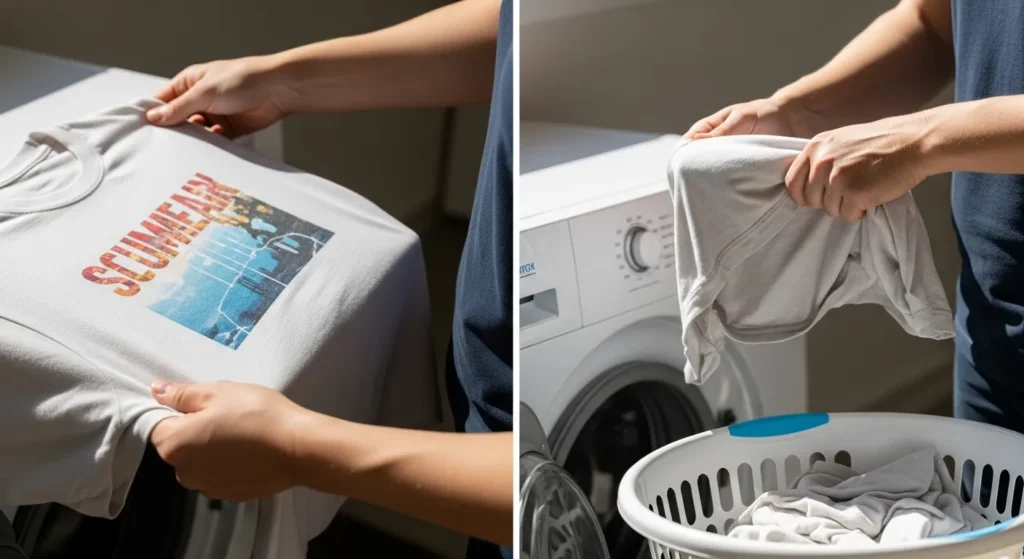
Fading that gets worse after washing
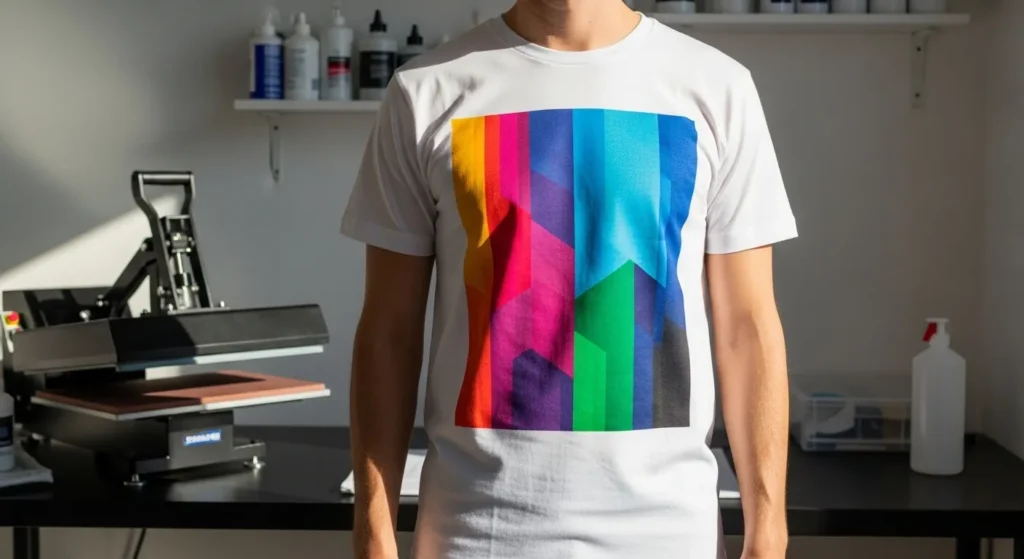
The ink was never bonded to the cotton fibers in the first place. Washing doesn’t strip color out so much as it reveals the undyed cotton that was there all along, which makes the print look like it’s fading faster than it actually is.
For a broader list of failure points beyond this specific blend, see common sublimation printing problems.
Settings That Help
Higher heat does not fix fading on a 50/50 blend. It usually makes bleeding worse. Start conservative and adjust from there.
| Setting | Starting Range |
|---|---|
| Temperature | 375–385°F |
| Time | 30–40 seconds |
| Pressure | Medium, even across the design |
Every press and every shirt behaves a little differently, so test on a scrap piece of the same blend before running a full order. For more detail on dialing in heat press settings generally, see heat press temperature for sublimation.
Does Sublimation Spray Help?
Sometimes, with trade-offs. Sublimation coating spray adds a temporary polymer layer that gives cotton fibers something closer to what polyester naturally offers, which lets more ink sit on the surface instead of passing through untouched.
The downside is a stiffer fabric feel, reduced durability after washing, and results that vary more than they do on a true polyester blank. Spray can brighten a print somewhat, but it doesn’t turn cotton into polyester. For a closer look at how these coatings work, see sublimation coating sprays.
Preventing the Worst of It
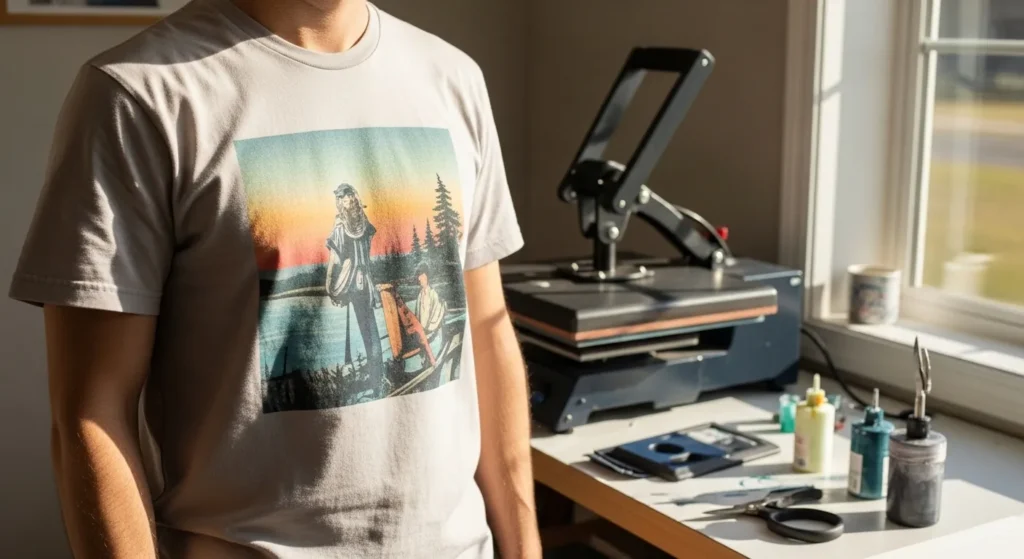
You can’t eliminate fading on a 50/50 blend, but a few habits slow it down.
- Pre-press the shirt for 5 to 10 seconds to remove moisture before printing
- Use moderate heat instead of pushing toward the top of your printer’s range
- Wait at least 24 hours after pressing before the first wash
- Wash inside out in cold water, and skip fabric softener
- Tumble dry on low or hang dry instead of high heat
For more on wash care that applies across sublimated garments, see how to wash sublimation shirts and tumblers.
When to Switch Materials
If you’re selling finished products, or a customer expects bold, consistent color, a 50/50 blend is the wrong starting point. 100% polyester remains the most reliable choice for sublimation, and it’s worth the switch anytime durability or brand consistency matters more than fabric feel.
If you’re still deciding whether the blend is worth it for your specific project, the full breakdown is in can you sublimate on 50/50 cotton-polyester blends. For a wider comparison of fabric options beyond this one blend, see best fabrics for sublimation.
This isn’t the ink washing out. It’s the cotton fibers revealing themselves over time.
Frequently Asked Questions
Can you sublimate on 50/50 cotton-polyester?
Yes, but expect lighter, less durable results than you’d get on polyester.
Why does the print fade so quickly?
Cotton fibers don’t bond with sublimation ink, so the color that does transfer sits mostly in the polyester half of the blend.
Will lowering the temperature make colors brighter?
It can help slightly and reduces bleeding, but it won’t bring the blend up to polyester-level vibrancy.
Is sublimation spray worth using on a 50/50 shirt?
It can help in some cases, but it adds cost, changes the fabric feel, and doesn’t guarantee consistent results.
What’s the minimum polyester percentage for sublimation to work at all?
Around 50% is the practical floor. Below that, the print won’t hold up in any usable way.





2 Comments