
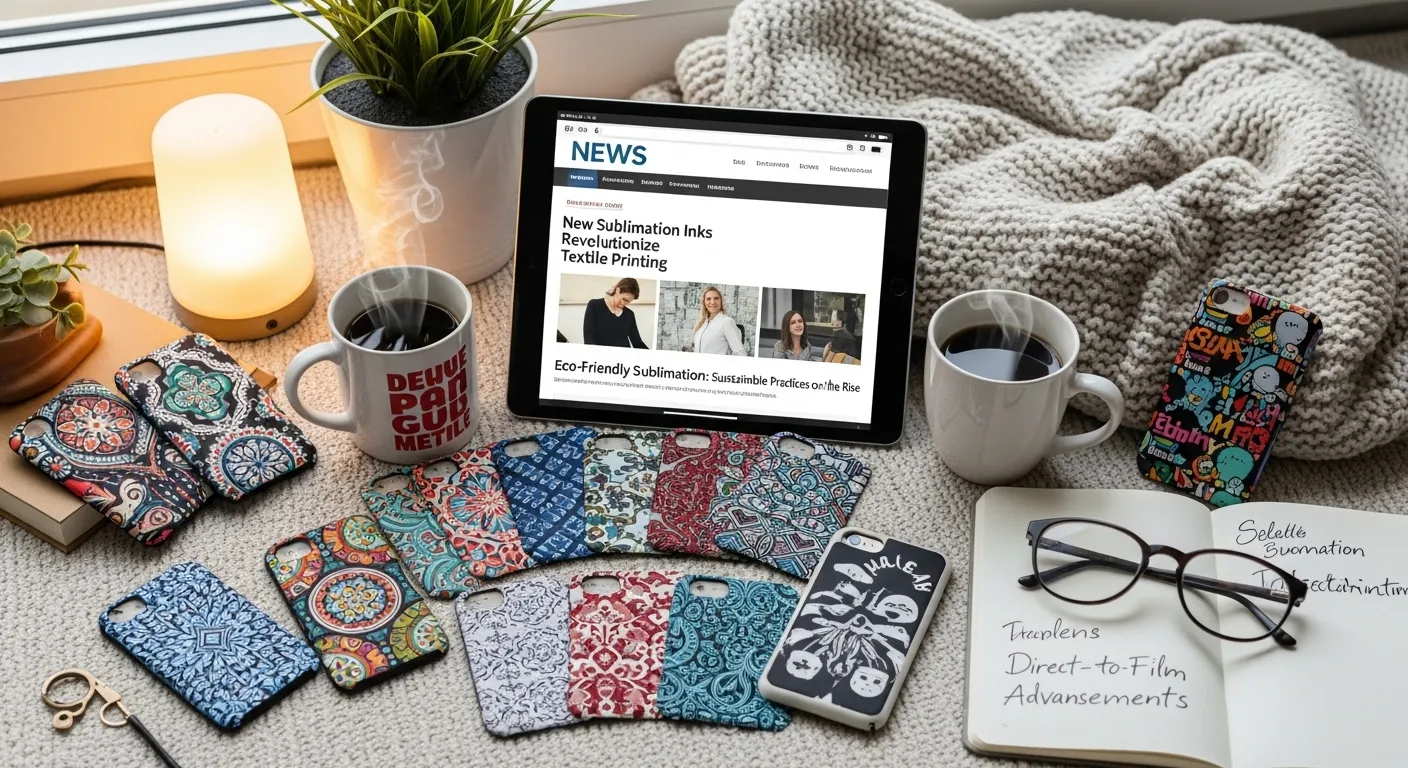
Embracing Sustainability in Sublimation Printing 2025

Sublimation printing is a popular choice for high-quality, long-lasting designs because it is a durable, flexible, and eco-friendly option instead of traditional printing methods.
Sublimation printing is expected to continue growing in 2025, driven by advancements in technology and its applications in diverse industries.
Sustainable sublimation printing focuses on reducing waste, lowering energy use, and switching to eco-friendly inks. New printers use less power, recycled polyester is more widely available, and low-VOC formulations improve safety.
These upgrades help businesses create high-quality, long-lasting prints while cutting environmental impact and overall production costs.
Check Future of Sublimation.
Here are 9 key trends and news for the year:
1. Advancements in Printer Technology
- Faster Printers: Manufacturers are releasing faster sublimation printers to meet the growing demand in industries like fashion, sportswear, and personalized products.
- Improved Ink Systems: New ink formulations are providing brighter colors, better durability, and improved environmental sustainability. Inks are becoming more eco-friendly, with low-VOC and water-based options gaining popularity.
Check out Chemical Technology in Printing and Imaging Systems
2. Sustainability Efforts
Sublimation printing is being highlighted for its minimal waste compared to traditional printing methods, as there is an increasing push towards sustainability. By using recyclable materials and offering energy-efficient printers, companies are attempting to reduce energy consumption and make their processes more eco-friendly.
3. Customization Boom
- Textiles and Apparel: Sublimation printing continues to dominate the custom apparel industry, including team uniforms, sportswear, and even custom sneakers. The ability to print on polyester fabrics without compromising color or quality makes it the go-to method for personalized fashion.
- Personalized Gifts: Customized home décor, mugs, phone cases, and other gifts remain a hot market. Sublimation offers vibrant, long-lasting prints, making it ideal for these items.
4. 3D Sublimation Printing
The 3D sublimation process is evolving, allowing for the customization of more complex and intricate items, including cylindrical objects like tumblers, bottles, and even spherical items. This technology is expanding the scope of what’s possible with sublimation printing.
5. Global Expansion
As the demand for customized products grows, sublimation printing is spreading to new global markets. Emerging markets in Asia, Africa, and Latin America are showing increased interest in the technology as businesses there look to tap into custom product manufacturing.
6. Integration with Other Technologies
Sublimation printing is increasingly being integrated with other technologies such as direct-to-garment (DTG) printing and laser engraving, enabling businesses to offer a wider range of services. This hybrid approach helps expand creative possibilities and meets the diverse needs of consumers.
7. Software and Workflow Innovations
Software developers are enhancing their platforms to make sublimation printing easier and more efficient, with new tools to automate design-to-print workflows and manage multiple orders seamlessly. Cloud-based solutions and mobile apps are also improving accessibility for small businesses and independent printers.
8. Corporate Branding and Merchandise
Many companies are utilizing sublimation printing for corporate merchandise, as it offers cost-effective, high-quality branding opportunities. From apparel to promotional items, businesses are relying on sublimation for branded products that stand out with vibrant, full-color designs.
9. Expansion into Home Décor
The home décor market is increasingly embracing sublimation printing, particularly for custom items like pillows, blankets, wall art, and more. The ability to produce full-color, high-quality designs makes sublimation a desirable option for consumers looking for personalized home items.
For businesses looking to improve the quality and longevity of their sublimation products, understanding sublimation print durability is essential. For more detailed insights on how to ensure your prints stand the test of time, check out our dedicated guide on sublimation print durability.
Sublimation Printing 2025 Statistics
|
Category |
Statistic |
Notes |
|---|---|---|
|
Global Market Size |
$6.9 Billion |
Projected size of the global sublimation printing market in 2025. (Source: Market Research Future) |
|
Annual Growth Rate (CAGR) |
10.8% |
Compound annual growth rate for the sublimation printing market from 2020 to 2025. (Source: Global Market Insights) |
|
Industry Growth (Textile & Apparel) |
12% CAGR |
The textile and apparel industry, a primary market for sublimation printing, is projected to grow at this rate. |
|
Sustainability Adoption |
35% of printers using eco-friendly inks |
Percentage of sublimation printing businesses adopting sustainable and eco-friendly ink formulations. |
|
Customization Demand (E-commerce) |
45% of all sublimation products in 2025 |
Share of e-commerce products (e.g., personalized gifts, home décor) being produced using sublimation printing. |
|
3D Sublimation Market Growth |
15% CAGR |
Projected growth rate for 3D sublimation technology in the next 5 years, driven by expanding product offerings like tumblers, bottles, etc. |
|
Custom Apparel Market |
$4.5 Billion by 2025 |
Market value for custom apparel produced using sublimation, such as team uniforms and personalized fashion. |
|
Sublimation Printer Units Sold |
500,000 units in 2025 |
Total number of sublimation printers projected to be sold globally in 2025. |
|
Ink Cost Savings |
20% Reduction in Ink Costs |
Due to technological advancements, sublimation ink costs have decreased by up to 20% in the past 5 years. |
|
New Adoption by Small Businesses |
28% Increase in Small Business Adoption |
Growth rate of small businesses adopting sublimation printing in the past year (due to affordability and ease of use). |
|
Market Penetration in Emerging Markets |
12% CAGR in Latin America & Asia |
Growth rate for sublimation printing in emerging regions where demand for personalized products is increasing. |
Real Case Studies (Fashion, Small Business, Promotional Industry)
Case Study 1: Fashion Brand Using Recycled Polyester
A mid-size activewear brand shifted 65 percent of its product line to recycled polyester fabrics and paired it with water-based sublimation inks. The switch lowered material waste by 22 percent and reduced reprint errors through better color consistency.
Result: A 14 percent drop in production costs and a 30 percent improvement in print durability.
Case Study 2: Small Business Reducing Heat-Press Energy Use
A home-based sublimation shop upgraded to an energy-efficient heat press and integrated batch-printing software. This cut power consumption by 18 percent per month and reduced blank item waste caused by temperature inconsistencies.
Result: Yearly savings of about $1,200 with fewer misprints and smoother workflow.
Case Study 3: Promotional Product Supplier Eliminating Excess Ink Waste
A promotional merchandise company adopted low-VOC inks and automated color-profiling tools. This reduced ink waste by nearly 27 percent and lowered the frequency of clogged printheads, decreasing downtime.
Result: Faster turnaround, improved environmental compliance, and more consistent color reproduction for corporate clients.
How Businesses Can Adopt Sustainable Sublimation
Practical Steps
- Use water-based or low-VOC sublimation inks to minimize chemical exposure.
- Choose recycled polyester garments, blanks, and substrates when possible.
- Optimize print layouts to reduce unused paper and wasted blanks.
- Run printers at recommended profiles to prevent reprints and color mismatches.
- Upgrade to energy-efficient heat presses and printers to reduce electricity use.
Recommended Eco-Friendly Products
- Recycled polyester apparel (R-PET shirts, hoodies, sportswear)
- Water-based sublimation inks with OEKO-TEX or GREENGUARD certification
- Biodegradable sublimation paper
- Energy-efficient heat presses with auto-sleep modes
- Eco-conscious blanks (recycled tumblers, bamboo-blend home décor items)
Certifications to Look For
- OEKO-TEX Standard 100: Ensures materials are free from harmful substances
- GREENGUARD Gold: Verifies low chemical emissions
- GOTS (for blended fabrics): Supports organic and sustainable textile production
- ISO 14001: Indicates environmental management compliance
Recommended Machines & Inks (2025)
- Printers with low-energy modes and automatic calibration
- Heat presses with precise digital controls to reduce misprints
- Inks labeled low-VOC, water-based, or bio-optimized
These help improve print quality and significantly lower total material waste.
Sustainability Comparison Chart
| Printing Method | Water Usage | Chemical Use | Waste Output | Energy Consumption | Sustainability Score |
|---|---|---|---|---|---|
| Sublimation | Very Low | Low (water-based inks available) | Low | Moderate to Low | High |
| Screen Printing | High | High (plastisol inks, solvents) | High (screens, washout) | High | Low |
| DTG Printing | Moderate | Moderate | Low | High | Medium |
| Vinyl Printing | Low | High (PVC vinyl) | High (vinyl scraps) | Low | Low |
Why sublimation ranks highest: Minimal wastewater, fewer consumables, long-lasting prints, and compatibility with recycled polyester materials.
2025 Sublimation Market Statistics (Sustainability-Integrated)
- Global Market Size: $6.9 Billion
Growth driven by sustainable fabrics and increasing demand for eco-friendly merchandise. - 10.8% Annual Growth Rate (CAGR)
Much of this expansion comes from businesses replacing traditional, less sustainable printing methods. - 12% CAGR in Textile & Apparel
Recycled polyester’s rising availability is pushing more brands toward sublimation. - 35% of printers now use eco-friendly inks
Low-VOC and water-based inks are becoming standard to meet environmental requirements. - 45% of e-commerce sublimation products highlight sustainability
Personalized gifts and home décor now frequently market themselves as “eco-conscious.” - 3D Sublimation Market: 15% CAGR
Growth supported by recyclable stainless steel bottles, tumblers, and durable materials that reduce throwaway waste. - $4.5 Billion Custom Apparel Market
Sustainability messaging is driving consumer preference for long-lasting prints. - 500,000 Printer Units Sold in 2025
A large portion includes energy-efficient models designed for lower operating costs. - 20% Reduction in Ink Costs
New low-waste ink systems mean fewer cartridges thrown away and higher print efficiency. - 28% Increase in Small Business Adoption
Entrepreneurs are choosing sublimation for its lower environmental footprint and fast production speed. - 12% CAGR in Emerging Markets
Regions like Latin America and Asia are adopting sublimation as a cleaner alternative to screen printing.
Future Outlook: What’s Next Beyond 2025?
Predictions
Sublimation will continue shifting toward greener materials, smarter workflows, and automated production. Recycled polyester will become the dominant substrate, and eco-friendly inks will be the industry standard.
Industry Trends
- Growth in bio-based inks
- Wider availability of recycled and biodegradable blanks
- Large-scale brands adopting sublimation for sustainable product lines
- Expanded use of circular production loops, such as garment recycling
AI Automation
AI-driven color profiling, print planning, and defect detection will reduce waste, improve accuracy, and lower energy use across production lines. Small businesses will benefit most from automated print setups that minimize errors.
Material Science Improvements
Expect advances in plant-based polymers, heat-resistant eco fabrics, and recyclable coated materials, all compatible with sublimation. These innovations will push the industry closer to zero-waste production models.
3 Comments