
Sublimation Tumbler Temperature: Press vs Oven Settings

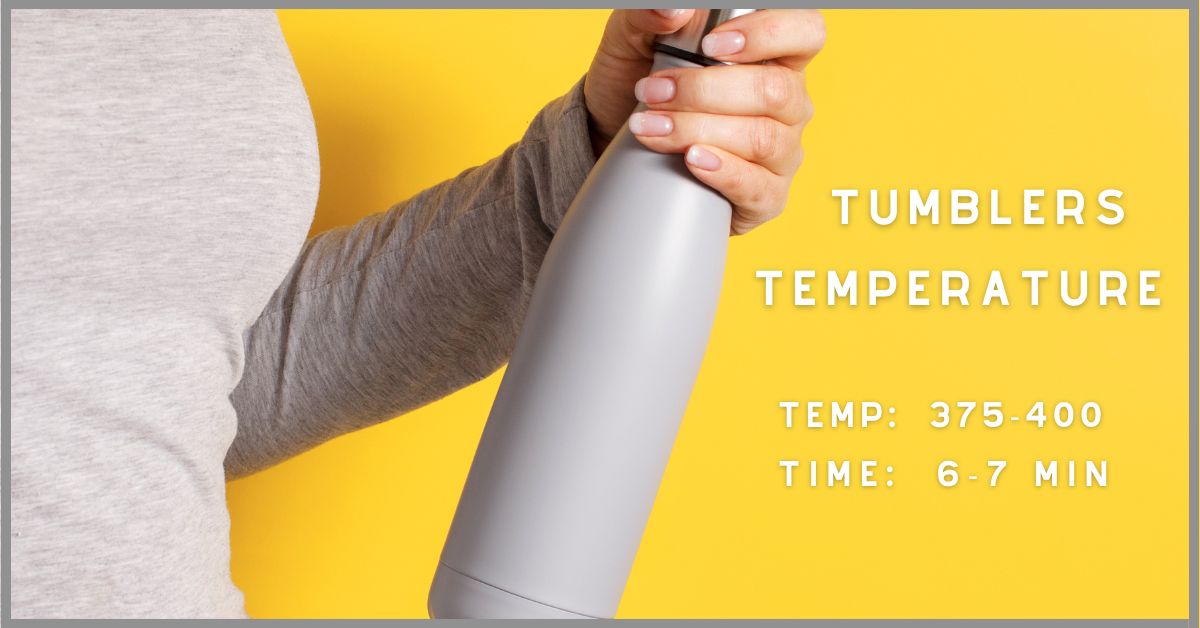
The ideal temperature for sublimation tumblers depends on your method. In a tumbler press, that’s about 380°F to 400°F for 60 to 90 seconds per position. In a convection oven, it’s 375°F to 400°F for 5 to 8 minutes.
Using an oven’s timing in a press (or a press’s timing in an oven) is one of the most common ways beginners scorch a blank.
What Temperature Is Best for Sublimation Tumblers?
The best sublimation tumbler settings depend on whether you’re using a tumbler press or a convection oven, since the two methods apply heat very differently.
A tumbler press clamps the design directly against the tumbler with strong, even pressure, so it needs far less time, typically 60 to 90 seconds per position at 380°F to 400°F. A convection oven heats the whole tumbler at once with no direct pressure, so it needs much longer, typically 5 to 8 minutes at 375°F to 400°F.
If your setup varies slightly, small adjustments (±5°F or ±10 seconds for a press, ±30 seconds for an oven) can make a noticeable difference.
Ideal Temperature & Time by Tumbler Type
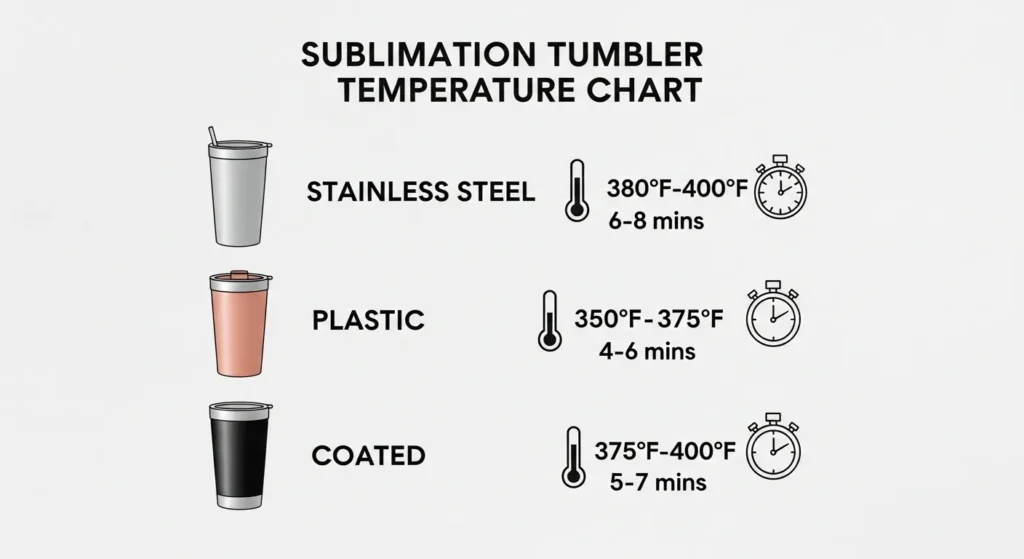
Different materials react differently to heat. Use this quick reference:
| Tumbler Type | Temperature | Time | Notes |
|---|---|---|---|
| Stainless Steel | 380–400°F | 60–90 sec per position | Most common, rotate to cover the full wrap |
| Coated Tumblers | 375–400°F | 50–80 sec per position | Follow manufacturer guidance |
| Plastic Tumblers | 350–375°F | 40–60 sec per position | Lower heat to avoid melting |
Convection Oven Method
| Tumbler Type | Temperature | Time | Notes |
|---|---|---|---|
| Stainless Steel | 375–400°F | 5–8 minutes | Rotate halfway for even coverage |
| Coated Tumblers | 375–400°F | 5–7 minutes | Follow manufacturer guidance |
| Plastic Tumblers | Not recommended | — | Plastic can warp or melt in an oven; use a press instead |
If you’re unsure about your blank, check the supplier or review this sublimation materials guide to confirm compatibility.
Why Temperature Matters in Sublimation
Sublimation printing works by turning solid dye into gas using heat. That gas then bonds with the polymer coating on your tumbler.
Here’s what happens when temperature is off:
- Too low: Ink doesn’t fully transfer → faded or dull colors
- Too high: Coating overheats → yellowing or blurry prints
- Uneven heat: Patchy or inconsistent color
This is why stable heat and correct timing matter just as much as your design or printer settings.
If you want a deeper understanding of the process, this sublimation printing guide explains how everything works together.
Step-by-Step: How to Sublimate a Tumbler Correctly
Follow this workflow for consistent results:
- Preheat the tumbler
Warm it for 5–10 seconds to remove moisture and improve ink bonding. - Wrap your design tightly
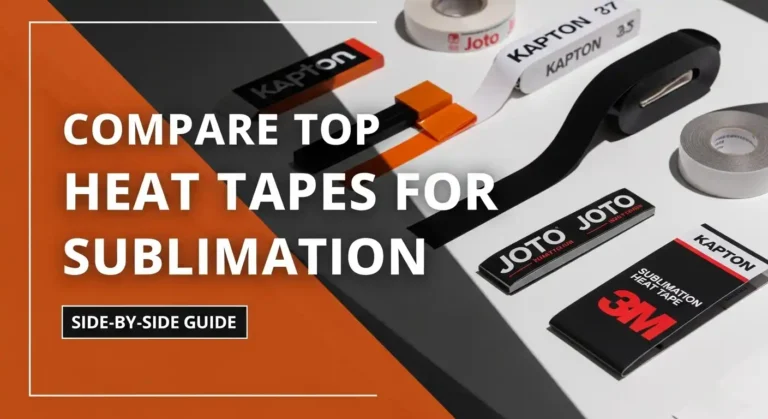
Use sublimation paper and secure it with heat-resistant tape.
Any gaps can cause ghosting. - Set your temperature and time
- Tumbler press: 380°F–400°F for 60–90 seconds per position, medium pressure
- Convection oven: 375°F–400°F for 5–8 minutes
- Apply even heat
Use whichever method matches the settings above. Don’t mix a press’s short time with an oven, or an oven’s long time with a press, that mismatch is the single most common cause of scorched or melted tumblers. Rotate for full coverage: in a press, rotate to reach each unpressed section; in an oven, rotate roughly halfway through the bake so heat reaches the tumbler evenly on every side. - Cool naturally
Let the tumbler cool at room temperature. Avoid water or cold surfaces.
If your setup struggles with consistency, review proper heat press temperature for sublimation to fine-tune your settings.
Common Temperature Problems and Fixes
Here’s how to quickly diagnose issues:
| Problem | Likely Cause | Fix |
|---|---|---|
| Faded colors | Temperature too low | Increase to 385–400°F |
| Ghosting/blurry | Paper shifted | Secure with heat tape |
| Uneven print | Inconsistent heat | Rotate or use convection oven |
| Yellowing | Too much heat | Reduce temperature slightly |
| Peeling design | Poor coating | Use sublimation-ready blanks |
For deeper troubleshooting, follow this sublimation troubleshooting guide.
Access our comprehensive chart that provides precise temperature guidelines for various tumbler materials.
Tips for Consistent Results
Consistency is what separates average prints from professional ones.
Keep these tips in mind:
- Always preheat your tumbler
- Use shrink wrap or silicone sleeves for even pressure
- Avoid using kitchen ovens (not safe for sublimation)
- Test new blanks before full production
- Keep a record of your best settings
Small adjustments can dramatically improve color vibrancy and clarity.
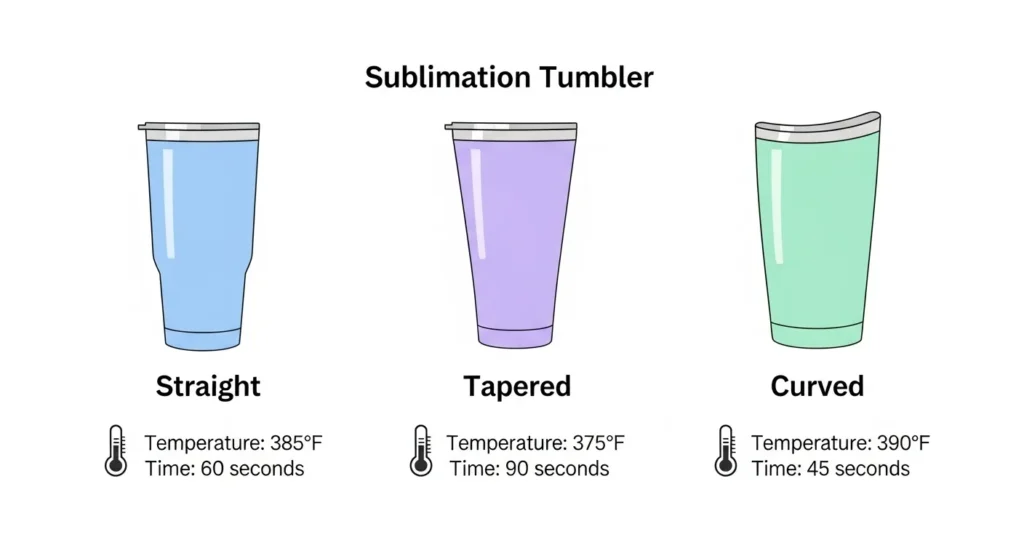
Do Different Tumbler Shapes Change Temperature? (Convection Oven Times Shown)
Yes, shape affects how evenly heat and shrink wrap tension reach the tumbler’s surface.
Straight Tumblers
- 375–400°F for 5–8 minutes
- Even heat contact all the way around
- Best for beginners
Tapered Tumblers
- 375–385°F for 7–9 minutes
- Heat and wrap tension reach the narrow and wide ends unevenly
- Needs a tighter, more even shrink wrap to prevent gaps
If you notice faded edges or gaps, the issue is usually loose or uneven shrink wrap, not just temperature. These times are for the convection oven method. If you’re using a tumbler press instead, see the press settings above, shape matters less there since the clamshell applies even pressure directly.

Frequently Asked Questions
Can I sublimate tumblers at 350°F?
Yes, but only for plastic tumblers. Stainless steel usually needs higher heat for proper ink transfer.
Do I need to rotate tumblers in an oven?
Yes, rotating helps ensure even heat distribution and prevents patchy prints.
Is 400°F too hot for sublimation tumblers?
It’s safe for most stainless steel tumblers, but going higher can damage coatings.
What’s the best time for sublimation tumblers?
It depends on your method. In a tumbler press, typically 60 to 90 seconds per position. In a convection oven, typically 5 to 8 minutes. Using the wrong time for your method is one of the most common causes of a scorched or melted tumbler.
Can I use different settings for different brands?
Yes, always test new blanks since coatings vary between manufacturers.
How long does it take to sublimate a 20 oz tumbler?
A 20 oz tumbler takes about the same time as other common sizes, since heat isn’t measured by volume. That’s roughly 60 to 90 seconds per position in a press, or 5 to 8 minutes in a convection oven. Larger or thicker tumblers may need the higher end of that range.
Why rotate a tumbler halfway through pressing?
A single press position can’t reach a curved surface all at once, and an oven’s heat doesn’t reach every side of a tumbler evenly either. Rotating partway through, whether in a press or an oven, ensures heat and pressure cover the entire wrap instead of just the side facing the heat source. Skipping rotation is a common cause of faded or patchy sections on the back or sides of a design.
Keep a record of your best settings so you don’t have to guess each time. Using a sublimation temperature tracker makes it much easier to repeat successful prints.

Professional Sublimation Printing & Wholesale Custom Products
Looking for high-quality sublimation printing for apparel, drinkware, and promotional items? Subli Genius Print delivers vibrant color, sharp detail, and long-lasting results for businesses, brands, and resellers across the U.S.



4 Comments