Mug Press vs Convection Oven: Which Should You Buy for Sublimation?

If you’re stuck choosing between a sublimation mug press vs oven, you’re not alone. Many beginners waste money or struggle with faded prints simply because they picked the wrong setup.
This decision directly affects your print quality, speed, and how much you can actually produce especially if you’re planning to sell.
Here’s the short answer:
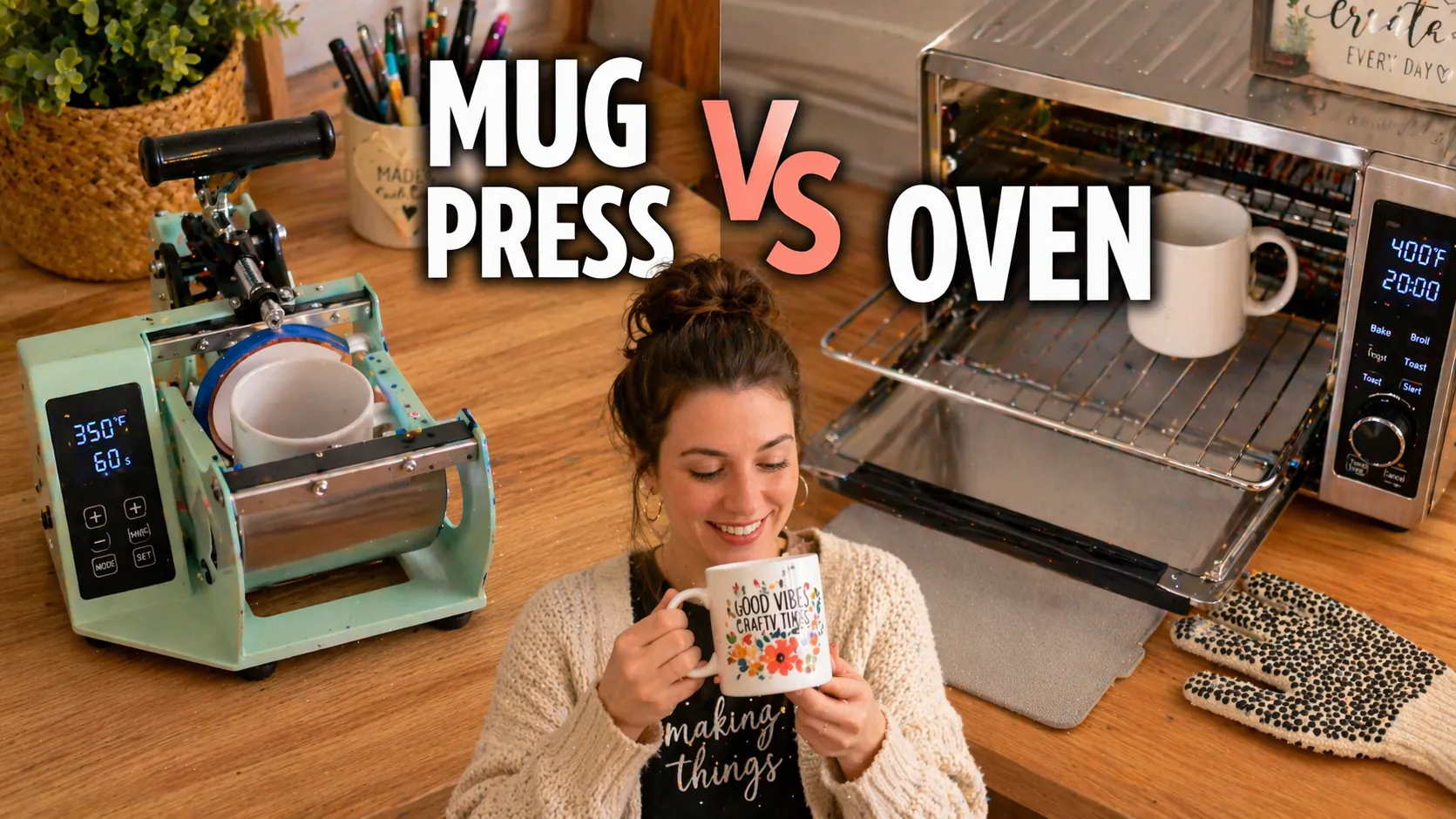
Mug presses are best for speed and consistency on standard mugs. Convection ovens are better for batch production and versatility.
In this guide, you’ll see exactly how both options work, where each one wins, and which one fits your workflow in 2026.
Before diving in, if you’re new to the process, this beginner sublimation printing guide will help you understand the full workflow.
What Is a Sublimation Mug Press?
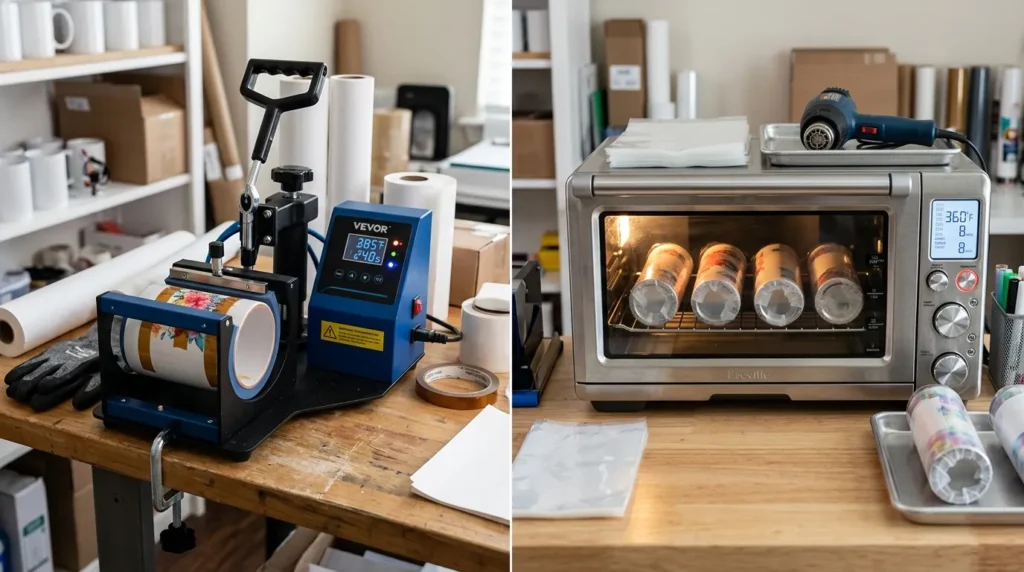
A sublimation mug press is a dedicated heat press designed specifically for mugs and tumblers.
It works by applying direct heat and pressure evenly around the surface.
How It Works
- Temperature: 380–400°F
- Time: 40–60 seconds
- Pressure: Medium to firm clamp
The pressure is what makes the difference. It forces sublimation ink into the coating, creating sharp and vibrant prints.
Types of Mug Presses
- Standalone mug presses
- Tumbler press machines
- Heat press attachments
Why It Matters
Direct pressure reduces:
- Ghosting
- Faded edges
- Uneven color transfer
This is why mug presses are often recommended for beginners.
What Is a Convection Oven for Sublimation?
A convection oven uses circulating hot air instead of direct pressure.
To replace pressure, you use:
- Shrink sleeves
- Silicone wraps
- Heat guns
How It Works
- Temperature: 380–400°F
- Time: 6–8 minutes
- Batch capacity: Multiple items
You place wrapped mugs or tumblers inside the oven, and the hot air evenly activates the sublimation ink.
Why People Use It
The biggest advantage is volume and flexibility.
You can sublimate:
- Tumblers
- Mugs
- Irregular shapes
- Multiple items at once
Mug Press vs Convection Oven: Head-to-Head Comparison
Here’s a quick breakdown to help you decide fast:
| Feature | Mug Press | Convection Oven | Winner |
|---|---|---|---|
| Speed per item | 40–60 seconds | 6–8 minutes | Mug Press |
| Batch capacity | 1 item | 4–12+ items | Oven |
| Size versatility | Limited | Very flexible | Oven |
| Setup & learning curve | Very easy | Moderate | Mug Press |
| Evenness of heat | Excellent | Good (depends on wrapping) | Mug Press |
| Cost (entry level) | $80–$250 | $40–$180 | Oven |
| Best for | Beginners, quick jobs | Small business, bulk orders |
Quick Takeaway
- Want speed and simplicity → Mug Press
- Want flexibility and volume → Oven
Pros & Cons Breakdown
Mug Press Pros
- Consistent pressure = better color transfer
- Faster production per item
- Easier for beginners
- Minimal setup
Mug Press Cons
- Limited size compatibility
- Only one item at a time
- Not ideal for scaling
Convection Oven Pros
- Batch production saves time
- Works with different shapes and sizes
- Lower starting cost
- Great for growing businesses
Convection Oven Cons
- Learning curve with shrink sleeves
- Risk of uneven transfers
- Requires extra tools (heat gun, wraps)
If you run into issues like fading or ghosting, follow this sublimation troubleshooting guide to fix common problems quickly.
Cost Comparison & Total Setup
Mug Press Setup
- Machine: $80–$250
- Blanks: $2–$5 per mug
- Ink & paper: standard sublimation setup
Convection Oven Setup
- Oven: $40–$180
- Shrink sleeves: ongoing cost
- Heat gun: ~$20
What Actually Costs More?
- Mug press saves time
- Oven saves money upfront
If you’re planning to sell, time often matters more than initial cost.
When Should You Buy a Mug Press?
A mug press is the best choice if you:
- Are a beginner
- Make single items or gifts
- Want consistent results
- Have limited space
Real-World Scenario
If you need to create 10 custom mugs quickly, a mug press will finish the job in minutes not hours.
When Should You Buy a Convection Oven?
A convection oven makes more sense if you:
- Run a small business
- Handle bulk orders
- Work with tumblers or odd shapes
- Want flexibility
Real-World Scenario
If you’re producing 20+ tumblers for Etsy orders, the oven becomes far more efficient.
Step-by-Step: How to Sublimate Mugs with Each Method
Mug Press Method
- Print your design on sublimation paper
- Tape it onto the mug
- Preheat press to 400°F
- Insert mug and clamp
- Press for 45–60 seconds
Oven Method
- Print and wrap design
- Apply shrink sleeve
- Use heat gun to tighten
- Preheat oven to 400°F
- Bake for 6–8 minutes
- Remove and cool
- Peel wrap
Problem-Solving Guide: Fix Common Issues
Ghosting (Mug Press)
- Increase pressure
- Secure design tightly
Uneven Color (Oven)
- Improve shrink wrap technique
- Ensure even airflow
Faded Prints
- Check your heat press temperature for sublimation
- Verify correct time settings
Our 2026 Verdict: Which One Should YOU Buy?
Here’s the honest breakdown:
- Beginner or hobbyist → Mug Press
- Etsy seller or scaling → Convection Oven
- Best long-term setup → Both
Most people should start with a mug press, then upgrade to an oven once they begin handling bulk orders.
Learn how sublimation printing works from Wikipedia:
Frequently Asked Questions
Can I use a regular kitchen oven for sublimation?
Yes, but it should be dedicated to sublimation only not used for food.
Is a mug press worth it for beginners?
Yes, it’s the easiest way to get consistent, high-quality results.
Which method gives brighter colors?
Mug presses usually produce more vibrant results due to direct pressure.
Can you sublimate tumblers in a mug press?
Only if the press supports tumbler sizes. Otherwise, use an oven.
Do I need shrink sleeves for oven sublimation?
Yes, they replace the pressure that a mug press provides.