How Do You Sublimate on Dark Polyester?

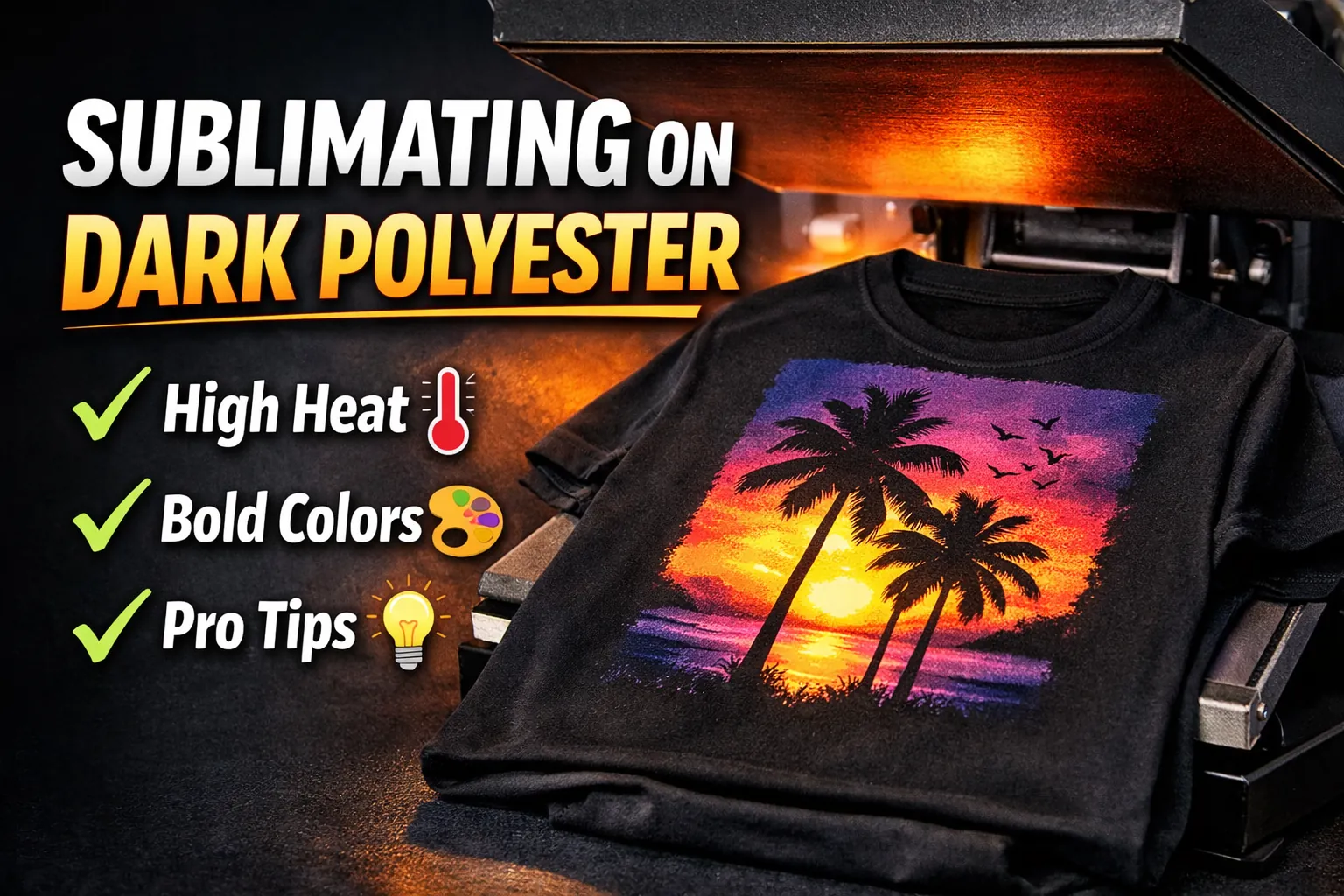
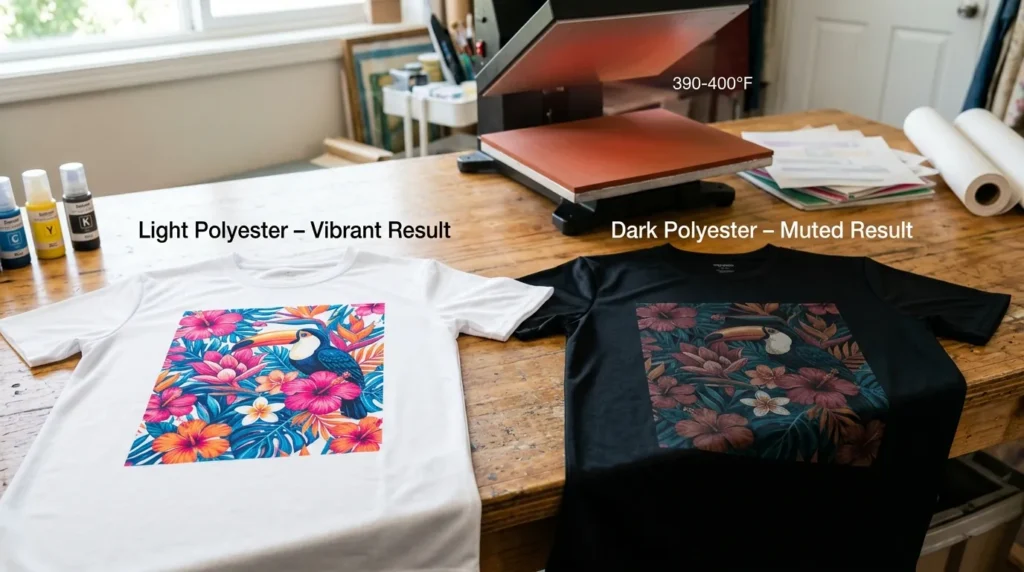
Sublimating on dark polyester is possible, but it requires specific adjustments. Because sublimation ink is translucent, the fabric color shows through the design. On dark garments, this reduces brightness and contrast, often making prints look dull or muted.
Here’s how to get the best possible results.
Why Dark Polyester Is Different
Sublimation dye bonds into polyester fibers at high heat, but it does not print white. The fabric color becomes part of the final design. On dark shirts:
- Light colors lose visibility
- White areas disappear
- Pastels look faded
If you’re unfamiliar with how dye bonding works, review the basics of what sublimation printing is before working with darker materials.
Best Heat Press Settings for Dark Polyester
Dark polyester typically benefits from slightly higher heat to improve dye penetration.
Recommended starting range:
- Temperature: 390–400°F
- Time: 55–65 seconds
- Pressure: Medium to firm
- Pre-press: 10 seconds
Higher heat improves bonding, but do not exceed 400°F to avoid scorching. For a broader settings chart across materials, see this detailed guide on heat press temperature for sublimation.
Use High-Contrast Designs
Design choice matters more on dark fabrics.
- Use bold, saturated colors
- Avoid light gray, beige, or pastel tones
- Increase saturation slightly before printing
- Keep fine details minimal
If your prints appear muddy or off-tone, review common sublimation color problems and fixes to improve vibrancy.
Can You Sublimate on Black Polyester?
Technically yes but results are limited.
Because sublimation ink is transparent:
- White elements will not appear
- Light colors will blend into the fabric
- Only deep, saturated tones remain visible
If your design depends on white or high brightness on black garments, compare methods like DTF vs sublimation printing to determine whether sublimation is the right choice.
Polyester Percentage Still Matters
Even with dark fabrics, polyester content controls dye retention.
- 100% polyester delivers the strongest bonding
- 80%+ polyester is acceptable
- Below 65% polyester results become significantly faded
For a broader breakdown of fabric compatibility, review this complete sublimation material guide.
Step-by-Step Process for Dark Polyester
- Choose 100% dark polyester fabric.
- Pre-press for 10 seconds to remove moisture.
- Slightly increase color saturation in your design file.
- Secure the transfer using heat-resistant tape.
- Press at 395°F for 60 seconds with firm, even pressure.
- Peel immediately while hot.
- Allow the garment to cool flat before handling.
Always test one sample before full production.
Common Problems on Dark Polyester
Design looks almost invisible
→ The fabric is too dark for the chosen color palette.
Print appears dull
→ Increase temperature slightly (5–10°F) and raise design saturation.
Ghosting or shadowing occurs
→ Improve pressure consistency and secure the transfer more firmly.
For broader troubleshooting across fabrics, see this comprehensive guide to fixing sublimation printing mistakes.
Final Verdict
You can sublimate on dark polyester, but expect reduced brightness compared to light-colored garments. Use higher heat within safe limits, bold color designs, and 100% polyester whenever possible.
For maximum vibrancy and accuracy, light polyester remains the better choice.
FAQs:
Can you sublimate on dark polyester shirts?
Yes, but colors will appear less vibrant because sublimation ink is transparent and cannot print white.
Why do my colors look dull on black polyester?
Dark fabric shows through the design, reducing brightness and contrast. Increasing saturation and heat slightly can improve visibility.
Do I need different heat settings for dark polyester?
Yes. Dark polyester typically performs better at 390–400°F for 55–65 seconds with medium to firm pressure.
Is 100% polyester required for dark sublimation?
For best results, yes. Lower polyester blends will appear even more faded because only polyester fibers bond with the dye.