15 Cricut Projects to Sell on Etsy: Materials, Costs & Licensing

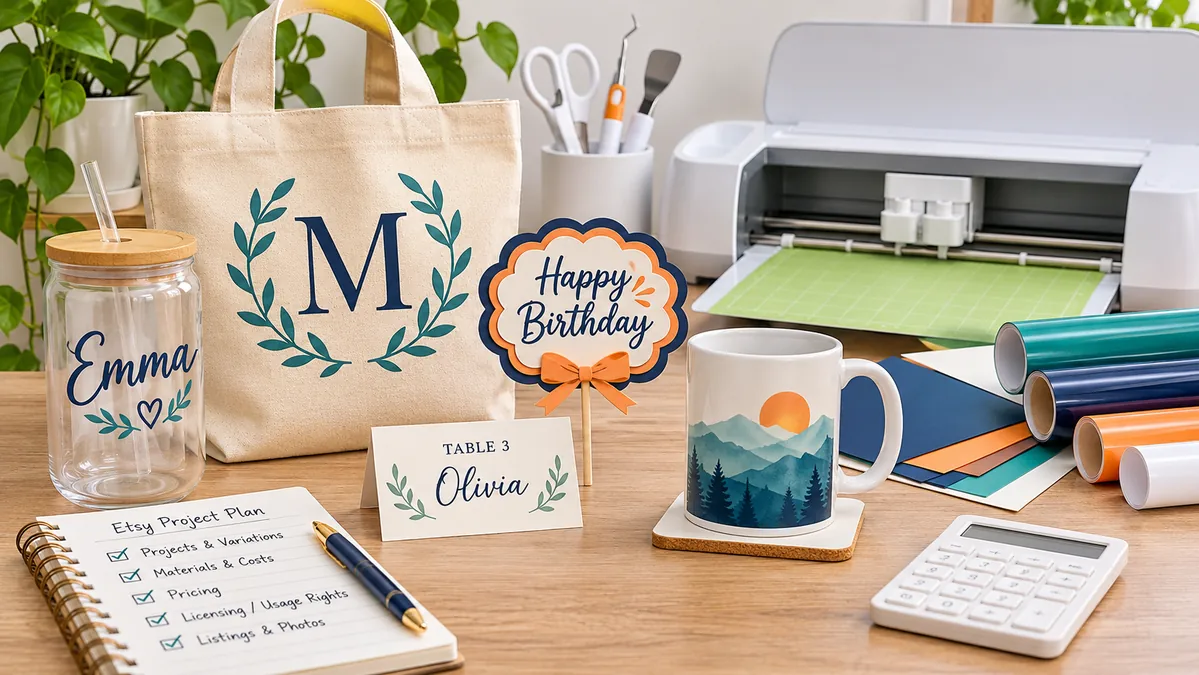
Good Cricut projects to sell on Etsy are items you can personalize, make consistently and ship without losing your margin. Water-bottle name decals, HTV tote bags, custom shirts and wedding paper goods are sensible products to investigate. A big list of ideas is not proof that any one product is a bestseller.
Start with one buyer, one material and one repeatable design. Then compare the order’s real production time, design permissions and shipping cost. The 15 projects below include cutting-machine materials such as adhesive vinyl, heat-transfer vinyl (HTV), cardstock and Infusible Ink. They are ideas to validate, not sales-ranked products or firsthand tests.
Quick Picks: Cricut Project Ideas by Seller Need
| Your starting point | Projects worth comparing | Main reason to consider them |
|---|---|---|
| New cutter owner with little stock | Water-bottle decals; pantry labels | Few different blank sizes to inventory; still require careful weeding and packing |
| Owns a suitable heat press | Monogram tote; aprons; family-reunion shirts | Repeatable HTV layout, but fabric compatibility and size mix affect cost |
| Wants event orders | Place cards; cake toppers; favor boxes | Personalization can be ordered in sets, but deadlines and revision work matter |
| Needs compact gift products | Pet ornaments; compatible Infusible Ink coasters | Small to ship, but finishing and blank compatibility need checking |
The choices above reflect production trade-offs, not verified search volume or product sales. Etsy’s Fall/Winter 2026 seller report points to interest in personal gifts, including pet and friend-group themes. Use Marketplace Insights to investigate terms for the exact product you want to sell; trends alone do not validate a niche.
15 Cricut Projects to Sell on Etsy
These project formats cover several equipment setups. A Cricut machine cuts or draws the design; it does not automatically print full-color sublimation transfers. That distinction matters when choosing between adhesive vinyl, HTV and Infusible Ink.
1. Personalized water-bottle name decals
Name decals can serve families, school groups and team members who already own bottles. Offer a small set of readable fonts and a few measured sizes rather than dozens of vague options. Small text can be frustrating to weed, so test the shortest and longest names you intend to accept.
Make and sell: Use an original name layout on permanent adhesive vinyl suitable for the customer’s surface. Ship cleanly weeded decals with transfer tape and simple application directions. Do not claim universal dishwasher safety: adhesives, finishes and customer washing habits vary.
First check: Check durability claims, lettering size and buyer application instructions.
2. Custom wedding welcome signs
Wedding signs can be personalized with names, ceremony date and a consistent font pairing. A simple two-color layout may be easier to assemble than intricate lettering across a large panel.
Make and sell: Plan the layout to the actual sign dimensions; transfer vinyl to acrylic, sealed wood or another verified surface. Photograph the finished product rather than presenting a digital mockup as a delivered sign. Oversized panels can be expensive and fragile to ship.
First check: Check sign dimensions, adhesive compatibility and shipping damage risk.
3. Personalized pet-name ornaments
Pet names are a natural personalization angle. Offer a readable name, optional year and a restrained palette so small ornaments remain legible in photos.
Make and sell: Choose a compatible ornament blank and secure decoration on the front or back as appropriate. Use break-resistant packaging where possible; avoid unverified promises about pet-safe materials or long-term outdoor use.
First check: Test surface preparation, personalization accuracy and seasonal lead times.
4. Removable nursery wall decals
Simple names, stars or botanical shapes can suit nursery décor. Buyers need a clear size diagram showing how large the finished decal will appear above a crib or shelf.
Make and sell: Use a removable vinyl product whose instructions permit application to the intended wall paint or finish. Include a small test suggestion; freshly painted, textured and delicate walls can react differently.
First check: Test painted-wall compatibility, removal claims and scale references.
5. Small-business window lettering
Local bakeries, salons and pop-up sellers may need opening-hour lettering or a small window logo. A compact, single-color design can be easier to price and install than a full storefront graphic.
Make and sell: Get the buyer’s pane measurements, placement preference and logo rights in writing. State the material maker’s applicable exposure claims, not a lifetime guarantee. Large graphics may be better quoted as a separate service.
First check: Confirm exterior exposure rating, install method and exact measurements.
6. Pantry and storage-container labels
Offer consistent label packs with a sensible number of names and fonts. Customers often care more about labels fitting different jars than about elaborate decoration.
Make and sell: Make an exact size chart. Apply or recommend labels on the outside of containers, away from direct food contact unless the material is specifically certified for that use.
First check: Check label readability, surface and material application restrictions.
7. Monogrammed fabric tote bags
Totes suit teacher gifts, volunteer groups and bridal party orders. Offer one monogram size and a limited selection of tote colors to keep repeat orders manageable.
Make and sell: Choose HTV recommended for the tote fabric. Follow its time, temperature, pressure and peel instructions, test wash care, and protect handles or seams from uneven pressing. A monogram is not evidence of a premium brand.
First check: Test press compatibility, tote fabric and wash-care instructions.
8. Bridal-party name T-shirts
Create a set that keeps design placement consistent while allowing different names or roles. The sale may involve several shirt sizes, so set a clear deadline for customer approval.
Make and sell: Prepare an order grid containing name, shirt size, shirt color and approved spelling. Use a consistent press placement guide rather than guessing each shirt’s position.
First check: Check all requested sizes, spelling and order deadline.
9. Family-reunion shirts
A family reunion usually has several names or a shared date. Offer fewer vinyl layers to control press time on multi-shirt orders.
Make and sell: Price the job as a batch: garments, vinyl, press time, artwork setup, packaging and possible rework. Verify your artwork is original and not copied from an organization or team mark.
First check: Estimate batch weeding time, size mixes and error allowance.
10. Personalized aprons
Home cooks, small food businesses and gift buyers may want names or role-based lettering. A simple chest print is easier to align than a graphic crossing a pocket seam.
Make and sell: Check that the apron is compatible with the selected HTV and use the maker’s wash guidance. An apron is not a substitute for protective equipment, so avoid implying special safety certification.
First check: Check strap placement, fabric composition and laundering needs.
11. Personalized pet bandanas
Name bandanas and short celebration messages offer personalization without needing photo printing. Size guidance matters because pet neck measurements vary.
Make and sell: Place the decoration away from ties or closures. Follow fabric and transfer instructions, and avoid unverified pet-safety or chew-resistance claims.
First check: Check sizing, fasteners and transfer placement.
12. Layered cardstock birthday cake toppers
Age and name personalization makes cake toppers practical for small custom orders. A design with broad connecting shapes is usually easier to cut and pack than a very thin script font.
Make and sell: Cut and assemble layers that remain rigid enough to stand. Use an appropriate food-contact barrier or components meeting the intended use; never assume craft glue or decorative cardstock is safe to touch cake.
First check: Test delicate layers and food-contact component rules.
13. Personalized party-favor boxes
Small event organizers may value coordinated favor packaging. Box dimensions and the number of folds will determine how feasible a 50-piece order is.
Make and sell: Test one fully assembled box with the planned favor before setting a price. Confirm your Cricut model supports the scoring method you use; include assembly time and damage allowance in bulk quotes.
First check: Measure assembled dimensions and assembly labor.
14. Wedding place cards and table details
Wedding place cards can be sold in sets. Personalized guest names create a clear customer benefit, but spreadsheet errors may require remaking many cards.
Make and sell: Ask customers to supply names in a consistent format and proof the file before cutting. Do not use unlicensed fonts or artwork, and reserve time to check spelling across every card.
First check: Check guest-name data entry, trim consistency and deadline.
15. Infusible Ink coasters on compatible blanks
Coasters are a compact gift format when a seller already owns the right equipment. A simple repeating pattern or a short personalized message can keep assembly consistent.
Make and sell: Use Cricut-compatible or otherwise manufacturer-confirmed blanks. Infusible Ink is distinct from adhesive vinyl and needs a supported transfer setup; a generic untreated wood or stone coaster is not automatically suitable.
First check: Verify blank compatibility, precise heat instructions and artwork rights.
15-Project Materials, Effort and Shipping Matrix
Use this as an initial production filter. Effort levels are editorial planning estimates, not measured production times. Your machine, cut complexity, order quantity and design style can change the result. Review the full table on a phone by scrolling horizontally if needed.
| Project | Main material | Other equipment | Effort estimate | Shipping format |
|---|---|---|---|---|
| Personalized water-bottle name decals | Adhesive vinyl; transfer tape | Cutter, weeding tool | Low | Flat envelope or rigid mailer |
| Custom wedding welcome signs | Adhesive vinyl on a finished sign blank | Cutter, transfer tools, sign blank | High | Bulky, protective packaging |
| Personalized pet-name ornaments | Adhesive vinyl; acrylic or coated ornament blank | Cutter, weeding and transfer tools | Medium | Padded small parcel |
| Removable nursery wall decals | Removable wall-rated adhesive vinyl | Cutter, transfer tape | Medium | Flat roll or rigid tube |
| Small-business window lettering | Outdoor-rated adhesive vinyl as specified | Cutter and transfer materials | Medium | Flat or rolled mailer |
| Pantry and storage-container labels | Adhesive vinyl on container exterior | Cutter, weeding tool | Low | Rigid envelope |
| Monogrammed fabric tote bags | Heat-transfer vinyl (HTV); suitable tote | Cutter and compatible heat press | Medium | Folded poly mailer or box |
| Bridal-party name T-shirts | HTV on compatible shirts | Cutter, press, shirt size inventory | Medium | Folded parcel |
| Family-reunion shirts | HTV and compatible apparel | Cutter, heat press | Medium | Multi-item parcel |
| Personalized aprons | HTV on apron fabric | Cutter and heat press | Medium | Folded parcel |
| Personalized pet bandanas | HTV and appropriate fabric bandana | Cutter and suitable heat press | Medium | Small padded parcel |
| Layered cardstock birthday cake toppers | Layered cardstock; approved adhesive; food-safe pick as specified | Cutter, cardstock mat and compatible blade | Medium | Rigid protected mailer |
| Personalized party-favor boxes | Cardstock and compatible adhesives | Cutter; scoring tool if supported | High | Flat-pack or protected parcel |
| Wedding place cards and table details | Cardstock; optional pens or vinyl details | Cutter; compatible pen or scoring accessory | Medium | Rigid flat mailer |
| Infusible Ink coasters on compatible blanks | Infusible Ink transfer material and qualified blank | Compatible cutter and appropriate heat press | Medium | Small padded box |
Which Cricut Materials and Equipment Do You Need?
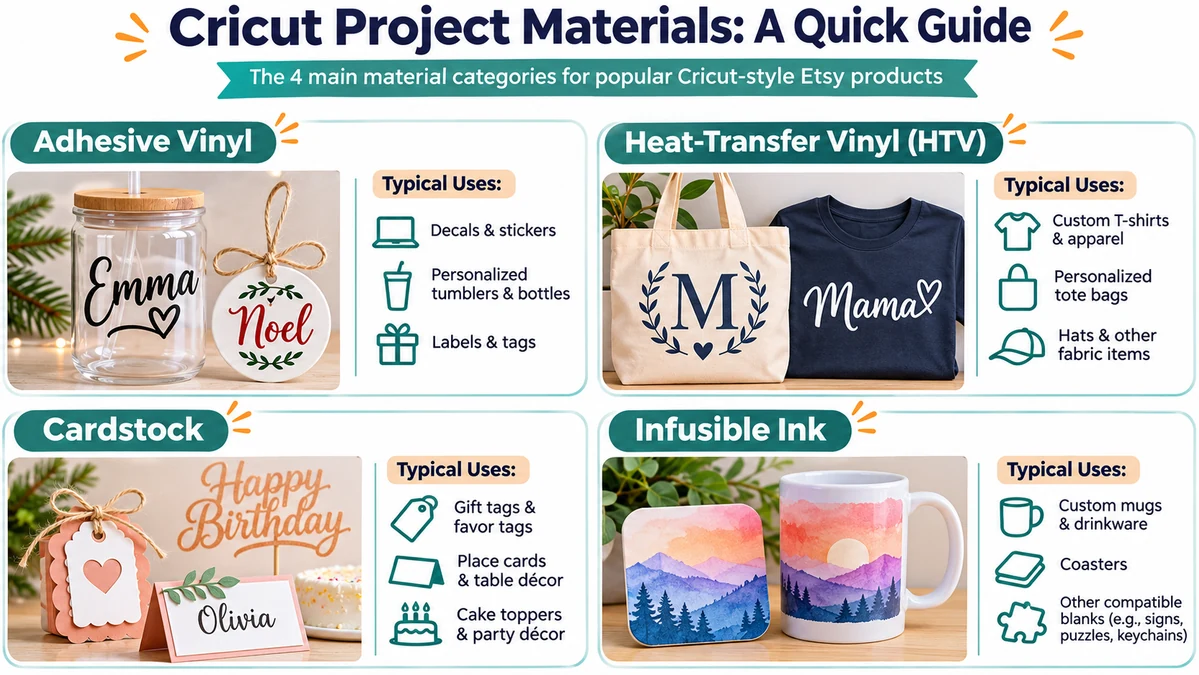
Adhesive vinyl is used for compatible hard, smooth surfaces such as some water bottles, windows and storage-container exteriors. HTV is an iron-on material that sits on fabric and requires suitable heat application. Cardstock can be cut and, with the correct supported tools, scored or drawn on. Infusible Ink transfers into compatible polyester-based or specifically prepared blanks rather than sitting on top like HTV.
| Material | Typical projects here | Must verify before making inventory |
|---|---|---|
| Adhesive vinyl | Name decals, signs, labels, ornaments | Removable vs permanent adhesive, surface finish, application and care |
| Heat-transfer vinyl | Totes, shirts, aprons, bandanas | Fabric fiber/finish and the exact transfer manufacturer’s heat instructions |
| Cardstock | Cake toppers, favor boxes, place cards | Cutting/scoring tools for your machine, fold strength and packaging |
| Infusible Ink | Compatible coasters | Correct transfer materials, approved blank and press compatibility |
A Cricut cutting machine does not perform the same function as a sublimation printer. For material selection, see our sublimation versus HTV comparison and Cricut-and-sublimation equipment guide. For Infusible Ink, consult our Infusible Ink walkthrough and Cricut’s official compatibility FAQ. No single time/temperature setting is safe for all combinations.
How to Estimate Costs and Choose an Etsy Selling Price
A low blank cost does not automatically mean a profitable order. Count the complete task, including mistakes and customer revisions. Work with current supplier quotes and your real shipping rates, not an assumed marketplace average.
- Record material cost: the blank or substrate, vinyl or paper actually consumed, transfer tape, adhesive and protective materials.
- Record active labor: designing, preparing names, weeding, pressing or assembling, photographing, packing and customer messages.
- Allocate waste: miscuts, failed transfers, offcuts and possible replacements, using your actual experience rather than a made-up industry percentage.
- Add fulfillment: packaging, postage and any transaction-specific handling.
- Apply marketplace charges: review Etsy’s current listing, transaction, payment-processing and advertising fee rules for your account and country.
- Test the price: compare realistic contribution after costs with competing offers and the customization value your buyer receives.
Illustrative calculation, not a market price: a seller charges $20 for one monogrammed tote. The blank costs $3.00, HTV $1.25, packaging $0.75, shipping paid by the seller $3.00 and 12 minutes of labor at an assumed $18/hour costs $3.60. The direct cost subtotal is $11.60 before Etsy fees, overhead, returns and taxes. The remaining $8.40 is not net profit. It must still cover marketplace fees and the seller’s other expenses.
For your own cost structure, use our sublimation profit margin calculator. If you sell vinyl separately, the vinyl decal pricing formula helps you avoid charging the same amount for tiny and labor-intensive cuts. Check Etsy’s published fee guidance before posting a price.
Can You Sell Cricut-Made Products on Etsy? Check These Rights
Etsy permits qualifying handmade items produced using computerized tools, including Cricut machines. It also expects handmade sellers to use their own listing photographs. That does not grant permission to copy brands, characters, other shops’ artwork or digital files.
Cricut’s Angel Policy is a limited, conditional permission for certain completed physical projects using eligible Cricut content. It is not a blanket license for everything displayed in Design Space. Its exclusions include Licensed Digital Content, certain Contributing Artist content, Cricut-trademark designs and artwork created using Design Space’s Create AI feature. It also restricts mass production, including an aggregate 10,000-project annual limit for covered finished products, with further conditions.
One easy-to-miss example: Cricut says the Angel Policy does not authorize selling individual sticker sheets made from its Design Space images, although decoration attached to a qualifying finished product can be treated differently. Sellers using their own original artwork or externally purchased SVGs still need to determine what rights they actually hold. Buying a file, owning a machine or subscribing to an image library is not a substitute for reading the applicable license.
| Artwork source | What to check | Practical record to keep |
|---|---|---|
| Your original artwork | Ownership, trademarks and any fonts or stock art incorporated | Source design file and asset/license records |
| Eligible Cricut content | Current Angel Policy, exclusions, quantity and finished-product restrictions | Content ID or screenshot and policy check date |
| Third-party SVG or graphic purchase | Commercial use, physical products, modifications, print-on-demand and redistribution permissions | License copy, purchase receipt and any required attribution |
| Customer-supplied logo or image | Authority to reproduce and sell it | Written permission or other suitable rights confirmation |
For Etsy eligibility, use Etsy’s official selling standards. This section is general publishing guidance, not legal advice; policies can change, so verify the license that applies to the exact artwork before listing.
Validate a Cricut Product Before You Order Supplies
- Name the buyer and use case. “Custom mug” is broad; “teacher name tote for end-of-year gifts” gives you a clearer buyer and occasion.
- Check Etsy terms. Use Marketplace Insights or relevant Etsy search results to compare phrasing, listing quality and competition. A search suggestion or a single successful seller is not proof of demand.
- Price one realistic order. Include your own material, labor, waste, fees and shipping. Do not assume a low competitor price is profitable.
- Make one prototype. Verify cut quality, transfer adhesion or paper strength, dimensions, packing and care instructions.
- Test the listing information. Take original product photographs, explain sizing and personalization fields, and state production/dispatch expectations you can meet.
- Buy small before expanding. Record time and scrap for the prototype before accepting a large order or stocking multiple colors.
The separate task of getting qualified buyers to find a product listing is covered in our Etsy SEO guide for sublimation sellers. Search visibility and good production economics both matter.
Free Cricut Etsy Product Selection Scorecard
Use the six factors below to rate three candidates. For buyer evidence, examine specific searches and competing listings rather than using broad trend headlines. For margin, use your actual numbers. For licensing, score zero if you have not inspected the files and permissions.
Free 3-Idea Cricut Etsy Scorecard
Compare three projects using your own findings. Give each factor 0 to 5 points: 0 means not checked or unsuitable; 5 means strong evidence or a good fit. A high total is not proof of sales. Any unverified artwork rights must be resolved before listing.
Idea 1
Total: 0 / 30
Rights check not yet scored.
Idea 2
Total: 0 / 30
Rights check not yet scored.
Idea 3
Total: 0 / 30
Rights check not yet scored.
This tool works only in your browser. Scores are not saved to the site or sent to a server. The comparison is a planning aid, not Etsy sales or licensing verification. If the buttons do not run in your browser, fill out the visible cards and use the browser’s Print command.
How to read your results: The maximum is 30 points. Compare the six individual scores before deciding; a project with a strong total but unresolved rights or costly fulfillment should not automatically win. You can export a CSV for your own records or print the comparison directly. No inputs are sent to our site.
Common Mistakes When Selling Cricut Crafts on Etsy
- Calling every idea a bestseller: another shop’s reviews or an attractive Pinterest pin do not reveal your expected sales.
- Buying blanks before checking costs: packaging and order-specific labor can erase an apparent margin.
- Assuming every Design Space image is sellable: check excluded licensed content, AI content and finished-project rules.
- Mixing heat-transfer systems: HTV, Infusible Ink and ordinary dye sublimation require different materials and equipment.
- Ignoring size instructions: a water-bottle decal or nursery wall graphic needs accurate dimensions, not just a pretty mockup.
- Underestimating customized order errors: incorrect spelling or the wrong shirt size can mean reproducing the whole order.
Frequently Asked Questions
What is an easy Cricut project to start selling on Etsy?
Simple personalized vinyl labels or name decals may require fewer different blank products than apparel. The trade-off is weeding small letters, application instructions and shipping thin vinyl without creasing. A project is beginner-friendly only if you can make and fulfill it consistently.
Can you sell items made with a Cricut machine on Etsy?
Yes, qualifying seller-made items made with computerized tools can be sold on Etsy. You still need proper rights to the design, accurate listing photographs and compliance with Etsy’s current policies. A Cricut machine does not confer a copyright license.
Is Cricut Access a commercial license for every SVG or image?
No. Some Cricut content may be covered by the limited Angel Policy, but certain third-party licensed art, Contributing Artist content and Create AI content are excluded. Check the exact graphic and Cricut’s current policy, plus any separate third-party rights.
Do I need a sublimation printer for Cricut projects?
Not for adhesive-vinyl decals, ordinary HTV clothing or cardstock crafts. Cricut-cut Infusible Ink sheets also use a different process from printing your own full-color sublimation transfer. The machine can cut materials but is not, by itself, a sublimation printer.
How much stock should I buy before my first Etsy sale?
Buy enough for a complete sample and a small, manageable test batch after you check price and supplier availability. Avoid ordering multiple colors and sizes until you understand your actual waste and customization workload. No fixed minimum works for every product.
Are original SVG designs allowed for Cricut items you sell?
Original artwork you own may be used subject to other people’s trademark, font, stock-image or licensed-element rights and Etsy’s standards. Purchasing an SVG does not automatically authorize resale of the file itself or every commercial use of products made from it.
Choose Three Projects Before Building a Full Product Line
Select one simple personalized product, one seasonal or gift option and one that uses equipment you already own. Check the buyer search, calculate contribution after actual costs, confirm the rights and make a sample. A small test of three distinct ideas tells you more about your shop’s workflow than buying supplies for all 15 at once.