
Is Sublimation Printing Eco Friendly in 2026

Sublimation printing is often called an eco friendly printing method, but in 2026 the answer depends on how you actually use it.
If you are trying to reduce waste, lower ink usage, or build a more sustainable printing setup, you need to understand both the benefits and the limitations.
In this guide, you will learn how sublimation printing affects the environment, what makes it more sustainable than other methods, and practical steps you can take to improve your workflow.
Check Future of Sublimation.
Is Sublimation Printing Eco Friendly
Yes, sublimation printing is generally more eco friendly than many traditional printing methods because it produces less waste and uses less water.
The process turns sublimation ink into gas and bonds it directly into the material. This means there is no excess ink, no washing process, and fewer discarded materials.
However, it is not completely sustainable. The environmental impact depends on your materials, equipment, and how efficiently you run your workflow.
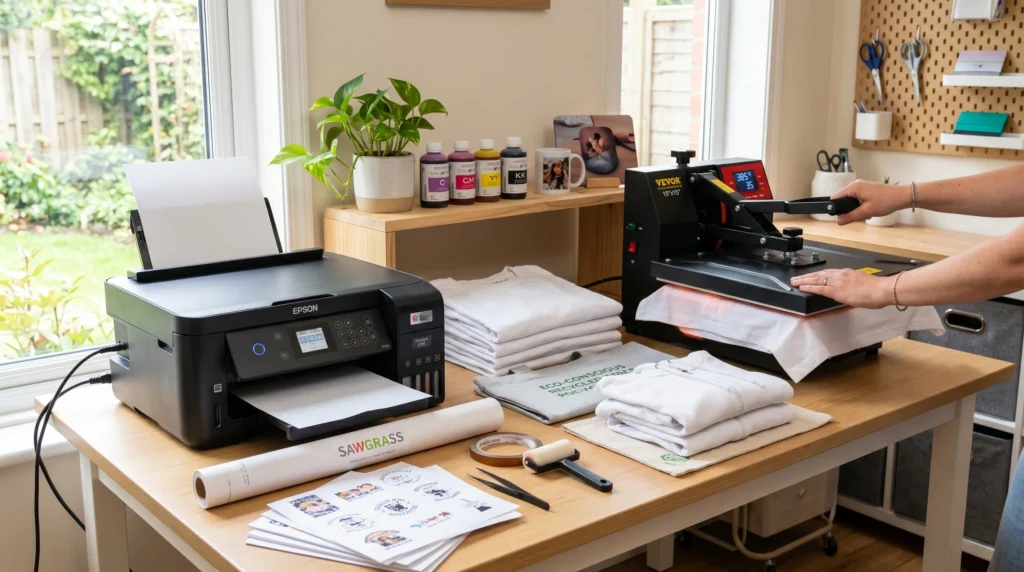
Why Sublimation Is More Sustainable Than Other Printing Methods
Sublimation printing reduces waste in several key ways.
It does not require water for cleaning like screen printing. It also avoids thick ink layers, which reduces material usage.
Key advantages include
- minimal waste during printing
- no water based cleanup process
- long lasting prints that reduce reprints
- efficient ink usage with less over application
If you want to understand how the full process works, read this
beginner sublimation printing guide
Where Sublimation Still Has Environmental Limitations
Even though sublimation is cleaner than many methods, it still has limitations.
The biggest issue is material dependency. Sublimation works best on polyester or coated surfaces, which are often synthetic.
Other limitations include
- reliance on polyester based materials
- energy usage from heat press machines
- limited compatibility with natural fabrics
- potential waste from failed transfers
Understanding these limitations helps you make smarter choices in your setup.
How to Make Your Sublimation Process More Sustainable
You can significantly improve sustainability by adjusting your workflow.
Here are practical steps you can apply immediately
- Use recycled polyester blanks instead of standard polyester
- Choose low VOC or water based sublimation inks
- Arrange designs efficiently to reduce paper waste
- Use correct press settings to avoid failed prints
- Maintain your printer regularly to prevent ink waste
- Use proper color profiles to reduce trial and error printing
If you struggle with print errors, follow this
common sublimation printing problems guide
Also make sure your settings are correct using this
heat press temperature for sublimation guide
For better color accuracy and fewer wasted prints, use proper
ICC profiles for sublimation
Best Eco Friendly Materials and Inks for Sublimation
Your material choices have the biggest impact on sustainability.
Recommended options include
- recycled polyester made from plastic bottles
- low VOC sublimation inks
- biodegradable sublimation paper
- energy efficient printers and heat presses
If you are unsure what materials to use, this guide helps you choose
best materials for sublimation
Real Examples of Sustainable Sublimation
Real workflows show how small changes make a difference.
A home based business reduced waste by switching to recycled blanks and improving print layout. This led to fewer failed prints and lower material costs.
Another small print setup improved efficiency by upgrading to an energy efficient heat press. This reduced electricity usage and improved consistency.
These changes are simple but effective when applied consistently.
Future of Sustainable Sublimation in 2026
Sublimation printing continues to move toward more sustainable practices.
Key developments include
- wider use of recycled polyester materials
- improved low emission ink formulations
- smarter print workflows that reduce waste
- more energy efficient printing equipment
As these improvements become standard, sublimation is becoming one of the most practical low waste printing options available.
Frequently Asked Questions
Can sublimation printing be done at home
Yes, many hobbyists and small businesses use sublimation printing at home with a desktop printer and heat press.
Is sublimation printing eco friendly
Yes, it is more eco friendly than many traditional methods because it produces less waste and uses less water.
What are the downsides of sublimation printing
It works mainly on polyester or coated materials and requires heat, which uses electricity.
Which printers are best for eco friendly sublimation
EcoTank style printers are commonly used because they reduce plastic waste with refillable tanks.
What is better eco solvent or sublimation
Sublimation is better for fabric durability and lower waste, while eco solvent works on more materials but creates more environmental impact.
4 Comments