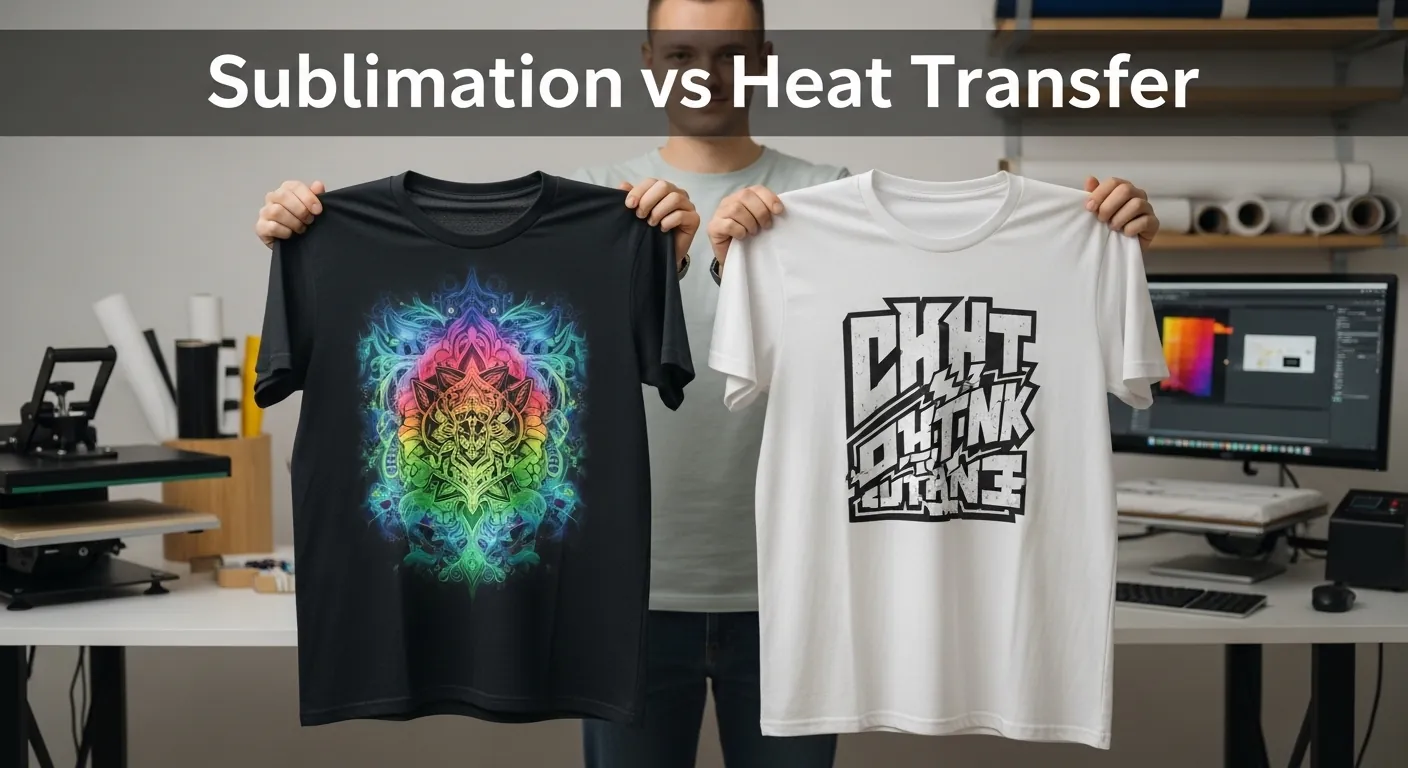
Sublimation Paper vs Heat Transfer Paper: Key Differences Explained Simply

If you’re starting with sublimation printing or custom apparel, one of the biggest questions is: should you use sublimation paper or heat transfer paper?
They may look similar, but they produce very different results. Choosing the wrong one can lead to faded prints, poor durability, or wasted materials.
Choosing between sublimation paper and heat transfer paper comes down to fabric type, durability needs, and your goals.
If you want professional, long-lasting results go with sublimation.
If you need flexibility and a lower entry cost heat transfer paper is a solid starting point.
Once you understand the difference, your print quality improves immediately.
In this guide, you’ll learn the exact differences, when to use each, and how to avoid common beginner mistakes.
What Is Sublimation Paper?
Sublimation paper is a specially coated paper used in dye sublimation printing.
You print your design using sublimation ink, then apply heat and pressure. The ink turns into gas and bonds directly with polyester fibers or polymer-coated surfaces.
This process is explained in detail in this sublimation printing guide.
Key characteristics:
- Works only on polyester or coated materials
- Requires sublimation ink and a compatible printer
- Produces vibrant, permanent prints
- No texture or layer on the surface
What Is Heat Transfer Paper?
Heat transfer paper is designed to transfer printed designs onto fabric using heat.
You print your design using a standard inkjet or laser printer, then press it onto the material. The design sits on top of the fabric as a layer.
Key characteristics:
- Works on cotton, polyester, and blends
- Compatible with regular printers
- Suitable for light and dark fabrics
- Leaves a noticeable surface layer
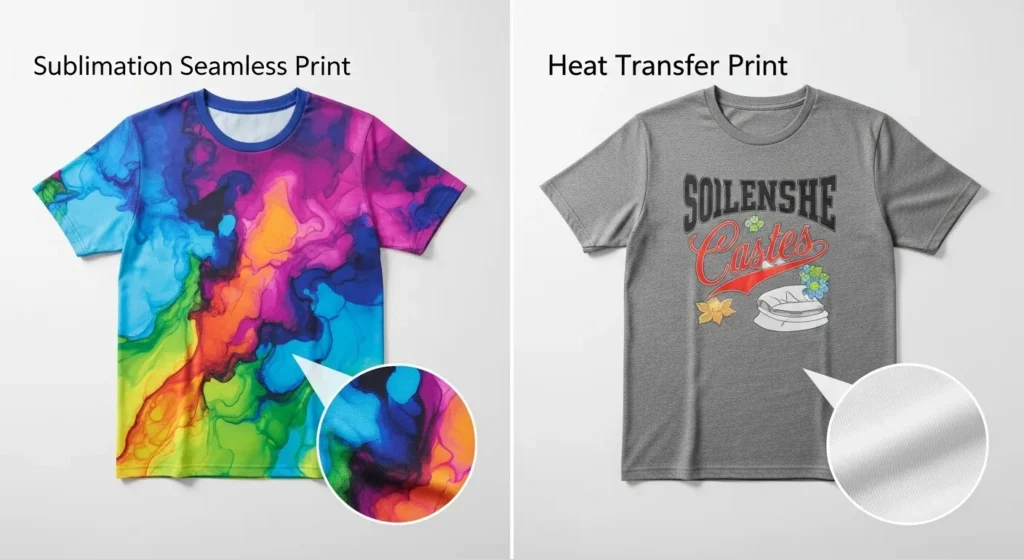
Sublimation Paper vs Heat Transfer Paper (Quick Comparison)
Here’s a simple breakdown:
| Feature | Sublimation Paper | Heat Transfer Paper |
|---|---|---|
| Fabric compatibility | Polyester only | Cotton, blends, polyester |
| Print feel | No texture | محسوس (layer on top) |
| Durability | Very high | Medium |
| Color vibrancy | Extremely vibrant | Good |
| Dark fabric support | ❌ No | ✅ Yes |
| Startup cost | Higher | Lower |
Which One Should You Choose?
Choose sublimation paper if:
- You want long-lasting, professional-quality prints
- You’re working with polyester fabrics
- You care about soft feel and durability
- You plan to sell products long-term
Choose heat transfer paper if:
- You print on cotton or dark fabrics
- You want a low-cost starting option
- You’re doing small DIY or hobby projects
Why Sublimation Doesn’t Work on Cotton
Sublimation ink bonds with polymer fibers, not natural fibers.
Cotton doesn’t have the chemical structure needed for sublimation dye to attach. Instead of bonding, the ink just sits loosely and fades quickly.
If you try sublimation on cotton, you’ll get:
- dull colors
- poor transfer
- fading after washing
To understand material compatibility better, check this sublimation materials guide.
Durability and Wash Test Differences
Durability is one of the biggest differences.
Sublimation:
- Ink becomes part of the fabric
- Won’t crack, peel, or fade easily
- Lasts as long as the garment
Heat transfer paper:
- Adds a layer on top
- Can crack or peel over time
- Fades after multiple washes
If your prints are fading early, follow this sublimation troubleshooting guide to fix common issues.
Feel and Comfort Comparison
This is something many beginners overlook.
- Sublimation: completely smooth no difference from fabric
- Heat transfer: slightly thick or plastic-like feel
For wearable products like T-shirts, sublimation usually feels more premium.
Cost Comparison (Beginner vs Long-Term)
Heat Transfer Paper:
- Lower startup cost
- Uses existing printer
- Good for testing or small batches
Sublimation:
- Higher initial investment
- Requires special printer and ink
- Better long-term value for business
If you’re planning to sell, sublimation often gives better results and fewer customer complaints.
Common Mistakes Beginners Make
Avoid these common errors:
- Using sublimation on cotton
- Choosing the wrong paper type
- Incorrect heat press settings
- Expecting sublimation to work on dark fabrics
Fixing these early will save you time and materials.
Final Verdict
Sublimation paper is best for quality, durability, and professional results.
Heat transfer paper is best for flexibility, low cost, and cotton fabrics.
Your choice depends on what you’re printing and your long-term goals.
Frequently Asked Questions
Can you use sublimation ink on heat transfer paper?
No. Sublimation ink requires sublimation paper and polyester-compatible materials to work properly.
Which lasts longer?
Sublimation prints last significantly longer because the ink becomes part of the fabric.
Can you sublimate on dark shirts?
No. Sublimation works best on white or light-colored materials.
Is sublimation better for a business?
Yes, if you want higher-quality products and long-term durability.