Sublimation Coating Sprays: How They Work and When to Use Them

If you’ve tried sublimation printing on cotton or non-coated surfaces, you’ve probably run into a wall. The design looks faded, washed out, or doesn’t transfer at all. That’s where sublimation coating sprays come in. For another challenging fabric, see our guide to sublimating on nylon.
In this guide, you’ll learn exactly how sublimation coating sprays work, when they actually help, and how to use them correctly to avoid common mistakes. By the end, you’ll know that what method fits your workflow or if there’s a better alternative.
What Is a Sublimation Coating Spray?
A sublimation coating spray is a liquid solution that creates a temporary polyester-like layer on surfaces that normally cannot accept sublimation ink.
Sublimation printing works by turning ink into gas and bonding it with polymer-coated materials. Without that coating, the ink simply won’t stick.
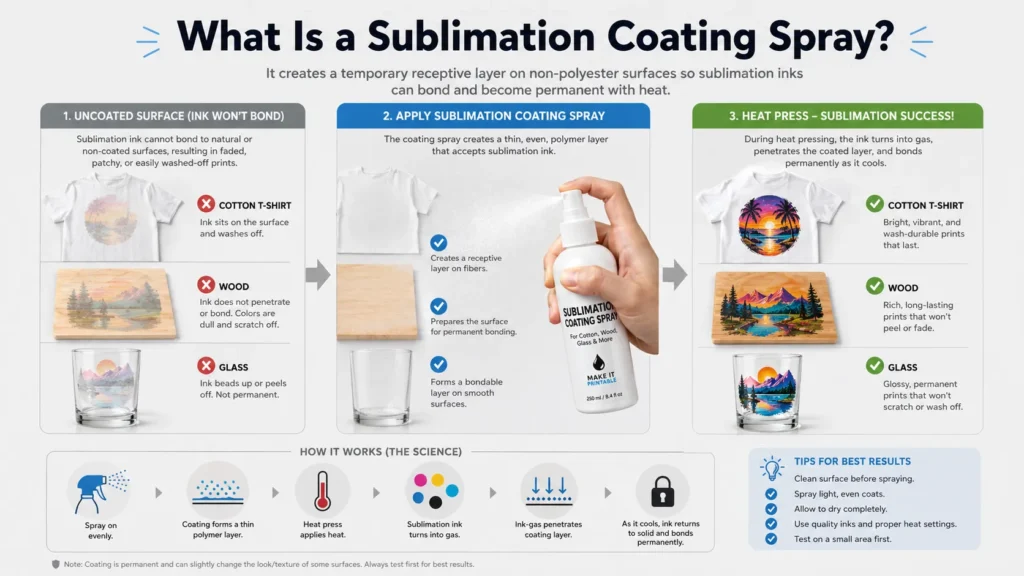
The spray acts as that missing layer. Once applied and heat-pressed, it allows sublimation transfer printing to bond with surfaces like cotton, wood, glass, or metal.
If you’re new to the process, it helps to understand the full sublimation printing guide before experimenting with coatings.
Do Sublimation Sprays Actually Work?
Yes, sublimation sprays can work, but only when used correctly and in the right situations.
They are most effective for:
- Light cotton fabrics
- Hard surfaces like wood or metal
- Small or one-off projects
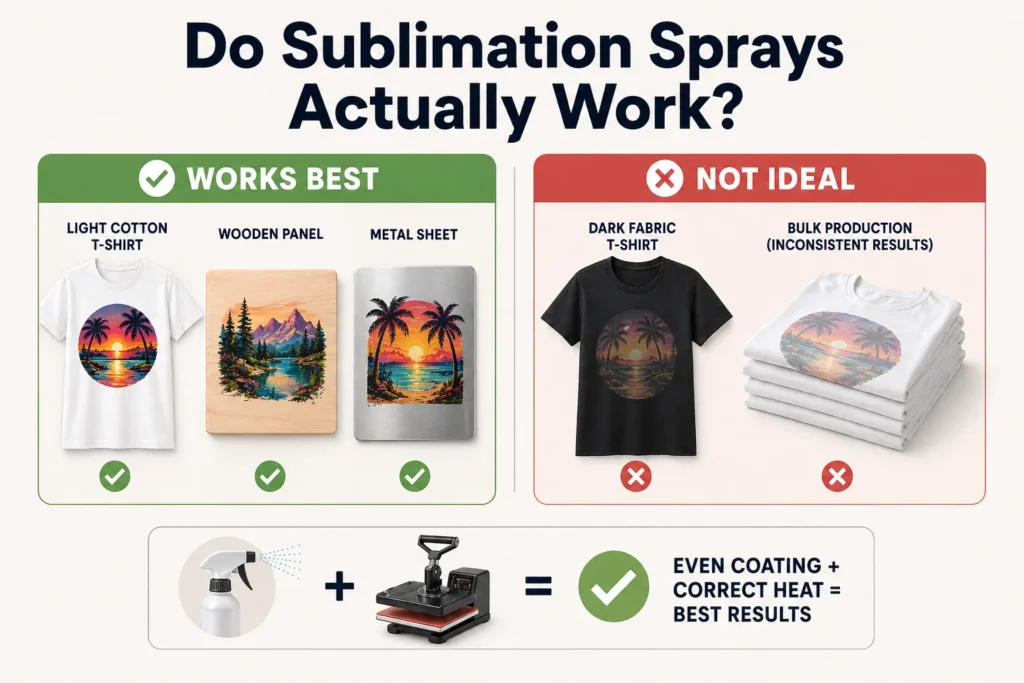
They are less reliable for:
- Dark fabrics
- High-volume production
- Long-term durability
The results depend heavily on how evenly the coating is applied and how well the heat press settings are controlled.
How Sublimation Coating Spray Works
Sublimation ink needs a polymer surface to bond during heat activation. When you apply a coating spray, you’re essentially adding that missing polymer layer.
Here’s what happens during the process:
- The spray creates a thin coating on the surface
- Heat activates sublimation ink into gas
- The gas bonds with the coating layer
- The design becomes embedded into the surface
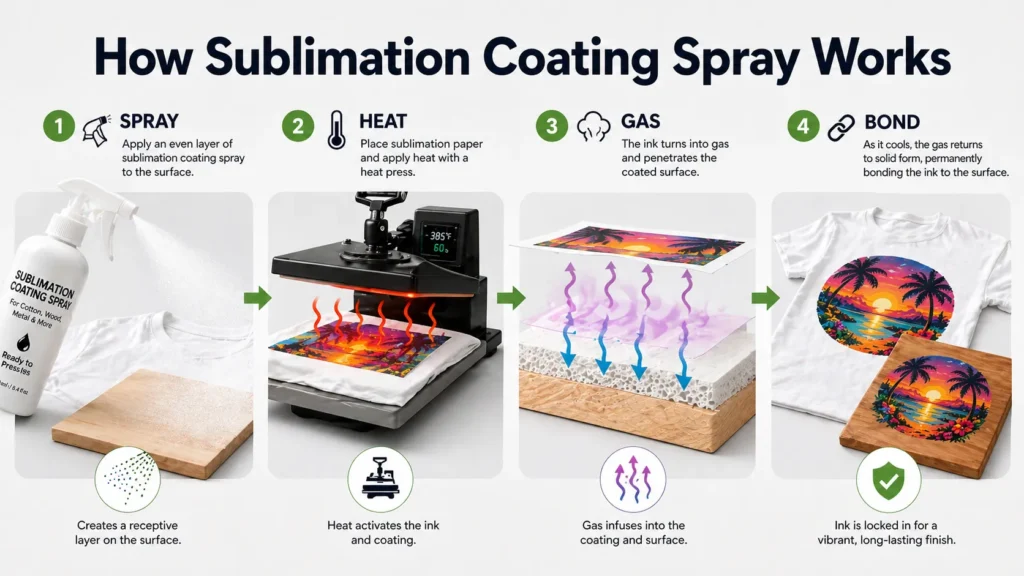
This process mimics polyester sublimation printing, but it’s not as durable because the coating sits on top rather than being built into the material.
What Materials Can You Use Sublimation Spray On?
Fabrics (Cotton and Blends)
Sublimation sprays are commonly used to print on cotton. Normally, cotton does not support sublimation ink.
With spray:
- You can transfer designs onto cotton shirts
- Results may feel slightly stiff depending on coating thickness
- Colors may not be as vibrant as polyester
For better material understanding, check this sublimation materials guide.
Hard Surfaces
Sprays work well on:
- Wood
- Ceramic
- Glass
- Metal
These surfaces need a coating layer to allow dye sublimation printing to bond properly.
What Does Not Work Well
Avoid using sprays on:
- Dark fabrics (colors won’t show properly)
- Flexible materials that bend frequently
- Surfaces exposed to heavy washing or friction
Step-by-Step: How to Use Sublimation Coating Spray
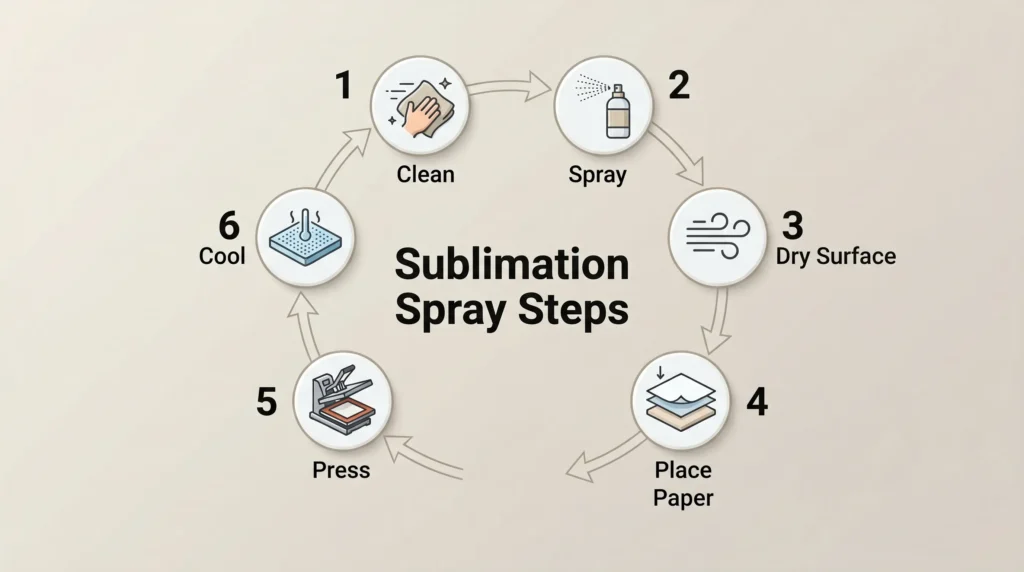
Follow this process carefully to get consistent results:
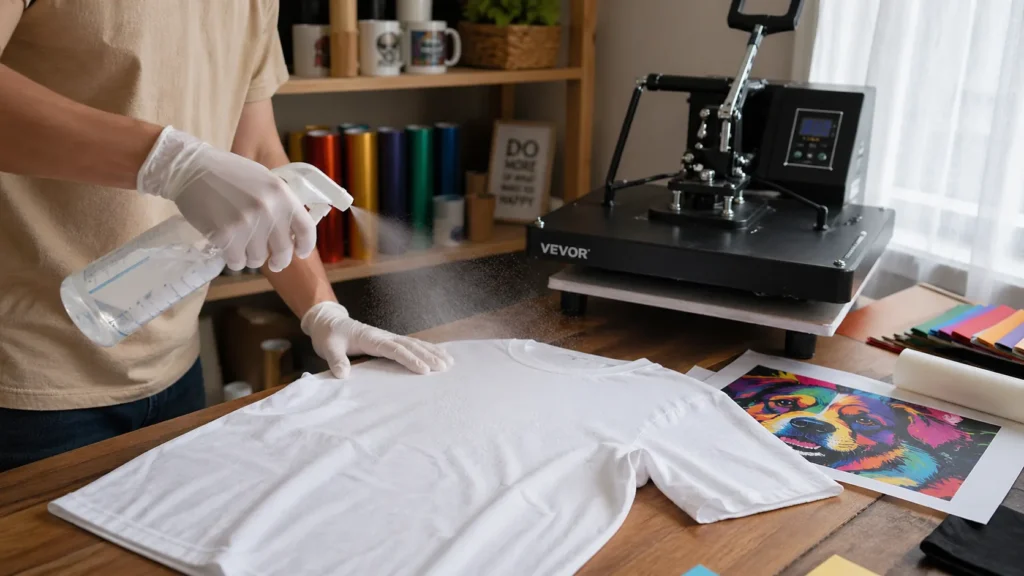
- Clean the surface
Remove dust, oil, or moisture before applying the spray - Apply the coating evenly
Hold the spray at a consistent distance and avoid over-spraying - Let it dry completely
Drying time is critical for proper bonding - Position your sublimation transfer
Use sublimation paper and secure it properly - Heat press the design
Apply correct temperature, pressure, and time - Let it cool before handling
Cooling helps stabilize the transfer
If you’re unsure about surface prep, this guide on how to make any material sublimation ready can help.
Common Mistakes That Ruin Results
Most failures with sublimation sprays come from simple mistakes:
- Uneven spray application
- Applying too much coating
- Not allowing proper drying time
- Incorrect heat press settings
- Using low-quality sublimation transfer paper
If your results look dull or inconsistent, follow this sublimation troubleshooting guide to identify the issue.
Pros and Cons of Sublimation Coating Sprays
Pros:
- Allows sublimation on non-polyester surfaces
- Works on a wide range of materials
- Easy to apply for small projects
- Affordable for beginners
Cons:
- Less durable than true sublimation
- Can feel stiff on fabric
- Results vary depending on technique
- Not ideal for bulk production
Sublimation Spray vs Other Methods
There are multiple ways to make non-sublimation materials compatible.
Sublimation Spray
- Quick and easy
- Best for small projects
Sublimation Coating Liquid
- More controlled application
- Better for hard surfaces
Polycrylic Method
- Budget-friendly
- Requires more preparation
Sublimation HTV
- More durable on cotton
- Adds a vinyl layer instead of direct bonding
Each method has its place depending on your project and expectations.
When Should You Use Sublimation Spray?
Sublimation coating spray makes the most sense when:
- You want to experiment with new materials
- You’re creating one-off or custom items
- You don’t want to invest in specialized blanks
- You need a quick solution for a project
It’s not the best choice for scaling a sublimation business or producing high-end products.
For more challenging surfaces, this guide on can you sublimate on nylon explains why adhesion issues happen and what alternatives work better.
Is Sublimation Spray Permanent?
Sublimation spray is not fully permanent.
On fabrics:
- Designs may fade after multiple washes
- Coating can wear off over time
On hard surfaces:
- Results last longer but can still degrade with use
Durability depends on:
- Coating quality
- Heat press accuracy
- Surface type
Troubleshooting Sublimation Spray Problems
If your results are not coming out right, check these common issues:
Faded colors
- Not enough coating
- Incorrect heat settings
Peeling or cracking
- Over-applied coating
- Poor surface prep
Dull prints
- Low ink saturation
- Incorrect temperature or pressure
Fixing these issues often comes down to refining your workflow rather than changing materials.
You can explore material-specific limitations in guides like can you sublimate on fleece hoodies to understand how coatings interact with different fabrics.
Quick Recap
Sublimation coating sprays can be a useful tool when you understand their limitations. They allow you to print on surfaces that normally wouldn’t work with sublimation, but they require careful application and realistic expectations.
If you want consistent, professional-quality results, focus on proper materials and technique first. Use sprays as a flexible option for testing and creative projects rather than a long-term production solution.
Frequently Asked Questions
Can you sublimate on cotton with spray?
Yes, sublimation spray allows designs to transfer onto cotton by creating a temporary coating, but durability is limited.
How long does sublimation spray last?
On fabrics, it may last several washes. On hard surfaces, it lasts longer but is still not permanent.
Do you need a heat press for sublimation spray?
Yes, a heat press is required to activate sublimation ink and bond it with the coating.
Is sublimation spray better than HTV?
Not always. HTV is more durable on cotton, while spray is better for quick or experimental projects.
Can you use sublimation spray on wood or glass?
Yes, sprays work well on hard surfaces like wood, glass, and metal when applied correctly.