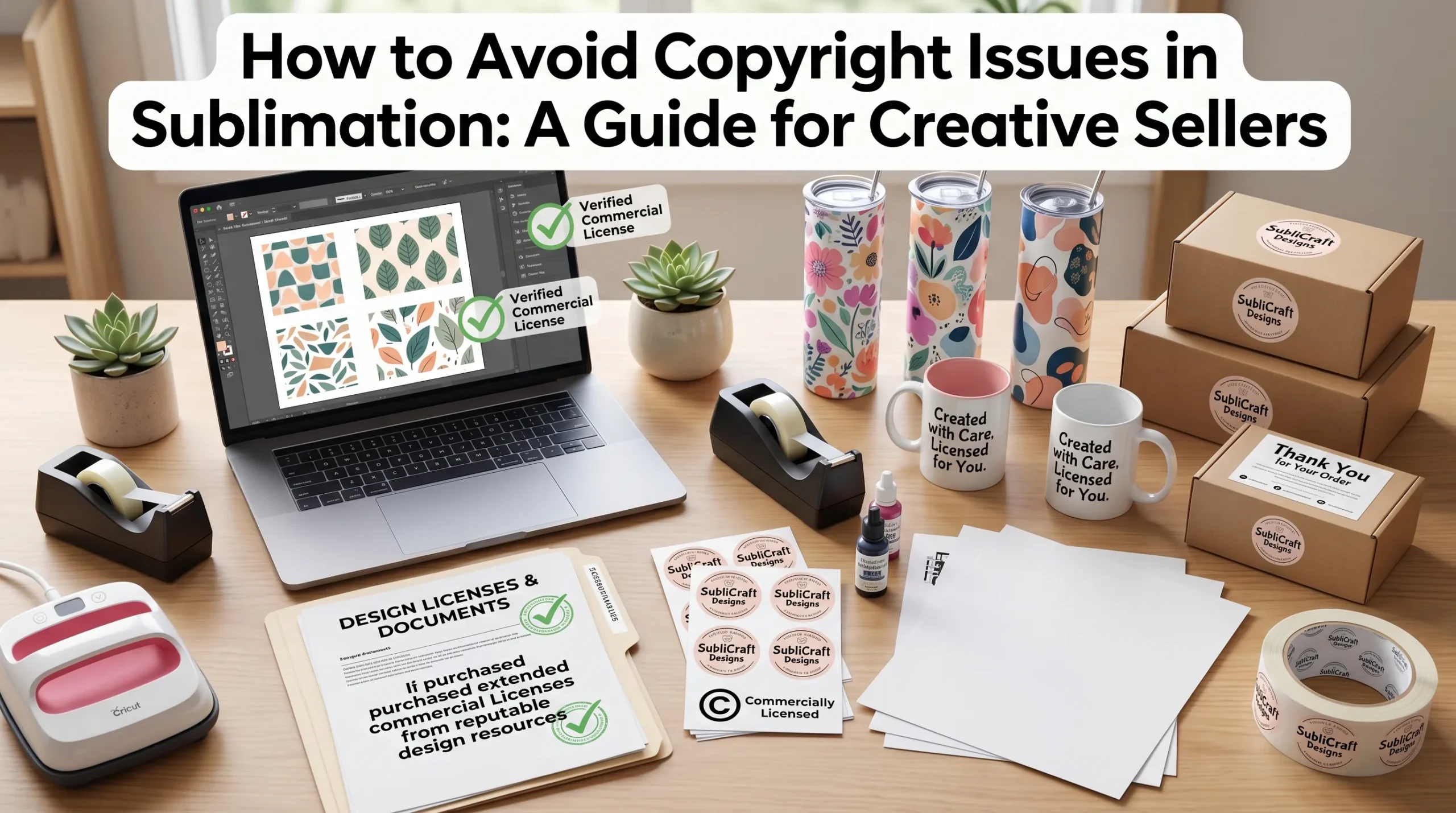
How to Avoid Copyright Issues in Sublimation Printing

Understanding copyright rules is one of the most important parts of building a safe long-term sublimation business.
Many beginner mistakes happen because:
- licensing terms feel confusing
- online misinformation spreads quickly
- copyrighted products appear everywhere online
The safest businesses usually focus on:
- original branding
- niche audiences
- commercial-use assets
- unique product presentation
You do not need copyrighted characters to build a successful sublimation business.
Strong branding, creative niches, and safer design sourcing often create more stable long-term growth.
This article is educational only and not legal advice.
If you are building a sublimation business, also read: Sublimation Business Guide
Why Copyright Issues Matter for Sublimation Sellers
Copyright problems can hurt small businesses much faster than many beginners expect.
A single copyright complaint can sometimes lead to:
- listing removals
- Etsy warnings
- reduced shop trust
- repeat infringement penalties
This is especially common with:
- Disney designs
- sports logos
- celebrity images
- anime artwork
- movie characters
- trademarked quotes
Many sellers accidentally use protected content because they assume:
- Pinterest images are free
- Google images are public
- Etsy listings are automatically legal
- changing a design removes copyright
Unfortunately, those assumptions are usually incorrect.
“Everyone Else Sells It” Does Not Mean It Is Legal
One of the most dangerous misconceptions in sublimation communities is:
“If thousands of Etsy shops sell it, it must be allowed.”
That is not how copyright works.
Many infringing products stay online temporarily because enforcement often happens inconsistently.
A listing being visible does not mean:
- it is licensed
- it is approved
- it is legally safe
This is important for long-term business stability.
Understanding Copyright vs Trademark in Sublimation
Many sellers confuse copyright and trademark laws because sublimation products often involve both.
What Copyright Protects
Copyright usually protects:
- artwork
- illustrations
- photographs
- graphics
- characters
- creative designs
Examples:
- Disney artwork
- anime illustrations
- movie posters
- digital art prints
What Trademarks Protect
Trademarks usually protect:
- logos
- business names
- slogans
- sports team branding
- recognizable brand identifiers
Examples:
- Nike logos
- NFL team names
- Starbucks branding
- Disney logos
Why This Confuses Sublimation Sellers
A single tumbler can sometimes involve:
- copyrighted artwork
- trademarked names
- protected characters
which creates multiple legal risks at once.
Understanding the difference helps sellers make safer decisions when sourcing designs.
Common Copyright Mistakes Sublimation Sellers Make
Many copyright problems happen because beginners simply do not know what to avoid.
Downloading Images From Google
Google is not a free image library.
Most images online are automatically protected by copyright, even if:
- no watermark exists
- the creator is unknown
- the image appears everywhere online
Saving an image from Google does not create ownership rights.
Using Pinterest Images Without Permission
Pinterest is another common problem.
Many shared graphics:
- belong to artists
- require licenses
- are reposted without permission
Pinterest visibility does not equal legal permission.
Selling Fan Art Without Licensing
Fan art creates major risks for sublimation sellers.
Examples:
- Disney tumblers
- anime mugs
- Marvel shirts
- sports-themed products
Many of these designs require official licensing agreements.
Buying Designs Without Commercial Rights
Not all digital design purchases allow resale.
Some files are:
- personal-use only
- limited commercial use
- restricted for POD
- prohibited for mass production
Always read licensing terms carefully.
Assuming Small Shops Are Safe
Small Etsy shops still receive:
- copyright complaints
- takedown notices
- account warnings
Copyright enforcement affects businesses of all sizes.
Can You Legally Sell Character Designs on Sublimation Products?
Character-themed products are one of the biggest risk areas in sublimation.
This includes:
- Disney characters
- anime artwork
- movie characters
- sports mascots
- cartoon graphics
Why Character Products Are Risky
Most recognizable characters are heavily protected intellectual property.
Companies actively monitor:
- Etsy
- Amazon
- Shopify
- social media marketplaces
for unauthorized products.
Licensing Is Usually Required
Official licensing often requires:
- legal agreements
- royalty payments
- commercial permissions
Without licensing, products may violate copyright or trademark laws.
Etsy Risks for Character Products
Potential Etsy consequences include:
- listing removals
- copyright strikes
- repeat infringement warnings
- account suspension
This is one reason many successful long-term sellers eventually focus on:
- original branding
- niche typography
- custom artwork
- licensed commercial assets
Does Changing an Image Avoid Copyright?
A very common myth is:
“If I change the image enough, it becomes legal.”
Small changes usually do NOT remove copyright protection.
Examples:
- changing colors
- flipping the image
- adding text
- cropping artwork
- adding filters
often still create derivative works based on protected content.
The original ownership rights usually remain with the creator.
This is especially important for:
- cartoon artwork
- fan art
- celebrity images
- sports graphics
Making small edits does not automatically create legal ownership.
What Does Commercial Use Mean in Sublimation?
Commercial use means you have permission to use a design for products you plan to sell.
Personal Use vs Commercial Use
Personal-use licenses usually allow:
- personal crafts
- gifts
- home printing
but NOT product sales.
Commercial-use licenses allow products to be sold legally within the license terms.
Commercial Licenses Often Have Limits
Some licenses restrict:
- quantity limits
- POD usage
- digital redistribution
- logo usage
This is why reading license terms carefully matters.
Fonts Also Have Licenses
Many sellers forget that fonts can also require commercial licenses.
Not every free font online allows:
- commercial printing
- resale products
- logo creation
Always verify font permissions before using them commercially.
Where to Find Safe Sublimation Designs
Safer design sourcing helps protect businesses long term.
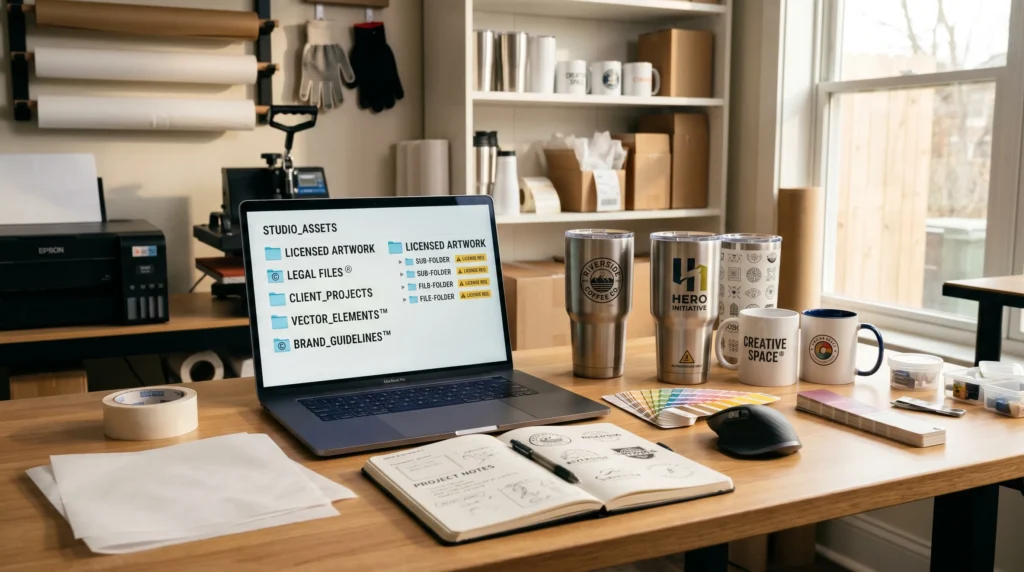
Create Original Designs
Original artwork is usually the safest option.
Benefits include:
- stronger branding
- less competition
- safer long-term growth
- more recognizable products
Buy Commercial-Use Design Files
Popular commercial-use marketplaces include:
- Creative Fabrica
- Design Bundles
- licensed Etsy sellers
Always verify:
- commercial rights
- POD permissions
- resale limitations
Hire Designers for Custom Artwork
Custom artwork helps businesses:
- stand out
- avoid copyright risks
- develop stronger branding
This works especially well for:
- niche shops
- seasonal collections
- personalized products
How to Check if a Design Is Safe to Use
Before using any sublimation design, ask:
- who created the artwork?
- does the license allow commercial use?
- does it include protected characters?
- is the design trademarked?
- is written permission available?
Common Red Flags
Warning signs include:
- “fan art”
- “inspired by Disney”
- missing license information
- suspiciously cheap design bundles
- unclear ownership claims
If the licensing information feels vague, it is safer to avoid the design.
Etsy Copyright Risks for Sublimation Sellers
Etsy actively responds to copyright complaints.
Etsy Uses DMCA Takedown Systems
Rights holders can report listings they believe infringe on their intellectual property.
This can lead to:
- listing removal
- shop warnings
- repeat infringement tracking
Copyright Problems Can Affect Shop Stability
Repeated copyright issues may reduce:
- shop trust
- long-term stability
- business growth opportunities
Safer branding creates stronger long-term businesses.
If you sell on Etsy, also read: Etsy SEO for Sublimation Sellers
Common Copyright Myths in Sublimation
Many beginner misconceptions spread quickly online.
“If I Bought It, I Can Sell It”
Buying a design does not automatically include commercial rights.
“Everyone on Etsy Sells It”
Popularity does not make a product legal.
“I Changed the Design”
Small edits usually do not remove copyright protection.
“I Found It on Google”
Most online images are protected automatically.
“Small Businesses Won’t Get Caught”
Small sellers still receive copyright complaints regularly.
How to Build a Safer Long-Term Sublimation Business
Businesses that rely heavily on copyrighted designs often face long-term instability.
Safer businesses usually focus on:
- original branding
- niche audiences
- custom typography
- personalized products
- unique themes
Build Around Strong Niches
Examples:
- teacher gifts
- camping products
- pet memorial products
- sports mom designs
Niche-focused businesses often perform better long term than trend-chasing shops.
For more ideas, read: Best Sublimation Niches in 2026
Improve Branding Instead of Relying on Characters
Better branding often creates stronger businesses than copyrighted fan art.
Strong branding includes:
- unique packaging
- original photography
- recognizable product styling
You may also like: How to Photograph Sublimation Products
And: Sublimation Packaging Ideas
Seasonal and Holiday Copyright Considerations
Holiday products often create copyright problems because sellers use protected seasonal characters.
Examples:
- Grinch designs
- Disney Christmas characters
- sports holiday graphics
Safer Seasonal Product Ideas
Safer alternatives include:
- original typography
- holiday quotes
- generic seasonal artwork
- custom illustrations
- licensed design assets
For seasonal business planning, visit: Seasonal Sublimation Sales Calendar
What To Do If You Receive a Copyright Notice
Receiving a copyright notice can feel stressful, but staying calm is important.
Remove the Product Immediately
Taking down the listing quickly often helps prevent additional problems.
Review Similar Listings
Check your shop for:
- related products
- repeated artwork
- similar copyright risks
Learn From the Experience
Many sellers improve their businesses by:
- using safer design sources
- verifying licenses carefully
- building stronger branding
Mistakes can become learning opportunities.
Related Sublimation Business Resources
- Sublimation Business Guide
- Etsy SEO for Sublimation Sellers
- How to Photograph Sublimation Products
- Sublimation Packaging Ideas
- Seasonal Sublimation Sales Calendar
- Best Sublimation Niches in 2026
Frequently Asked Questions
Can I use Google images for sublimation products?
No. Most Google images are protected by copyright automatically and usually require permission or licensing for commercial use.
Is fan art legal for sublimation businesses?
Fan art can still violate copyright or trademark laws if proper licensing is not obtained.
What does commercial use mean in sublimation?
Commercial use means a design license allows you to create products for sale using the artwork or font.
Can changing a design avoid copyright?
Usually not. Small edits like changing colors or adding text often do not remove copyright protection.
Can Etsy shut down my sublimation shop for copyright issues?
Repeated copyright complaints can lead to listing removals, account warnings, or possible shop suspension.
Are fonts copyrighted for sublimation use?
Yes. Many fonts require commercial licenses before they can legally be used on products for sale.
How do I safely source sublimation designs?
Use original artwork, verified commercial-use marketplaces, licensed assets, or custom-created designs whenever possible.