Sublimation on Polyester Sportswear: Best Fabrics & Heat Settings

Sublimation on polyester sportswear delivers exceptional durability, vibrant colors, and professional-quality results when the correct materials and settings are used. If you are comparing fabric options, see our guide to sublimation on rayon before pressing a rayon blend. For a cozy apparel niche, browse our cottagecore sublimation tee ideas. For more apparel formats, compare our best hoodies for sublimation and sublimated jersey guide.
For most sportswear projects, 100% polyester, interlock polyester, and polyester-spandex blends provide the best balance of print quality and athletic performance.
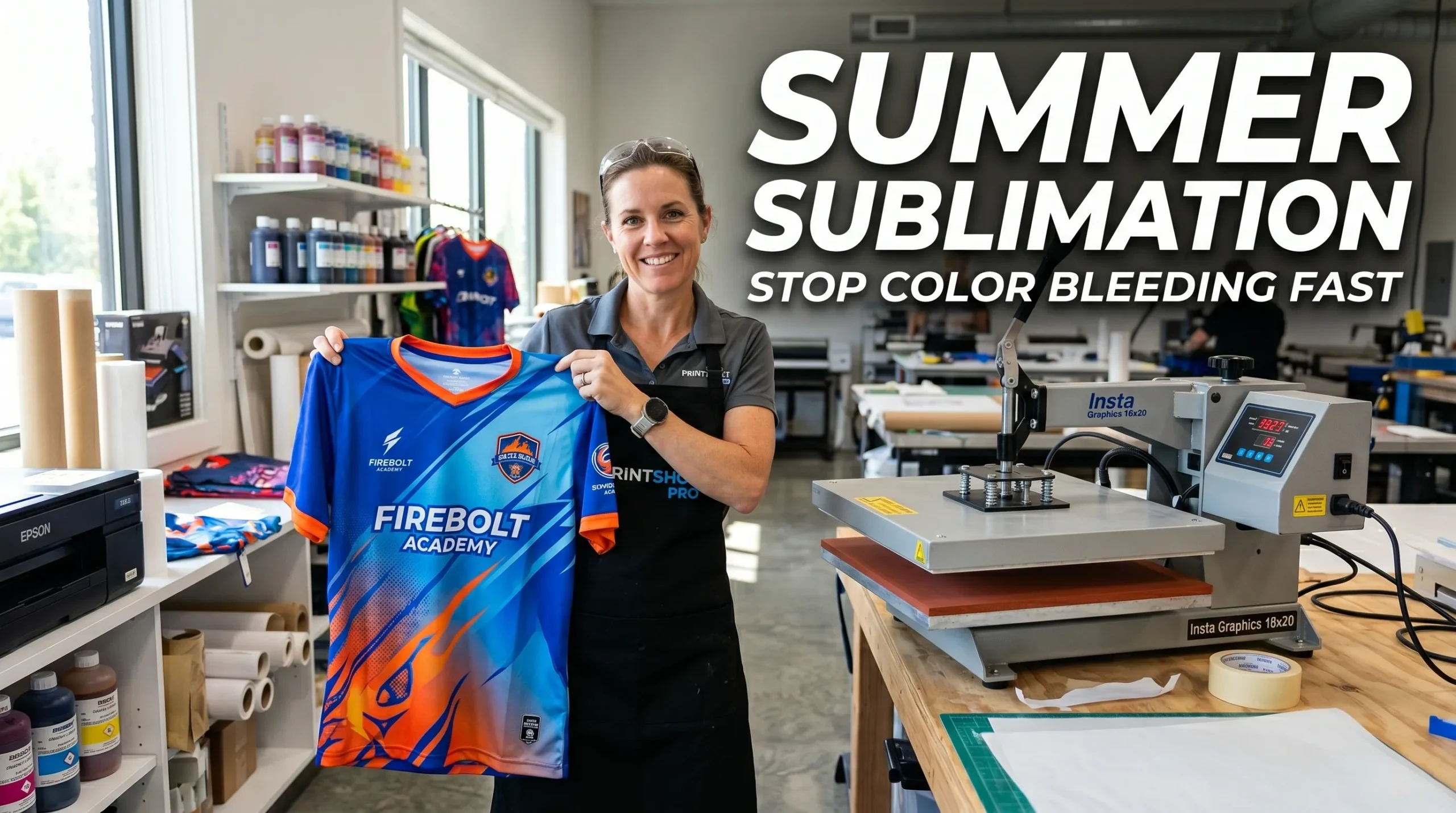
During summer production, focus on moisture control, careful heat management, and proper cooling procedures to minimize dye migration and color bleeding.
Consistent testing remains the fastest way to build reliable production workflows and achieve repeatable results on every order.
What Makes Polyester the Best Fabric for Sublimation Sportswear?
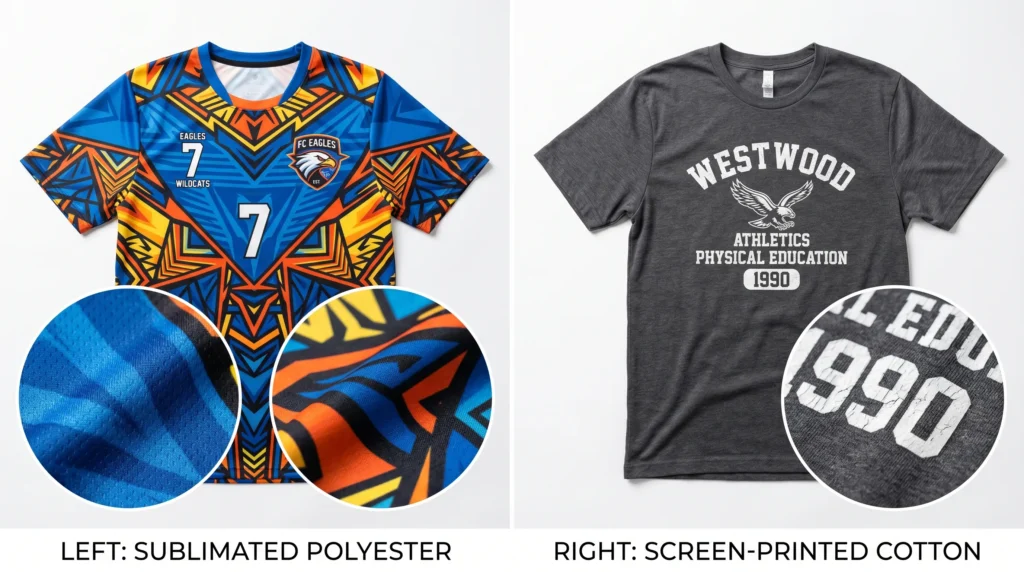
Sublimation works by turning dye into a gas under heat and pressure. The dye penetrates polyester fibers and becomes part of the fabric itself rather than sitting on top of the material.
This creates several advantages for sportswear:
- No cracking or peeling
- Excellent wash durability
- Lightweight feel
- Full breathability
- Stretch-friendly graphics
- Long-lasting color vibrancy
Unlike screen printing or heat transfer vinyl, sublimation does not create a heavy layer on the garment. Athletes can wear the apparel comfortably without affecting moisture-wicking performance.
If you’re new to the process, our complete sublimation printing guide explains exactly how sublimation works from design to finished product.
Best Polyester Fabrics for Sublimation Sportswear
Not all polyester fabrics perform the same during sublimation.
Choosing the right fabric can dramatically improve color vibrancy, durability, and production consistency.
100% Polyester Performance Fabric
For most sportswear applications, 100% polyester remains the gold standard.
Benefits include:
- Maximum color saturation
- Sharp image detail
- Excellent moisture management
- Consistent transfer results
- Long-term durability
Best for:
- Team jerseys
- Running shirts
- Training apparel
- Athletic uniforms
Polyester-Spandex Blends
Many modern athletic garments include 5% to 15% spandex.
These fabrics provide:
- Better flexibility
- Enhanced comfort
- Compression support
- Improved athletic performance
Best for:
- Compression shirts
- Cycling jerseys
- Fitness apparel
- Sports leggings
A common sublimation mistake is using excessive heat on high-spandex garments. Overheating can reduce stretch recovery and create shiny press marks.
Interlock Polyester
Interlock polyester has a smooth surface that produces extremely sharp graphics.
Advantages:
- High-resolution image reproduction
- Professional appearance
- Excellent durability
- Comfortable feel
Best for:
- Soccer jerseys
- Basketball uniforms
- Esports jerseys
Birdseye Mesh Polyester
Birdseye mesh contains tiny ventilation holes that improve airflow.
Advantages:
- Superior breathability
- Lightweight feel
- Excellent moisture management
Best for:
- Running apparel
- Marathon shirts
- Training uniforms
Microfiber Polyester
Microfiber polyester provides a softer texture than standard athletic polyester.
Benefits:
- Smooth finish
- Comfortable wear
- Excellent color reproduction
Best for:
- Premium sportswear
- Golf apparel
- Lifestyle athletic clothing
Recycled Polyester Sports Fabrics
Recycled polyester continues to gain popularity among apparel brands.
Many recycled polyester fabrics now produce sublimation results nearly identical to virgin polyester while reducing environmental impact.
Polyester Sportswear Fabric Comparison
| Fabric Type | Print Quality | Breathability | Stretch | Best Use |
|---|---|---|---|---|
| 100% Polyester | Excellent | High | Moderate | Jerseys |
| Polyester-Spandex | Very Good | High | Excellent | Compression wear |
| Interlock Polyester | Excellent | Moderate | Moderate | Team uniforms |
| Birdseye Mesh | Very Good | Excellent | Moderate | Running shirts |
| Microfiber Polyester | Excellent | High | Moderate | Premium sportswear |
What Fabric Colors Work Best for Sublimation?
White polyester always delivers the brightest and most accurate results.
Because sublimation ink is transparent, the fabric color influences the final appearance.
Best choices:
- White
- Light gray
- Silver
- Pale blue
- Light yellow
More challenging options:
- Dark navy
- Red
- Black
- Deep green
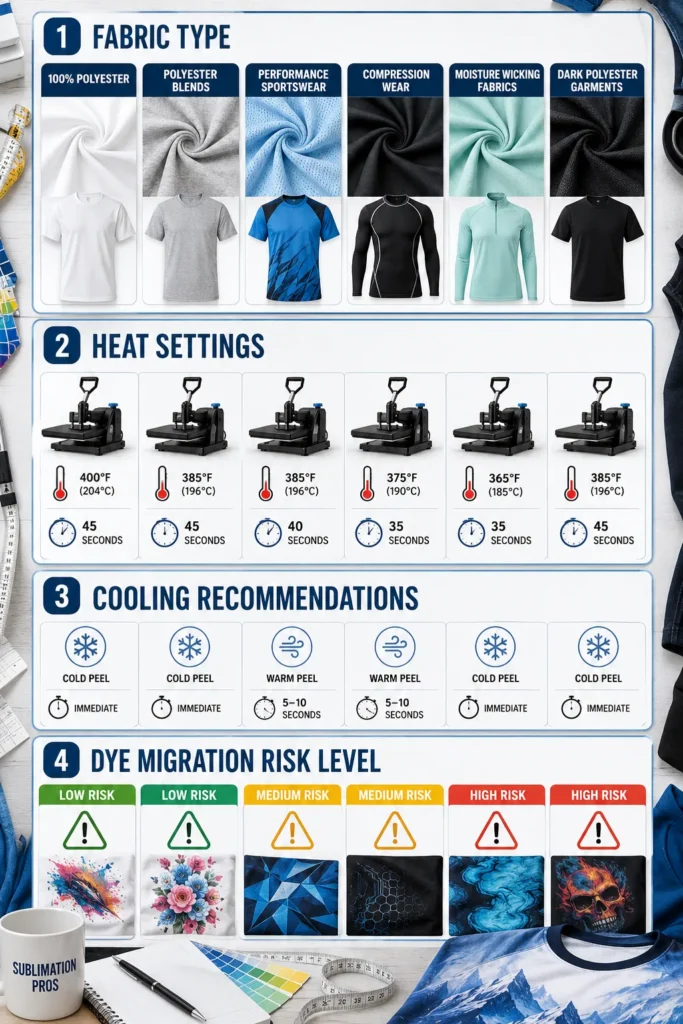
Dark polyester fabrics often contain dyes that can migrate during pressing and contaminate transferred colors.
Best Heat Press Settings for Polyester Sportswear
Quick Answer
For most polyester sportswear:
- Temperature: 385°F–400°F
- Time: 40–60 seconds
- Pressure: Medium
Always follow the garment manufacturer’s recommendations whenever available.
Recommended Starting Settings
| Fabric Type | Temperature | Time | Pressure |
|---|---|---|---|
| 100% Polyester Jersey | 400°F | 45 seconds | Medium |
| Interlock Polyester | 390°F | 45 seconds | Medium |
| Polyester-Spandex Blend | 385°F | 40 seconds | Medium |
| Lightweight Mesh Fabric | 385°F | 35–40 seconds | Light to Medium |
For more detailed recommendations, see our guide on sublimation heat press settings.
When Should You Lower Temperature?
Reduce heat when:
- Press marks appear
- Fabric becomes shiny
- Compression garments lose elasticity
- Thin fabrics show scorching
Many experienced decorators use a lower-temperature, longer-dwell strategy during summer production.
Why Does Color Bleeding Happen on Polyester Sportswear?
Color bleeding is often caused by dye migration.
Dye migration occurs when dyes already inside the garment become unstable during pressing and move into the sublimated design.
Common causes include:
- Dark polyester fabrics
- Excessive heat
- Long press times
- Poor-quality blanks
- High ambient temperatures
Summer conditions can make these issues worse because garments often arrive already warm from storage or shipping.
Why Summer Production Increases Dye Migration Risks
Hot weather creates several hidden problems.
Elevated Fabric Temperature
Garments stored in warehouses or delivery trucks may already be warm before pressing.
This means the fabric reaches critical temperatures faster than expected.
Increased Humidity
Humidity introduces additional moisture into polyester fabrics.
Excess moisture can contribute to:
- Ghosting
- Uneven transfers
- Reduced color consistency
Extended Heat Retention
Hot garments cool more slowly after pressing.
This increases the chance of secondary dye movement.
How to Prevent Color Bleeding in Summer Sublimation Prints
Pre-Press Every Garment
A quick pre-press removes:
- Moisture
- Wrinkles
- Surface contamination
Recommended:
- 5 to 10 seconds
- Light pressure
Lower Heat Slightly
Instead of pressing at 400°F, test:
- 385°F
- 390°F
Combined with a slightly longer dwell time, this often reduces dye migration while maintaining color quality.
Use Quality Sportswear Blanks
Not all polyester garments are created equal.
Reliable sportswear fabrics generally contain:
- Better dye stability
- Consistent fiber composition
- Improved heat resistance
Allow Garments to Cool Flat
One of the most overlooked steps is post-press cooling.
After pressing:
- Remove transfer paper carefully.
- Lay garments flat.
- Allow complete cooling.
- Avoid stacking hot apparel.
Many beginners accidentally create transfer issues during this stage.
Test Every New Fabric Batch
Even trusted suppliers occasionally change fabric sources.
A simple test press helps identify:
- Dye migration risks
- Color shifts
- Press mark susceptibility
before large production runs.
Summer Sportswear Sublimation Workflow
Use this workflow when producing jerseys or athletic apparel during warm weather.
Step 1: Check Shop Conditions
Monitor:
- Room temperature
- Humidity levels
- Heat press calibration
Step 2: Pre-Press
Remove moisture and wrinkles.
Step 3: Transfer Design
Apply tested settings based on the fabric type.
Step 4: Controlled Cooling
Allow garments to cool completely before stacking.
Step 5: Quality Inspection
Inspect for:
- Color consistency
- Ghosting
- Dye migration
- Press marks
Common Sportswear Sublimation Mistakes
Using Cotton-Rich Athletic Shirts
Polyester content directly affects color vibrancy.
Cotton fibers cannot permanently bond with sublimation dyes.
Pressing Too Hot
More heat does not always mean better results.
Excessive heat often creates:
- Dye migration
- Fabric damage
- Press marks
Ignoring Humidity
Humidity can introduce moisture-related defects that appear random but are actually preventable.
Skipping Test Presses
A 5-minute test can save dozens of ruined garments.
Troubleshooting Summer Sublimation Problems
Colors Look Faded
Possible causes:
- Low polyester content
- Incorrect temperature
- Weak ICC profile setup
Review your ICC profiles for sublimation if colors consistently appear dull.
Red or Black Garments Affect the Design
This is usually dye migration.
Lower the temperature and test alternative blanks.
Print Appears Blurry
Potential causes:
- Paper movement
- Excess moisture
- Uneven pressure
Fabric Shows Shiny Areas
This indicates excessive heat or pressure.
Reduce settings and retest.
Sportswear Fabric Testing Framework
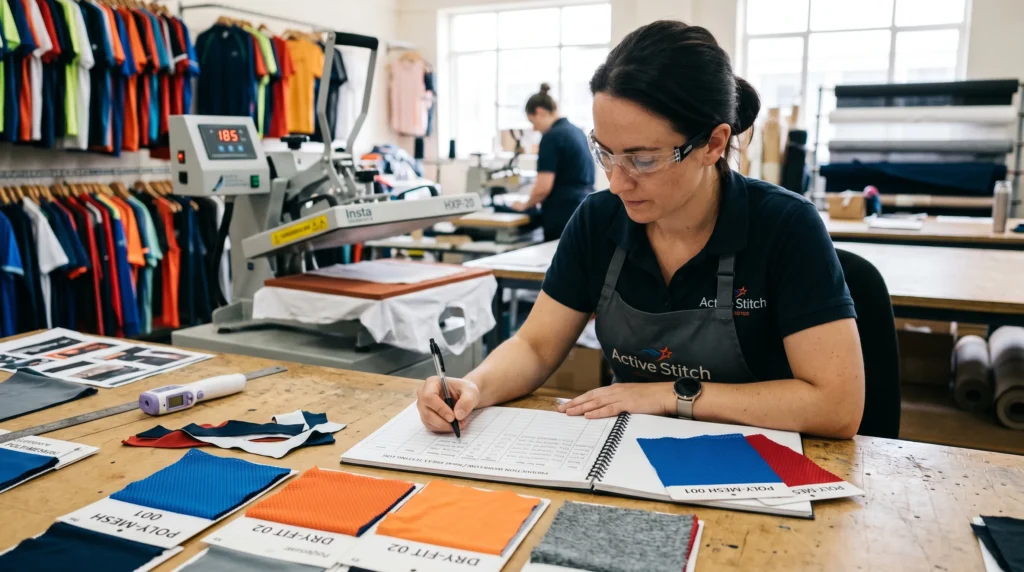
Before accepting large uniform orders, perform a simple five-garment test.
Record:
| Test Area | Record |
|---|---|
| Fabric Type | Yes |
| Polyester Percentage | Yes |
| Temperature | Yes |
| Time | Yes |
| Pressure | Yes |
| Cooling Method | Yes |
| Final Result | Yes |
Building your own settings database eventually becomes more valuable than relying on generic charts.
Quick Sportswear Sublimation Checklist
Before Production:
- Verify polyester content
- Check humidity
- Calibrate heat press
- Run a test transfer
- Pre-press garment
During Production:
- Use consistent pressure
- Monitor temperature
- Avoid paper movement
After Production:
- Cool garments flat
- Inspect for dye migration
- Check color consistency
Tailored Action Plan for Small Sportswear Shops
If you regularly produce jerseys, uniforms, or athletic apparel:
Week 1
Create a fabric testing log for every sportswear blank you use.
Week 2
Develop a custom heat settings chart based on actual production results.
Week 3
Test dark-colored polyester garments separately from white garments.
Week 4
This simple system reduces production errors and improves consistency over time.
Frequently Asked Questions
Can you sublimate on polyester-spandex sportswear?
Yes. Polyester-spandex blends work well for sublimation, but lower temperatures are often safer to protect fabric elasticity.
What temperature is safest for polyester jerseys?
Most polyester jerseys perform well between 385°F and 400°F. Testing is always recommended.
Why do sublimation prints bleed more in summer?
Higher temperatures and humidity increase the likelihood of dye migration and moisture-related transfer issues.
Can humidity affect sublimation quality?
Yes. Excess moisture can contribute to ghosting, uneven transfers, and color inconsistency.
Is mesh polyester good for sublimation?
Yes. Birdseye mesh and similar athletic fabrics are popular choices because they combine breathability with strong print performance.
What is the best polyester fabric for team uniforms?
Interlock polyester and high-quality 100% polyester performance fabrics are among the most reliable options for team apparel.