Epson ET-15000 Purge Sheet: What to Print

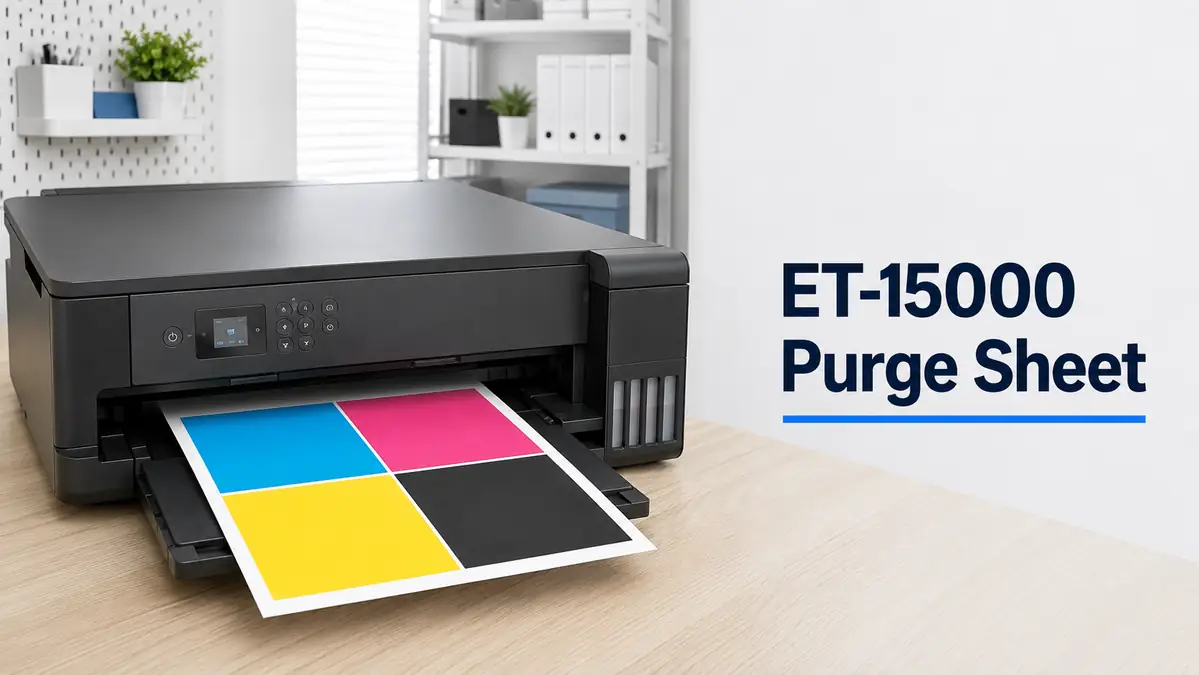
The ET-15000 is a standard 4-color EcoTank, cyan, magenta, yellow, and black, the same ink configuration as most converted sublimation printers in this category. You don’t need a special purge file for this model.
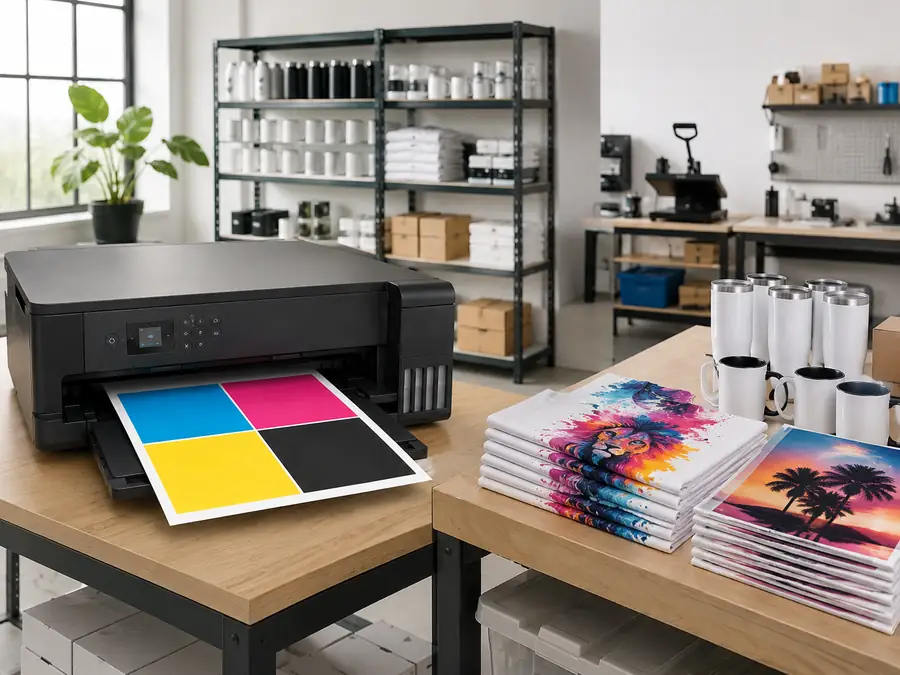
The CMYK purge sheet on our main purge sheet resource is the correct one, and it’s the same file used on our ET-2800/ET-2803 purge sheet page. This page covers how to use it specifically on the ET-15000.
Why Converted ET-15000 Printers Need This
Like other converted EcoTanks, the ET-15000 wasn’t originally engineered around sublimation ink. Epson built its tank system and print head for standard DuraBrite ink, and sublimation dye behaves differently once it sits idle, particles settle faster than the printer’s original ink was designed to handle.
Shops running the ET-15000 tend to use it for higher-volume work, so the clog risk usually shows up after a slower stretch between big jobs rather than daily idle time.
Which File to Use
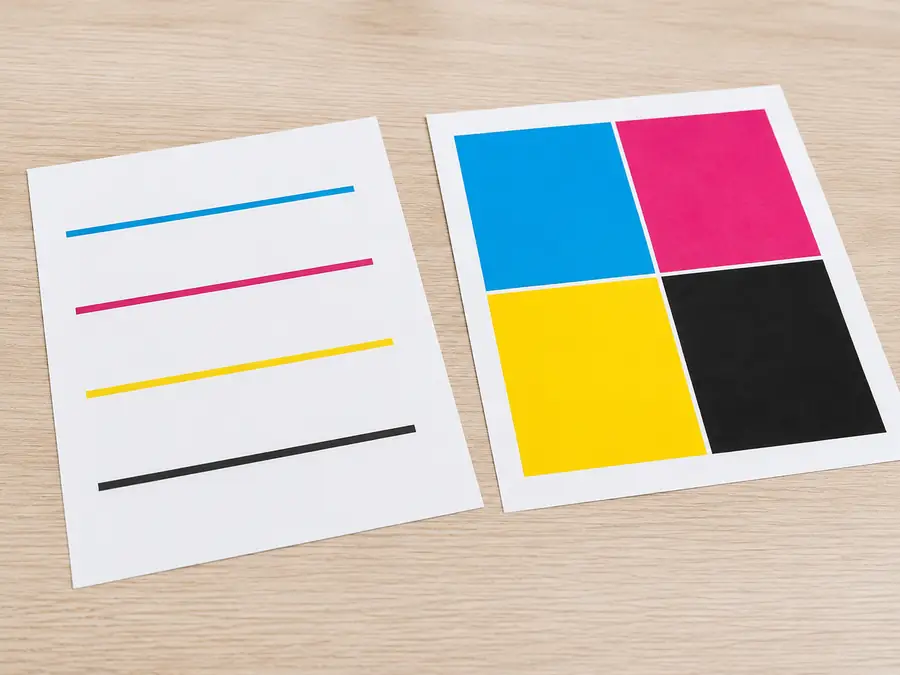
Use the CMYK purge sheet. The ET-15000 has four ink channels, cyan, magenta, yellow, and black, no additional colors, so the standard CMYK file maps correctly and there’s no 6-color or 8-color version to worry about here.
| Printer | Ink Channels | File to Use |
|---|---|---|
| ET-15000 | 4 (CMYK) | CMYK purge sheet |
Download: Get the CMYK purge sheet PDF directly, or visit the individual color files if only one channel is giving you trouble.
How to Print It Correctly on This Model
1. Plain copy paper works fine for a purge print, save your sublimation paper for actual jobs.
2. The ET-15000 supports paper up to 13×19 through the rear specialty feed, but there’s no benefit to sizing up for a purge print. Letter or A4 through the front tray gives plenty of ink coverage.
3. Set the printer to its highest quality or photo print mode. Draft mode won’t push enough ink through to clear a clog.
4. Print one copy, then run a nozzle check before printing another. Don’t repeat a purge sheet blind, check in between so you’re not burning ink you don’t need to.
5. If one color is still weak after two purge prints, switch to that color’s individual purge file instead of repeating the full CMYK sheet.
Signs You Need to Run One
Horizontal banding, a color that’s faded or missing after the printer has sat between jobs, or prints that suddenly look duller or streakier than they did a batch ago with no changes to your files or settings. On the ET-15000 specifically, this often shows up right after a slower week or a gap between large production runs rather than daily use.
How Often to Run One
This comes down to how often you print rather than the printer model. Our purge sheet frequency guide covers the general rule of thumb and how higher-volume use changes it.
If a Purge Sheet Doesn’t Fix It
Run a nozzle check first to see which channels are actually affected before burning more ink on purge prints. Our purge files vs. nozzle checks guide explains when to use each. If it’s still not clearing after a few rounds of both, the deeper steps in our full printhead cleaning guide are the next move.
If you’re running Cosmos Ink on this printer and colors look off rather than missing entirely, that’s a different issue, see our Cosmos Ink ICC profile page instead.
Frequently Asked Questions
Does the ET-15000 need a different purge file than smaller EcoTanks?
No. It’s a standard 4-color CMYK printer, the same purge file used for the ET-2800/2803 and other converted EcoTanks works here too.
Can I run the purge sheet on 13×19 paper since the ET-15000 supports it?
You can, but there’s no real benefit. Letter or A4 gives enough ink coverage to clear a clog without using extra paper.
Does using Cosmos Ink change how often I need to purge?
Not in a way we can confirm. Purge frequency comes down to how often the printer sits idle, not which ink brand is loaded.
What if only one color looks weak?
Run a nozzle check to confirm which channel is affected, then use that color’s individual purge file instead of the full CMYK sheet.
What to Do Next
Download the CMYK purge sheet above, print one copy on high quality mode using plain paper, and run a nozzle check before deciding whether to print another. If your ET-15000 has been idle between jobs, this is usually enough to bring color back to normal.