
Invisible Sublimation Ink: How It Works, Why It Matters, and When to Use It

It looks like nothing. And that’s exactly why it’s powerful.
Invisible sublimation ink is one of those tools most printers don’t realize they need until they’ve wasted a stack of blanks or ruined a near-perfect alignment. Once you see what it actually solves, it’s hard to unsee the value. For related planning, see How to Use Infusible Ink Markers on Mugs.
If you already understand the basics of sublimation printing, this guide builds on that foundation and focuses on process control, not novelty.
What Is Invisible Sublimation Ink?
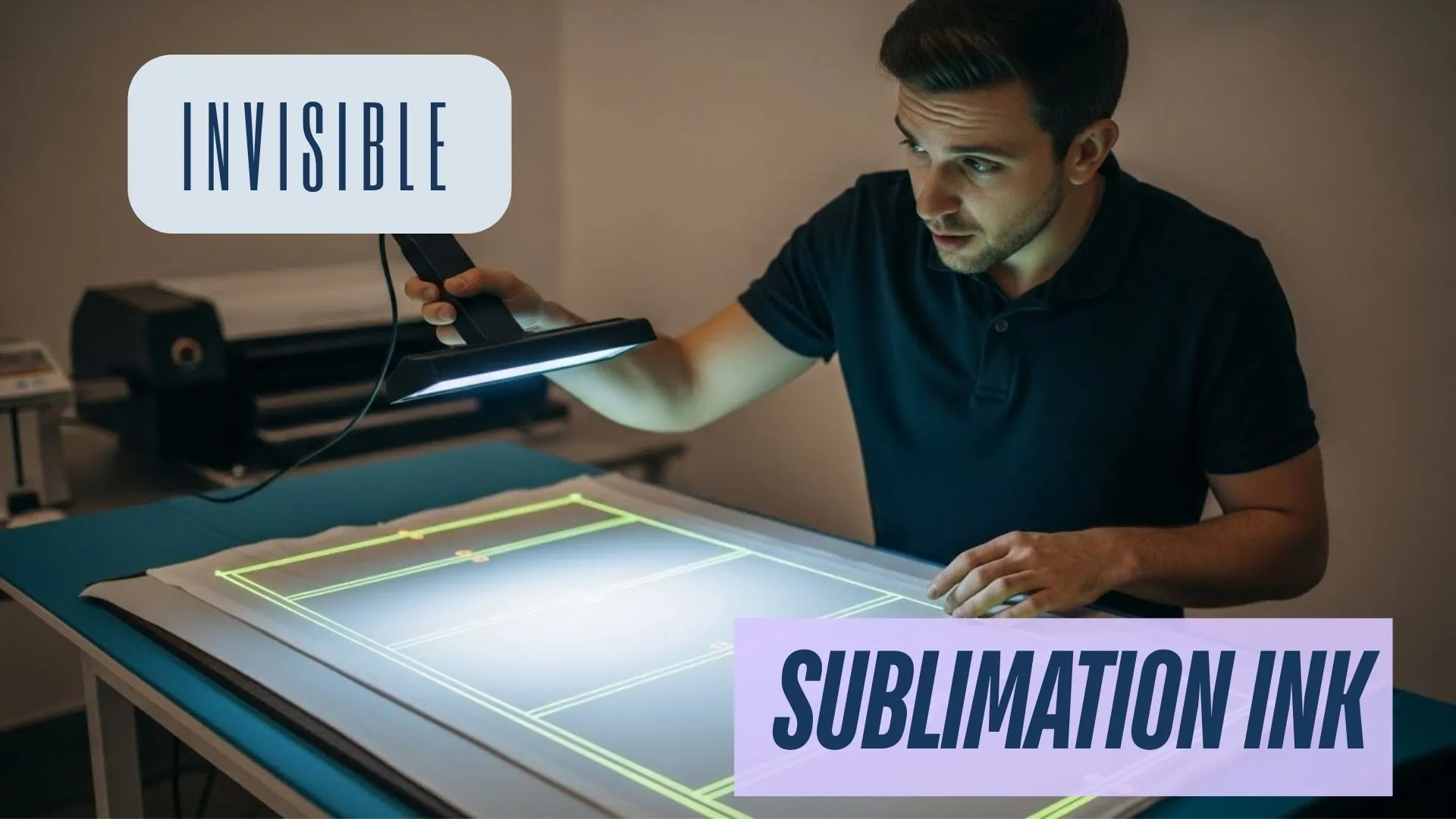
Invisible sublimation ink is a specialty dye-based ink that stays unseen under normal lighting but becomes visible when exposed to UV or black light.
In practical terms:
- You print with it
- You can’t see it under room light
- You can see it instantly under a black light
- After heat pressing, it doesn’t affect the final design
It behaves differently from standard inks used in sublimation printing, which is why it’s usually kept separate in a dedicated workflow.
Why Invisible Ink Exists in Sublimation Printing
Most sublimation mistakes happen before heat pressing:
- Misaligned transfers
- Printing outside coated areas
- Guessing where treatments were applied
- Reprinting due to small placement errors
Invisible ink solves these problems by letting you see guides without leaving marks.
This is especially useful when working with coated or treated substrates, something many shops struggle with when sublimating on non-ideal materials like cotton. If that’s your pain point, this pairs naturally with techniques explained in this guide on sublimation on cotton.
The Science Behind the Glow (Simple Version)
Invisible sublimation ink contains fluorescent compounds.
Here’s what’s happening:
- Under normal light, the ink absorbs light but doesn’t reflect it visibly
- Under UV or black light, those compounds emit visible light
- Your eye suddenly sees glowing lines, shapes, or coverage zones
Once heat is applied during the sublimation process, the ink either dissipates or becomes irrelevant to the final product, depending on how it’s used.
If you want a deeper breakdown of how heat triggers dye behavior, this overview of the sublimation process explains the fundamentals clearly.
Practical Uses That Actually Matter
Cotton Pretreatment Mapping
Sublimating on cotton requires coatings or pretreatments. The problem is you usually can’t see exactly where that coating ends.
Invisible ink fixes that.
How it’s used:
- Add invisible ink to the pretreatment or apply it as a guide
- Hit the fabric with a black light
- Instantly see the coated zone
- Align your transfer perfectly inside it
This approach dramatically reduces wasted blanks, especially when combined with controlled heat and pressure settings like those outlined in this sublimation heat guide.
Invisible Registration Marks
Alignment is everything in:
- Sublimation
- DTF
- DTG
Invisible registration marks let you:
- Print precise guides
- Align artwork perfectly
- Remove all visible guide marks from the final product
They’re particularly helpful in workflows that already require high accuracy, such as those described in this comparison of DTG vs sublimation printing.
Reducing Transfer Errors and Waste
Invisible ink makes boundaries visible before you commit.
That means:
- No pressing off-center
- No overlapping designs
- No accidental edge clipping
For shops tracking material loss, this pairs well with cost planning tools like a sublimation cost estimator to clearly see the financial impact of fewer reprints.
Equipment You’ll Need
You don’t need a whole new setup, but a few things are non-negotiable.
Required
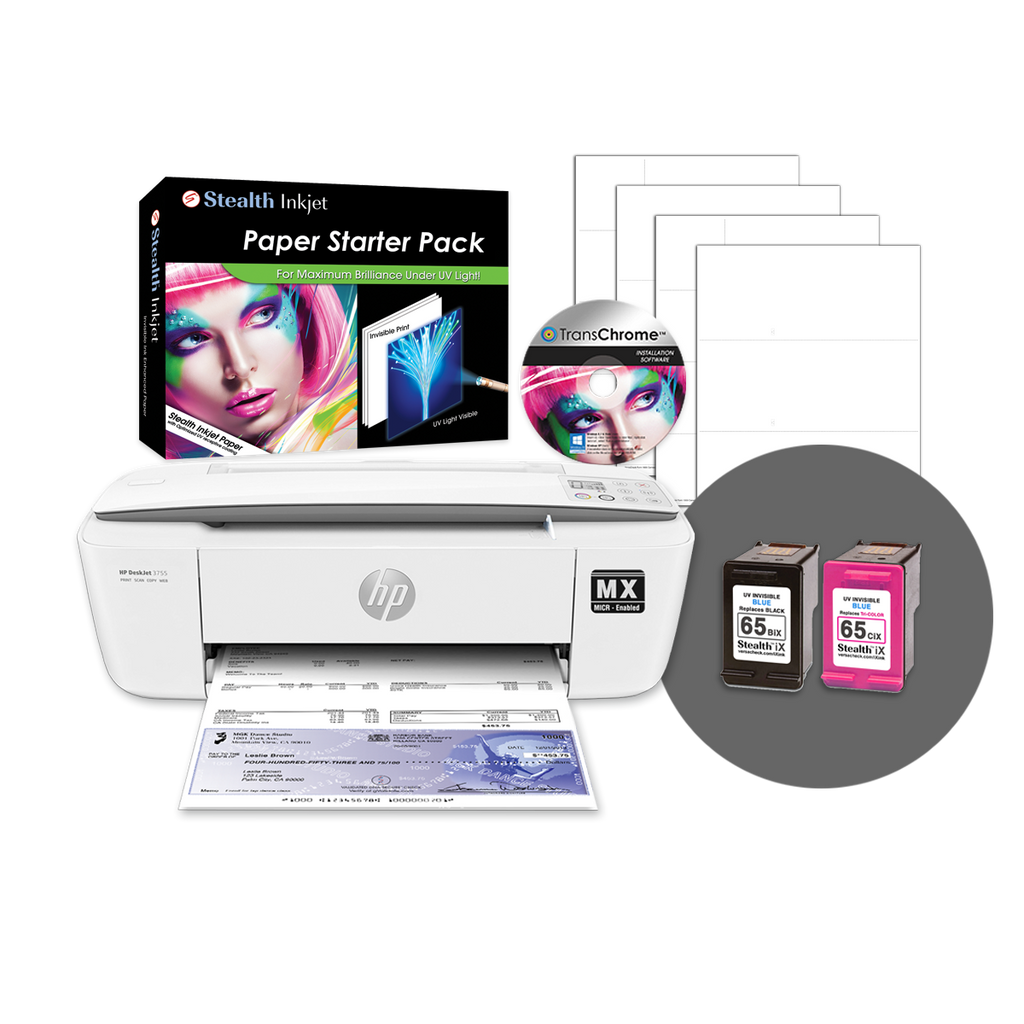
- A dedicated printer or cartridge system for invisible ink
- UV or black light
- Compatible sublimation substrates or treated fabrics
Strongly Recommended
- Separate ink lines to avoid contamination
- Test prints before production runs
If you’re still dialing in hardware choices, this overview of what kind of printer is needed for sublimation helps clarify compatibility questions.
Printer Preparation and Best Practices
Invisible ink behaves differently from standard dyes.
Smart setup habits:
- Use a dedicated printer or dedicated cartridges
- Flush lines thoroughly before switching inks
- Label everything clearly
- Run regular test prints under black light
Most issues here mirror the same problems printers face with clogged or contaminated systems, which are covered in this guide on preventing banding and clogging.
Applications of Invisible Sublimation Ink
Enhancing Cotton Treatments for Sublimation
Sublimation on cotton has always posed challenges, but invisible ink comes to the rescue. By incorporating this ink into cotton treatments, you can achieve outstanding results. The invisible coating becomes apparent under black light, enabling you to see the treated area clearly before heat transfer. This empowers you to avoid applying for transfers outside the coated zone, minimizing wastage and maximizing efficiency.
Creating Invisible Registration Marks on Fabric
Accurate alignment is crucial in sublimation, DTF, and DTG printing processes. Invisible registration marks are the perfect solution, facilitating the precise positioning of designs and graphics. These marks are invisible to the naked eye but become visible under black light, ensuring seamless and accurate printing.
Avoiding Transfer Errors and Wastage
Gone are the days of guesswork and transfer errors. With invisible ink, you can identify transfer boundaries accurately using a black light. This helps you prevent misaligned transfers and reduces ink wastage, saving you time and money.
Implementing Invisible Sublimation Ink
Equipment and Tools To harness the true potential of invisible ink, you’ll need specialized printers and applicators. Additionally, black light sources are essential for testing and production purposes.
Precautions and Best Practices While embracing this innovative technology, safety should always be a priority. Handle the ink carefully, and store it correctly to maintain longevity and effectiveness.
Real-World Use Scenarios
Apparel Manufacturer Using Cotton Pretreatment
A mid-sized apparel shop used invisible ink to mark pretreatment zones on cotton shirts. Alignment errors dropped, and fewer garments were rejected after pressing.
DTG Shop Using Invisible Registration Marks
A DTG-focused print shop added invisible guides to their workflow and achieved more consistent placement across operators and shifts.
High-Volume Sublimation Production
A production environment standardized invisible alignment guides across teams, improving consistency without visible marks on final products, similar to best practices discussed in sublimation troubleshooting guides.
Where Invisible Sublimation Ink Does Not Make Sense
Skip it if:
- You only do basic polyester sublimation
- You don’t struggle with alignment or pretreatment zones
- Your workflow is low volume and forgiving
If you’re mostly working with straightforward blanks like those covered in this polyester sublimation guide, invisible ink may be unnecessary.
Future Potential and Innovations
The journey doesn’t end here; invisible sublimation ink is just the beginning. Ongoing research and development promise even more exciting innovations in printing technology. Stay tuned for what the future holds!
StealthInkjet video on safeguarding your content with invisible print and copy systems! In this video, we’ll explore the fascinating world of invisible ink and how it can be used to protect your valuable documents and information from unauthorized copying or printing.
Final Analysis:
Invisible Ink is a true marvel transforming printing processes with hidden magic. From enhancing sublimation on cotton to revolutionizing registration marks and reducing wastage, this ink is a game-changer in the industry. As we delve deeper into its potential, we can’t help but be excited about the boundless possibilities it offers.
Embrace this groundbreaking technology and elevate your printing ventures to unprecedented heights. The future of printing is invisible, and we’re thrilled to be part of this extraordinary journey with you.
Explore the world of sublimation and printers with our comprehensive guide, for more information or a step-by-step how-to guide.
Common Questions People Ask About Invisible Sublimation Ink
What is invisible ink in sublimation printing?
Invisible ink in sublimation printing refers to a special type of ink that becomes visible only when subjected to certain conditions, such as heat or UV light.
Can I use invisible sublimation ink on regular polyester?
Yes, you can, but most shops don’t need it for basic polyester jobs unless placement accuracy is extremely tight.
Do I need a separate printer for invisible sublimation ink?
You don’t need a brand-new printer, but you do need a dedicated ink path or cartridges to avoid contamination.
Is invisible sublimation ink safe for clothing and skin contact?
When heat-cured correctly, it’s considered safe for garments and normal skin contact.
Will invisible ink affect my final printed design?
No, it’s designed to guide placement and disappears or becomes irrelevant after pressing.
Does invisible sublimation ink glow without a black light?
No, it stays invisible under normal lighting and only appears under UV or black light.
Can invisible ink be used for registration marks only?
Yes, that’s one of its most common and practical uses, especially for sublimation, DTG, and DTF alignment.
Will invisible sublimation ink fade over time?
Since it’s not meant to be part of the visible design, durability isn’t usually a concern once pressing is complete.



4 Comments