
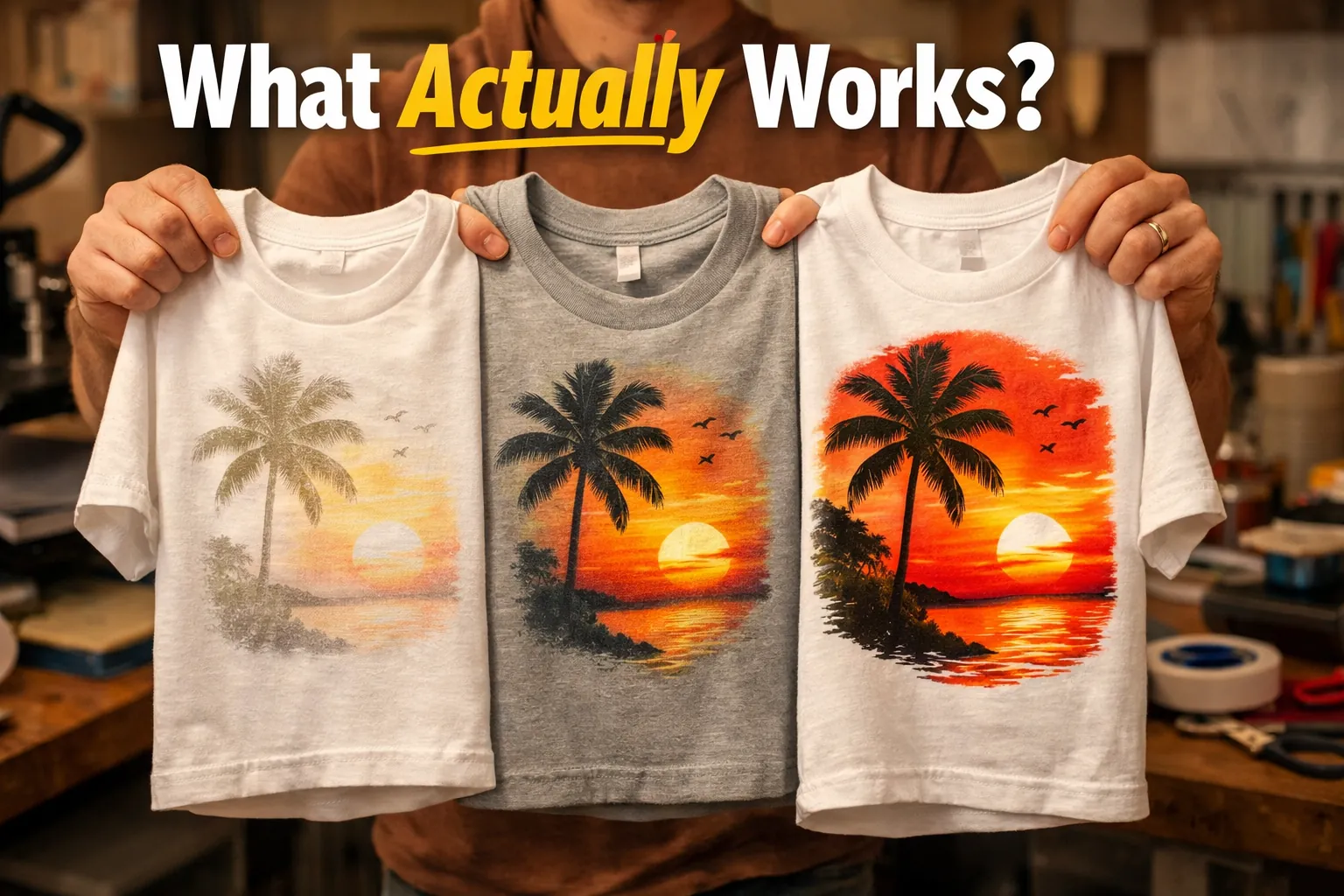
I Tested Sublimation on Cotton:

Sublimation printing on cotton is one of the most confusing topics for beginners.
Some people say it’s impossible. Others show perfect results online. If you’ve tried it yourself, you’ve probably seen faded prints, dull colors, or designs that disappear after washing.
So instead of guessing, I tested the most common methods you’ll find in search results and documented what actually works.
In this guide, you’ll see real outcomes, common mistakes, and the best method to use if you want consistent results.
Why Sublimation on Cotton Usually Fails
Short answer: Sublimation ink does not bond with cotton fibers.
Sublimation printing works through a chemical process where heat turns ink into gas, allowing it to bond with polyester fibers. Cotton doesn’t have that structure, so the ink simply sits on the surface instead of embedding into the fabric.
That’s why beginners often see:
- faded colors
- washed-out prints
- poor durability
If you want to understand this process clearly, review this sublimation printing guide.
The only way to make sublimation work on cotton is to add a polyester-like layer.
It’s Not Just Cotton
Any material without polyester in it runs into this same wall, and it’s worth seeing a second example to make the chemistry click. Toilet paper is pure cellulose, same as cotton, and pressing sublimation ink onto it directly produces the identical result: a soft, muted image rather than a vivid one.
The fixes are different because the material is different. You can’t laminate or HTV a cotton shirt onto itself, and a coating spray behaves differently on tissue than on fabric. But the underlying reason both need a workaround is the same one explained above.
If you want to see the chemistry play out on a completely different surface, our guide to sublimating toilet paper walks through it start to finish.
The Methods I Tested (Based on Real Search Results)
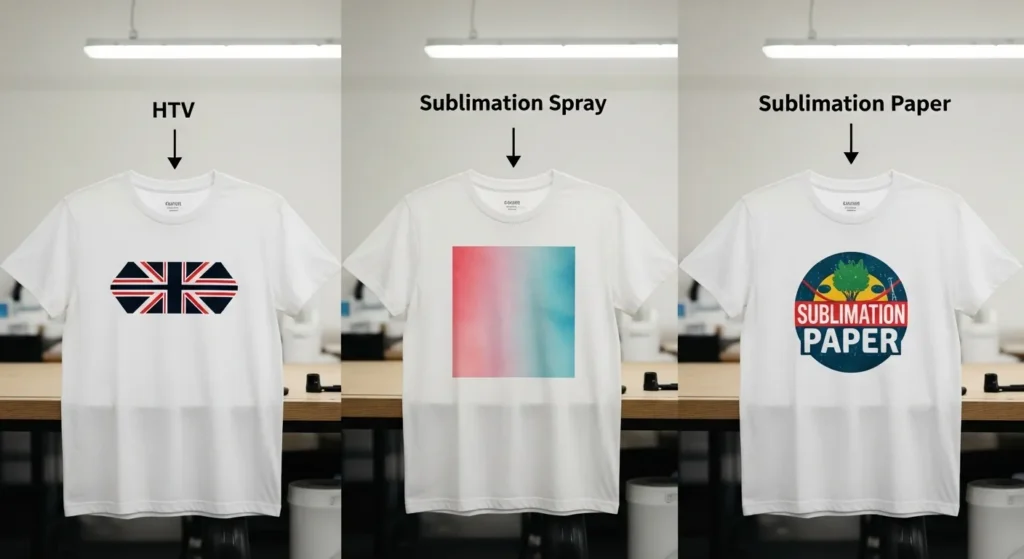
After analyzing what people recommend online, I focused on the three most common methods:
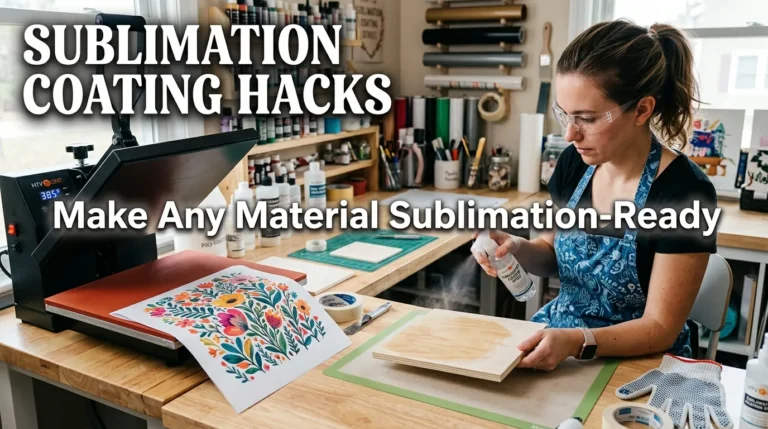
- Sublimation coating spray
- Heat transfer vinyl (HTV)
- Sublimation transfer paper for cotton
Each method tries to solve the same problem: giving sublimation ink something it can bond to.
Test #1 – Sublimation Spray on Cotton
What I Did
I applied a sublimation coating spray evenly across a cotton shirt, let it dry completely, and pressed the design at 400°F for 60 seconds with medium pressure.
What Worked
- Colors looked decent immediately after pressing
- Fabric stayed relatively soft
- Easy process for beginners
What Failed
- Colors faded noticeably after washing
- Coating was hard to apply evenly
- Some areas looked patchy
Final Verdict
Sublimation spray works but only for short-term results. It’s fine for personal projects but not reliable for anything you plan to sell.



Test #2 – Sublimation Paper for Cotton
What I Did
I printed the design on cotton-compatible sublimation paper and pressed it using standard heat press settings.
What Worked
- Simple process
- Good color transfer initially
- No extra coating needed
What Failed
- Design sits on top of the fabric
- Slight peeling after multiple washes
- Less professional finish
Final Verdict
This method is beginner-friendly, but durability is limited. It’s not the best choice for long-lasting prints.
Test #3 – Sublimation with HTV (Best Overall Result)
What I Did
I applied a layer of white heat transfer vinyl to the cotton shirt, then sublimated the design directly onto the vinyl layer.
What Worked
- Bright, vibrant colors
- Sharp image detail
- Consistent results every time
- Better wash durability
What Failed
- Adds a layer to the fabric
- Slightly reduces breathability

Final Verdict
This was clearly the best method.
If you want reliable, repeatable results especially for selling products HTV is the safest option.
You can learn the full process in this sublimation HTV guide.
Side-by-Side Comparison (What Works Best)
| Method | Color Quality | Durability | Feel | Difficulty |
|---|---|---|---|---|
| Spray | Medium | Low | Soft | Easy |
| Paper | Medium | Medium | Slight layer | Easy |
| HTV | High | High | Slight layer | Moderate |
Best overall: HTV delivers the most consistent and professional results.
Recommended Heat Press Settings for Cotton Sublimation
From testing and common usage, these settings worked best:
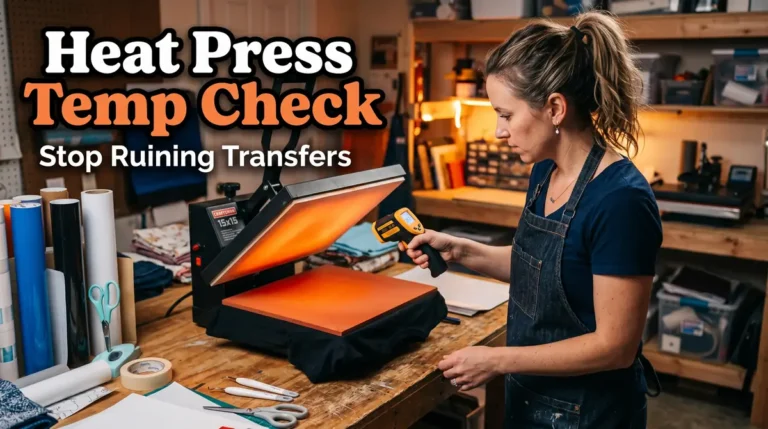
- Temperature: 375–400°F
- Time: 30–60 seconds
- Pressure: Medium to high
These settings ensure proper ink activation when using a base layer.
For more detailed setup guidance, check heat press temperature for sublimation.
Biggest Mistakes I Made (Avoid These)
A few small mistakes made a big difference in results.
Here’s what to avoid:
- Not using a lint roller before pressing
- Uneven pressure from the heat press
- Using low-quality transfer materials
- Expecting direct sublimation to work on cotton
- Skipping test prints
If your prints look faded or inconsistent, follow this sublimation troubleshooting guide.
What I Would Do Differently Next Time
After testing everything, here’s what I’d change:
- Use HTV for all serious projects
- Avoid spray for anything long-term
- Stick to consistent heat press settings
- Always test new materials first
These small adjustments save time and prevent wasted materials.


When You Should NOT Use Cotton for Sublimation
Even though these methods work, cotton still isn’t always the best choice.
Avoid cotton if:
- You need long-lasting prints
- You’re selling products professionally
- You want a soft, embedded print feel
In most cases, polyester still gives better results.
If you’re unsure, compare materials in this polyester sublimation guide.
Quick Answer – Can You Sublimate on Cotton?
Yes, but only with a coating, HTV, or special transfer material.
Direct sublimation on cotton does not work.
What is the best sublimation method for cotton shirts?
The best option right now is sublimation HTV. It adds a polyester layer on top of the cotton, so the ink actually bonds properly. That’s why you get brighter colors and better durability compared to other methods.
How can I make sublimation brighter on cotton?
If your prints look dull, here’s what usually fixes it:
- Use sublimation HTV instead of direct printing
- Apply coating spray evenly if you’re using that method
- Press at the right temperature and pressure
- Use high-quality sublimation ink and paper
Small tweaks here can make a big difference in color vibrancy.
Does sublimation last on cotton after washing?
On its own, no, it fades fast.
But with HTV or a coating spray, it holds up much better. Still, it won’t be as long-lasting as printing on polyester.
Can you use a regular printer for sublimation on cotton?
No, you’ll need a dedicated sublimation printer with sublimation ink.
A regular inkjet printer won’t give you the chemical bonding needed for sublimation.
What temperature and time is best for sublimation on cotton?
Most setups work well around:
- 385°F to 400°F
- 40 to 60 seconds
- Medium pressure
That said, always double-check your HTV or spray instructions, because brands can vary a bit.
Why does my sublimation look dull on cotton shirts?
This is the most common issue. Here’s the simple reason:
- Sublimation ink bonds with polyester, not cotton
- Without a coating or HTV layer, the ink just sits on the fabric
- That leads to faded, washed-out results
Once you understand this, everything else starts to make sense.
Frequently Asked Questions
Can I sublimate directly on cotton?
No, sublimation ink won’t bond to cotton without a polyester layer or coating.
What method gives the best results on cotton?
HTV provides the most vibrant and durable results.
What temperature is best for sublimation on cotton?
Typically between 375°F and 400°F depending on the method used.
Does sublimation on cotton last after washing?
It depends on the method. HTV lasts the longest, while spray fades faster.



3 Comments