
What Can You Make With Sublimation? (Beginner Product Guide)

If you’re just getting started, one of the biggest questions is simple: what can you actually make with sublimation?
The answer isn’t just “a lot of things” it depends on materials, coatings, and how sublimation works. Many beginners waste time (and money) trying products that simply won’t work.
In this guide, you’ll learn exactly what you can make with sublimation, why those products work, and how to choose the right ones to start with.
What Makes a Product Suitable for Sublimation?
Before choosing products, you need to understand one key rule: sublimation only works on the right surfaces.
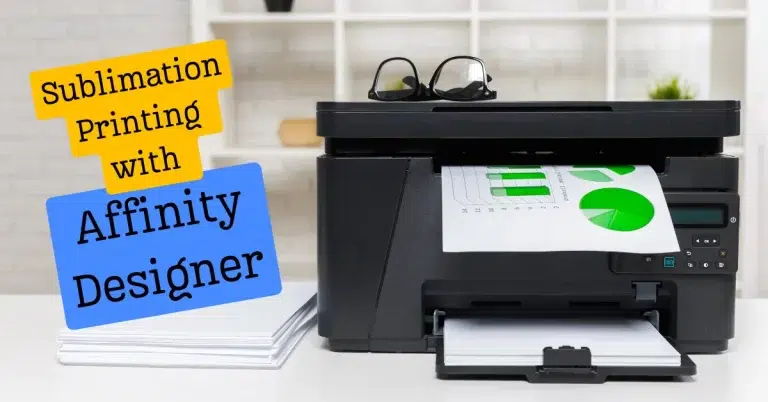
If you’re new to the process, this sublimation printing guide explains how heat turns ink into gas and bonds it to materials.
The Two Requirements for Sublimation
For a product to work, it must have:
- Polyester content (for fabrics)
- Polymer coating (for hard surfaces like mugs or metal)
These materials allow sublimation ink to bond during heat transfer.
Why Some Materials Don’t Work
A common mistake is trying to sublimate on:
- 100% cotton
- untreated wood
- regular plastic
These materials don’t absorb sublimation ink properly, which leads to faded or invisible results.
If you’re unsure about materials, this sublimation materials guide breaks down what works and what doesn’t.
Most Popular Things You Can Make With Sublimation
Instead of random ideas, let’s look at real product categories and why they work.
Apparel Products (T-Shirts, Hoodies, Socks)
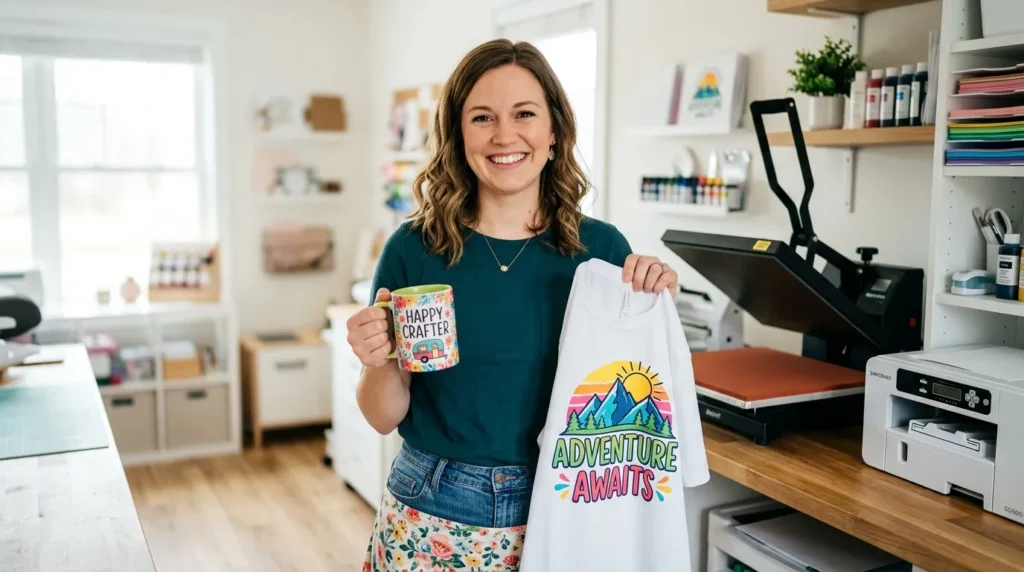
Apparel is one of the most common uses of sublimation printing.
You can create:
- Polyester T-shirts
- Athletic wear
- Hoodies (poly blends)
- Socks
Why it works:
Polyester fibers allow sublimation dye to bond deeply, creating vibrant, long-lasting prints.
Beginner tip:
Avoid dark fabrics unless using special workarounds. Sublimation works best on light-colored polyester.
Drinkware (Mugs, Tumblers, Bottles)
Drinkware is one of the easiest starting points.
Popular options include:
- Sublimation mugs
- Stainless steel tumblers
- Water bottles
Why it works:
These products are coated with a polymer layer that accepts sublimation ink.
Beginner tip:
Mugs are ideal because they’re:
- Affordable
- Easy to press
- Consistent in results
Home Decor Items
Sublimation is widely used for personalized home products.
You can make:
- Pillow covers
- Blankets
- Wall art panels
Why it works:
Most of these items are polyester-based or coated, making them compatible with sublimation transfer printing.
Hard Surface Products
These are great for custom gifts and small products.
Examples include:
- Aluminum photo panels
- Keychains
- Phone cases
- Coasters
Why it works:
These items come with a sublimation coating that locks in color during heat pressing.
Best Sublimation Products for Beginners to Start With
If you’re just starting, don’t try everything at once. Focus on products that are easy and reliable.
Here are the best beginner-friendly options:
- Mugs → consistent results, easy learning curve
- Polyester T-shirts → great for understanding fabric behavior
- Keychains → low-cost practice items
These products help you learn:
- heat press timing
- pressure control
- color transfer behavior
What You Need to Make Sublimation Products
To create sublimation products, you’ll need a simple setup:
- Sublimation printer
- Sublimation ink
- Sublimation paper
- Heat press machine
- Compatible blanks
If you’re unsure about equipment, reviewing best sublimation printers for beginners can help you choose the right starting setup.
Common Mistakes Beginners Make When Choosing Products
Many beginners struggle not because of technique—but because of wrong product choices.
Here are the most common mistakes:
- Using cotton instead of polyester
- Buying non-coated blanks
- Ignoring heat press settings
- Trying to sublimate on dark fabrics
If your prints look faded or incorrect, follow this sublimation troubleshooting guide to identify the issue quickly.
How to Choose the Right Sublimation Product for Your Goal
Not every product fits every goal. Choose based on what you want to achieve.
For Personal Use
- Custom gifts
- Home decor
- Family items
Start with simple, meaningful products like mugs or shirts.
For Selling
- T-shirts
- Tumblers
- Personalized gifts
Focus on products with:
- high demand
- repeat buyers
- easy production
For Practice
- Keychains
- Small polyester items
- Low-cost blanks
These allow you to test settings without wasting money.
Tips to Get Better Results With Any Sublimation Product
No matter what you make, these tips improve results:
- Always run test prints
- Use correct temperature and pressure
- Choose high-quality blanks
- Ensure proper color settings
Color issues are common, so learning about ICC profiles for sublimation printing can help improve accuracy and consistency.
When Sublimation Is NOT the Right Choice
Sublimation is powerful but not universal.
It does NOT work well on:
- Dark fabrics
- Cotton-heavy materials
- Rough or uncoated surfaces
In these cases, alternative methods like HTV or DTF may be better options.
Frequently Asked Questions
Can I make sublimation products on cotton?
No, sublimation doesn’t bond well with cotton unless you use special coatings or workarounds.
What is the easiest sublimation product for beginners?
Mugs are the easiest because they’re consistent, affordable, and simple to press.
Do I need special blanks for sublimation?
Yes, you need polyester or polymer-coated blanks for proper ink bonding.
Can I sell sublimation products from home?
Yes, many people start small businesses using sublimation for custom apparel and gifts.