Sublimated vs Embroidered Workwear: Which Is Better for Your Business?

Choosing branded workwear isn’t just about adding a logo to a shirt. The decoration method you choose affects appearance, comfort, durability, production time, and long-term costs.
Two of the most popular options are sublimation printing and embroidery. Both create professional-looking uniforms, but they work in completely different ways.
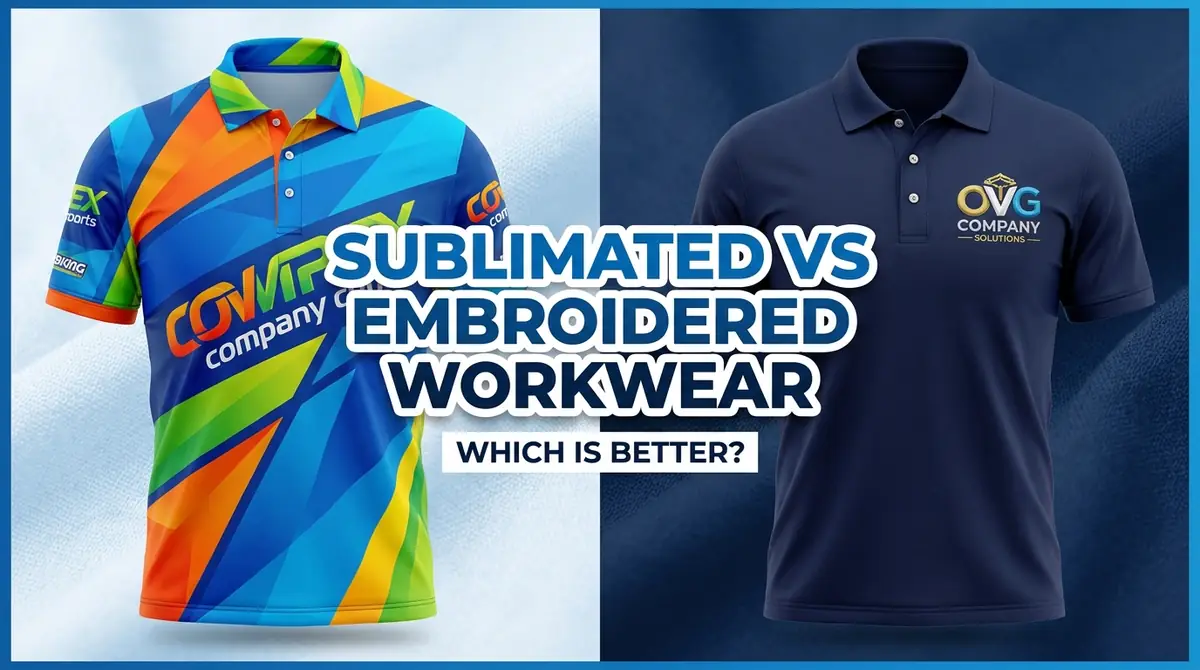
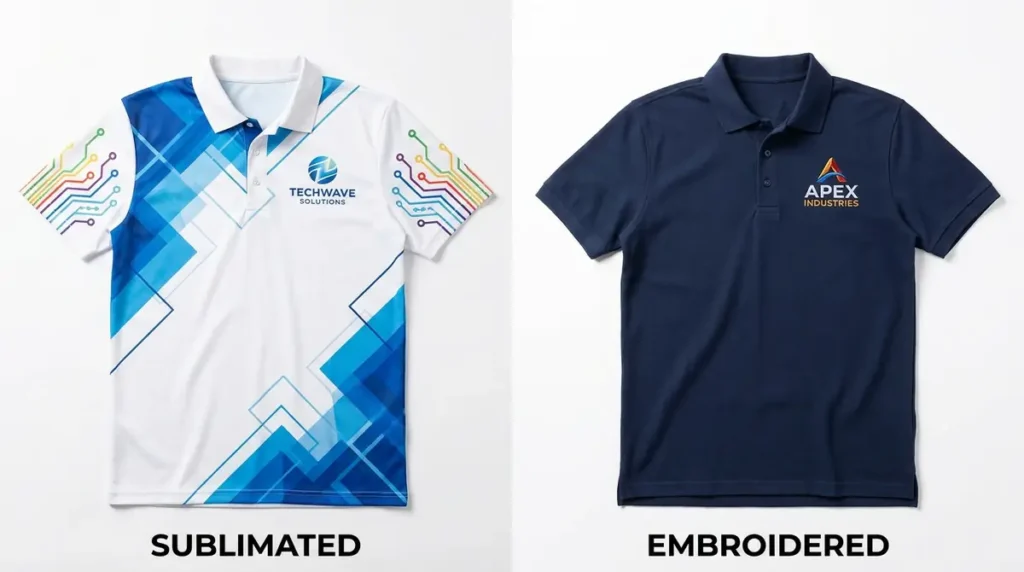
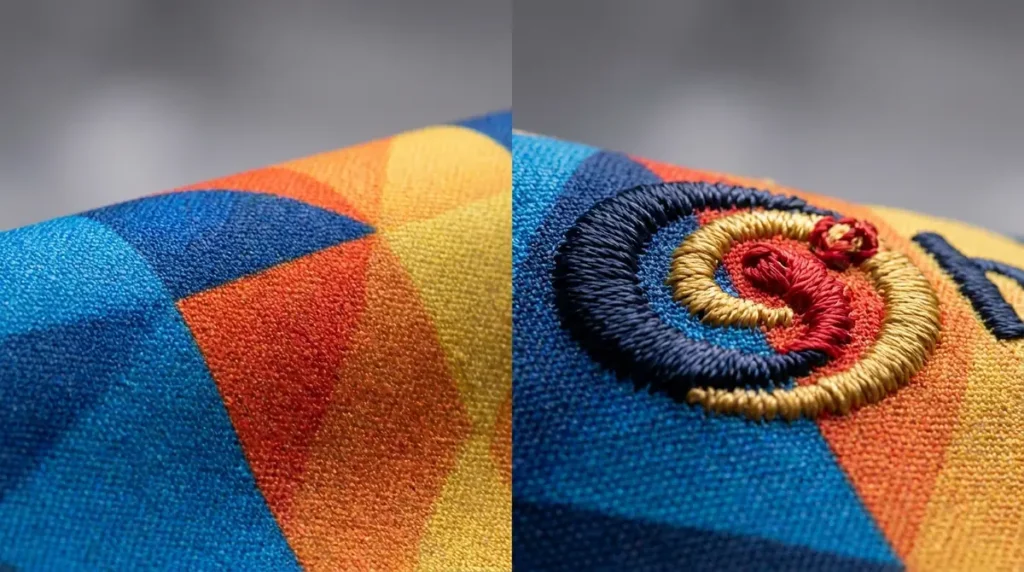
Sublimation permanently dyes the fabric with vibrant, full-color graphics, while embroidery stitches thread directly into the garment for a textured, premium finish.
So which one is right for your business?
The answer depends on your logo, the type of clothing you need, your budget, and how employees will wear the garments every day.
If you’re new to custom apparel decoration, start with our guide to what is sublimation printing to understand how the process works before comparing it with embroidery.
Quick Answer
If your business needs lightweight, breathable uniforms with vibrant full-color designs, sublimated workwear is usually the better choice.
If you want a traditional premium appearance with a small company logo on polos, jackets, or office uniforms, embroidery is often the better investment.
Here’s a quick comparison.
| Feature | Sublimated Workwear | Embroidered Workwear |
|---|---|---|
| Best For | Sportswear, trades, events, promotional apparel | Corporate uniforms, hospitality, retail |
| Design | Unlimited colors, gradients, photos | Best for simple logos |
| Feel | No added texture | Raised stitched texture |
| Durability | Design won’t crack or peel | Very durable stitching |
| Breathability | Excellent | Slightly reduced under stitched areas |
| Comfort | Lightweight | Slightly heavier around embroidered logo |
| Setup Cost | Low | Digitizing required |
| Large Graphics | Excellent | Not practical |
| Small Logos | Good | Excellent |
| Polyester Garments | Ideal | Compatible |
What Is Sublimated Workwear?
Sublimated workwear is clothing decorated using dye-sublimation printing, where special inks become part of the fabric instead of sitting on top of it.
During production:
- The design is printed onto transfer paper.
- Heat and pressure convert the ink into gas.
- The ink permanently bonds with polyester fibers.
- The finished garment contains the design within the fabric itself.
Because the design becomes part of the material, it won’t:
- Crack
- Peel
- Flake
- Fade easily with proper care
Another major advantage is complete design freedom. Businesses can print:
- Company branding
- Employee names
- Reflective-style graphics (printed effect)
- Safety color blocks
- Large back logos
- Sleeve branding
- Full-shirt patterns
- Sponsor logos
- QR codes
- Complex gradients
Unlike embroidery, there are virtually no color limitations.
Sublimation also keeps garments lightweight because no additional layers of ink or stitching are added.
This makes it especially popular for:
- Construction uniforms
- Landscaping teams
- Delivery companies
- Sporting organizations
- Promotional staff
- Manufacturing facilities
- Event crews
For companies using polyester performance apparel, sublimation offers one of the most durable branding methods available.
Sublimation works best on polyester garments, so it’s important to choose the best fabrics for sublimation for long-lasting color and durability.
What Is Embroidered Workwear?
Embroidered workwear uses industrial embroidery machines to stitch a design directly onto a garment using colored thread.
Instead of printing ink, embroidery creates a raised logo with thousands of individual stitches.
The process generally involves:
- Converting the logo into a stitch file (digitizing)
- Hooping the garment
- Stitching the design using embroidery machines
- Trimming and finishing the garment
The result is a textured, professional logo often associated with premium uniforms.
Embroidery works best for:
- Company logos
- Employee names
- Small chest logos
- Hat branding
- Polo shirts
- Jackets
- Fleeces
- Corporate apparel
One reason businesses choose embroidery is its classic appearance. The stitched texture gives uniforms a polished look that many offices, hotels, restaurants, and retail businesses prefer.
However, embroidery also has limitations.
Very detailed artwork, fine gradients, and photographic images cannot usually be reproduced accurately with thread. Large embroidered areas may also make garments heavier and less breathable.
Sublimated vs Embroidered Workwear: Detailed Comparison
Both decoration methods produce durable, professional uniforms, but they excel in different areas. The best choice depends on how your employees use their clothing and what kind of branding you want to achieve.
Design Quality
This is where the biggest difference becomes obvious.
Sublimation can reproduce almost any artwork, including:
- Unlimited colors
- Fine details
- Photographs
- Color gradients
- Large graphics
- Edge-to-edge designs
- Individual employee names and numbers
Because the ink becomes part of the polyester fabric, there are no visible edges or thick layers.
Embroidery, on the other hand, creates designs with thread. This gives logos a premium, textured appearance but limits the level of detail.
Embroidery works best for:
- Company logos
- Monograms
- Text
- Simple icons
- Small chest branding
Very small text, gradients, and photo-quality artwork often lose detail when converted into stitches.
Winner
- Sublimation for colorful, detailed, or full-coverage graphics
- Embroidery for clean, professional logos with minimal detail
Durability
Durability is one of the main reasons businesses choose either sublimation or embroidery.
Sublimated Workwear
A sublimated design becomes part of the fabric instead of sitting on top of it.
With proper garment care, the decoration won’t:
- Crack
- Peel
- Flake
- Separate from the fabric
However, the garment itself will eventually wear out through regular use.
Embroidered Workwear
Embroidery is also extremely durable.
High-quality stitching can withstand years of washing and daily wear.
Potential issues only appear when:
- Poor-quality thread is used
- Stitch density is too high
- Garments are washed improperly
- The stitching catches on sharp objects
Overall, both methods offer excellent longevity when produced correctly.
Winner
Tie
Both are excellent long-term branding solutions.
Comfort
Employees often wear uniforms for eight to twelve hours each day, making comfort an important consideration.
Sublimated Workwear
Because there is no added stitching or heavy ink layer, sublimated garments remain:
- Lightweight
- Flexible
- Soft
- Breathable
The decoration cannot be felt during normal wear.
Embroidered Workwear
Embroidery adds thousands of stitches to the garment.
Small logos are rarely noticeable.
However, larger embroidered designs can:
- Feel heavier
- Reduce flexibility
- Cause slight irritation on the inside of the garment
- Add warmth in hot environments
Winner
Sublimation
It provides the lightest and most comfortable finish for active work environments.
Breathability
Many industries require uniforms that remain comfortable throughout long shifts.
Sublimation has almost no impact on airflow because the design becomes part of the fabric.
Embroidery introduces an additional stitched layer, which slightly reduces breathability around the logo area.
For office wear, this difference is minimal.
For outdoor workers, warehouse staff, delivery drivers, and sports teams, the lighter feel of sublimation can improve overall comfort.
Winner
Sublimation
Fabric Compatibility
Not every garment works with every decoration method.
Sublimation
Best suited for:
- 100% polyester
- High-polyester blends
It is not recommended for cotton because the dye bonds with polyester fibers.
Embroidery
Embroidery is far more versatile and can be applied to:
- Cotton
- Polyester
- Poly-cotton blends
- Canvas
- Denim
- Fleece
- Jackets
- Hats
- Aprons
- Bags
Winner
Embroidery
It works on a much wider range of materials.
Color Accuracy
Brand consistency matters, especially for company uniforms.
Sublimation reproduces vibrant colors and complex graphics with excellent consistency, making it well suited for logos that include gradients, multiple shades, or photographic elements.
Embroidery relies on available thread colors. While there are many thread options, exact matches for every brand color may not always be possible. Complex gradients also need to be simplified into solid thread colors.
Winner
Sublimation
Production Speed
Turnaround time becomes especially important for bulk orders or seasonal staffing.
Sublimation
Once artwork is approved, printing and pressing can be completed efficiently, particularly for full-color designs and personalized garments.
Embroidery
Embroidery requires an additional digitizing step before production. Stitching time also increases with larger or more detailed logos because every stitch must be sewn individually.
Repeat orders are generally faster once the digitized file has been created.
Winner
Sublimation, especially for full-color or personalized workwear.
Cost Comparison
The overall cost depends on artwork complexity, garment type, and order quantity.
| Cost Factor | Sublimation | Embroidery |
|---|---|---|
| Initial Setup | Usually lower | Digitizing fee may apply |
| Small Logo | Competitive | Competitive |
| Large Full-Front Design | More economical | Can become expensive |
| Multi-Color Artwork | No additional color charges | More stitches generally increase cost |
| Employee Personalization | Easy to include | Additional stitching may increase cost |
| Large Bulk Orders | Excellent value | Good value for simple logos |
In general:
- Sublimation offers better value for colorful, full-coverage designs and personalized garments.
- Embroidery is often cost-effective for simple logos placed on the chest, sleeve, or cap.
The right choice depends on both your branding requirements and the garments you’re decorating.
For large company orders, understanding minimum order quantities for custom workwear can help you estimate costs and negotiate better pricing.
Pros and Cons of Sublimated Workwear
Sublimation has become a popular choice for businesses that want eye-catching uniforms without sacrificing comfort. It works particularly well for polyester garments used in active or outdoor environments.
Pros
- Unlimited color printing with no restrictions on design complexity
- Sharp logos, gradients, and photographic images
- Lightweight finish with no added layers or texture
- Design won’t crack, peel, or flake
- Excellent breathability for long shifts
- Easy to personalize with employee names, numbers, or departments
- Cost-effective for large, full-color designs
- Consistent branding across multiple garments
Cons
- Works best on white or light-colored polyester fabrics
- Not suitable for 100% cotton garments
- Cannot create a raised or textured logo
- Dark polyester garments may require specially designed sublimation-ready products
- Less traditional appearance for businesses that prefer a classic embroidered look
Best For
Sublimated workwear is ideal for:
- Construction companies
- Landscaping businesses
- Sports teams
- Event staff
- Delivery services
- Manufacturing facilities
- Promotional apparel
- Safety uniforms with large graphics
Pros and Cons of Embroidered Workwear
Embroidery has been used for decades because it delivers a timeless, professional appearance that many businesses associate with premium uniforms.
Pros
- Premium stitched appearance
- Excellent durability
- Suitable for many fabric types
- Great for small logos and company names
- Ideal for jackets, polos, hats, and fleeces
- Adds perceived value to uniforms
- Professional look for customer-facing employees
Cons
- Limited color and design detail
- Cannot reproduce gradients or photographs
- Large designs become heavier and more expensive
- Digitizing adds setup time and cost
- Dense stitching may reduce flexibility
- Large embroidered areas can affect breathability
Best For
Embroidery is commonly chosen by:
- Hotels
- Restaurants
- Corporate offices
- Retail stores
- Healthcare providers
- Hospitality businesses
- Financial institutions
- Professional service companies
Which Option Is Best by Industry?
Different industries have different priorities. Some need lightweight performance apparel, while others prefer a polished, professional image.
| Industry | Recommended Option | Why |
|---|---|---|
| Construction | Sublimation | Lightweight, durable, and ideal for large safety graphics |
| Landscaping | Sublimation | Comfortable for outdoor work and easy to personalize |
| Delivery Services | Sublimation | Breathable and suitable for frequent washing |
| Manufacturing | Sublimation | Handles large logos and identification graphics well |
| Sports Teams | Sublimation | Full-color designs, names, and numbers without extra weight |
| Hospitality | Embroidery | Creates a refined, professional appearance |
| Corporate Offices | Embroidery | Classic branding on polos, shirts, and jackets |
| Retail | Embroidery | Clean logo presentation that reinforces brand identity |
| Healthcare | Embroidery | Professional look on scrubs, lab coats, and jackets |
| Schools | Either | Depends on whether detailed graphics or classic logos are preferred |
Which Option Is Best by Garment Type?
The type of garment also plays a major role in choosing the right decoration method.
| Garment | Recommended Option | Reason |
|---|---|---|
| Performance T-Shirts | Sublimation | Lightweight and breathable with vibrant graphics |
| Hi-Vis Shirts | Sublimation | Supports large safety graphics and full-color branding |
| Sports Jerseys | Sublimation | Unlimited colors and player personalization |
| Polo Shirts | Embroidery | Classic business appearance with durable chest logos |
| Hoodies | Either | Depends on artwork and branding goals |
| Jackets | Embroidery | Premium stitched logos suit heavier garments |
| Fleeces | Embroidery | Thread provides a high-end finish |
| Hats and Caps | Embroidery | Produces crisp, durable logos on structured materials |
| Aprons | Embroidery | Professional branding for hospitality and food service |
| Softshell Jackets | Embroidery | Long-lasting logos that complement premium outerwear |
Can You Combine Sublimation and Embroidery?
Yes. Many businesses use both methods on the same garment to balance visual impact with a premium finish.
A common approach is to:
- Sublimate the full garment with company colors or patterns
- Embroider the company logo on the left chest
- Add embroidered employee names for a more professional appearance
- Use sublimation for sponsor logos or large graphics while reserving embroidery for the primary brand mark
This combination is especially popular for:
- Corporate sports uniforms
- Premium team apparel
- Branded event clothing
- Executive workwear
- Company golf shirts
- Trade show uniforms
Although combining both techniques increases production costs, it creates a distinctive, high-quality result that helps reinforce your brand.
If you’ve decided on printed uniforms, explore our custom printed apparel services to find the best solution for your business.
Common Mistakes When Choosing Workwear
Selecting the wrong branding method can increase costs and lead to uniforms that don’t meet your team’s needs. Avoid these common mistakes before placing a bulk order.
Choosing Based on Price Alone
The lowest upfront cost isn’t always the best long-term value.
For example:
- A construction crew may benefit more from lightweight sublimated shirts that stay comfortable during long shifts.
- An office team may gain more value from embroidered polos that create a polished first impression.
Consider durability, employee comfort, and your brand image alongside the initial cost.
Ignoring Fabric Compatibility
Sublimation works best on polyester garments because the dye bonds with polyester fibers.
If your uniforms are primarily cotton or fleece, embroidery is often the more suitable option.
Always confirm the garment material before choosing a decoration method.
Using Embroidery for Highly Detailed Artwork
Logos with gradients, shadows, or fine details can lose clarity when converted into stitches.
If your branding includes:
- Multiple colors
- Small text
- Complex illustrations
- Photographic elements
Sublimation is generally the better choice.
Overlooking Employee Comfort
Large embroidered logos can add weight and reduce flexibility in certain areas of the garment.
For employees who work outdoors or perform physically demanding tasks, lightweight sublimated apparel may improve comfort throughout the day.
Not Planning for Future Orders
If you expect to reorder uniforms regularly, think about:
- New employee additions
- Department color changes
- Seasonal uniforms
- Updated branding
Sublimation makes it easy to personalize garments without significantly increasing production complexity, while embroidery benefits from reusing existing digitized logo files for repeat orders.

How to Choose the Right Option for Your Business
Still deciding? Use this quick guide.
Choose Sublimated Workwear If You Need:
- Full-color company branding
- Large front or back graphics
- Lightweight performance apparel
- Sports-style uniforms
- Employee names and numbers
- Polyester garments
- Maximum breathability
- Modern, vibrant designs
Choose Embroidered Workwear If You Need:
- Premium corporate uniforms
- Small chest logos
- Polo shirts
- Jackets and fleeces
- Hats and caps
- Traditional branding
- Textured, high-end logos
- Greater fabric flexibility
Choose Both If:
Some businesses don’t have to choose one method exclusively.
A combination of sublimation and embroidery can provide:
- Vibrant all-over garment designs
- Premium embroidered logos
- Professional branding
- Strong visual impact
- Long-lasting uniforms tailored to different departments or roles
Frequently Asked Questions
Is sublimated workwear more durable than embroidered workwear?
Both methods are highly durable when produced correctly. Sublimated designs become part of the fabric and won’t crack or peel, while embroidered logos are stitched directly into the garment and can withstand years of regular wear.
Which is cheaper: sublimation or embroidery?
It depends on the design. Sublimation is often more economical for large, full-color graphics and personalized garments, while embroidery can be cost-effective for simple chest logos on polos, jackets, and caps.
Does embroidery last longer than sublimation?
Neither method is universally longer-lasting. High-quality sublimation and professional embroidery both provide excellent durability. The lifespan often depends on garment quality, production standards, and proper care.
Can sublimation be used on cotton workwear?
No. Standard dye-sublimation printing works best on polyester fabrics because the dye bonds with polyester fibers. Cotton garments are typically decorated using embroidery or other printing methods.
Which option looks more professional?
That depends on your brand image.
- Embroidery creates a classic, textured appearance often associated with corporate uniforms.
- Sublimation delivers vibrant, modern branding with unlimited design possibilities.
Both can look highly professional when matched to the right application.
Is sublimated workwear suitable for industrial use?
Yes. Many industries use sublimated polyester workwear because it is lightweight, breathable, and resistant to peeling or cracking. It is commonly used in construction, logistics, manufacturing, and sports-related industries.