Sublimation Material List: Everything You Actually Need

Most people start researching sublimation because they saw a mug or shirt online and wondered how it was made. Then they hit a wall of unfamiliar terms: sublimation ink, coated blanks, transfer paper, heat presses. It’s a lot to sort through before you’ve printed a single design.
This list breaks down exactly what you need, grouped by category, so you can figure out what to buy first and what can wait.
Quick Answer
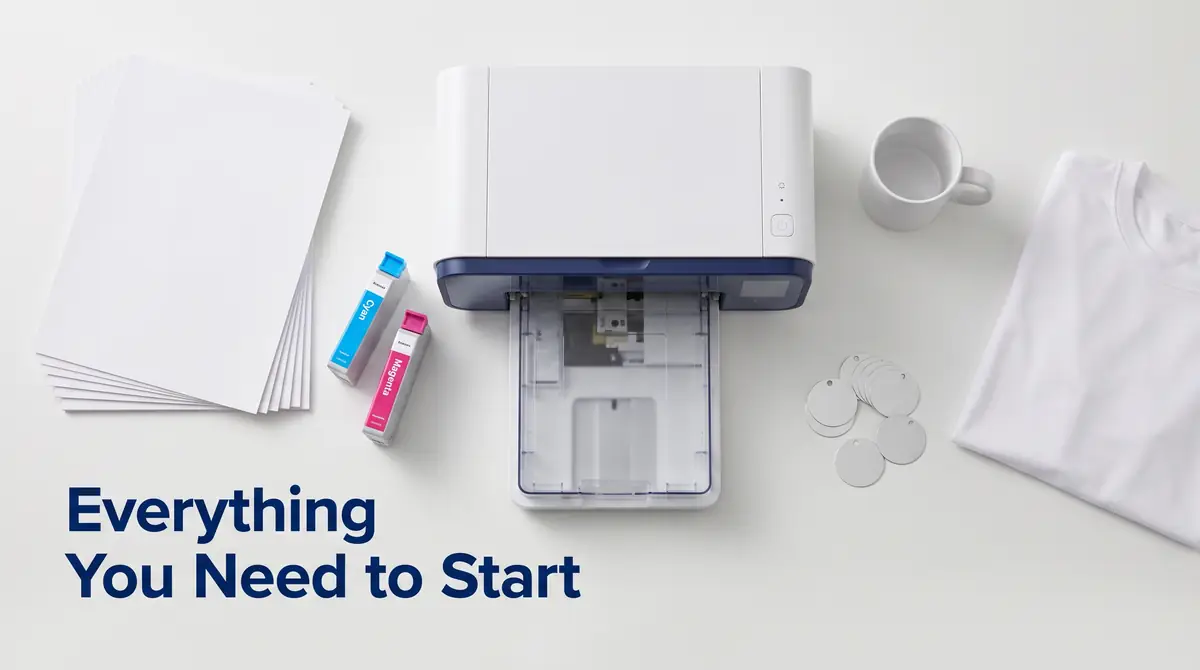
Sublimation requires five core categories of supplies:
- A sublimation printer
- Sublimation ink
- Sublimation paper
- A heat source (heat press, mug press, or convection oven)
- Sublimation blanks made from polyester or coated with a polymer surface
Everything else on this list supports those five categories or makes the process easier.
Core Sublimation Supplies
Sublimation Printer
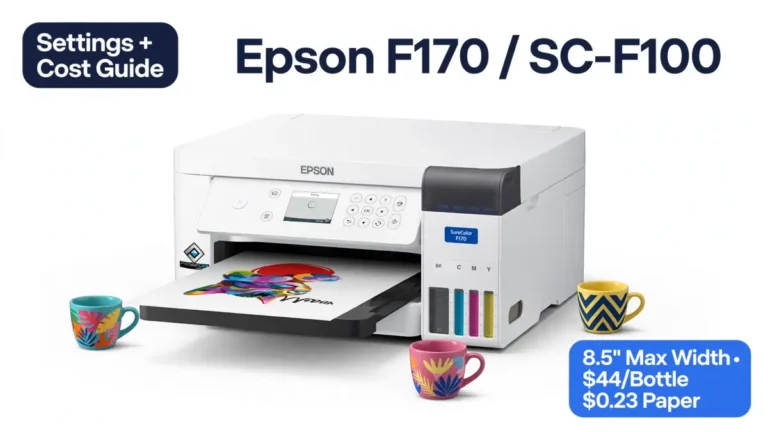
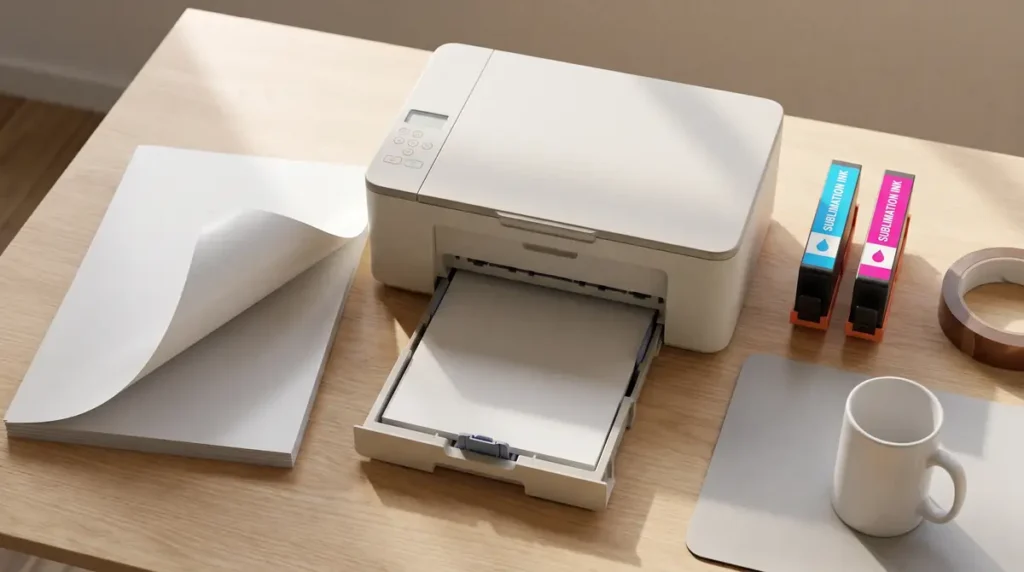
You need a printer that can either print with sublimation ink natively or has been converted to do so. Dedicated sublimation printers like the Sawgrass SG500 or Epson F170 start at a few hundred dollars, while converting a standard Epson EcoTank model is usually the cheaper entry point.
The size of your printer matters more than people expect. A standard 8.5 x 11 inch printer works fine for mugs, ornaments, and most apparel prints. If you plan to make garden flags, oversized shirts, or blankets, you’ll need a wide format printer that handles 13 x 19 inch paper or larger.
Sublimation Ink
Sublimation ink is chemically different from regular inkjet ink. It’s formulated to turn into a gas under heat rather than soak into paper permanently, which is what allows it to transfer onto a blank. Using regular ink in a sublimation setup, or sublimation ink in a regular printer, won’t produce usable results.
If you’re using a Sawgrass printer with their Print Manager software, you need genuine Sawgrass ink. Off-brand cartridges tend to cause banding and streaking because the software calibration expects specific ink properties. Converted printers have more flexibility here, and third-party inks generally work well as long as you’re using an ICC profile matched to that ink.
Sublimation Paper
Sublimation paper holds ink on its surface instead of absorbing it, which lets the ink release cleanly when heat is applied. Regular printer paper won’t do this. Paper quality affects color vibrancy and how sharp your fine details come out, so it’s worth testing a couple of brands early on rather than assuming they’re interchangeable.
Equipment You Need
Heat Press, Mug Press, or Convection Oven
Sublimation ink needs a consistent heat source in the 375 to 385°F range to properly bond with your blank. General heat press guides sometimes cite lower temperatures, but those figures are usually for heat transfer vinyl, not sublimation, so don’t rely on them here.
A flat heat press is the most versatile option and works for shirts, mouse pads, and other flat blanks. A clamshell press is the common beginner choice because of its lower cost, though it can’t accommodate thicker items like cutting boards or slate. For those, you’d need a swing-away press that opens wider.
Mugs and tumblers are different enough that most people use a dedicated mug press or tumbler press rather than a flat press. Some sublimators use a convection oven instead, particularly for tumblers where wraparound heat gives more even coverage.
Regular kitchen ovens aren’t safe for this since sublimation gases shouldn’t be released into a space used for cooking food afterward.
Choosing the Right Heat Source for Your Projects
If your goal is mostly apparel, a flat press covers you. If you’re focused on drinkware, a mug press or convection oven setup makes more sense, and comparing a mug press vs convection oven before buying can save you from purchasing equipment that doesn’t fit your actual product line.
Sublimation Blanks and Substrates
Fabric Blanks
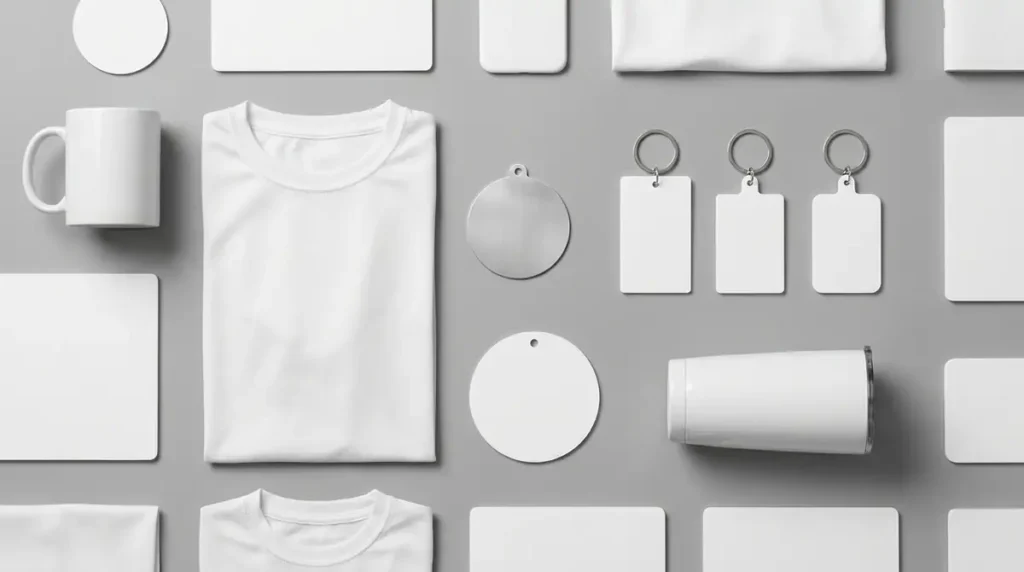
Polyester is the standard for fabric sublimation because the ink bonds to the polyester fibers themselves rather than sitting on top of the material. The higher the polyester content, the more vibrant and durable your print will be.
If you’re shopping for shirts specifically, it helps to know what shirts are best for sublimation printing before you commit to a bulk order.
Hard Substrate Blanks
Beyond fabric, sublimation works on a wide range of coated hard goods: ceramic mugs, aluminum tags, acrylic ornaments, tumblers, dry erase boards, and slate.
These items have a polymer coating applied during manufacturing that allows the ink to bond, which is different from how it works on fabric.
Blank prices vary widely, with items like keychains and ornaments starting around a dollar and larger items like blankets or door mats running considerably more.
What Fabric Requirements Actually Matter
Why Light or White Fabric Matters
Sublimation ink is translucent, similar to watercolor. It shows through onto the fabric rather than sitting on top as an opaque layer, which is why the base color of your blank shows through your design.
On dark fabric, this makes designs look muddy or disappear entirely unless you’re using a workaround method. On white or light colored blanks, colors print true to what you see on screen.
Polyester Percentage and What It Means for Your Results
Fabric with 65 percent polyester or higher generally sublimates well, with colors that stay vibrant through repeated washing. Below that threshold, results get less predictable because the cotton fibers don’t accept the ink at all, only the polyester portion does.
A 50/50 cotton-polyester blend sits right at that boundary. It’s possible to sublimate on it, but the outcome is different from what you’d get on a higher polyester blank.
We’ve covered exactly what to expect from that specific ratio, including the vintage, faded look it typically produces, in our full breakdown of sublimating on 50/50 cotton-polyester blends.
Can You Use Dollar Tree Mugs for Sublimation?
This comes up often because budget mugs seem like an easy way to test sublimation without spending much. The honest answer is that it depends entirely on the coating, not the retailer.
Sublimation requires a polymer coating baked into the mug’s surface during manufacturing. Dollar Tree doesn’t sell mugs specifically marketed as sublimation blanks, so any mug you find there is a gamble.
Some crafters report getting a design to take on certain ceramic mugs from budget retailers, but results are inconsistent from batch to batch and store to store, since these mugs aren’t manufactured with sublimation in mind.
Before buying any mug for sublimation, check for two things: a description that specifically states it’s coated for sublimation or dye-sub printing, and a ceramic (not plastic or enamel-coated metal) surface.
If a mug doesn’t list sublimation compatibility anywhere, treat it as a test piece rather than something you’d sell to a customer.
What Materials You Cannot Sublimate On
Sublimation only works on polyester or polymer-coated surfaces, which rules out a longer list of materials than people expect.
You generally cannot sublimate on:
- 100 percent cotton fabric
- Untreated wood
- Uncoated metal or glass
- Most plastics that aren’t specifically polyester-based
- Dark or black fabric (without a specialized workaround)
- Leather that hasn’t been treated for sublimation
Some of these materials can become sublimation-ready with the right coating or spray treatment, which is a separate process from standard sublimation. If you’re trying to work with a material on this list, our guide on how to make any material sublimation-ready covers the coatings and techniques that make it possible.
Miscellaneous Supplies That Make a Difference
Butcher Paper and Heat Tape
Butcher paper goes between your blank and your heat press to protect the press plate from stray ink transfer. It should only be used once per press, since any ink that transfers onto it will end up on your next project if reused.
Avoid substituting Teflon paper here, since it traps moisture and causes blurry “ghosting” around your design edges.
Heat tape keeps your transfer from shifting during pressing, which matters most on hard substrates. For fabric, an adhesive spray is usually a better fit since it doesn’t leave a sticky residue behind.
Heat Resistant Gloves and Thermometer
A heat press or mug press reaches temperatures well above what’s safe to touch directly, so a pair of heat resistant gloves is worth having from day one. If you’re using a convection oven for tumblers or mugs, add an oven thermometer to your list too.
Built-in oven temperature gauges are frequently inaccurate, and getting the actual internal temperature wrong is one of the most common causes of failed prints.
Frequently Asked Questions
What do I need for sublimation printing?
At minimum, you need a sublimation printer, sublimation ink, sublimation paper, a heat source, and a compatible blank made from polyester or coated for sublimation.
Can you use a regular printer for sublimation?
Only if it’s been converted with sublimation ink and, in most cases, a chip resetter. Standard inkjet printers using standard ink won’t work, since the ink itself needs to convert to gas under heat.
Can you sublimate on 50/50 cotton-polyester blends?
Yes, though results look different from a higher polyester blend. The polyester portion accepts the ink while the cotton mostly doesn’t, producing a softer, more vintage-looking print.
Can you use a regular iron for sublimation?
A household iron can technically transfer some sublimation ink, but it can’t hold consistent temperature or even pressure across the design, which usually results in patchy, uneven color. It’s a workaround for testing, not a reliable production method.
See our full explanation of sublimating on 50/50 blends for what to expect.
Getting Started
Once you have the core supplies together, the next decision is usually which blank to practice on first. Mugs and simple flat items like coasters are forgiving for beginners because mistakes are cheap.
From there, most people move on to apparel once they’re comfortable with pressure, temperature, and timing. If you’re still working through the basics of setup, our introduction to sublimation printing walks through the full beginner setup in more detail.