Can You Sublimate on Nylon? (What Actually Works)

If you’ve ever tried sublimation on different fabrics, you’ve probably wondered if nylon works the same way as polyester. It’s a common question, especially when working with jackets, bags, or sportswear.
The short answer is no, sublimation does not work well on nylon. But understanding why can save you time, money, and a lot of frustration.
In this guide, you’ll learn why sublimation fails on nylon, what actually happens when you try it, and what methods work better instead.
Can You Sublimate on Nylon? (Quick Answer)
No, you cannot successfully sublimate on nylon in most cases.
Sublimation requires polyester or a polymer-coated surface to bond properly. Nylon does not provide the right structure for sublimation ink to attach, so the design will not hold.
If you’re still learning the fundamentals, this sublimation printing guide explains why material compatibility matters so much.
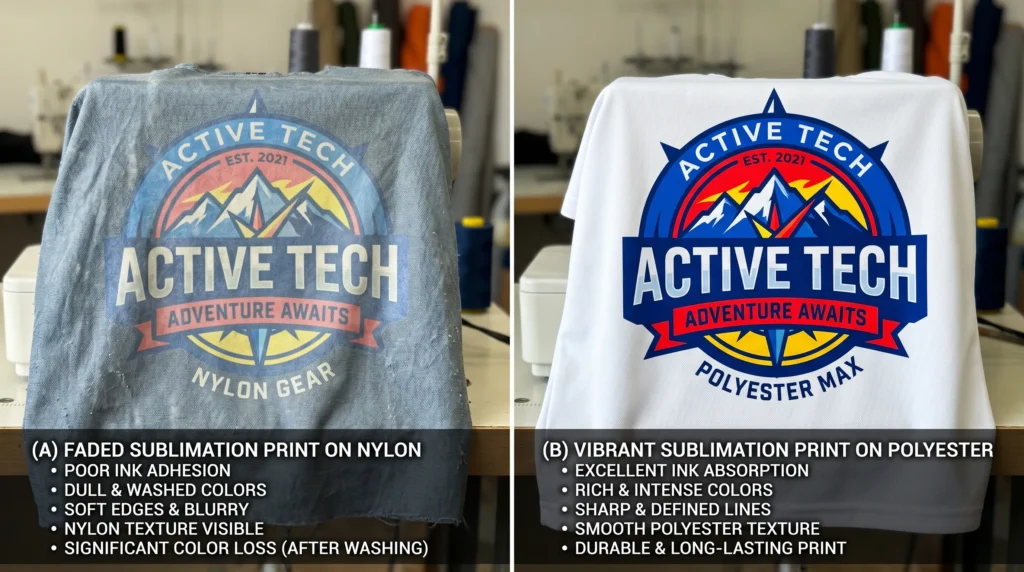
Why Sublimation Doesn’t Work on Nylon
To understand the problem, you need to look at how sublimation works.
Sublimation ink turns into gas under heat and bonds with polyester fibers or polymer coatings. This process is called dye diffusion, and it requires a surface that can absorb and lock in the ink.
Nylon behaves differently.
Key reasons it fails:
- No proper bonding surface
Nylon fibers do not absorb sublimation ink effectively - Poor ink retention
The ink may sit on the surface instead of bonding - Heat sensitivity
Nylon can warp or melt under high sublimation temperatures
Because of this, even if the design transfers slightly, it won’t last.
What Happens If You Try Sublimating Nylon Anyway?
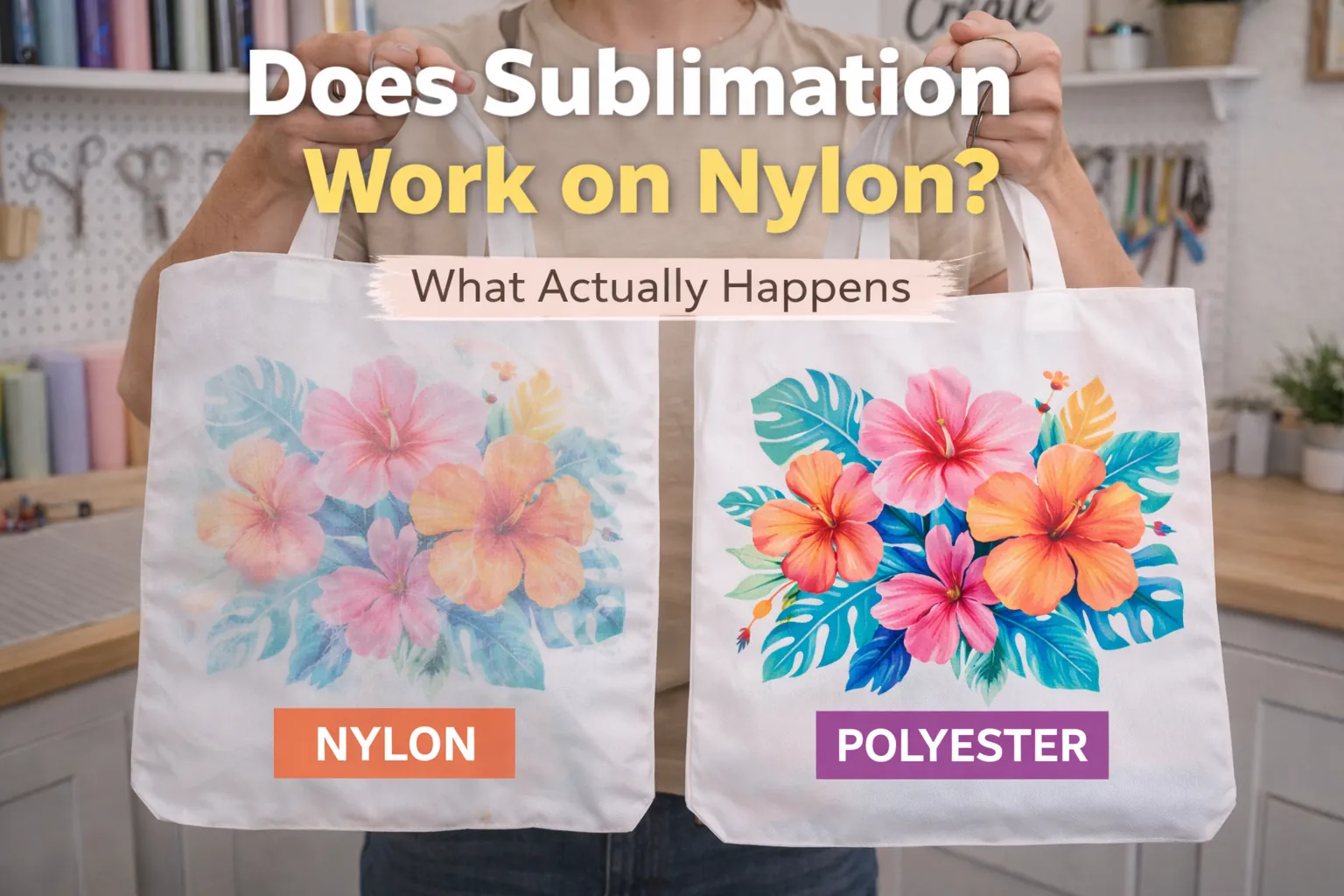
Many beginners try this at least once. The results are usually disappointing.
What you’ll likely see:
- Faded or dull prints
- Patchy or uneven transfer
- Colors that look washed out
- Design fading after the first wash
In some cases, the print may look okay at first but quickly disappear over time.
This is a common issue covered in this sublimation troubleshooting guide when dealing with poor material compatibility.
Are There Any Exceptions? (When It Might Work Slightly)
There are a few edge cases where sublimation can appear to work on nylon, but they are not reliable.
Possible exceptions:
- Polymer-coated nylon
Some treated surfaces allow limited bonding - Sublimation coating sprays
These create a temporary printable layer
However, results are often inconsistent and not suitable for selling products or long-term use.
Best Alternatives for Printing on Nylon
If you need to print on nylon, there are better methods that actually work.
1. Heat Transfer Vinyl (HTV)
- Adheres well to nylon
- Flexible and durable
- Great for jackets and bags
2. DTF (Direct-to-Film) Printing
- Works on a wide range of fabrics
- Strong adhesion to nylon
- Good for detailed designs
3. Screen Printing
- Ideal for bulk production
- Long-lasting results
Choosing the right method depends on your workflow and production scale.
What Fabrics Work Best for Sublimation Instead?
If your goal is sublimation printing, you need the right materials.
Best options:
- Polyester fabrics
- Polymer-coated blanks
- Sublimation-ready materials
These allow proper ink bonding and produce vibrant, long-lasting prints.
To explore compatible materials, check this sublimation materials guide for a complete breakdown.
Image suggestion:
Polyester shirts and sublimation blanks with vibrant prints compared to a failed nylon attempt.
Common Mistakes Beginners Make
Material choice is one of the biggest mistakes in sublimation.
Common errors:
- Trying sublimation on nylon
- Using cotton without coating
- Printing on dark fabrics
- Ignoring material compatibility
These mistakes lead to wasted blanks and poor results.
Understanding the basics early helps avoid these issues.
Tips If You Still Want to Experiment with Nylon
If you’re curious and want to test it anyway, keep expectations realistic.
Tips:
- Use small test pieces first
- Try sublimation coating sprays
- Lower heat slightly to avoid damage
- Expect limited durability
This should only be done for experimentation, not production.
Frequently Asked Questions
Can I sublimate on nylon bags?
No, standard nylon bags will not hold sublimation prints properly.
Is coated nylon good for sublimation?
Only if it has a proper polymer coating, but results can still be inconsistent.
What fabric is best for sublimation printing?
Polyester is the best fabric because it allows the ink to bond permanently.
Can I use sublimation on waterproof fabrics?
Most waterproof fabrics are not suitable unless specially coated.
What is the best alternative to sublimation on nylon?
DTF printing or heat transfer vinyl are the most reliable options.