Can Canon Printers Use Sublimation Ink? Models and Risks

Can Canon printers use sublimation ink to make transfers for shirts, mugs or other blanks? The Canon PIXMA and imagePROGRAF models discussed below are photo or document inkjets, not Canon-supported dye-sublimation transfer printers. The Canon SELPHY CP1300 does use dye sublimation, but only for its dedicated photo-printing process. Neither system should be mistaken for a printer that produces heat-press transfers.
If you already own a Canon printer, check its supported ink and media before buying supplies. If you are shopping specifically for sublimation transfers, choose a printer with manufacturer-documented dye-sublimation support rather than relying on an unverified conversion.
Canon Printer Compatibility: Quick Model Check
This matrix compares each model’s documented purpose and ink system. Not supported means Canon does not document the model as a dye-sublimation heat-transfer printer; it does not claim that every third-party experiment is physically impossible.
| Canon model | Manufacturer-documented printing system | Can it produce supported heat-transfer sublimation sheets? | Practical decision |
|---|---|---|---|
| PIXMA PRO-100 | Professional photo inkjet; eight CLI-42 ink cartridges | No documented support | Use for its specified photo-printing tasks, not as a sublimation starter printer |
| PIXMA PRO-200 | Professional eight-color dye-ink photo printer | No documented support | Dye-based photo ink is not the same thing as sublimation-transfer ink |
| PIXMA TS9520 | Five-color hybrid inkjet; PGI-280 pigment black and CLI-281 dye colors | No documented support | Compatible T-shirt transfer media is a different method from dye sublimation |
| imagePROGRAF PRO-1000 | Professional photo inkjet using pigment-based LUCIA PRO ink | No documented support | Large photo-printing capability does not make it a sublimation printer |
| SELPHY CP1300 | Compact dye-sublimation photo printer, using matched ink cassettes and photo paper | No, not a heat-transfer-sheet printer | Suitable for supported photo prints, not for mug or polyester-shirt transfers |
The model information above comes from Canon PIXMA PRO-100 specifications, PRO-200 specifications, TS9520 specifications, PRO-1000 specifications, and SELPHY CP1300 specifications. Exact model and regional documentation matter more than a retailer listing.
Which Canon Models Are People Considering for Sublimation Ink?
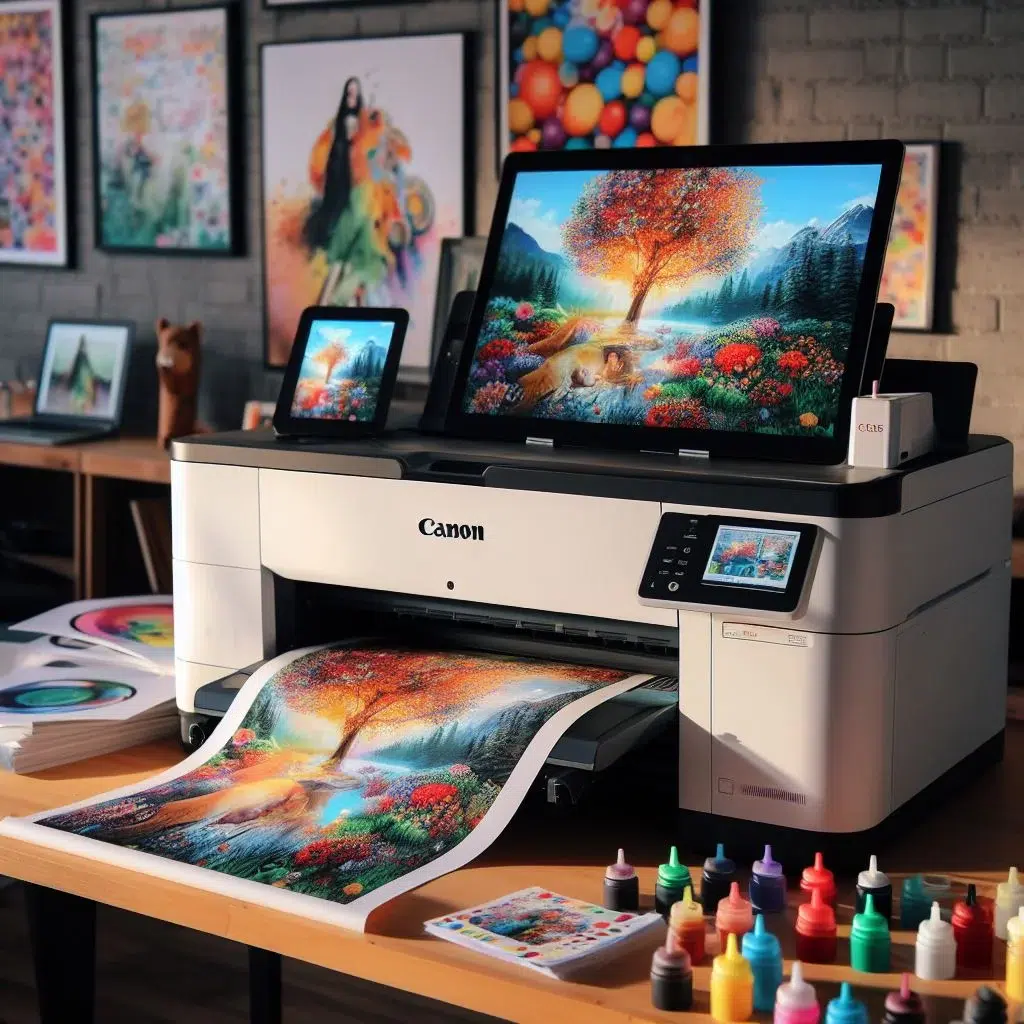
The five models below appear in Canon sublimation searches because they offer photo-printing features, large paper sizes or dye-sublimation wording. Their original manufacturer use is a better buying guide than an unsupported transfer-ink ranking. The preserved photos illustrate the models; they do not demonstrate heat-transfer compatibility.
Canon PIXMA PRO-100: Eight-Color Photo Printer

Canon lists the PRO-100 as a professional inkjet using eight CLI-42 inks and media up to 13 × 19 inches. That is a photo-printing specification, not a dye-sublimation transfer-ink specification. The printer is not recommended here for sublimation conversion because a compatible, Canon-supported workflow has not been established. Check Canon specifications.
Canon imagePROGRAF PRO-1000: Pigment Photo Printer

The imagePROGRAF PRO-1000 uses Canon LUCIA PRO pigment ink and supports photo papers up to 17 × 22 inches. Its width and professional color features are useful for photographic printing; they do not make it compatible with heat-transfer sublimation ink. Review the listed ink and media.
Canon PIXMA TS9520: Inkjet With Iron-On Transfer Media

Canon specifies a five-color hybrid system: PGI-280 pigment black plus CLI-281 dye inks, with media up to 11 × 17 inches. It also lists T-shirt transfer paper among compatible media. Inkjet iron-on transfer paper is not dye-sublimation transfer paper. Use the paper maker’s method if you intend to make iron-on graphics. Do not substitute sublimation ink based only on the paper listing. See the manufacturer ink and media specification.
Canon PIXMA PRO-200: Dye Ink Does Not Mean Sublimation Ink

Canon describes the PRO-200 as an eight-color dye-based professional photo inkjet, capable of printing 13 × 19-inch photo sheets. Standard dye-based photographic ink is designed for its own printing process. It is not automatically suitable for heat-transfer sublimation simply because both contain the word “dye.” Read Canon’s PRO-200 specifications.
Canon SELPHY CP1300: Dye Sublimation for Photos

The SELPHY CP1300 is genuinely a dye-sublimation printer, but it prints photo images using matched ink cassettes and paper. It does not output loose dye-sublimation transfer sheets intended for a heat press. If your goal is a 4 × 6-inch photo, a SELPHY may fit that purpose; if your goal is a coated mug or polyester shirt, it is the wrong workflow. Check its printing method and supported paper.
Why Canon SELPHY and Canon PIXMA Are Different
Three different printing methods are often confused:
- Inkjet photo printing: PIXMA and imagePROGRAF models deposit specified photo or document ink onto supported paper. A photo printer’s dye ink is not automatically heat-transfer sublimation ink.
- SELPHY dye-sublimation photo printing: Heat transfers dye from a matched ribbon/ink cassette onto SELPHY photo media inside the printer. This produces the finished photo rather than a sheet intended for a separate heat press.
- Heat-transfer dye sublimation: A compatible dye-sublimation printer prints a transfer sheet, which is then heated against polyester or a suitably coated blank following that blank’s instructions.
Canon’s SELPHY technology overview describes its photo-print process. A purpose-built transfer option such as Epson’s SureColor F170 is explicitly described by its manufacturer as a dye-sublimation printer for customizable products.
Can You Convert a Canon PIXMA or MegaTank Printer?
This article does not recommend converting the Canon models above. Their published specifications identify Canon photo, pigment or document inks, and no Canon-approved process has been verified for filling these systems with heat-transfer sublimation dye. A third-party claim that a tank can be refilled or cartridges can be changed does not establish printhead, color-management or long-term reliability compatibility.
Using an unsupported ink may cause blocked nozzles, unreliable output or damage. Warranty decisions depend on the product terms and the cause of a problem; do not assume every unrelated claim is automatically void. If you already added unsuitable ink, check the official support instructions for your exact printer before attempting cleaning or flushing.
Do not buy a Canon photo printer assuming it can use heat-transfer sublimation ink. Canon has not documented dye-sub transfer support for the models compared here. Verify the manufacturer’s approved ink and printing method before spending money.
What Should You Buy for Sublimation Transfers Instead?
Choose based on the width of your regular transfers and the ink system you want to maintain, not the maximum paper size of a photo printer.
| What you want to make | Safer printer decision | What to check before buying |
|---|---|---|
| Mugs, coasters, small polyester items | A compact purpose-built dye-sublimation printer such as the Epson SureColor F170 | 8.5-inch media width, supported ink, software, and the blank supplier’s instructions |
| Larger shirt graphics or wide panels | A purpose-built system whose manufacturer documents the wider transfer size you need | Actual printable width, sheet or roll support, and complete equipment cost |
| Ordinary photos or supported iron-on media | A compatible Canon photo/document printer and the correct media workflow | The printer’s exact ink cartridges and the transfer-paper maker’s instructions |
If you need an equipment comparison, see our printer buying guide by use case. For a compact purpose-built system, review Epson F170 setup, specifications and running costs. If you are uncertain about inkjet conversion versus genuine dye-sublimation use, read which printer type is needed for sublimation.
Five Checks Before Buying a Printer for Sublimation
- Look up the exact manufacturer model number and the original supported ink family.
- Verify that the manufacturer explicitly documents dye-sublimation transfer printing, rather than photo dye ink or iron-on paper.
- Check printable paper width against your largest regular product, including margins.
- Confirm the software, color workflow, replacement ink and service arrangements for the printer.
- Calculate the whole working setup: printer, intended ink, paper, compatible blanks and a suitable heat press.
The most expensive mistake is buying a printer for a process it was not designed or supported to perform. A larger Canon photo printer is not a substitute for verified transfer compatibility.
Manufacturer Documentation and Editorial Method
This page compares manufacturer-published ink systems, printing methods and media limitations. It is not a hands-on test of Canon conversions or a measured print-quality ranking. Specifications and product availability can change, so check the manufacturer’s current page for your exact model before ordering. No unverified retailer review counts, stock statements or prices are used.
Some links elsewhere on Subli Genius Print may be affiliate links. If you make a purchase through an affiliate link, we may earn a commission at no additional cost to you. Recommendations on this page are based on documented suitability, not commission.
Professional Sublimation Printing & Wholesale Custom Products
Looking for high-quality sublimation printing for apparel, drinkware, and promotional items? Subli Genius Print delivers vibrant color, sharp detail, and long-lasting results for businesses, brands, and resellers across the U.S.