
Sublimation vs Suppression in Psychology (Key Differences Explained)

Sublimation and suppression are two ways the mind deals with difficult emotions, but they work very differently.
Sublimation transforms emotional energy into positive action, while suppression simply holds those emotions back for later. If you want to understand the full concept, start with this guide on sublimation in psychology.
In this article, you’ll learn the key differences between sublimation and suppression, how they work, and when each one is useful.
What Is Sublimation?
Sublimation is a defense mechanism where negative or unwanted emotions are redirected into positive and productive actions.
Instead of acting on anger, stress, or desire directly, the mind channels that energy into something useful like exercise, creativity, or work.
For a deeper explanation, see Freud’s sublimation explained simply.

What Is Suppression?
Suppression is the conscious decision to delay or control emotions instead of expressing them immediately.
It means you are aware of what you feel but choose to set it aside temporarily to handle it later.
For example, staying calm during an argument and processing emotions afterward is suppression.
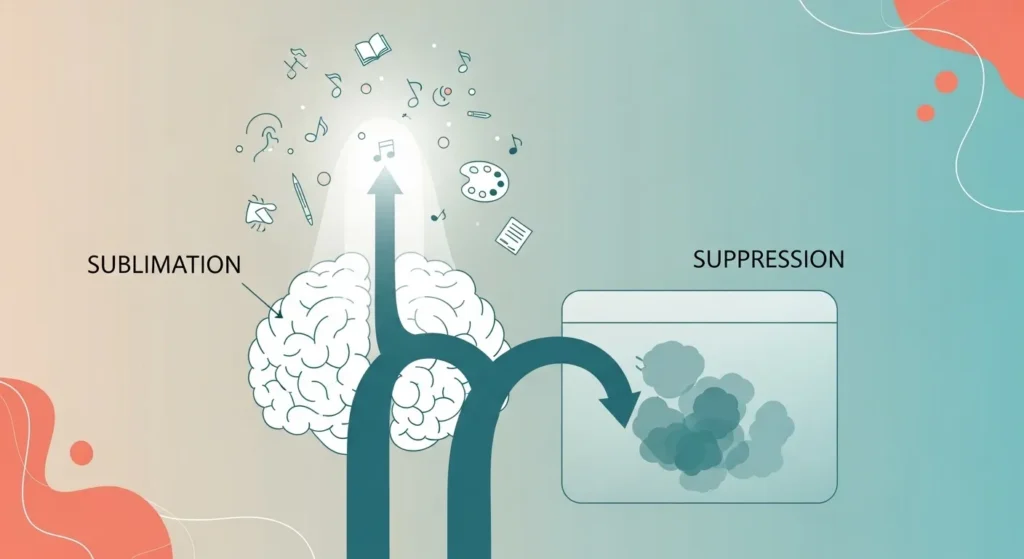
Sublimation vs Suppression (Key Differences)
Sublimation transforms emotion into action, while suppression controls emotion without changing it.
Here’s the difference in simple terms:
Sublimation
Emotion is redirected into something positive
Often happens unconsciously
Leads to growth and productivity
Suppression
Emotion is held back temporarily
Happens consciously
Provides short-term control
| Aspect | Sublimation | Suppression |
|---|---|---|
| Process | Unconscious transformation of impulses | Conscious postponement or control of emotions |
| Awareness | Happens automatically, without deliberate effort | Requires awareness and decision-making |
| Outcome | Emotion redirected into productive or creative action | Emotion temporarily held back or ignored |
| Emotional Impact | Reduces inner conflict and promotes growth | Maintains control but may create tension if prolonged |
| Example | Channeling anger into intense exercise or art | Staying calm during conflict, processing later |
| Type | Mature, adaptive defense mechanism | Mature, but less transformative |
Real-Life Examples
Understanding the difference becomes easier with real situations.
Sublimation example
A person feels angry and chooses to go to the gym, turning that energy into physical strength.
Suppression example
A person feels angry during a meeting but stays calm and deals with the emotion later.
For more everyday situations, explore these real-life examples of sublimation.
Scholarly Context:
According to NCBI and Verywell Mind, sublimation represents one of the highest forms of emotional maturity because it transforms potentially harmful drives into socially beneficial acts. Suppression, while still a mature defense, focuses more on control than change.
Related Distinctions:
- Suppression vs. Repression: Suppression is conscious; repression is unconscious.
- Displacement vs. Sublimation: Displacement redirects emotion to a safer target; sublimation elevates it into constructive action.
When Sublimation Is Better
Sublimation is more helpful when you want long-term emotional growth.
It helps:
- release emotional energy
- build productive habits
- improve mental well-being
Because it transforms emotion instead of hiding it, it reduces internal tension over time.
When Suppression Is Useful
Suppression is useful in situations where immediate emotional control is necessary.
It helps:
- maintain professionalism
- avoid conflict
- stay focused under pressure
However, it should be temporary. Emotions need to be processed later to avoid buildup. Sublimation Hoodies: Turning Emotion into Expression.
How to Use Both in a Healthy Way
The best approach is not choosing one over the other, but using both appropriately.
Use suppression when you need control in the moment.
Then use sublimation to release and transform that emotional energy into something productive.
This balance helps you stay emotionally stable while still growing.
External Scholarly Source:
- NCBI: Defense Mechanisms and the Ego Psychology Framework A comprehensive overview of Freudian and modern interpretations of psychological defenses.