Unlocking the Potential of UV-Curable Inks

In the rapidly evolving world of printing technology, UV-curable inks stand out as a beacon of innovatioIf you’re exploring modern printing methods, you’ve probably come across UV-curable inks—but it’s not always clear how they work or when to use them.
In this guide, you’ll learn what UV-curable inks are, how they cure instantly under UV light, and where they fit compared to sublimation printing. By the end, you’ll know exactly when UV printing makes sense for your projects.
What Are UV-Curable Inks?
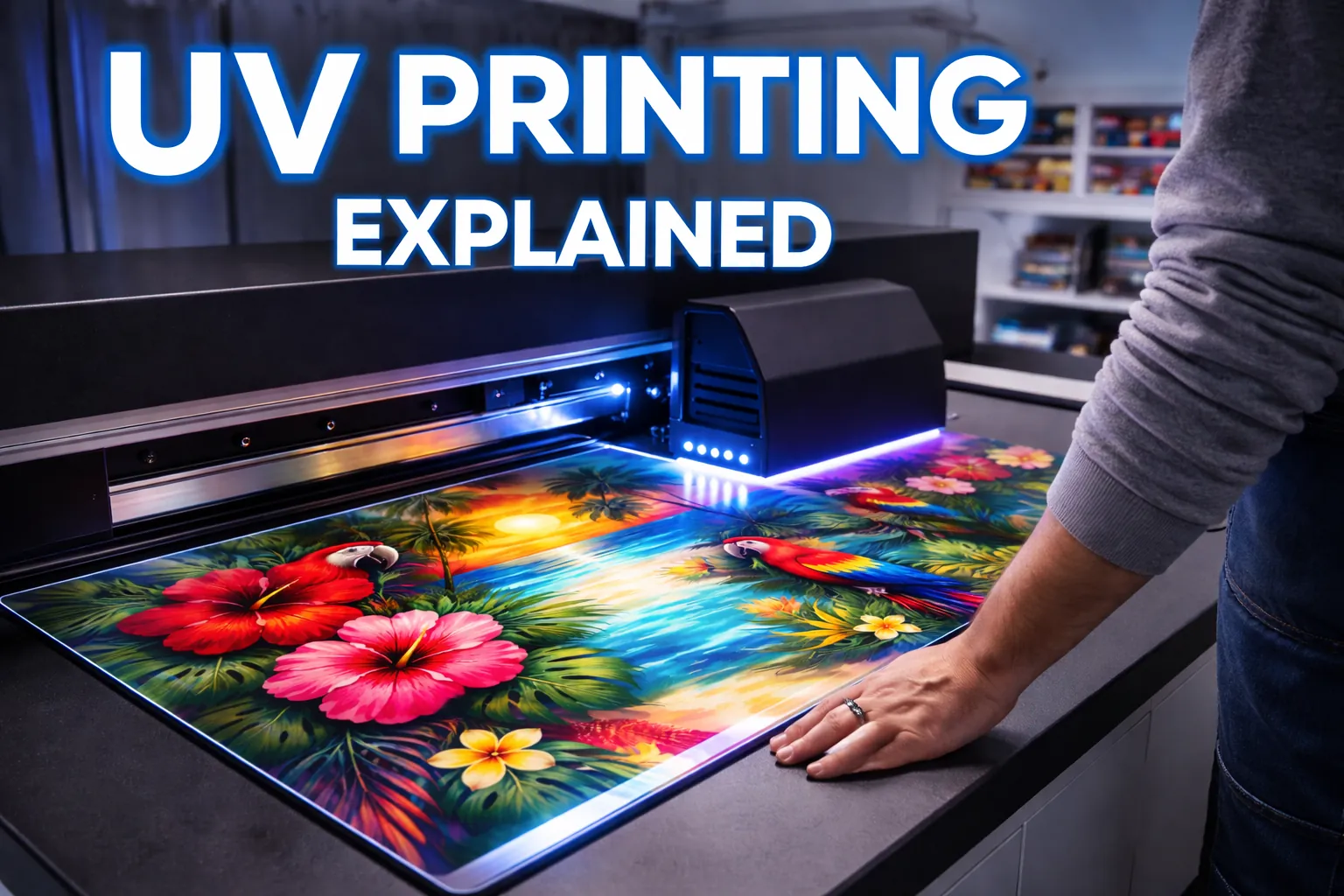
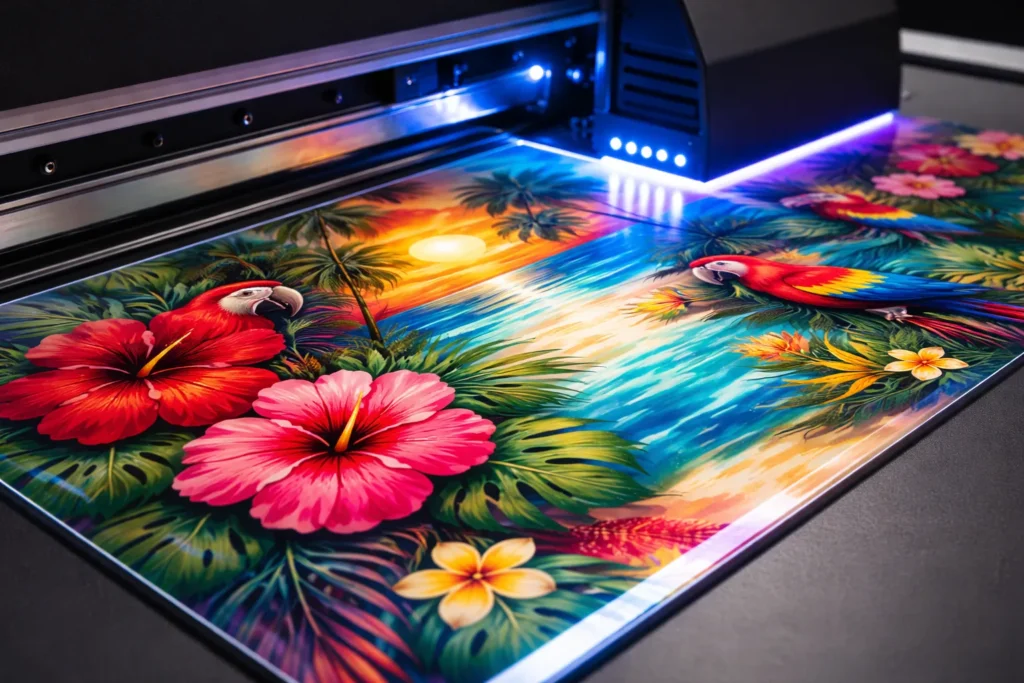
UV-curable inks are a type of printing ink that dries instantly when exposed to ultraviolet (UV) light.
Instead of soaking into a material like traditional inks, UV ink sits on the surface and hardens when exposed to UV lamps. This process creates a durable, vibrant print almost immediately.
This makes UV printing very different from methods explained in this sublimation printing guide, where heat turns ink into gas and bonds it into the material.
How UV-Curable Inks Work (Simple Explanation)
Here’s what happens during UV printing:
- The printer applies liquid UV ink onto the surface
- UV light passes over the ink instantly
- Photoinitiators inside the ink react to the UV light
- The ink hardens (cures) within seconds
- The print is ready to handle immediately
Why This Matters
- No drying time
- No smudging
- Faster production workflows
In real setups, this means you can print and move to the next step right away something that’s not possible with many traditional inks.
Key Benefits of UV Printing
1. Instant Drying (Curing)
UV inks cure immediately under UV light, which speeds up production and reduces errors.
2. Strong Durability
UV prints are:
- scratch-resistant
- water-resistant
- fade-resistant
This makes them ideal for long-term use.
3. Works on Many Materials
UV printing can be used on:
- glass
- metal
- plastic
- wood
- acrylic
This flexibility is a major advantage compared to sublimation, which requires polyester or coated surfaces.
If you’re working with coated blanks, this sublimation blanks and materials guide explains compatible materials in more detail.
4. High Print Quality
You’ll notice:
- textured finishes (in some cases)
- sharp details
- vibrant colors
Where UV-Curable Inks Are Used
UV printing is commonly used in:
- custom phone cases
- promotional products
- signage and outdoor boards
- glass decoration
- industrial part labeling
You may notice many businesses use UV printing when they need direct-to-surface printing without heat transfer.
The curing process relies on photochemical reactions triggered by UV light, which you can explore further in this guide on UV curing technology .
UV-Curable Inks vs Sublimation Printing
This is where many beginners get confused.
The Short Answer:
- UV printing = prints ON the surface
- Sublimation printing = prints INTO the material
Key Differences:
| Feature | UV Printing | Sublimation Printing |
|---|---|---|
| Ink Behavior | Cures on top | Bonds into material |
| Drying Time | Instant | Requires heat press |
| Material Compatibility | Almost any surface | Polyester or coated items |
| Durability | Surface-level durability | Embedded, long-lasting |
| Texture | Can feel raised | Smooth, no texture |
If you’re unsure which method fits your setup, understanding sublimation ink vs regular ink can help clarify how ink behavior affects results.
Limitations of UV-Curable Inks
UV printing is powerful, but it’s not always the best choice.
1. Higher Equipment Cost
UV printers are typically more expensive than entry-level sublimation setups.
2. Surface Adhesion Can Vary
Some materials may require:
- coatings
- surface preparation
Without proper prep, prints may peel over time.
3. Not Ideal for Fabric Printing
UV printing doesn’t work well on soft fabrics like T-shirts.
For apparel, sublimation or DTG is usually a better option.
When Should You Use UV Printing?
UV printing is the right choice when:
- you need to print on hard surfaces
- you want instant results
- your products require durability (outdoor use)
- you are customizing non-polyester materials
Choose Sublimation Instead If:
- you are printing on shirts or fabric
- you want a soft, embedded design
- you need long-lasting color inside the material
If your prints are coming out faded or inconsistent, this sublimation troubleshooting guide can help you fix common issues.
Common Mistakes with UV Printing
1. Skipping Surface Preparation
Some materials need cleaning or coating before printing.
2. Incorrect UV Exposure
Too little exposure = uncured ink
Too much exposure = brittle prints
3. Choosing the Wrong Material
Not all surfaces hold UV ink equally well.
Frequently Asked Questions
Can I use UV printing on fabric?
No, UV printing is not ideal for fabric. Sublimation or DTG works better for clothing.
Do I need special materials for UV printing?
Not always, but some surfaces may need coating or preparation for better adhesion.
Is UV printing more durable than sublimation?
It depends. UV prints are durable on the surface, while sublimation prints are embedded into the material and often last longer on fabric.
What’s the best use for UV printing?
Hard surfaces like acrylic, glass, and metal are the best use cases.