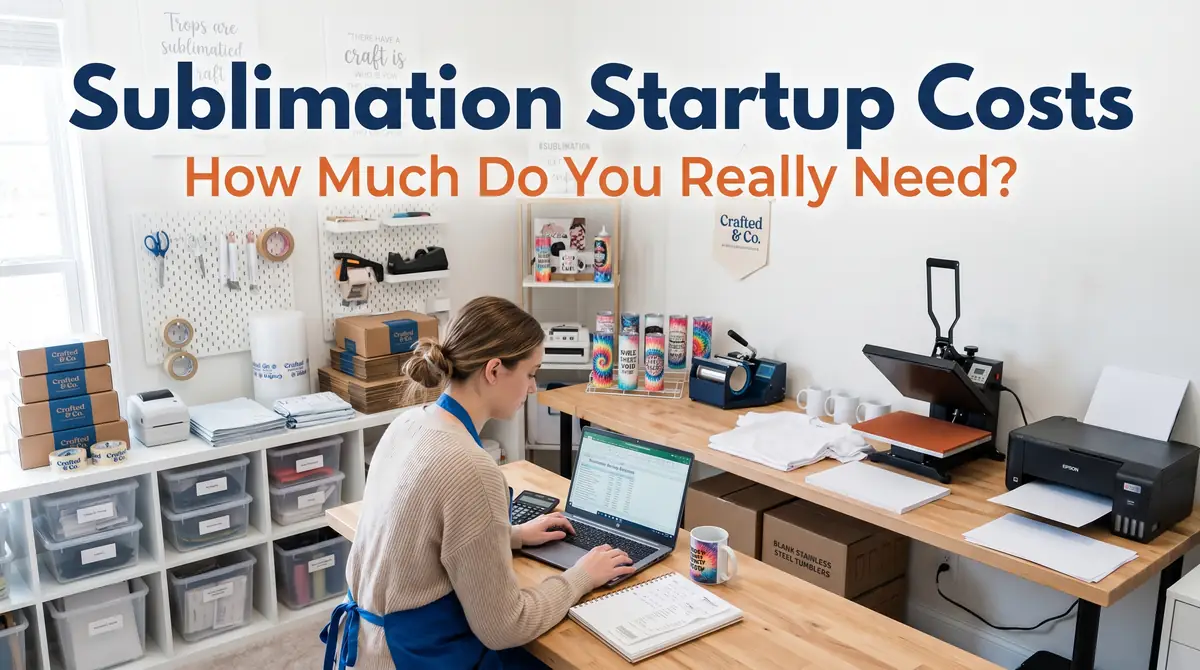
Sublimation Startup Costs: How Much Money Do You Need in

Starting a sublimation business does not require a massive investment, but it does require smart budgeting.
The most successful sellers focus on learning the process, validating product demand, and reinvesting profits rather than purchasing every tool immediately.
By understanding your true startup costs and planning carefully, you can build a profitable sublimation business without unnecessary expenses.
How Much Does It Cost to Start a Sublimation Business?
Most new sublimation businesses can get started for between $500 and $2,000, depending on equipment quality, inventory levels, and business goals.
Here’s a realistic breakdown:
| Setup Type | Estimated Startup Cost |
|---|---|
| Hobby Starter | $300–$800 |
| Side Hustle Business | $800–$2,000 |
| Home-Based Business | $2,000–$5,000+ |
| Production Shop | $5,000+ |
Many beginners assume they need professional equipment immediately. In reality, most successful sellers start with a basic setup, validate product demand, and upgrade later.
If you’re still evaluating whether sublimation is the right business model, review our Sublimation Business Guide for a complete overview of startup planning and growth strategies.
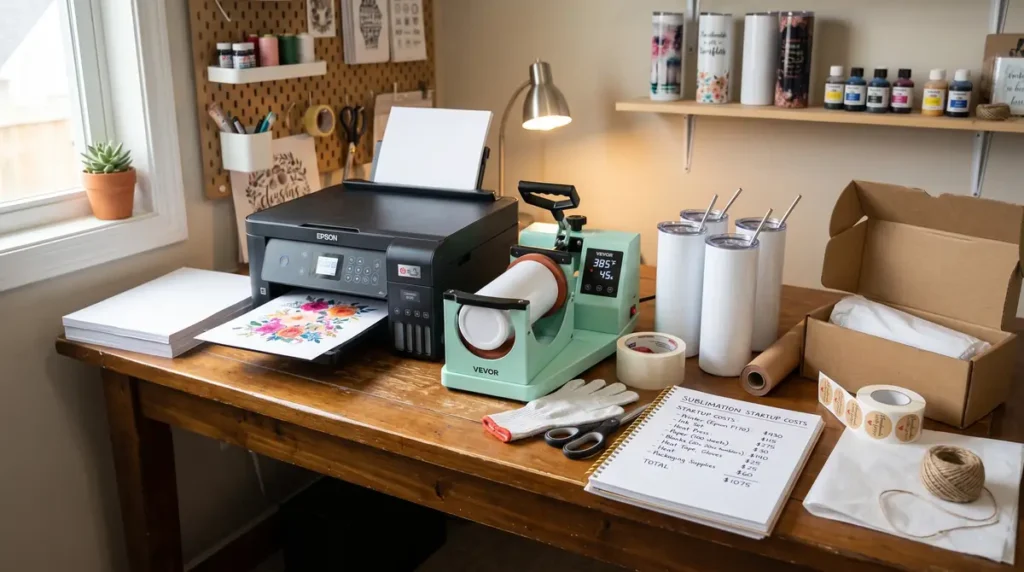
The Essential Equipment You Actually Need
Sublimation Printer Costs
Your printer is usually the largest startup expense.
Typical options include:
- Converted Epson EcoTank printers: $250–$700
- Entry-level dedicated sublimation printers: $400–$1,000
- Professional production printers: $1,500+
For most new businesses, a converted EcoTank or entry-level sublimation printer provides enough production capacity.
Heat Press Costs
A quality heat press is more important than many beginners realize.
Budget presses often create:
- Uneven temperatures
- Inconsistent pressure
- Faded transfers
- Higher waste rates
Expected investment:
- Budget heat press: $150–$300
- Mid-range press: $300–$800
- Commercial press: $1,000+
Design Software Costs
Many sellers begin with:
- Canva
- Affinity Designer
- Adobe Illustrator
Monthly software costs can range from free to approximately $60 per month.
Computer and Workspace Requirements
You likely already own a computer, which reduces startup expenses significantly.
You’ll also need:
- Dedicated workspace
- Ventilation
- Storage shelves
- Worktable
Initial Blank Inventory
Popular starter products include:
- Tumblers
- Mugs
- Shirts
- Coasters
- Keychains
Avoid purchasing large inventory quantities immediately.
A common mistake is buying dozens of blanks before validating demand.
Sublimation Ink and Paper
Typical starter supplies:
- Sublimation ink: $40–$120
- Transfer paper: $15–$50
- Heat tape and accessories: $10–$30
Before buying blanks, use the Craft Fair Inventory Planner to estimate how many products you’ll actually need.
Hidden Sublimation Startup Costs Most Beginners Miss
Equipment costs are only part of the picture.
Several expenses tend to surprise new business owners.
Shipping Supplies
You’ll likely need:
- Boxes
- Bubble wrap
- Tissue paper
- Labels
- Shipping scales
These costs add up quickly.
Product Photography Costs
Professional-looking product photos directly affect conversion rates.
Instead of hiring a photographer immediately, many sellers start with:
- Natural lighting
- Foam boards
- Smartphone cameras
When you’re ready to improve listings, our guide on How to Photograph Sublimation Products can help improve product presentation.
Business Registration and Taxes
Depending on your state, you may need:
- Business registration
- Sales tax permits
- Local licenses
Requirements vary by location.
Sample and Testing Expenses
Before selling products, you’ll need to test:
- Colors
- Materials
- Press settings
- Packaging
Testing costs are part of doing business and should be included in your startup budget.
Replacement Parts and Maintenance
Over time, you’ll encounter costs such as:
- Printer maintenance
- Replacement cartridges
- Cleaning solutions
- Heat press repairs
Electricity and Utility Costs
While sublimation equipment doesn’t consume extreme amounts of electricity, regular production does increase utility expenses.
Know What Each Product Needs to Earn Back
Buying the printer and heat press is only the beginning. Once you start selling, every order also needs to cover materials, labor, packaging, waste, selling fees, and part of your ongoing business costs.
The Subli Genius Pricing & Profit Toolkit helps you turn those expenses into a real cost per product, then calculate your target selling price, break-even point, profit, and margin.
Budget Breakdown: Starting a Sublimation Business for Under $1,000
A realistic beginner budget might look like this:
| Item | Estimated Cost |
|---|---|
| Converted Epson Printer | $350 |
| Heat Press | $250 |
| Ink & Paper | $100 |
| Starter Blanks | $150 |
| Packaging Supplies | $50 |
| Miscellaneous | $100 |
| Total | $1,000 |
What to Buy First
Prioritize:
- Printer
- Heat press
- Ink and paper
- Limited blank inventory
What Can Wait
Delay purchasing:
- Bulk inventory
- Specialty presses
- Premium packaging
- Additional equipment
Budget Breakdown: Building a Serious Home-Based Sublimation Business
If your goal is consistent online sales through Etsy or your own store, expect a larger investment.
Areas worth upgrading include:
- Better heat press
- Larger inventory selection
- Product photography setup
- Business software
- Dedicated workspace
How Much Does Sublimation Cost Per Product?
Understanding cost per item is critical for profitability.
Typical costs include:
Ink Cost
Usually between a few cents and under a dollar per transfer.
Paper Cost
Generally a small percentage of total production cost.
Blank Cost
Often the largest variable expense.
Electricity Cost
Usually minimal on individual products.
Packaging Cost
Frequently overlooked by beginners.
Example Cost Calculation
Example tumbler:
| Expense | Cost |
|---|---|
| Blank Tumbler | $4.50 |
| Ink | $0.40 |
| Paper | $0.20 |
| Packaging | $0.75 |
| Miscellaneous | $0.15 |
| Total Cost | $6.00 |
If sold for $24.99, the gross margin appears strong, but additional expenses still apply.
For a deeper breakdown, see How to Calculate Sublimation Profit Margins.
You can also use our Sublimation Profit Margin Calculator when pricing products.
Is Starting a Sublimation Business Profitable in 2026?
Yes, a sublimation business can still be profitable in 2026 when focused on the right products, pricing strategy, and niche selection.
Profitability depends less on equipment and more on:
- Product demand
- Market positioning
- Pricing
- Customer acquisition
- Repeat business
Many sellers struggle because they underprice products rather than because sublimation itself is unprofitable.
Is the Sublimation Market Oversaturated?
This question appears frequently, but the answer is more nuanced.
The general market is crowded.
Specific niches are not.
Many new sellers enter highly competitive categories such as:
- Generic tumblers
- Basic mugs
- Standard shirts
Opportunities often exist in specialized audiences and personalized products.
Our guide to Best Sublimation Niches in 2026 explores areas with stronger profit potential.
The Fastest Way to Recover Your Startup Costs
Many successful sellers focus on recovering startup expenses before expanding.
Focus on High-Margin Products
Products with personalization typically generate stronger margins.
Avoid Excess Inventory
Buy inventory based on demand, not assumptions.
Validate Before Expanding
Test products before investing heavily in equipment upgrades.
Build Repeat Customers
Returning customers reduce marketing costs and improve profitability.
Tailored Action Plan: Choosing the Right Startup Budget
If You Have $500
Focus on:
- One printer
- One heat press
- One product category
Keep operations simple.
If You Have $1,500
Add:
- Multiple product lines
- Better inventory selection
- Improved packaging
If You Have $3,000+
Invest in:
- Higher-quality equipment
- Workspace improvements
- Branding assets
- Ecommerce infrastructure
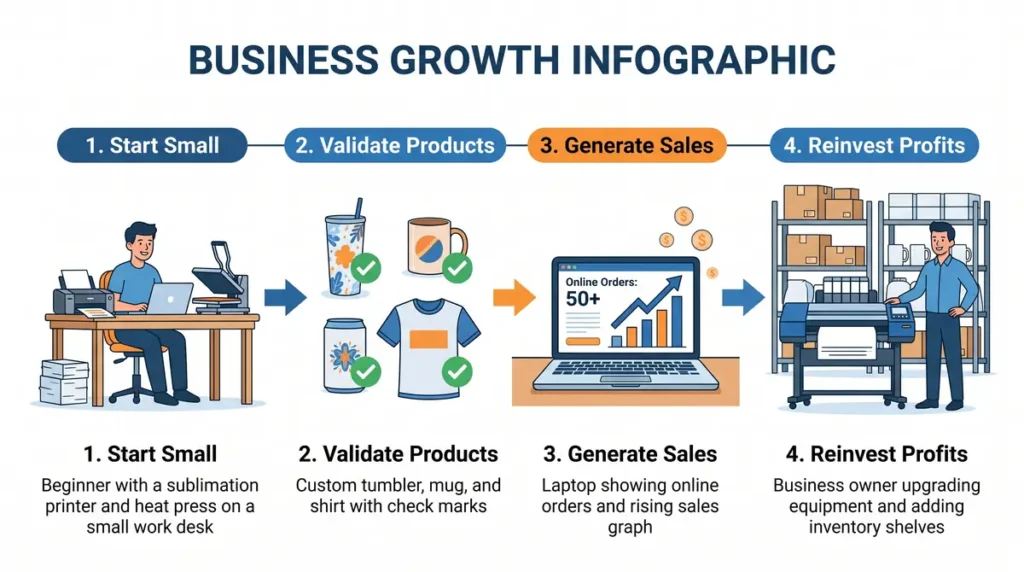
The most sustainable growth path is usually:
Start small → Validate products → Generate sales → Reinvest profits.
Common Sublimation Startup Mistakes That Waste Money
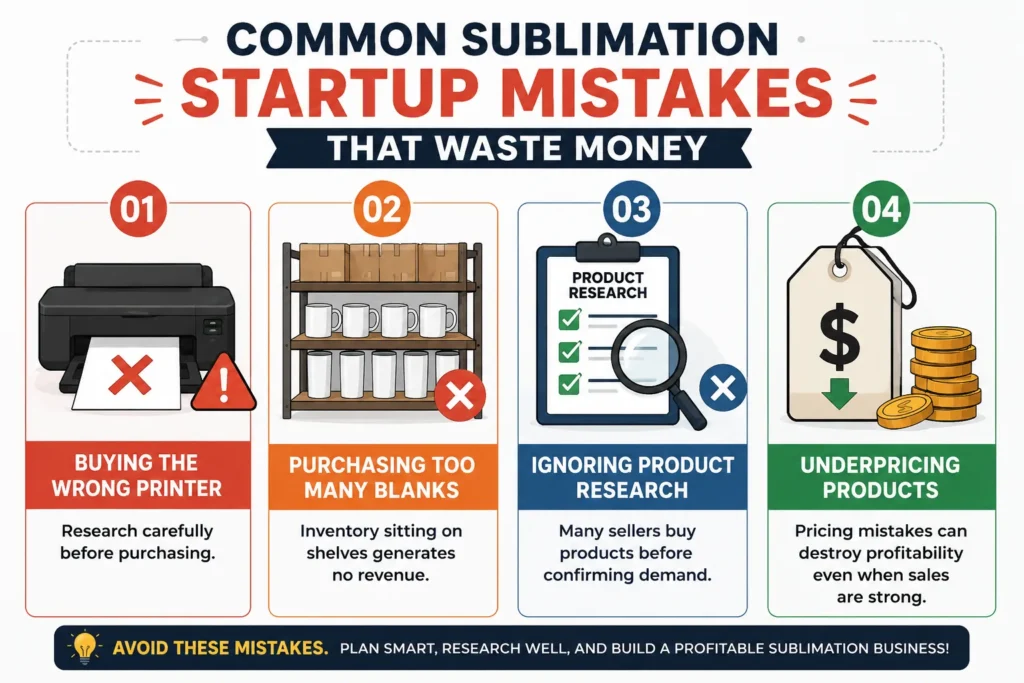
Buying the Wrong Printer
Research carefully before purchasing.
Purchasing Too Many Blanks
Inventory sitting on shelves generates no revenue.
Ignoring Product Research
Many sellers buy products before confirming demand.
Underpricing Products
Pricing mistakes can destroy profitability even when sales are strong.
For product-specific pricing strategies, see How to Price Sublimation Tumblers.
Frequently Asked Questions
How much does it cost to start a sublimation business?
Most beginners spend between $500 and $2,000 for a functional home-based setup.
Can I start a sublimation business with $500?
Yes. A basic printer, heat press, and limited inventory can fit within a $500 budget if you start small.
How much does a sublimation printer cost?
Most beginner printers range from $250 to $1,000 depending on setup type and production needs.
How much does sublimation cost per job?
Many products cost between a few cents and several dollars in materials depending on the blank used.
Is sublimation still profitable in 2026?
Yes. Profitability depends on niche selection, pricing, and marketing rather than market size alone.
What sells the most with sublimation?
Tumblers, mugs, shirts, ornaments, and personalized gifts remain among the most popular categories.
How long does it take to recover startup costs?
Some sellers recover startup expenses within a few months, while others take longer depending on sales volume and pricing.