How to Calculate Sublimation Profit Margins

Learning how to calculate sublimation profit margins helps transform your business from hobby pricing into sustainable pricing.
Profitable sublimation shops do not rely on guessing. They track costs carefully, account for labor realistically, and build pricing systems that support long-term growth.
Once you create a repeatable pricing workflow, it becomes easier to:
- raise prices confidently
- choose more profitable products
- avoid underpricing
- grow your business sustainably
The goal is not simply making sales.
You can use our free calculator app:
The goal is building a sublimation business that actually keeps profit.
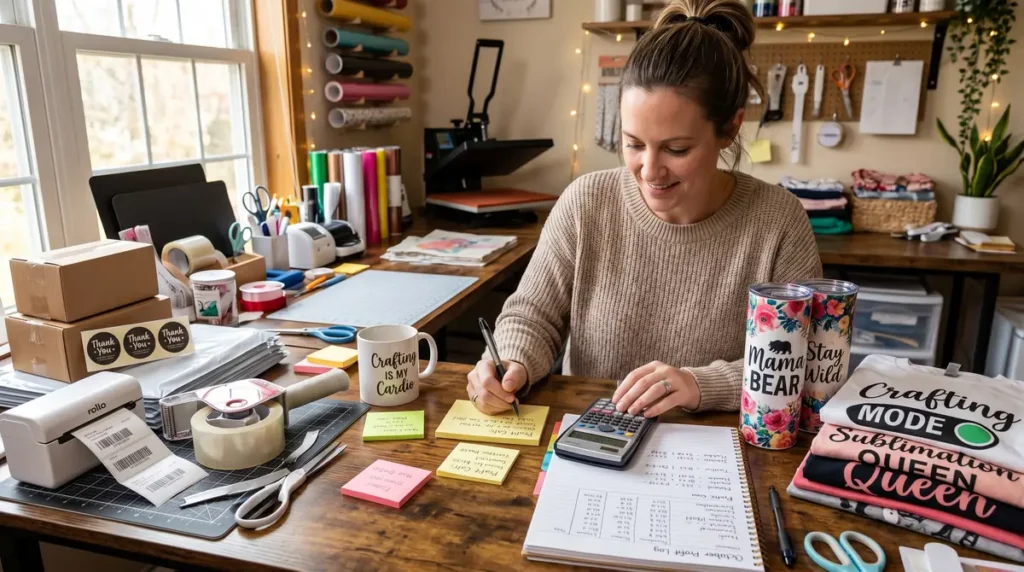
If you’re still building your business foundation, this sublimation business guide explains the bigger picture behind profitable sublimation workflows.
What Is a Sublimation Profit Margin?
A sublimation profit margin is the percentage of money you keep after subtracting all business and production expenses from the final selling price.
Many sellers confuse:
- markup
- revenue
- profit
But profit margin specifically measures how much money you actually keep after expenses.
Sublimation Profit Margin Formula
Profit Margin=Selling PriceSelling Price−Total Cost×100
Example
If:
- your tumbler sells for $40
- total production cost is $16
Your profit is: $24
Your profit margin is: 60%
This number matters because strong revenue does not always mean strong profitability.
A common sublimation mistake is selling a large number of products while keeping very little actual profit.
Turn the Formula Into a Repeatable Pricing System
Calculating one margin by hand is useful. Doing it for every tumbler, shirt, mug, wholesale order, and custom quote quickly becomes harder to manage.
The Subli Genius Pricing & Profit Toolkit lets you enter your real material, labor, packaging, waste, overhead, and selling costs once, then compare your proposed price with your true cost, target margin, break-even price, and expected profit.
Why Most Sublimation Sellers Underprice Their Products
Many beginners price products emotionally instead of strategically.
You may notice sellers:
- copying competitor prices
- using random multipliers
- pricing too low to “get sales”
- forgetting hidden business costs
The problem is that sublimation has many small expenses that quietly reduce profit margins over time.
Hidden Costs Most Beginners Forget
| Hidden Expense | Why It Matters |
|---|---|
| Failed prints | Misprints still cost money |
| Test prints | Ink and paper usage add up |
| Heat tape & butcher paper | Small supplies affect margins |
| Electricity | Heat presses use significant power |
| Etsy fees | Platform costs reduce profits |
| Packaging | Boxes and inserts are real expenses |
| Printer maintenance | Cleaning cycles consume ink |
| Design time | Your time has value |
Even experienced sublimation businesses occasionally lose products due to:
- ghosting
- pressing mistakes
- color shifts
- damaged blanks
Ignoring these losses creates unrealistic pricing.
If you are still estimating your setup expenses, this guide on sublimation startup costs helps break down the real investment behind a sublimation business.
How to Calculate Sublimation Costs Step by Step
To calculate sublimation costs accurately, you need to include every production expense before setting your final selling price.
This process works for:
- tumblers
- shirts
- mugs
- tote bags
- craft fair products
- Etsy orders
Step 1: Calculate Blank Cost
Start with the base blank.
Examples:
- tumbler blank
- polyester shirt
- ceramic mug
- aluminum panel
Example: 20 oz tumbler blank = $6.50
Always use your actual supplier cost, including shipping when possible.
Step 2: Add Sublimation Ink and Paper Costs
Many beginners underestimate sublimation ink usage.
Even though individual prints may seem inexpensive, costs increase over hundreds of products.
Include:
- sublimation ink
- transfer paper
- butcher paper
- heat tape
Example:
- ink usage = $0.90
- paper/tape = $0.45
Total: $1.35
If you want more accurate ink tracking, you can also reference tools like a sublimation cost estimator or ink coverage tracker later within the article cluster.
Step 3: Include Labor Cost
Your time matters.
One of the biggest pricing mistakes in sublimation is pretending labor is free.
Estimate:
- design setup time
- printing time
- pressing time
- packaging time
Example:
- production time = 20 minutes
- labor target = $24/hour
Labor cost:
$8
Even small side businesses should include labor. Otherwise your business eventually becomes exhausting instead of profitable.
Step 4: Add Overhead Expenses
Overhead includes business costs that are not tied to one specific product.
Examples:
- electricity
- printer cleaning cycles
- software subscriptions
- replacement parts
- workspace costs
- internet expenses
Many sublimation sellers use a flat overhead estimate per product.
Example: overhead allocation = $1.50 per item
This keeps calculations simple while still accounting for real business expenses.
Step 5: Add Marketplace Fees
Your sales platform affects profitability significantly.
Etsy Sellers Should Include
- listing fees
- transaction fees
- payment processing fees
- optional Etsy ads
Shopify Sellers Should Include
- payment processor fees
- app subscriptions
- shipping software costs
Craft Fair Sellers Should Include
- booth fees
- local taxes
- card processing fees
Example: Etsy fee allocation = $2.40
Ignoring platform fees is one of the fastest ways to accidentally destroy profit margins.
Pair your pricing strategy with our craft fair inventory planner to create a realistic sales and inventory plan.
Step 6: Add Packaging and Shipping Supplies
Packaging affects both branding and profitability.
Include:
- shipping boxes
- bubble wrap
- thank-you cards
- tissue paper
- labels
- branded inserts
Example: packaging cost = $1.25
Strong packaging can also justify premium pricing.
If you want ideas that improve perceived value without dramatically increasing costs, these sublimation packaging ideas can help.
Example Sublimation Profit Margin Calculation
Here’s a realistic example using a sublimation tumbler.
Sublimation Tumbler Cost Breakdown
| Expense | Cost |
|---|---|
| Tumbler blank | $6.50 |
| Ink + transfer paper | $1.35 |
| Labor | $8.00 |
| Overhead | $1.50 |
| Etsy fees | $2.40 |
| Packaging | $1.25 |
| Total Cost | $21.00 |
Selling price: $42, Profit: $21, Profit margin: 50%This is a much healthier business model than simply doubling your blank cost.
Many profitable sublimation shops aim for consistent margins rather than chasing low prices.
For more product-specific pricing workflows, this guide on how to price sublimation tumblers goes deeper into tumbler pricing strategy.
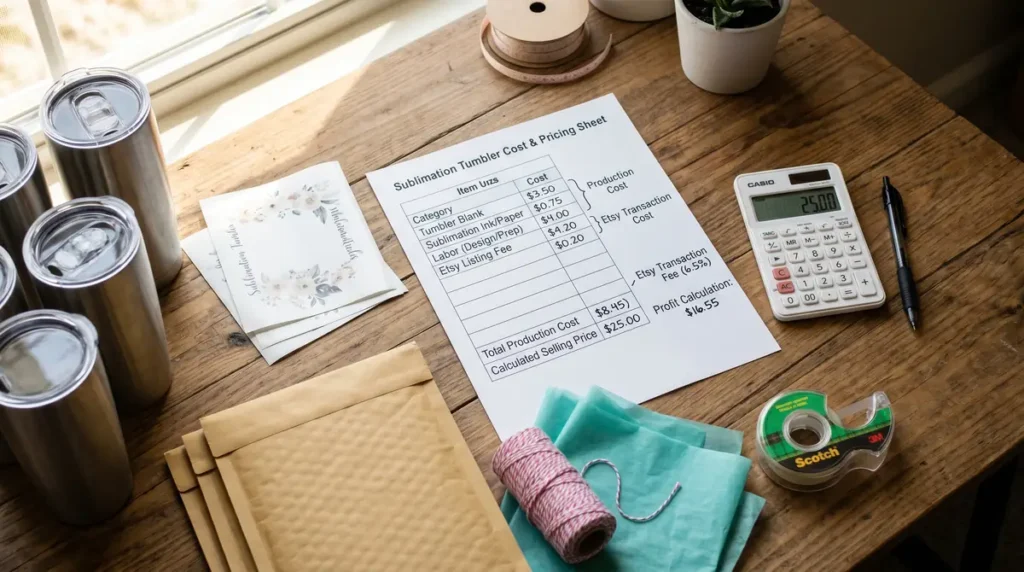
Looking for products that consistently perform at local markets? See our guide to the best sublimation products for craft fairs.
What Is a Good Sublimation Profit Margin?
Most successful sublimation businesses target profit margins between 40% and 70%.
The ideal range depends on:
- product type
- competition
- customization level
- production speed
- sales channel
Typical Sublimation Margin Benchmarks
| Product Type | Common Margin Range |
|---|---|
| Tumblers | 45%–65% |
| Shirts | 40%–60% |
| Mugs | 50%–75% |
| Personalized gifts | 55%–75% |
| Bulk company orders | 25%–45% |
| Craft fair products | 50%–70% |
Higher personalization usually supports higher margins because customers value customization more than commodity products.
How to Price Sublimation Products Without Guessing
A lot of sellers rely on outdated advice like:
- “multiply your blank cost by 3”
- “charge double plus shipping”
These shortcuts sometimes work, but they often fail when:
- supply prices increase
- Etsy fees rise
- shipping costs change
- labor time varies
A more sustainable pricing system uses:
- total production cost
- desired profit margin
- market positioning
Selling Price Formula
Selling Price=1−Desired MarginTotal Cost
Example
If:
- total cost = $18
- desired margin = 60%
Then:
Selling price = $45
This formula creates much more consistent profitability than random pricing methods.
Craft Fair Pricing vs Etsy Pricing
One major pricing mistake is using identical pricing across every platform.
Different sales channels have different business costs.
Etsy Pricing Usually Requires Higher Margins
Why?
Because Etsy sellers deal with:
- marketplace fees
- advertising costs
- shipping complexity
- higher competition
Many Etsy shops need stronger margins just to remain sustainable.
If you’re improving your visibility there, this guide to Etsy SEO for sublimation sellers can help increase conversion potential.
Craft Fair Pricing Can Work Differently
At local events:
- customers see products physically
- impulse buying increases
- shipping disappears
- bundle sales become easier
This allows more flexibility with:
- volume pricing
- discounts
- multi-item offers
The most profitable craft fair products are often:
- seasonal gifts
- personalized items
- low-cost impulse purchases
This article on best sublimation products for craft fairs pairs well with profit margin planning.
The Most Profitable Sublimation Products Usually Share These Traits
The highest-margin sublimation products often have:
- low material cost
- strong emotional value
- personalization opportunities
- gift appeal
- niche-specific demand
Examples:
- teacher tumblers
- memorial gifts
- sports mom shirts
- pet-themed products
- family vacation shirts
- holiday mugs
Customers pay more when products feel:
- personalized
- emotional
- gift-worthy
- niche-specific
Many sellers improve profitability simply by choosing better niches instead of lowering prices.
If you’re exploring higher-demand product categories, these best sublimation niches in 2026 are worth studying.
Better Product Photography Can Increase Profit Margins
Pricing is not only about math.
Presentation affects perceived value.
A common sublimation business mistake is using:
- dark photos
- cluttered backgrounds
- inconsistent lighting
- blurry mockups
Better photography often allows:
- higher pricing
- better conversion rates
- improved customer trust
Many Etsy sellers discover they can raise prices after improving product presentation alone.
This guide on how to photograph sublimation products explains simple ways to improve listing quality without expensive equipment.
Common Sublimation Pricing Mistakes
Ignoring Labor Time
Your production time is part of your business cost.
Without labor included, growth becomes unsustainable quickly.
Forgetting Failed Prints
Failed transfers happen in real sublimation workflows.
You should expect occasional:
- ghosting
- color errors
- pressing mistakes
- ruined blanks
Healthy pricing absorbs those losses.
Copying Competitor Prices
Competitors may:
- buy wholesale
- outsource labor
- use cheaper blanks
- operate at larger scale
Their pricing structure may not fit your business model.
Charging Too Little to “Get Sales”
Low prices can attract customers temporarily, but they often create:
- burnout
- low profits
- constant stress
- inability to upgrade equipment
Long-term profitability matters more than being the cheapest seller.
Tailored Action Plan for Beginner Sublimation Sellers
This section turns pricing theory into a practical workflow you can actually implement.
If You Sell on Etsy
Focus on:
- niche-specific personalization
- premium product photos
- strong branding
- optimized listings
- gift-focused products
Your goal is not competing on price alone.
Your goal is increasing perceived value.
If You Sell at Craft Fairs
Prioritize:
- impulse-friendly items
- seasonal products
- bundled offers
- fast-selling designs
Good examples:
- holiday tumblers
- teacher gifts
- local sports products
- personalized kids items
Beginner Pricing Workflow
- Track every material cost
- Estimate labor honestly
- Add overhead consistently
- Include failed print allowance
- Calculate target margin
- Compare against market pricing
- Adjust gradually over time
Suggested Practical Resources
Useful downloadable assets for this topic:
- sublimation pricing spreadsheet
- profit margin worksheet
- Etsy fee calculator
- craft fair pricing planner
- production cost tracker
These tools help transform pricing from guessing into a repeatable system.
Frequently Asked Questions
Is the sublimation business profitable?
Yes, sublimation can be very profitable when pricing includes labor, overhead, fees, and waste costs. Many businesses struggle because products are underpriced, not because demand is low.
What is a 20% profit margin?
A 20% profit margin means you keep 20 cents in profit for every dollar earned after expenses are removed.
How do I calculate sublimation cost per shirt?
Add together:
- shirt blank cost
- sublimation ink cost
- transfer paper
- labor
- overhead
- packaging
- selling fees
Then compare total costs against your final selling price.
What happens if my sublimation margins are too low?
Low margins usually create:
- burnout
- poor cash flow
- difficulty replacing supplies
- slower business growth
Do I need a sublimation pricing calculator?
A pricing calculator or spreadsheet makes it much easier to track changing material costs and maintain consistent profit margins.