Equipment Insurance for Heat Presses and Printers: Is It Worth It?

A failed heat press or printer can stop production within minutes. The harder question is whether insurance will pay for the repair or replacement.
Equipment insurance for heat presses and printers is not usually one single type of policy. Commercial property insurance can protect business equipment against covered property losses, while equipment breakdown coverage addresses certain mechanical and electrical failures.
The right protection depends on the machine, why it failed, how much it costs to replace, and the wording of your policy.
Quick answer: Heat presses and printers can be insured as business property. Commercial property coverage and equipment breakdown coverage protect against different types of loss, so owning one does not automatically mean every equipment failure is covered.
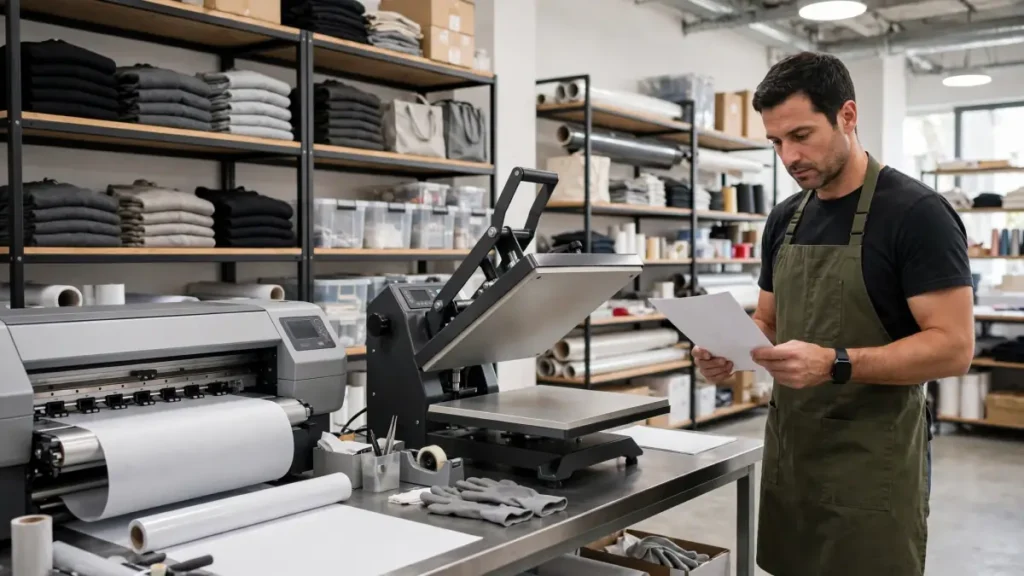
What Insurance Covers Heat Presses and Printers?
Print-shop equipment can fall under several types of coverage. The first step is matching the loss to the correct policy.
| Coverage | Main purpose | Example |
|---|---|---|
| Commercial property | Damage from covered property events | Fire damages a printer |
| Equipment breakdown | Certain machinery or electrical failures | Electrical failure stops a heat press |
| Business owner’s policy | Bundles common property and liability coverage | Small print shop insures premises and equipment |
| Business income | Certain income losses after a covered shutdown | Covered property loss stops production |
| Warranty | Manufacturer-defined defects or failures | Covered component fails during warranty |
Commercial property insurance can cover physical business assets such as equipment, inventory, and furniture when a covered peril causes damage.
Equipment breakdown is different. The National Association of Insurance Commissioners describes it as coverage for failures involving boilers, machinery, and other electrical equipment.
General liability serves another purpose. It mainly deals with liability to other people rather than replacing your own production machinery. Our general liability insurance for print shops guide explains that coverage separately.
Free Printable Checklist: Organize your equipment values, ownership details, receipts, and insurance questions before requesting a quote.
Commercial Property vs Equipment Breakdown Insurance
Commercial property and equipment breakdown coverage protect against different causes of loss. A print shop with valuable machinery should check both instead of assuming one policy covers everything.
| Loss | Coverage to check |
|---|---|
| Fire damages printer | Commercial property |
| Covered vandalism damages equipment | Commercial property |
| Electrical failure damages machine | Equipment breakdown |
| Sudden machinery failure | Equipment breakdown |
| Gradual wear | Usually maintenance or replacement issue |
| Manufacturer defect | Warranty may apply |
What Commercial Property Insurance Covers
Commercial property insurance protects the physical assets used to run your business against losses covered by the policy.
That can include:
- printers
- heat presses
- computers
- cutters
- inventory
- furniture
- production supplies
NAIC guidance identifies equipment and inventory as examples of physical business property that commercial property insurance can protect.
The exact covered events, limits, deductibles, and exclusions depend on your policy.
What Equipment Breakdown Insurance Covers
Equipment breakdown coverage focuses on failures inside machinery or electrical equipment rather than traditional property events such as fire.
It can address certain failures involving:
- machinery
- electrical systems
- motors
- control systems
- other covered production equipment
NAIC classifies equipment breakdown as coverage for failures involving machinery and electrical equipment.
Travelers also describes equipment breakdown insurance as coverage that can help with equipment repair or replacement after breakdowns.
Why a Print Shop May Need Both
Picture two different failures.
A fire damages your heat press overnight. That is primarily a commercial property question.
A different heat press looks normal from the outside but suddenly suffers an internal electrical failure. That points toward equipment breakdown coverage.
The machine is the same. The cause of damage is what changes the insurance question.
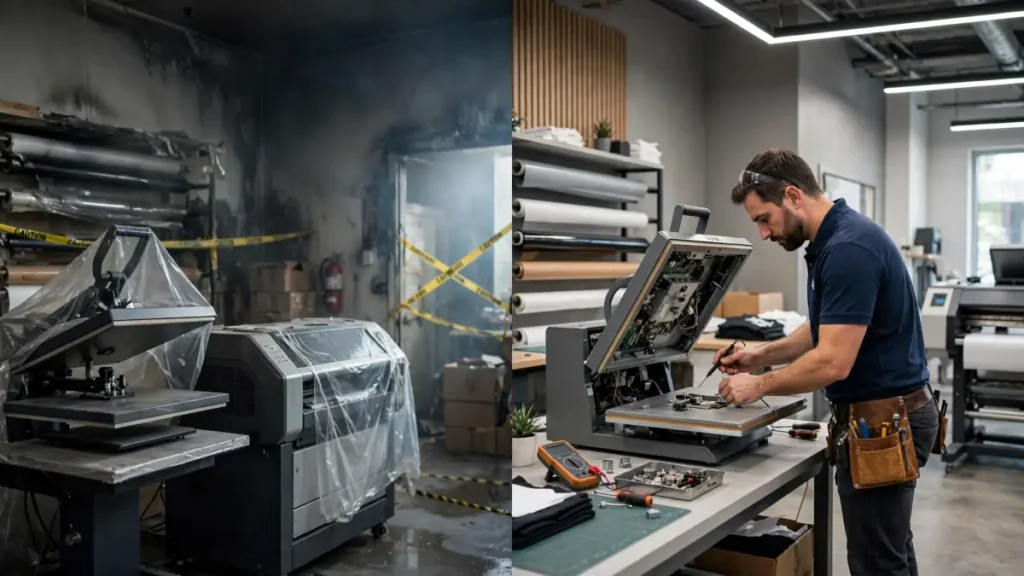
What Printing Equipment Can Be Insured?
Most print shops own more equipment than they realize once everything in the production chain is counted.
Typical equipment includes:
- sublimation printers
- DTF printers
- DTG printers
- heat presses
- mug presses
- cap presses
- calendar presses
- embroidery machines
- screen-printing equipment
- powder shakers and dryers
- conveyor dryers
- vinyl cutters
- wide-format printers
- production computers
- RIP workstations
- finishing equipment
Do not stop at the most expensive printer.
A smaller dryer, computer, cutter, or press may still be essential to completing an order. Losing one critical link in the production chain can make the rest of your equipment temporarily useless.
If you are still calculating how much money is tied up in machinery, our breakdown of print shop startup costs can help you separate equipment expenses from other business costs.
Can You Insure Just One Heat Press or Printer?
Yes, an individual machine can potentially be included in business equipment coverage. How it is handled depends on your insurer and policy structure.
An insurer may cover equipment under an overall business-property limit or require more detailed information about higher-value machines.
For expensive equipment, keep a record of:
- manufacturer
- model
- serial number
- purchase date
- original purchase price
- current replacement cost
- machine location
- ownership status
This information becomes especially important when one machine represents a large percentage of your total equipment value.
When a Machine Deserves Extra Attention
Review coverage closely when the machine is:
- expensive to replace
- your only production unit
- difficult to replace quickly
- financed
- leased
- used for most customer orders
- specialized for a particular process
A backup tabletop heat press creates a different financial risk from the only DTF printer keeping a commercial shop running.
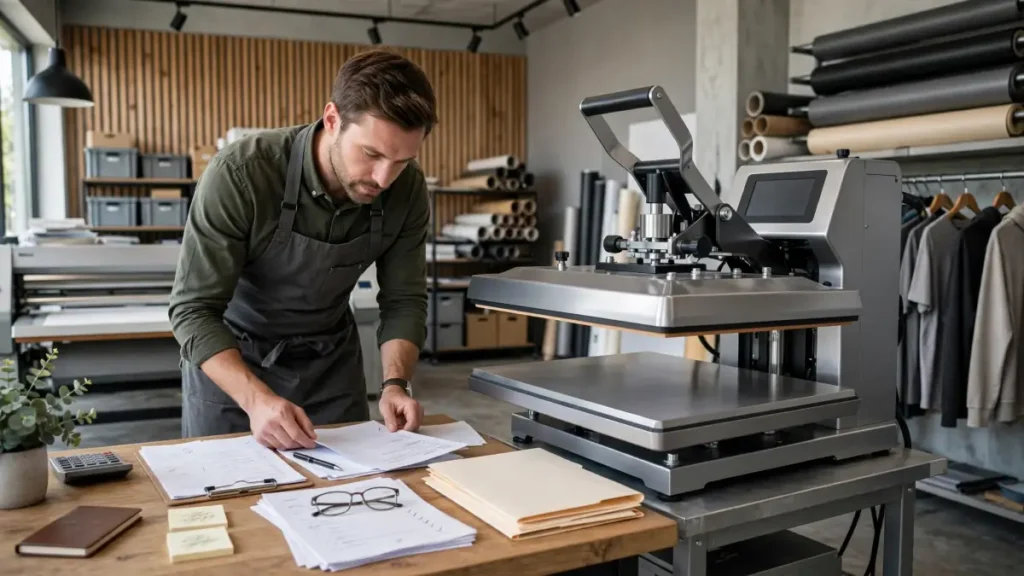
Owned vs Leased Printing Equipment
Owned, financed, and leased equipment should not automatically be treated the same way.
| Equipment status | What to check |
|---|---|
| Owned outright | Your property and breakdown coverage |
| Financed | Lender requirements plus your policy |
| Leased | Insurance terms in the lease |
| Used off-site | Coverage away from your primary location |
| Rented temporarily | Rental agreement and existing policy |
Check the Lease Before Assuming You’re Covered
A leasing agreement may specify what insurance must be maintained on the machine.
Before signing or renewing a lease, check:
- Who is responsible for insuring the equipment?
- What types of loss must be covered?
- What limits are required?
- Does your existing business policy satisfy the requirement?
- What proof of insurance must you provide?
- What happens if your coverage lapses?
A lease-related equipment charge is not automatically the same thing as equipment breakdown protection for the rest of your print shop.
What Equipment Insurance Usually Does Not Cover
Equipment coverage is not a substitute for routine maintenance.
Depending on the policy, problems involving gradual deterioration, normal wear, maintenance, or excluded causes of loss may not qualify for coverage.
Common issues to investigate before assuming you have a claim include:
- routine wear and tear
- poor maintenance
- gradual deterioration
- pre-existing damage
- consumable parts
- cosmetic damage
- intentional damage
- excluded causes of loss
Policy wording controls the final answer.
Is a Clogged Printhead an Insurance Claim?
Routine printhead clogging should not automatically be treated as an insurance claim.
Sublimation, DTF, and DTG printers need regular maintenance. Dried ink, clogged nozzles, contamination, and gradual printhead deterioration are different from a sudden machinery or electrical breakdown.
For maintenance-related problems, start with troubleshooting. Our guide to preventing banding, clogging, and print-head problems covers the common causes and preventive steps.
If the machine suffered a sudden electrical or mechanical failure instead, document what happened and check the policy before authorizing major repairs.
Does Equipment Insurance Cover a Broken Heat Press?
A broken heat press may be covered, but the reason it failed matters more than the fact that it stopped working.
Use this simple check.
Fire or Another Covered Property Event
Commercial property insurance may apply when a covered external event physically damages the press.
Sudden Mechanical or Electrical Failure
Equipment breakdown coverage may apply when a covered machinery or electrical failure damages the machine.
Normal Wear
A platen, heating element, hinge, controller, or other component can eventually wear from normal use.
Do not assume routine aging is an insurance loss. Check maintenance and warranty options first.
Manufacturer Defect
A machine still within its warranty period may qualify for manufacturer support instead.
Insurance and warranties solve different problems.
Accidental Operator Damage
Coverage depends on how the damage happened and what the policy includes.
Take photos and keep technician reports, repair estimates, invoices, and serial numbers when a significant failure occurs.
Does Equipment Insurance Cover Printer Breakdown?
Printer breakdown may fall under equipment breakdown coverage when a covered sudden mechanical or electrical failure causes the damage.
Potential failures can involve:
- electrical components
- power systems
- motors
- control boards
- mechanical systems
- other covered internal components
Travelers describes equipment breakdown risks as including mechanical and electrical failures.
Routine printer problems belong in a different category.
Examples include:
- clogged nozzles
- dried ink
- worn consumable components
- neglected cleaning
- ink contamination
- routine calibration problems
- gradual deterioration
A printer that “stopped working” does not provide enough information to determine coverage.
The cause of failure matters.
How Much Does Equipment Insurance Cost for a Print Shop?
There is no useful flat price that applies to every heat press, printer, or print shop.
Premiums can change based on factors such as:
- total equipment value
- type of equipment
- shop location
- business size
- coverage limits
- deductible
- claims history
- selected endorsements
- property exposure
- policy structure
The SBA recommends assessing the risks a business could not comfortably absorb and comparing insurance terms and prices from different sources.
Compare the Risk, Not Just the Machine Count
Consider these hypothetical setups.
Small home setup
- one sublimation printer
- one heat press
- laptop
- small inventory
Commercial DTF setup
- production DTF printer
- powder shaker
- curing dryer
- several heat presses
- RIP workstation
- larger inventory
Both businesses own printing equipment, but the cost of a serious loss is very different.
When requesting quotes, provide the same equipment values, limits, and deductibles to each insurer. That makes the comparison much more useful.
Replacement Cost vs Actual Cash Value
The way your policy values damaged equipment can affect how much money is available after a covered loss.
Two terms matter here.
Replacement Cost
Replacement-cost coverage is generally based on repairing or replacing covered property with property of like kind and quality, subject to policy terms.
Actual Cash Value
Actual cash value considers depreciation, including age and wear.
NAIC explains that actual cash value subtracts depreciation, while replacement-cost coverage does not reduce the settlement for depreciation in the same way.
Why It Matters for Older Printers
Consider a printer purchased several years ago.
Its original purchase price may be very different from:
- its depreciated value today
- the price of a comparable replacement machine
Ask your insurer:
- Is the machine valued at replacement cost or actual cash value?
- Are there special limits for older equipment?
- Do I have to replace the machine before receiving full replacement-cost benefits?
- What deductible applies?
Do not wait for a claim to learn how your equipment is valued.
How Much Equipment Coverage Does a Print Shop Need?
Start with an equipment inventory.
Trying to estimate from memory usually misses smaller machines and supporting systems.
Step 1: Record Every Major Machine
Create a simple table:
| Information | What to record |
|---|---|
| Equipment | Printer, press, dryer, cutter |
| Brand/model | Exact model |
| Serial number | Machine serial |
| Purchase date | Invoice date |
| Purchase price | Original cost |
| Replacement value | Current comparable equipment |
| Location | Shop, home, warehouse |
| Ownership | Owned, financed, leased |
Step 2: Add Supporting Equipment
Include the machines that keep production moving:
- computers
- dryers
- shakers
- cutters
- compressors
- pretreatment equipment
- finishing equipment
Step 3: Record Inventory Separately
Blanks, ink, paper, film, packaging, and finished customer orders are business property too.
Keep their value separate from machinery so you can see how much of your total exposure comes from equipment.
Step 4: Mark Revenue-Critical Machines
Ask:
If this machine stopped tomorrow, could I still complete customer orders?
Label each asset as:
- critical
- important
- backup
- easily replaceable
A print shop production checklist can help identify where each machine sits in your normal order-to-delivery process.
Is Equipment Insurance Worth It for a Heat Press or Printer?
Equipment insurance is easier to justify when replacing a machine yourself would cause a serious cash-flow problem or stop production.
Use the machine’s business importance, not only its purchase price.
| Situation | Insurance priority |
|---|---|
| Low-cost backup press | Lower |
| Only production heat press | Higher |
| Expensive DTF printer | Higher |
| Commercial DTG system | Higher |
| Several machines with backup capacity | Depends |
| Financed machine | Check financing terms |
| Leased machine | Check lease |
| Easy to replace from cash | Lower |
| Machine drives most revenue | Higher |
Ask One Practical Question
Could the business comfortably replace this machine tomorrow?
If the answer is yes, carrying more of the risk yourself may be practical.
If the answer is no, insurance deserves closer attention.
The SBA recommends insuring against business losses you would not be able to pay for yourself.
Downtime Can Cost More Than the Repair
Replacing the machine is only one part of the problem.
A failed production printer can also create:
- delayed orders
- outsourced production costs
- missed deadlines
- continuing rent and payroll
- customer-service problems
Business-income coverage addresses certain income losses when operations stop because of a covered event. The trigger and exclusions depend on the policy.
Ask how a covered equipment loss would affect any business-income protection you carry.
Equipment Insurance vs Warranty vs Service Plan
These protections overlap less than many shop owners expect.
| Protection | Main purpose |
|---|---|
| Commercial property | Covered physical property losses |
| Equipment breakdown | Certain mechanical and electrical failures |
| Manufacturer warranty | Defects or failures defined by manufacturer |
| Extended warranty | Repairs defined by contract |
| Service agreement | Maintenance and service support |
| Business income | Certain income losses after covered shutdown |
Manufacturer Warranty
A warranty follows the manufacturer’s terms.
It may help when a covered defect or component failure happens during the warranty period.
It does not replace business property insurance.
Service Agreement
A service contract may include:
- preventive maintenance
- technical support
- labor
- replacement parts
- scheduled servicing
Coverage varies by agreement.
Equipment Breakdown Insurance
Equipment breakdown coverage addresses insured machinery and electrical failures rather than routine servicing. NAIC treats it as a distinct type of coverage.
A print shop may have a warranty, service contract, and insurance at the same time because each solves a different problem.
What to Tell Your Insurance Agent About Print Equipment
Do not describe a production shop only as a “T-shirt business.”
Give the agent enough information to understand what equipment is actually being used.
Prepare:
- manufacturer
- model
- serial number
- machine age
- purchase price
- replacement value
- business location
- ownership status
- production use
- off-site use
- maintenance routine
Explain your printing methods too:
- sublimation
- DTF
- DTG
- screen printing
- embroidery
- HTV
- wide-format printing
This is especially useful when the business has grown beyond the equipment listed when the policy was originally purchased.
A documented print shop workflow can make it easier to identify the equipment that is essential at each stage of production.
Questions to Ask Before Buying Equipment Coverage
Take your equipment list with you when comparing policies.
Equipment
- Is my heat press covered?
- Are all printers covered?
- Do expensive machines need to be listed separately?
- Are production computers covered?
- Are dryers, cutters, and supporting equipment included?
Causes of Loss
- What types of property damage are covered?
- Is equipment breakdown included?
- Are mechanical failures covered?
- Are electrical failures covered?
- Which causes are excluded?
Value
- Is equipment valued at replacement cost or actual cash value?
- What equipment limit applies?
- Are any sublimits used?
- What deductible applies?
Location
- Is equipment covered away from my shop?
- What happens when I take equipment to an event?
- Is equipment protected during transport?
Ownership
- Is financed equipment covered?
- Is leased equipment covered?
- Does my lease require additional insurance documentation?
Downtime
- Is business-income coverage included?
- What event must happen before it applies?
- Is extra-expense coverage available?
Get important answers in writing and keep them with your policy records.
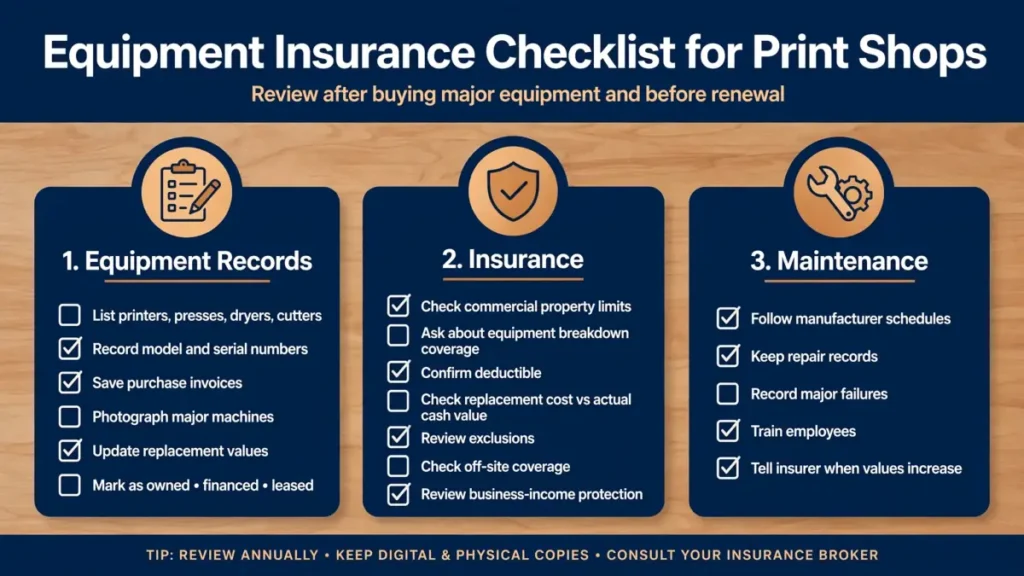
Equipment Insurance Checklist for Print Shops
Review this list after buying major equipment and again before policy renewal.
Equipment Records
- List printers, presses, dryers, and cutters.
- Record model and serial numbers.
- Save purchase invoices.
- Photograph major machines.
- Update replacement values.
- Mark equipment as owned, financed, or leased.
Insurance
- Check commercial property limits.
- Ask about equipment breakdown coverage.
- Confirm the deductible.
- Check replacement cost vs actual cash value.
- Review exclusions.
- Check off-site equipment coverage.
- Review business-income protection.
Maintenance
- Follow manufacturer maintenance schedules.
- Keep repair records.
- Record major failures.
- Train employees on proper machine use.
- Tell your insurer when equipment values increase significantly.
A policy written when you owned one printer and a small press may no longer match a production room filled with commercial equipment.
Frequently Asked Questions
Can You Insure a Single Piece of Business Equipment?
Yes. A heat press, printer, or other business machine can potentially be included in business property coverage. Ask your insurer whether it falls under your overall property limit or needs to be listed separately.
Does Business Insurance Cover a Broken Heat Press?
It depends on why the press broke. Commercial property may cover certain external property losses, while equipment breakdown coverage can apply to some sudden mechanical or electrical failures. Routine wear is a different issue.
Does Insurance Cover Printer Mechanical Failure?
Equipment breakdown insurance can cover certain mechanical or electrical failures, subject to the policy. Normal maintenance, gradual wear, and clogged printheads should not automatically be treated as covered breakdowns.
Does Commercial Property Insurance Cover Printers?
Yes, printers can be insured business property. Coverage applies when the equipment is damaged by a cause covered under the commercial property policy.
Is Equipment Breakdown Insurance Worth It?
It is worth considering when a machine is expensive, difficult to replace, or essential to production. Compare the possible loss with the premium, deductible, limits, and exclusions.
How Much Does Printing Equipment Insurance Cost?
There is no single price for every print shop. Equipment value, location, deductible, limits, business size, and selected coverage can all affect the quote.
Does Insurance Cover Used Printing Equipment?
Used business equipment can potentially be insured, but valuation and coverage depend on the policy. Ask how older machines are valued before choosing your limits.
Does Insurance Cover Leased Printers and Heat Presses?
It can, but the lease may have specific insurance requirements. Review the agreement and confirm the coverage with both the insurer and leasing company.
Is a Warranty the Same as Equipment Insurance?
No. A warranty covers defects or failures defined by the manufacturer or warranty contract. Equipment insurance protects against insured causes of loss. One does not automatically replace the other.
Does Homeowners Insurance Cover a Home Sublimation Printer?
Do not assume that it does. NAIC warns that standard personal policies can provide limited business-property protection, so home-based businesses should review their coverage with an insurer.
Protect the Machines Your Shop Depends On
Equipment insurance for heat presses and printers is most useful when losing a machine would create a financial problem the business could not easily absorb.
Start by identifying why a loss might happen:
- Fire or another covered property loss: check commercial property insurance.
- Sudden machinery or electrical failure: check equipment breakdown coverage.
- Manufacturer defect: check the warranty.
- Normal wear or maintenance: plan for repair and replacement costs.
- Production shutdown: review business-income coverage.
Then inventory your equipment and record the replacement value, serial number, ownership status, deductible, valuation method, and importance to production.
The most useful question is not simply, “Is my printer insured?”
Ask instead:
“If this machine cannot run tomorrow, what will it cost to repair, replace, and keep orders moving?”
That answer will tell you far more about whether equipment coverage is worth paying for.