Industrial Sublimation Oven vs Heat Press: Cost, Output, and ROI Compared

Both industrial sublimation ovens and commercial heat presses have an important place in professional print production. The right investment depends on the products you manufacture, your daily production volume, and your long-term business goals.
Choosing equipment for your workflow? Our Heat Press Buying Guide explains how to match press type and platen size to the products you make.
If your business specializes in drinkware and regularly fulfills bulk orders, an industrial sublimation oven offers greater efficiency and lower labor costs over time.
If you need the flexibility to produce apparel, promotional products, photo panels, and other flat substrates, a commercial heat press remains the more versatile choice.
Many successful print shops eventually invest in both machines. Using each piece of equipment for the products it handles best creates a more efficient workflow and supports steady business growth.
If you’re still learning the fundamentals of the printing process, our What Is Sublimation Printing? guide explains how sublimation works before comparing commercial equipment.
Quick Answer
Neither machine is the best choice for every business. The right investment depends on what you produce and how much you plan to manufacture.
| Feature | Industrial Sublimation Oven | Commercial Heat Press |
|---|---|---|
| Initial Cost | Higher | Lower |
| Batch Production | Excellent | Limited |
| Single Item Production | Good | Excellent |
| Drinkware | Excellent | Very Good |
| Apparel | Not Suitable | Excellent |
| Labor Efficiency | High | Moderate |
| Scalability | Excellent | Good |
Choose an industrial sublimation oven if your business focuses on high-volume drinkware production and you want to increase output while reducing labor per batch.
Choose a commercial heat press if you produce a variety of products, need precise pressure control, or want a lower upfront investment.
Industrial Sublimation Oven vs Heat Press Comparison
Before looking at cost and return on investment, it’s helpful to understand how these machines differ in day-to-day production.
| Category | Industrial Sublimation Oven | Commercial Heat Press |
|---|---|---|
| Heating Method | Convection heat | Heated platen with pressure |
| Production Style | Batch processing | Individual pressing |
| Best Applications | Tumblers, mugs, bottles | Apparel, panels, flat blanks |
| Operator Involvement | Low during heating cycles | Required for every press |
| Production Capacity | High-volume batches | Continuous single-item production |
| Business Type | Drinkware specialists | General sublimation businesses |
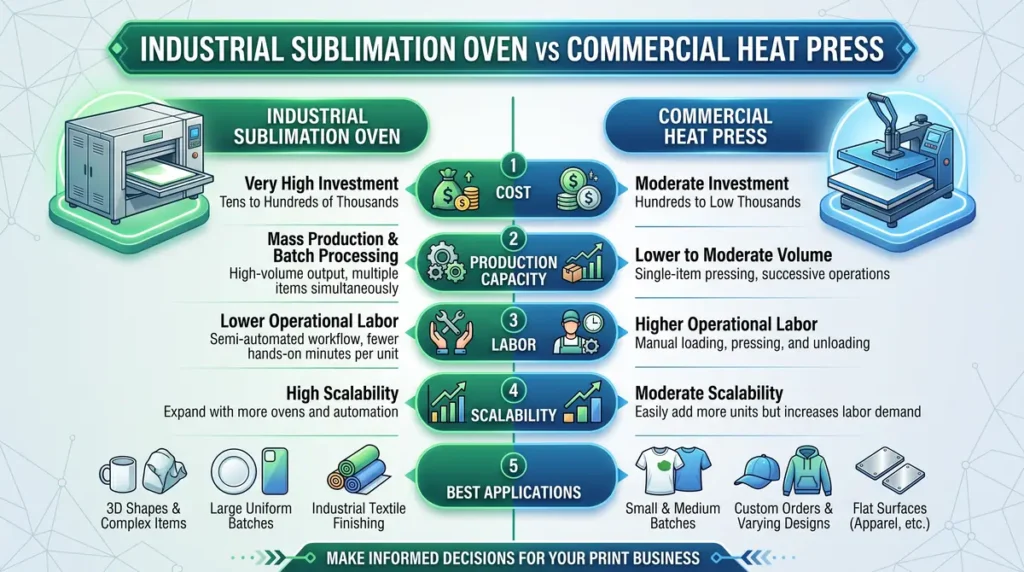
An industrial sublimation oven usually costs more upfront, its ability to process multiple products in one heating cycle can improve productivity for businesses with consistent drinkware orders. A commercial heat press offers greater flexibility, making it a practical investment for shops that produce a wider range of sublimation products.
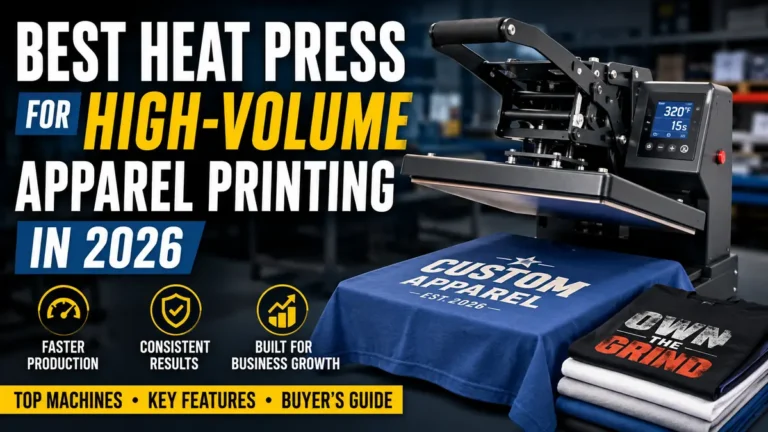
Businesses with high apparel output should consider the recommendations in our Best Heat Press for High Volume Apparel Printing guide before investing.
What Is an Industrial Sublimation Oven?
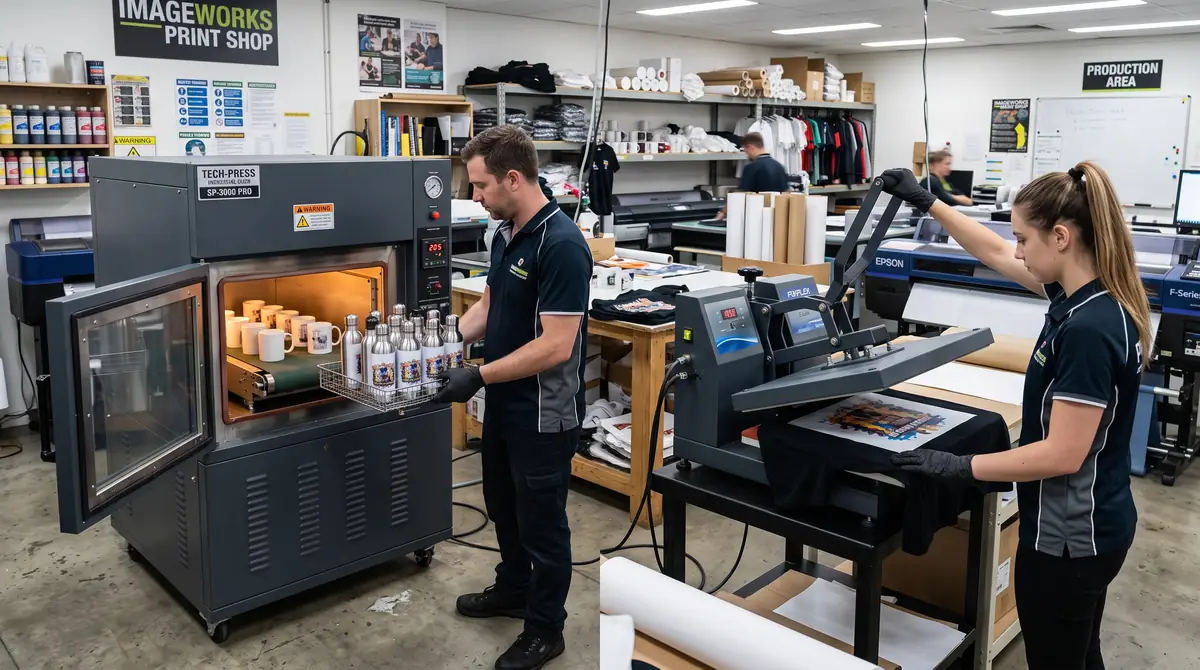
An industrial sublimation oven is a convection heating system designed to transfer sublimation prints onto coated products in batches. Instead of using pressure, the oven circulates hot air around each item, allowing multiple products to cure during the same production cycle.
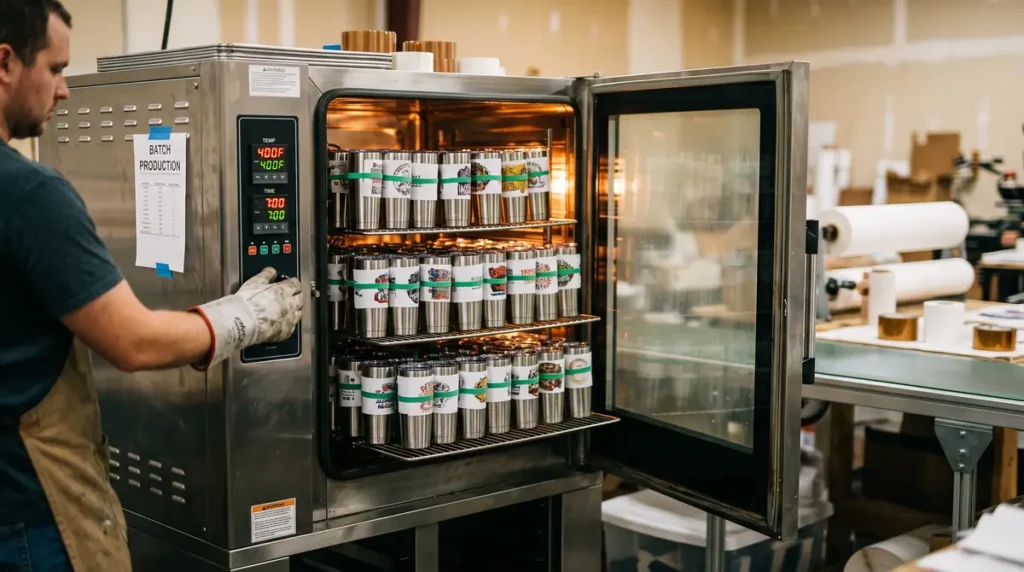
This production method is widely used by businesses that specialize in drinkware because several wrapped items can be processed simultaneously. As production volume increases, batching products together can improve efficiency and reduce labor compared to pressing each item individually.
Industrial sublimation ovens are commonly used for:
- Stainless steel tumblers
- Ceramic mugs
- Water bottles
- Glass cans
- Sports bottles
- Other coated cylindrical sublimation blanks
If you’re deciding whether an oven fits your production workflow, our What Is a Sublimation Oven? guide explains how these systems work and the products they support.
Advantages
- Produces multiple items in one heating cycle
- Reduces operator involvement during production
- Ideal for wholesale and bulk drinkware orders
- Supports consistent batch workflows
- Easier to scale as production volume grows
Limitations
- Primarily designed for coated cylindrical products
- Cannot replace a heat press for garments or most flat substrates
- Higher initial investment than many commercial heat presses
- Requires shrink sleeves or wraps for most applications
What Is a Commercial Heat Press?
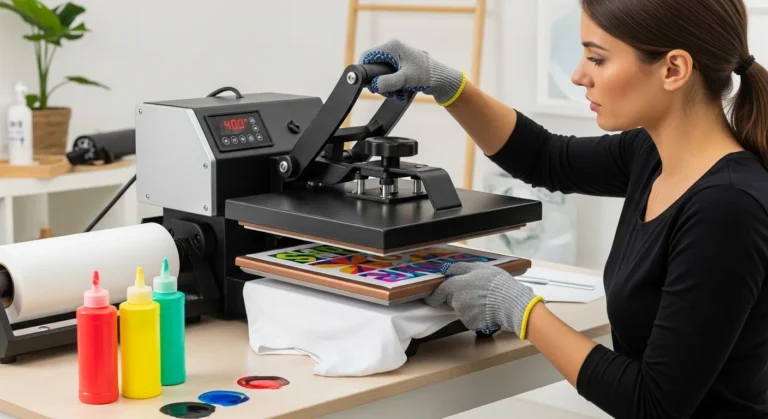
A commercial heat press transfers sublimation ink by applying controlled heat and pressure to a single product. This combination creates consistent contact between the transfer paper and the substrate, making it suitable for a wide variety of flat materials.
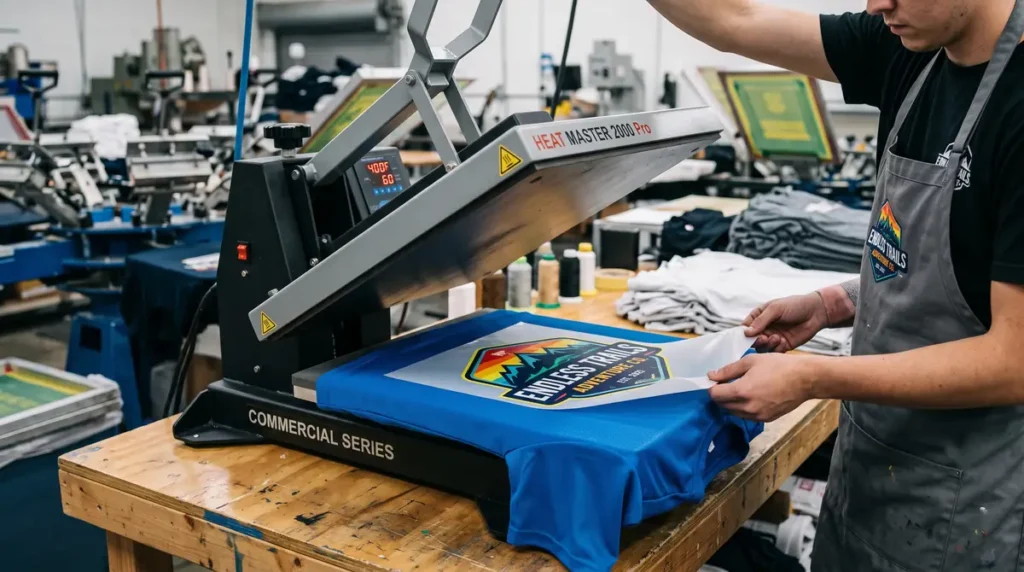
Unlike an industrial oven, a heat press allows operators to adjust temperature, pressure, and pressing time for different products. That flexibility makes it one of the most valuable machines for print shops offering custom apparel and promotional items.
Commercial heat presses are commonly used for:
- Polyester shirts
- Hoodies
- Aluminum photo panels
- Mouse pads
- Ceramic tiles
- MDF blanks
- License plates
- Flat promotional products
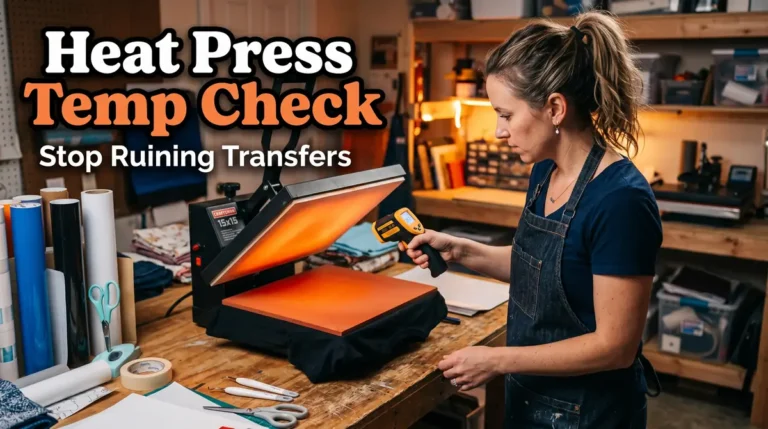
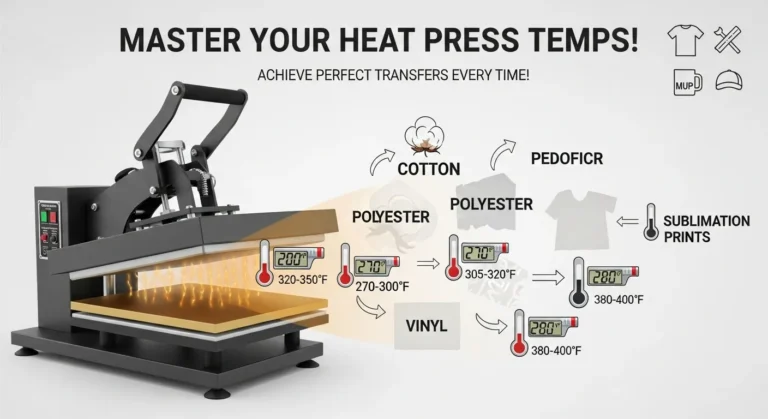
Proper temperature and pressure settings play a major role in print quality. Our Heat Press Sublimation Settings guide covers recommended settings for a wide range of sublimation blanks.
Advantages
- Works with many different sublimation products
- Provides accurate pressure control
- Produces consistent transfers on flat substrates
- Lower equipment cost for many businesses
- Suitable for both small shops and commercial production
Limitations
- Processes one item at a time
- Requires more operator attention during production
- Scaling production often requires multiple presses or additional staff
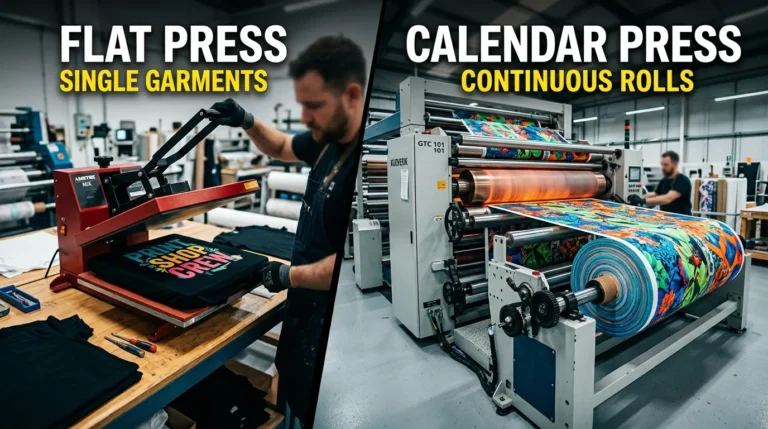
Learn the differences between these two commercial machines in our Calendar Heat Press vs Flat Heat Press comparison guide.
Industrial Sublimation Oven vs Heat Press Cost
Purchase price is only one part of the investment. Operating costs, labor requirements, maintenance, and production capacity all influence the total cost of ownership.
| Cost Factor | Industrial Sublimation Oven | Commercial Heat Press |
|---|---|---|
| Initial Equipment Cost | Higher | Lower |
| Accessories | Shrink sleeves, wraps, racks | Platens, mug attachments, accessories |
| Energy Usage | Higher per heating cycle | Lower per press cycle |
| Labor Cost | Lower for batch production | Higher for large orders |
| Maintenance | Heating elements, fans | Heating elements, pressure components |
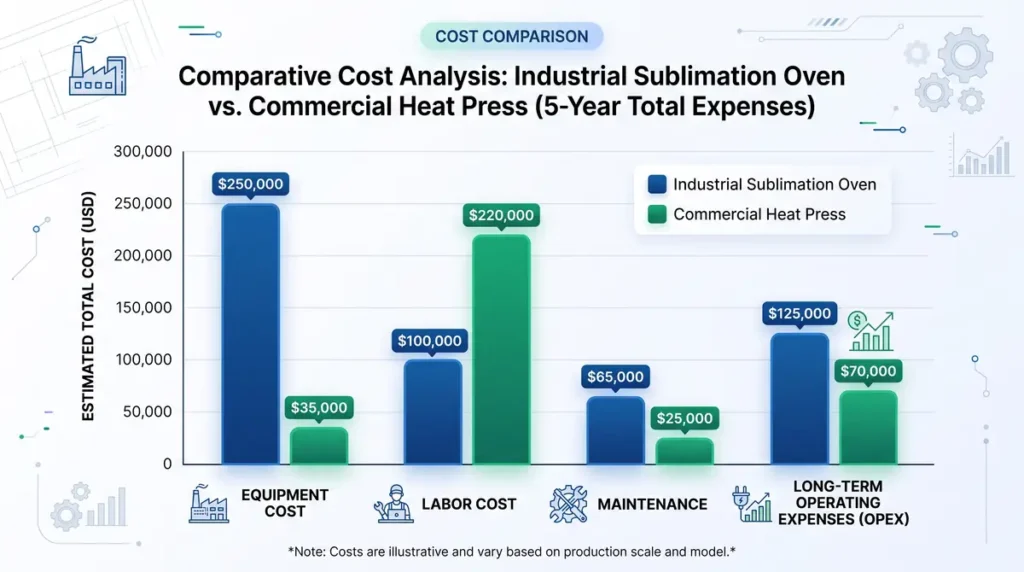
For businesses producing hundreds of tumblers each week, labor savings can offset the higher purchase price of an industrial oven. Smaller shops or businesses with a varied product range often recover their investment faster with a commercial heat press because of its lower upfront cost and greater versatility.
Before purchasing new equipment, it’s also worth calculating your production costs and pricing strategy. Our Sublimation Pricing Calculator can help estimate costs and determine how quickly a new machine could pay for itself.
purchase prices. Consider how each machine fits your current workflow and future business plans.
Ask yourself these questions before making a decision:
- What products generate most of your revenue?
- How many items do you produce each day?
- Do you expect production to grow within the next 12 to 24 months?
- Do you have enough workspace and electrical capacity?
- Will additional labor be required as order volume increases?
Many businesses begin with a commercial heat press because it supports a broad range of products. As drinkware sales increase, adding an industrial sublimation oven can improve efficiency without replacing existing equipment.
If you’re planning long-term growth, the Sublimation Business Guide provides practical advice on equipment planning, pricing, and scaling a production workflow.
Output and Production Capacity
Production capacity is where the biggest difference between an industrial sublimation oven and a commercial heat press becomes apparent. While both machines can produce professional-quality transfers, the number of items they process in a typical workday varies significantly.
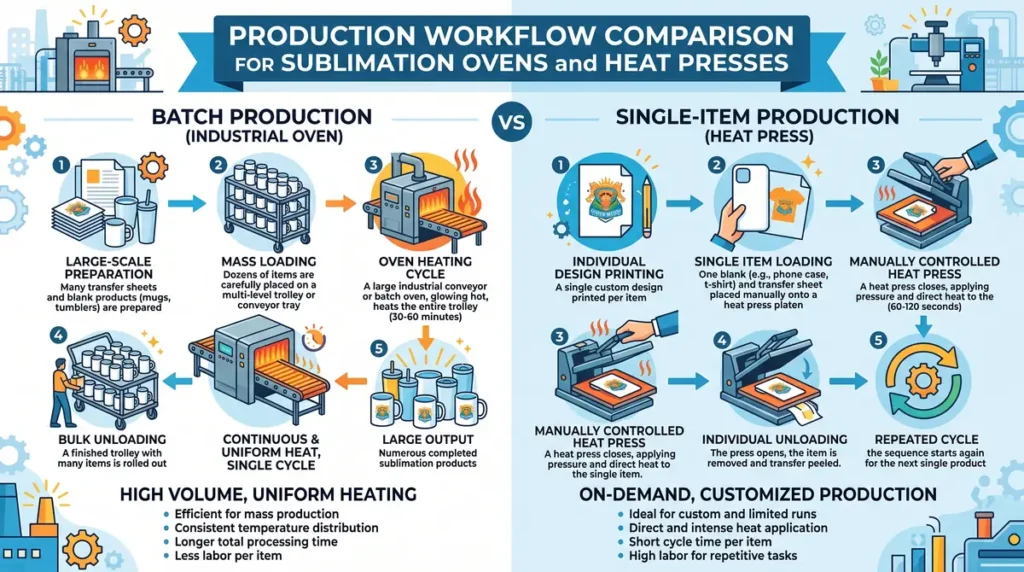
A heat press completes one transfer at a time. An experienced operator can maintain a steady workflow, but every product still requires individual loading, pressing, unloading, and cooling. This process works well for custom orders, short production runs, and businesses that manufacture different products throughout the day.
An industrial sublimation oven is built for batch production. Multiple wrapped tumblers, mugs, or bottles can be heated during the same cycle, allowing operators to prepare the next batch while the current one is curing. This workflow reduces idle time and improves labor efficiency as production volume increases.
| Production Factor | Industrial Sublimation Oven | Commercial Heat Press |
|---|---|---|
| Production Method | Batch processing | Individual pressing |
| Operator Time | Lower | Higher |
| Bulk Orders | Excellent | Good |
| Custom Orders | Good | Excellent |
| Production Scalability | High | Moderate |
For businesses that regularly fulfill wholesale drinkware orders, an industrial oven can significantly improve daily output. Shops that focus on personalized products or mixed product catalogs often benefit more from the flexibility of a commercial heat press.
Print Quality Comparison
Both machines are capable of producing vibrant, permanent sublimation prints when the correct temperature, transfer paper, ink, and substrates are used. The difference lies in how heat is applied during the transfer process.
A commercial heat press combines heat with controlled pressure. This creates even contact between the transfer paper and the substrate, helping produce sharp details, accurate colors, and consistent transfers on flat materials.
An industrial sublimation oven relies on circulating hot air rather than mechanical pressure. When products are wrapped correctly with shrink sleeves or heat-resistant wraps, ovens can produce excellent results on cylindrical items. Poor wrapping, however, may lead to blurred edges, ghosting, or uneven color transfer.
| Print Quality Factor | Industrial Sublimation Oven | Commercial Heat Press |
|---|---|---|
| Color Consistency | Excellent with proper wrapping | Excellent |
| Pressure Control | None | Precise |
| Flat Substrates | Limited | Excellent |
| Cylindrical Products | Excellent | Very Good |
| Risk of Ghosting | Moderate if wrapped incorrectly | Low with proper setup |
Regardless of the equipment you choose, color management remains essential. If you’re experiencing dull colors or inaccurate prints, our Best ICC Profiles for Sublimation guide explains how printer profiles affect final print quality.
Which Products Work Best With Each Machine?
Not every sublimation blank performs equally well with both machines. Selecting the right equipment often depends on the types of products your business sells most frequently.
| Product | Industrial Sublimation Oven | Commercial Heat Press |
|---|---|---|
| Stainless Steel Tumblers | ✓ | ✓ |
| Ceramic Mugs | ✓ | ✓ |
| Water Bottles | ✓ | ✓ |
| Glass Cans | ✓ | Limited |
| Polyester Shirts | ✗ | ✓ |
| Hoodies | ✗ | ✓ |
| Mouse Pads | ✗ | ✓ |
| Aluminum Photo Panels | ✗ | ✓ |
| MDF Products | ✗ | ✓ |
| Ceramic Tiles | ✗ | ✓ |
If your product catalog is centered around drinkware, an industrial sublimation oven can increase efficiency by processing multiple items together. If you offer apparel, promotional products, signage, and personalized gifts, a commercial heat press provides the flexibility needed for a wider range of substrates.
Businesses expanding into custom apparel may also find our Sublimation Shirts guide helpful when selecting suitable garments and production methods.
Cost Per Unit and Return on Investment
The purchase price of a machine only tells part of the story. Long-term profitability depends on production efficiency, labor costs, and how many products you manufacture each day.
For businesses producing occasional custom orders, a commercial heat press often delivers a faster return because of its lower upfront investment. As production volume grows, labor becomes a larger expense. Processing each product individually can slow production and increase operating costs.
An industrial sublimation oven becomes more cost-effective when production shifts toward bulk drinkware orders. Processing multiple items in a single heating cycle helps reduce labor per unit and increases daily output without requiring additional presses.
| Business Size | Recommended Equipment | Primary Reason |
|---|---|---|
| Hobby Business | Commercial Heat Press | Lower investment and greater flexibility |
| Etsy Seller | Commercial Heat Press | Handles a wide variety of personalized products |
| Growing Print Shop | Depends on product mix | Choose based on production volume |
| Wholesale Drinkware Business | Industrial Sublimation Oven | Faster batch production and lower labor costs |
| Large Commercial Facility | Both Machines | Maximum flexibility and production capacity |
Before investing in new equipment, estimate your production costs, material expenses, and selling prices. Our Sublimation Cost Estimator and Sublimation Pricing Calculator can help determine how quickly an equipment purchase may pay for itself.
Which Machine Should You Choose?
The best investment depends on your product catalog and production goals.
Choose an Industrial Sublimation Oven If You:
- Produce large quantities of tumblers or mugs
- Handle wholesale or bulk orders
- Want to reduce labor during batch production
- Plan to scale drinkware production
- Need higher daily output
Choose a Commercial Heat Press If You:
- Produce apparel and flat sublimation blanks
- Offer a wide variety of custom products
- Have a limited startup budget
- Focus on personalized or short-run orders
- Need precise pressure control for different substrates
Many established print shops eventually use both machines. A heat press handles garments and flat products, while an industrial sublimation oven increases efficiency for drinkware production. This combination allows businesses to expand their product range without sacrificing productivity.
If you’re still building your production setup, our Sublimation Business Guide shares practical advice on selecting equipment, managing costs, and scaling a print business.
Industrial Sublimation Oven vs Heat Press Decision Matrix
The table below provides a quick way to determine which machine best matches your business.
| If You… | Best Choice |
|---|---|
| Produce mostly tumblers and mugs | Industrial Sublimation Oven |
| Print shirts and flat products | Commercial Heat Press |
| Need the lowest startup investment | Commercial Heat Press |
| Handle wholesale drinkware orders | Industrial Sublimation Oven |
| Offer a wide range of custom products | Commercial Heat Press |
| Plan to scale drinkware production | Industrial Sublimation Oven |
| Need one machine for multiple product types | Commercial Heat Press |
Choosing equipment based on your production workflow rather than the purchase price usually delivers better long-term value. A machine that improves efficiency today should also support your business as demand continues to grow.
Common Buying Mistakes
Choosing equipment based only on price often leads to unnecessary upgrades later. Before making a purchase, consider how the machine will fit into your production workflow over the next several years.
Common mistakes include:
- Buying equipment that exceeds current production needs
- Choosing an oven when most orders involve apparel
- Purchasing a heat press when production is primarily drinkware
- Ignoring electrical requirements and workspace limitations
- Underestimating labor costs as order volume increases
- Failing to plan for future business growth
Selecting equipment that matches your product mix usually provides better long-term value than simply choosing the least expensive option.
Frequently Asked Questions
Can an industrial sublimation oven replace a heat press?
No. Industrial sublimation ovens are designed primarily for coated cylindrical products such as tumblers and mugs. A commercial heat press remains the better option for garments and most flat substrates.
Which machine produces better print quality?
Both machines can produce excellent results when used correctly. Heat presses provide precise pressure control, while ovens rely on proper wrapping and even heat circulation to achieve consistent transfers.
Is an industrial sublimation oven worth the higher cost?
For businesses producing large quantities of drinkware, the increased production capacity and lower labor per batch can justify the higher investment. Smaller businesses may see a faster return with a commercial heat press.
Can I start a sublimation business with only a heat press?
Yes. Many businesses begin with a commercial heat press because it supports a wide range of products. As production grows, adding an industrial sublimation oven can improve efficiency for drinkware orders.
What products are best suited for an industrial sublimation oven?
Industrial sublimation ovens are commonly used for tumblers, mugs, water bottles, glass cans, sports bottles, and other coated cylindrical blanks.