Best Heat Press for High-Volume Apparel: Production Comparison

For high-volume apparel printing, choose a heat press by actual transfer size, repeat cycle time, operator loading effort, power requirements, and repair support. Automatic and dual-station models can help with particular bottlenecks, but a manual commercial press can also be productive when the workflow is simple. The comparisons below use manufacturer documentation rather than claimed first-hand tests.
If you are choosing a first or general-purpose model, see the heat press buying guide. This page focuses on production equipment and measured shop throughput.
Quick Commercial Press Buying Decisions
| Primary need | Equipment type to compare | Important check |
|---|---|---|
| Repeat single-station work | Manual swing-away or clamshell | Transfer fit, operator fatigue and loading clearance |
| Timed release | Manufacturer-supported auto-release | Confirm the precise model, not merely the brand |
| Frequent batches with overlapping garment preparation | Pneumatic or dual-workstation system | Compressor, shop footprint and real cycle timing |
| Oversized artwork | Larger platen or specialty-format machine | Graphic dimensions and press power |
| Controlled entry cost | Serviceable commercial manual press | Replacement parts and complete installed price |
Commercial Heat Press Models Worth Comparing
These models illustrate different approaches. Their order is not a lab-tested ranking, and no universal daily-shirt capacity or profit level is implied.
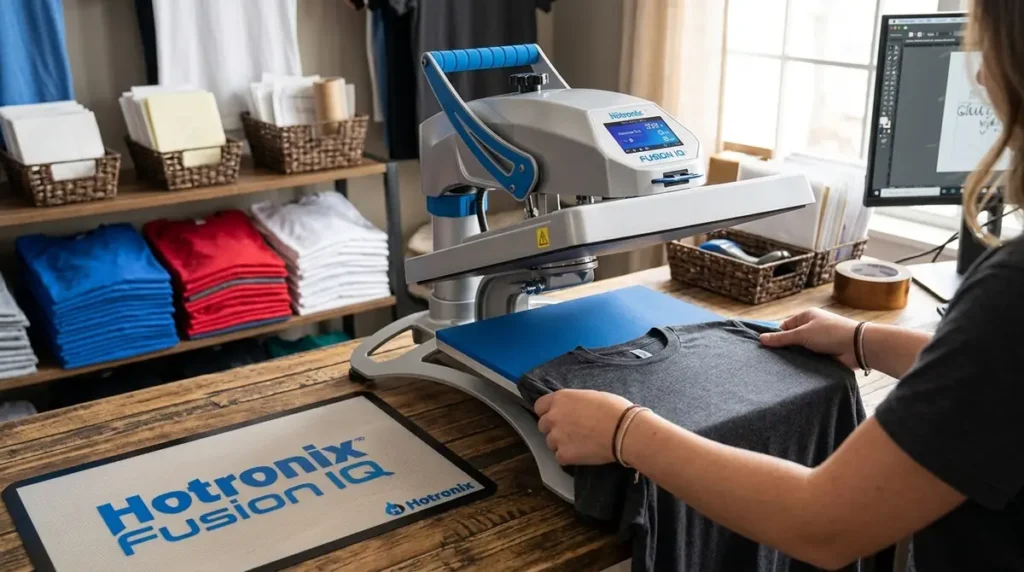
Hotronix Fusion IQ: Manual Swing and Draw
The regular Fusion IQ combines swing-away upper-platen access with a pull-out lower platen. The standard model is manual, not auto-open. Its digital controls and presets can help with repeat jobs, while the operator still moves and closes the machine. Source: Hotronix Fusion IQ operator manual.
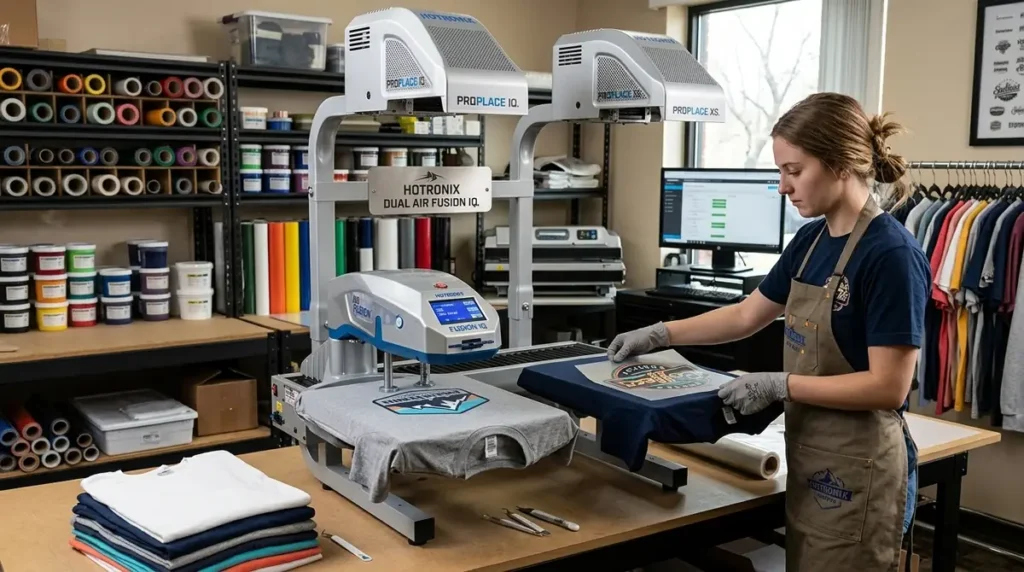
Hotronix Dual Air Fusion IQ: Pneumatic Dual Workstation
The Dual Air Fusion IQ has two 16 × 20-inch lower loading workstations and one moving heated upper platen. Alternating stations can help stage the next garment while a transfer runs. The manufacturer catalog states that a suitable air compressor is required, with at least 1 horsepower, an 8-gallon tank, and a rated 3.8 CFM air use. Check model-specific power and compressor supply before purchasing.
HIX N-Series EVO PRO: Confirm the Exact Variant
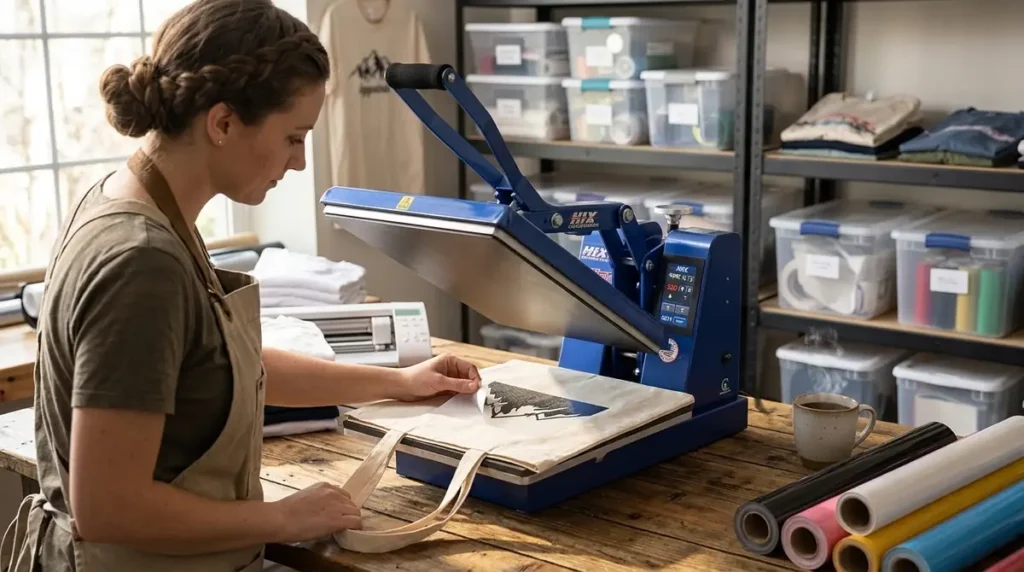
HIX currently lists N-Series EVO PRO machines including N-880 variants. Auto-release operation is a reason to compare the series, but the precise size, controls, release system and power depend on the model. Compare the precise manufacturer model number rather than an ambiguous or outdated product label. Use the current HIX manufacturer equipment catalog for model numbers and specifications rather than assuming every older HIX press is identical.
Geo Knight DK20S: 16 × 20 Manual Swing-Away
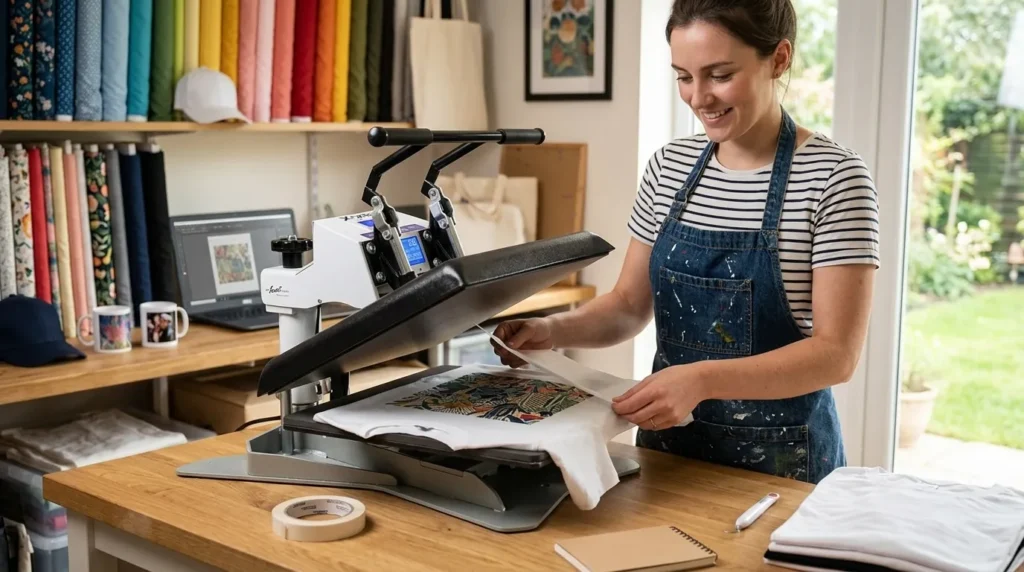
The DK20S is a 16 × 20-inch swing-away press, not a clamshell. Geo Knight’s official DK20S specifications describe digital controls, interchangeable lower tables, parts support, and a standard 120-volt, 15-amp configuration. Check swing clearance and equipment weight before installation.
STAHLS’ MAXX 250: Manual Clamshell
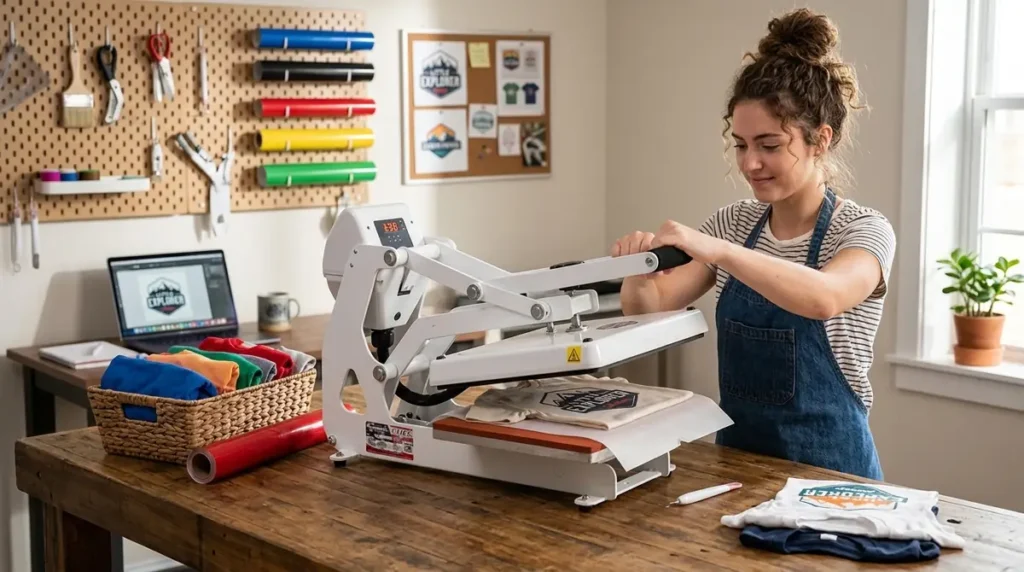
The MAXX 250 line includes a manual 16 × 20-inch clamshell and smaller sizes. It offers a commercial apparel option without the complexity of pneumatic shuttling. STAHLS’ published 2026 MAXX 250 announcement describes temporary promotional pricing. Compare a current delivered quote rather than the outdated generic ranges previously used here.
For True Oversized Transfers
A 16 × 20-inch platen is not large enough for every oversize transfer. Geo Knight’s swing-away equipment range also lists the 20 × 25-inch DK25S. Measure actual artwork and available power, not just garment size.
How These Models Were Evaluated
The comparison uses official product catalogs and manuals for equipment class, pressing style, platen size, operation, power, compressor needs, and service availability. No shop trials, independent rankings or manufacturer-approved maximum pieces per day were performed for this article.
Commercial Press Comparison
| Model | Press operation | Pressing area | Decision factor |
|---|---|---|---|
| Hotronix Fusion IQ | Manual swing-and-draw | 16 × 20-inch family | Loading access and digital presets |
| Hotronix Dual Air Fusion IQ | Pneumatic, two lower stations | Two 16 × 20-inch lower stations, one heated head | Compressor and measured station changeover |
| HIX N-Series EVO PRO | Auto-release family, exact model varies | Confirm chosen N-Series variant | Verified model name and available support |
| Geo Knight DK20S | Manual swing-away | 16 × 20 inches | Power, swing clearance and replaceable components |
| STAHLS’ MAXX 250 | Manual clamshell | 16 × 20 inches and smaller versions | Correct platen size and current delivered price |
| Geo Knight DK25S | Manual swing-away | 20 × 25 inches | Oversized prints, footprint and power |
Total Cost of a Production Heat Press
The purchase price alone does not establish ownership cost. Promotions, dealer freight, electrical requirements, replacement parts and model options change. Avoid assuming a pneumatic unit is automatically more economical at a fixed garments-per-day threshold.
| Cost factor | What to verify |
|---|---|
| Machine and lower platens | Exact model, usable size, interchangeable accessories |
| Freight and installation | Delivered charges, required outlet, safe workstation clearance |
| Compressed air | Compressor, regulator and air line for applicable pneumatic models |
| Maintenance and parts | Heating elements, pads, service technician, warranty limits |
| Production labor | Measured garment loading, pressing, unloading and inspection time |
| Order risk | Downtime, rejects, calibration and replacement availability |
Compare the purchase decision using the equipment ROI calculator with realistic shop inputs. A manufacturer demonstration may clarify the mechanism but is not a substitute for measuring your own work.
How to Choose Based on Your Shop’s Workflow
- Measure the largest repeat transfer, including placement around seams and collars.
- Record approved press time from the transfer supplier plus loading and unloading seconds.
- Assess ergonomics during repeated shifts without assuming every automatic press is faster.
- Confirm 120V, 240V or other model-specific wiring and any compressor demand.
- Measure clearance for swing-away arms, drawers, moving platens and both operators.
- Check the current warranty, replacement heaters, controls, pads and authorized support.
- Request a demonstration of a representative order if the seller offers one.
Follow the print shop workflow guide to identify whether pressing or another handoff limits order throughput.
Production Capacity: Measure Cycles Instead of Using Fixed Daily Tiers
There is no universal 50, 200 or 500 garments-per-day boundary separating manual, auto-open and pneumatic machines. One shirt may take a single pressing cycle; a layered design may need several. Production time includes preparation, loading, pressing, unloading and inspection.
Estimated completed cycles = floor(available production seconds / seconds between completed cycles). A second lower station helps only to the extent that it reduces real idle time between heated cycles. Do not multiply output by two solely because the press has two workstations.
Interactive Production Throughput Worksheet
Production Throughput Comparison Worksheet
Use actual transfer pressing cycles and operator handling times. Two loading stations do not mean two simultaneous heated platens.
Planning estimate only. Excludes artwork, printing, unexpected rejects, cooling and shipping. Inputs come from your workflow, not a model’s advertised maximum.
The worksheet uses the timing values you enter and subtracts unavailable time. It is a planning estimate, not a test of any press. Include upstream printing, approved supplier press settings and acceptable quality rates when planning staffing.
Manual, Auto-Release, Pneumatic and Dual-Station Differences
| Category | Mechanism | What it does not guarantee |
|---|---|---|
| Manual clamshell | Operator moves the upper platen | A fixed production limit |
| Manual swing-away or draw | Operator opens and loads via swing or lower drawer | Auto-open capability |
| Auto-release press | Machine releases or assists after its cycle | Pneumatic pressure or hands-free loading |
| Pneumatic press | Compressed air operates the mechanism | Two simultaneous pressing heads |
| Dual-workstation press | Separate lower loading positions | Twice the finished output |
Check the actual model, not just the advertised phrase automatic. An auto-release unit, an air-operated press, and a two-loading-station press solve different operator problems.
Production Buying Checklist
- Transfer fits the usable platen without awkward repositioning.
- Machine operation matches the operator’s job sequence and safety needs.
- Circuit and compressor requirements have been checked by qualified personnel.
- Repeated batch timing includes press and between-cycle delays.
- Supplier can provide current specification and parts documentation.
- Warranty service, replacement elements and workflow support are accessible.
- Price comparison includes freight, installation, accessories and operating support.
For pressure and platen checks, see the heat press setup and calibration guidance. Follow the transfer and material supplier’s actual instructions, not generic chart values.
Frequently Asked Questions
What counts as high-volume apparel printing?
High volume is a workflow problem rather than a universally agreed shirt count. Measure the orders your shop must complete in a shift and the pressing cycles, labor, setup and downtime involved.
Does an automatic heat press double output?
No. Auto-release can reduce manual motion, and two loading stations can overlap preparation, but neither proves a fixed throughput improvement. Measure the interval between completed transfers.
Is the Hotronix Fusion IQ an automatic press?
The standard Fusion IQ is manual. Hotronix also sells pneumatic Air Fusion variants with different mechanisms and installation needs.
Is the Geo Knight DK20S a clamshell?
No. The DK20S is a manual 16 × 20-inch swing-away press. Geo Knight also offers separate clamshell models.
Is a 16 × 20-inch platen always best?
No. Choose based on actual transfer size, garment loading and repeat production. Oversized graphics may need a larger platen; small repeat items may not.
Should a shop choose pneumatic operation?
Consider it when air-operated pressure or movement solves a measured labor or repeatability bottleneck. Include compressor, installation, training and maintenance costs in the comparison.
Final Buying Decision
Shortlist verified models that accommodate your recurring artwork and your workspace. Measure a representative completed-garment cycle, obtain a complete installed quote, and choose the press that removes a real production constraint. It is more useful to confirm reliable output from your own transfer workflow than to rely on a generic machines-per-day ranking.