Mixing Sublimation Ink with Regular Ink: What Happens?

If you’re new to printing, it’s easy to assume ink is just… ink. But that confusion can get expensive fast.
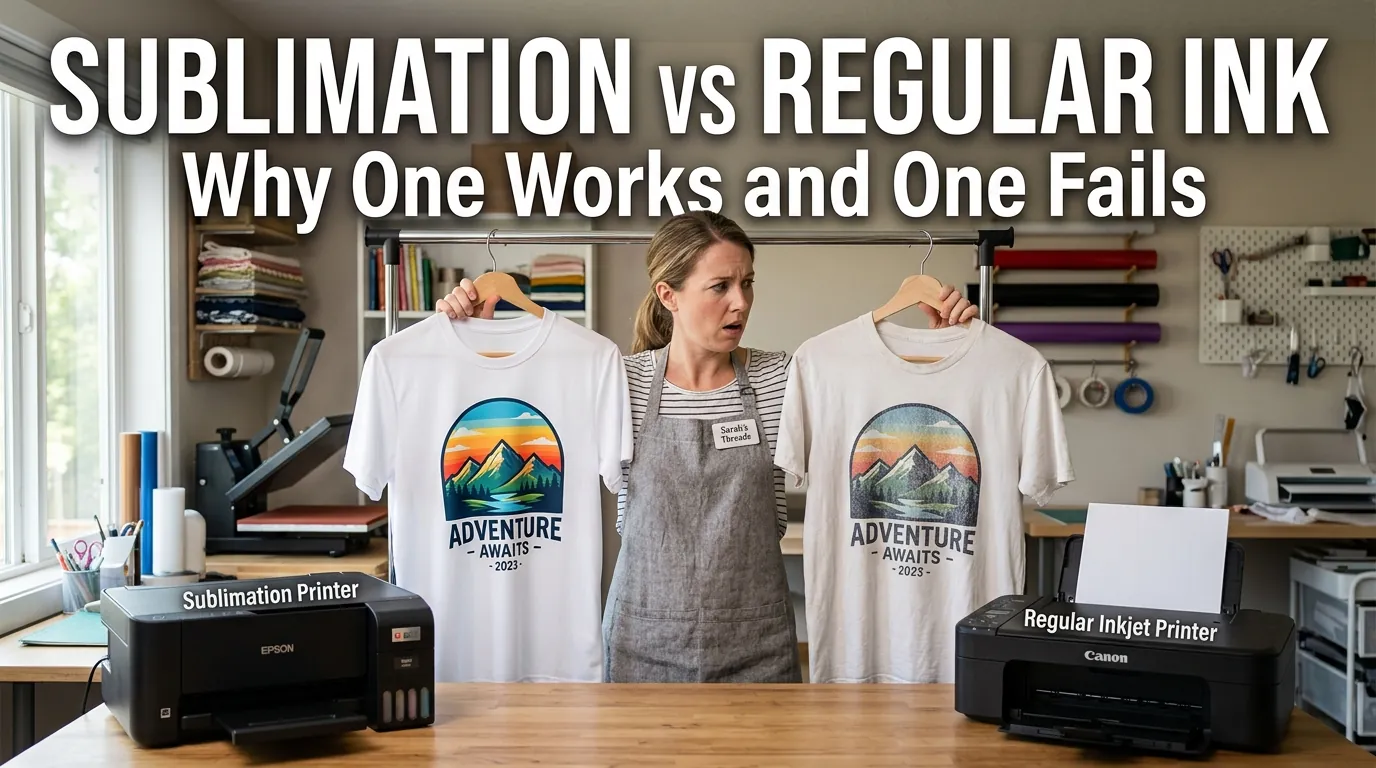
Here’s the direct answer. Sublimation ink and regular printer ink are not the same, and they are not interchangeable. Using the wrong one can ruin your transfer, fade your design after one wash, or even damage your printer.
If you’re still learning how the process works, start with this simple breakdown of what sublimation printing actually is. It’ll help everything click.
Now let’s break this down clearly so you don’t waste time, money, or blank shirts.
What Is Sublimation Ink?
Sublimation ink is specially formulated for heat transfer printing.
Here’s what makes it different:
➡️ It’s dye-based and designed to turn from a solid into a gas under high heat.
➡️ Instead of sitting on top of a surface, it penetrates polyester fibers or polymer coatings.
➡️ It creates a molecular bond with the material.
➡️ It only works properly when activated with heat and pressure.
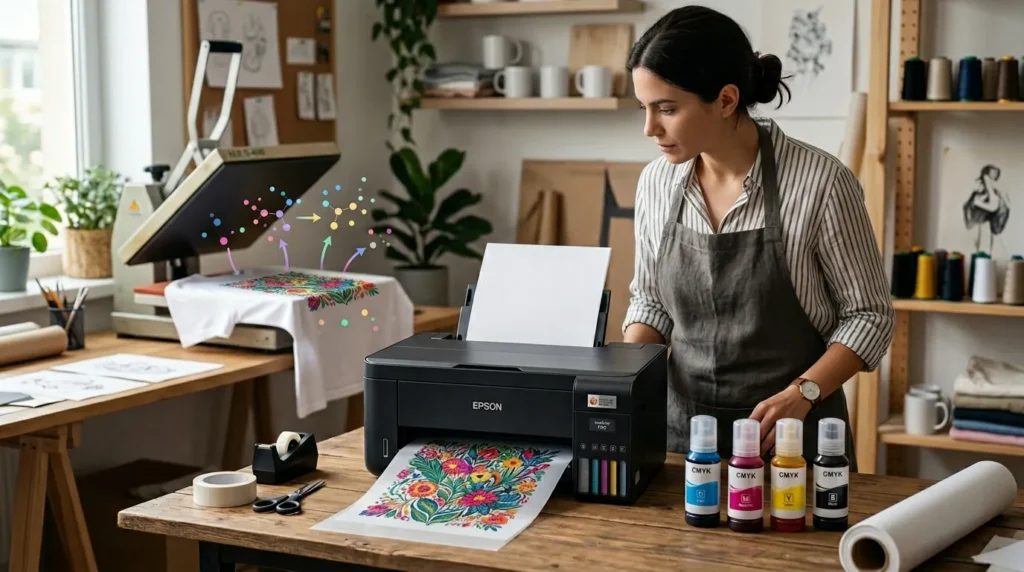
That’s why sublimation prints feel smooth. There’s no raised layer. The design becomes part of the fabric or coated surface.
It’s built for heat press systems. Not office printing.
What Is Regular Printer Ink?
Regular printer ink is made for standard inkjet printing.
It can be:
➡️ Dye-based
➡️ Pigment-based
But here’s the key difference. It’s designed to dry on the surface of paper.
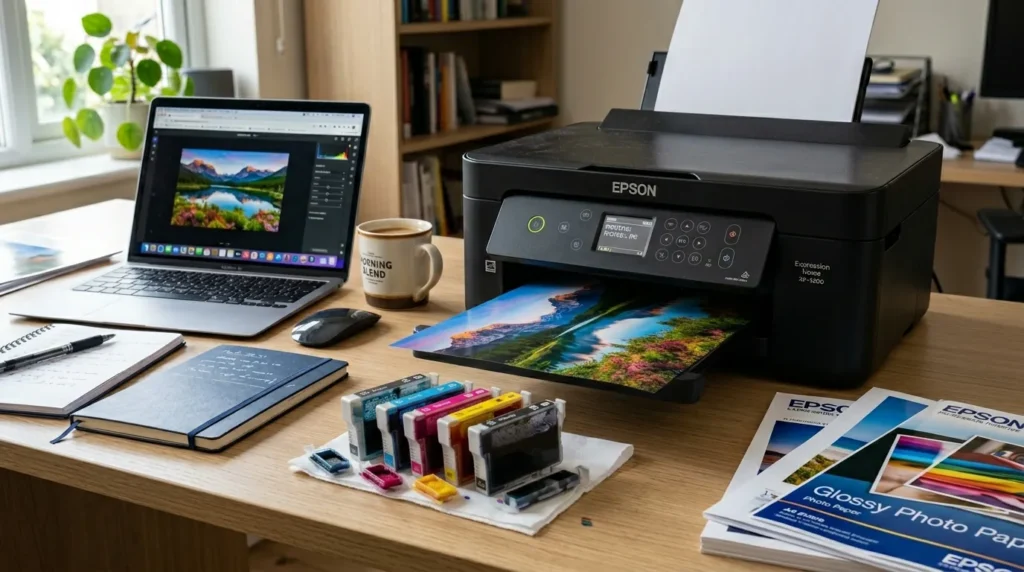
It does not activate under heat.
It does not bond with polyester fibers.
It simply absorbs into paper or sits on top of coated media.
That’s perfect for documents, photos, and graphics. It’s not built for heat transfer chemistry.
Key Differences Between Sublimation Ink and Regular Ink
Here’s the side-by-side comparison so you can see it instantly:
| Feature | Sublimation Ink | Regular Ink |
|---|---|---|
| Activation | Heat-activated | Air-dried |
| Material Compatibility | Polyester / coated blanks | Paper & general media |
| Bonding Method | Molecular bonding | Surface absorption |
| Wash Durability | High on polyester | Low on fabric |
| Printer Type | Converted / sublimation printers | Standard inkjet |
If you’re unsure whether your material even works with sublimation, this guide on which fabrics are best for sublimation clears that up fast.
The chemistry is different. The performance is different. The results are different.
Can You Use Regular Ink for Sublimation?
Short answer. No.
Here’s why:
➡️ It won’t sublimate.
➡️ It won’t turn into gas under heat.
➡️ It won’t bond with polyester.
➡️ The image will wash out or crack quickly.
You might get color on transfer paper. But once you press it, it won’t properly infuse into the fabric.
You’ll end up with a dull, faded print that looks wrong almost immediately.
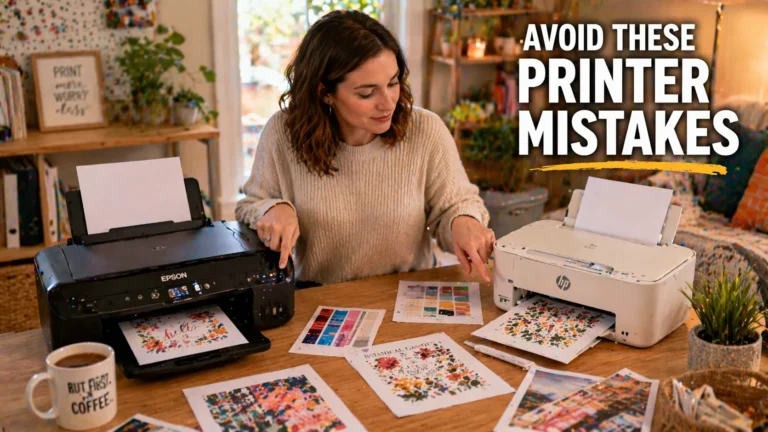
What Happens If You Put Sublimation Ink in a Regular Printer?
This depends on the printer, but there are risks.
➡️ The printhead may clog.
➡️ Color profiles will be off.
➡️ You could void the warranty.
➡️ Ink flow systems may not handle sublimation ink properly.
If you’re already seeing clogging or banding issues, here’s a step-by-step guide on how to clean a sublimation printer head before things get worse.
Not every regular printer is safe to convert. And once sublimation ink goes in, it’s hard to go back.
Can You Convert a Regular Printer to Sublimation?
Yes, but carefully.
Some Epson EcoTank-style inkjet printers can be converted.
Important rules:
➡️ It must be brand new.
➡️ It cannot have previously used regular ink.
➡️ You’ll need sublimation ink and proper ICC profiles.
➡️ Converting usually voids the manufacturer warranty.
➡️ Switching back later is extremely difficult.
If you’re unsure what equipment works, this breakdown of what kind of printer is needed for sublimation will save you a lot of trial and error.
Conversion works when done correctly. But it’s not something to experiment with casually.
Which Ink Should You Use?
It comes down to what you’re printing.
Use sublimation ink if you are:
➡️ Printing on polyester
➡️ Using a heat press
➡️ Making shirts, tumblers, mugs, or coated blanks
➡️ Creating long-lasting, wash-resistant designs
Use regular ink if you are:
➡️ Printing documents
➡️ Printing photos on paper
➡️ Making flyers or general graphics
➡️ Doing standard office work
Match the ink to the job. That’s it.
Frequently Asked Questions
Is sublimation ink the same as infusible ink?
No. They both use heat to bond with polyester, but infusible ink systems are pre-formulated sheets or pens, while sublimation ink is liquid ink used in printers.
Can I print sublimation paper with regular ink?
Yes, you can print on the paper, but it will not transfer properly because regular ink does not sublimate.
Can I switch back to regular ink after using sublimation ink?
Not easily. You would need to completely flush the system, and even then results are unpredictable.
Is sublimation ink waterproof?
On polyester or coated blanks, yes, it’s highly durable. But durability depends entirely on the material it bonds to.
Conclusion
Sublimation ink and regular ink are chemically different.
They are not interchangeable.
One bonds with polyester through heat.
The other dries on paper.
Using the wrong one leads to poor results, wasted blanks, fading prints, and sometimes printer damage.
If you’re serious about quality results, match your ink to your process. That’s what makes the difference between a hobby mistake and a professional finish.