Why Most Sublimation Businesses Fail (And How to Avoid It)

Starting a sublimation business looks simple. You get a printer, a heat press, and start creating products.
But many people quit within months.
If you’re struggling or planning to start, this guide will help you understand what goes wrong and how to build something that actually works.
The Real Reason Most Sublimation Businesses Fail
Most failures are not caused by the sublimation process itself.
They happen because people treat it like a quick side hustle instead of a structured business.
Here is the simple truth
Sublimation is easy to start but difficult to run profitably without the right approach.
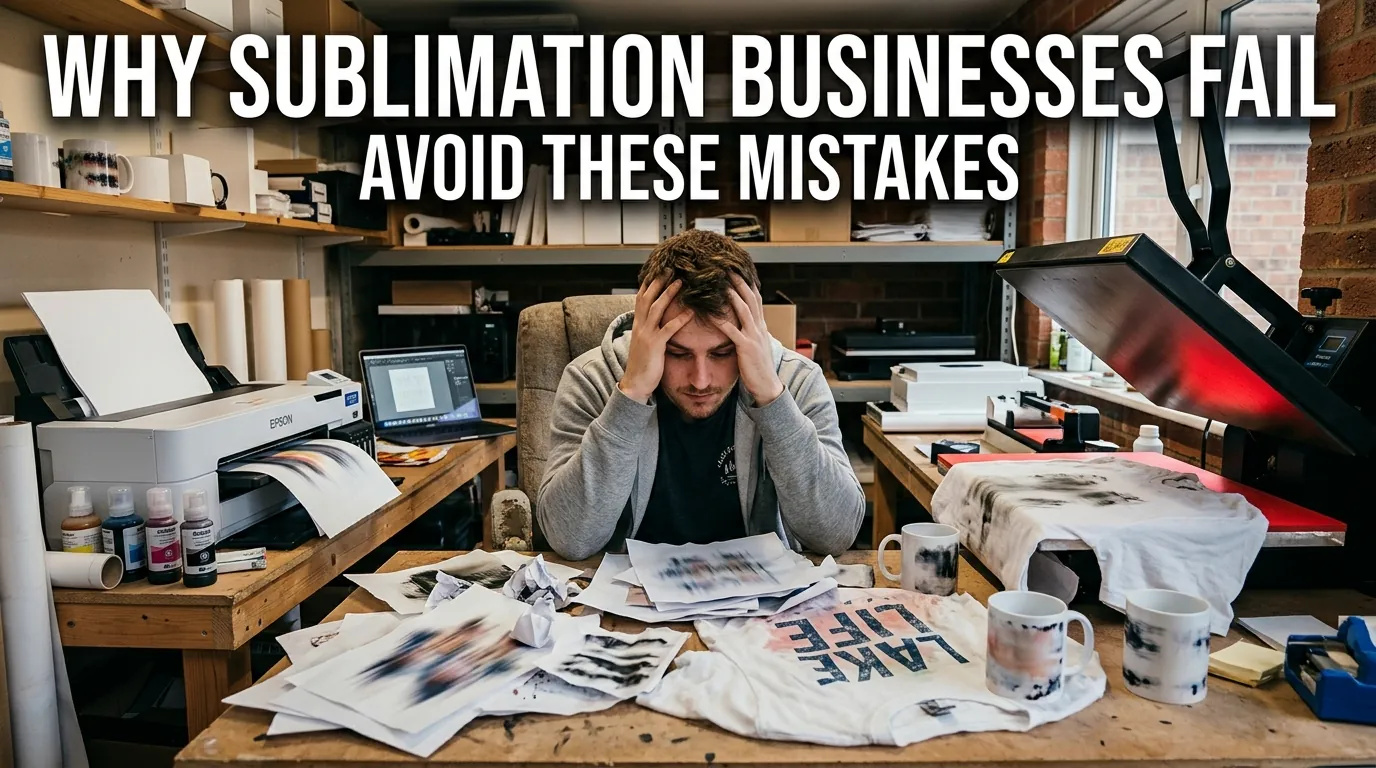
Common causes of failure include
- weak pricing strategy
- inconsistent print quality
- no niche focus
- poor material choices
- lack of planning
If you are new, it helps to first understand how everything works. This sublimation printing guide gives you a clear foundation.
1. Poor Pricing Strategy
Pricing is the biggest reason most sublimation businesses fail.
Many beginners copy competitors or guess prices without understanding their real costs.
This leads to
- low profit margins
- high workload with little return
- burnout
Why this matters
Every product includes hidden costs
- sublimation ink usage
- blank materials
- electricity
- time spent designing and pressing
- failed prints
If you ignore these, your business slowly loses money.
What to do instead
- calculate cost per item
- include all expenses
- add a healthy profit margin
- position your product as quality instead of cheap
For a clearer breakdown, read this sublimation t-shirt pricing guide.
2. Inconsistent Print Quality
Poor quality prints quickly damage your reputation.
Common issues include
- faded colors
- ghosting
- blurry designs
- uneven transfers
Why this happens
Sublimation depends on proper setup
- correct heat press temperature
- accurate pressure
- ICC color profiles
- quality blanks
Even small mistakes affect the final result.
How to fix it
- follow correct heat press settings for sublimation
- use proper color profiles
- test prints before selling
If your colors look dull, follow this guide on fixing sublimation color problems.
3. Choosing the Wrong Products
Many beginners enter saturated markets without differentiation.
Examples include
- basic t-shirts
- generic mugs
- copied designs
What goes wrong
- too much competition
- no unique value
- low perceived quality
What works better
- focus on a niche audience
- offer personalization
- create bundles or themed products
You can explore ideas in this best-selling sublimation products list.
4. Ignoring Material Compatibility
Not all materials work with sublimation printing.
Common mistakes include using
- cotton without coating
- low-quality blanks
- incompatible surfaces
Why this matters
Sublimation requires
- polyester fabrics
- polymer-coated blanks
- heat-resistant surfaces
Without the right material, the ink will not bond properly.
What to do
Learn material basics using this sublimation materials guide.
5. Lack of Business Planning
Many people start without a clear direction.
This leads to
- random product ideas
- inconsistent branding
- no marketing strategy
What successful businesses do
- choose a clear niche
- build a consistent brand
- create repeatable workflows
Even a simple plan can prevent major mistakes.
6. Unrealistic Expectations
Many beginners expect fast success.
In reality, sublimation takes time to learn.
What actually happens
- early stage involves trial and error
- improvement comes with practice
- consistent sales take time
If expectations are unrealistic, people quit too early.
7. Poor Equipment Decisions
Using the wrong equipment creates ongoing problems.
Common issues include
- unreliable printers
- low-quality heat presses
- incompatible ink
What to consider
- choose reliable equipment
- avoid the cheapest setup
- invest where it matters
This guide on best sublimation printers can help you choose wisely.
8. Ignoring Customer Experience
A business does not grow on products alone.
Customer experience matters just as much.
Common mistakes include
- slow communication
- poor packaging
- no follow-up
Why this matters
Satisfied customers bring repeat sales and referrals.
Unhappy customers stop growth quickly.
How to Build a Successful Sublimation Business
Focus on these fundamentals
- understand the full sublimation workflow
- price products correctly
- choose a clear niche
- maintain consistent quality
- use the right materials
- treat it like a real business
If you are starting out, this beginner sublimation printing guide will help you build a strong foundation.
Common Mistakes to Avoid
- pricing too low
- skipping test prints
- using poor-quality blanks
- ignoring color calibration
- trying to sell too many products
These mistakes may seem small but they add up quickly.
Explore how automation is reshaping the industry in this AI print production guide.
Frequently Asked Questions
Can I start a sublimation business with low budget?
Yes, but you need to manage costs carefully and focus on quality from the beginning.
Do I need a professional printer to succeed?
No, but reliable equipment improves consistency and reduces errors.
Is sublimation still profitable?
Yes, especially when you focus on niche products and consistent quality.
Why are my sublimation products not selling?
Usually due to weak product positioning, pricing issues, or lack of differentiation.