What Shirts Are Best for Sublimation? Polyester % & Color Guide

White or very light 100% polyester shirts are the most predictable choice for bright, direct sublimation. If you want a softer feel, a 90 to 95% polyester blend can still produce strong color. Around 65% polyester is better when you intentionally want a softer, heathered, or vintage look.
The shirt itself is part of the print system. Polyester percentage, garment color, knit, opacity, seams, heat behavior, and the ability to reorder the same blank all matter before you buy a pack or case.
Best Shirt for Sublimation: Quick Decision Chart
| Your goal | Shirt to start with | Why | Main trade-off |
|---|---|---|---|
| Photos and vivid full color | White or very light 100% polyester | Maximum polyester available to accept sublimation dye | Some blanks have a performance or athletic feel |
| Strong color with a softer feel | 90 to 95% polyester | High polyester content with another fiber for feel or stretch | Result varies with the secondary fiber and fabric finish |
| Vintage or heathered look | 65 to 80% polyester | Non-polyester fibers stay lighter and soften the print | Lower color saturation |
| Deliberately faded style | 50/50 blend | Large non-polyester portion creates a more distressed result | Poor choice for photos or exact brand colors |
| Dark shirt | Use another garment workflow | Standard sublimation ink is transparent and has no white underbase | DTF, HTV, or another transfer layer may fit better |
| Ordinary 100% cotton | Use another garment workflow | Direct sublimation dye does not bond to cotton like it does to polyester | A compatible intermediate layer or another printing method is needed |
Bottom line: if the customer expects vivid photos, saturated logos, or predictable repeat orders, start with a light 100% polyester blank. Use lower-polyester blends only when the softer, more muted result is part of the look you want.
100% vs 95% vs 65% Polyester for Sublimation
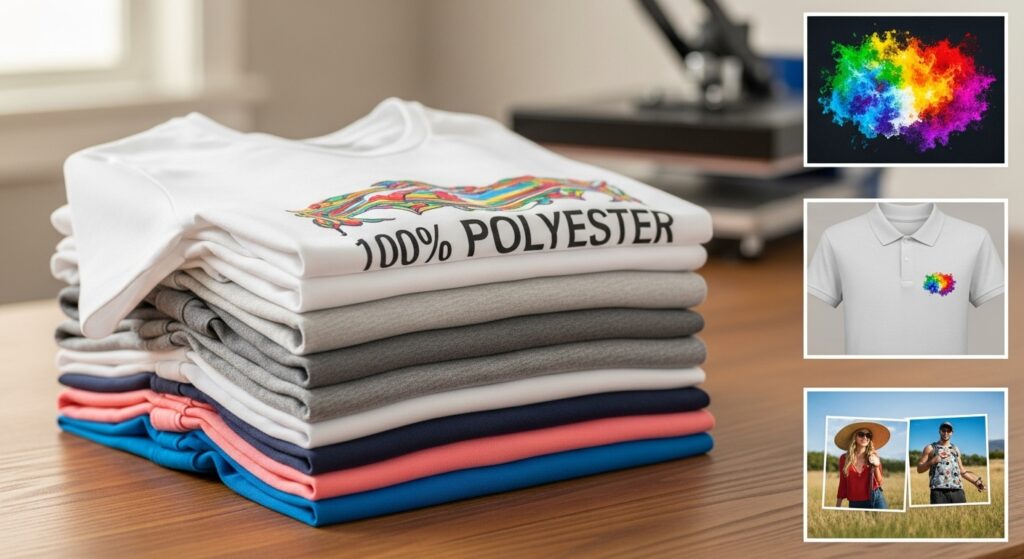
Polyester percentage changes how much of the fabric can accept sublimation dye, but it does not tell you everything about the shirt. The other fiber, knit, finish, color, and heat behavior still need to be checked on the exact style.
| Factor | 100% polyester | 90 to 95% polyester | Around 65% polyester |
|---|---|---|---|
| Color saturation | Strongest starting point | Usually strong | More muted |
| Photo and logo work | Best fit | Often suitable after testing | Usually not first choice for color-critical work |
| Soft or cotton-like feel | Depends heavily on knit and construction | Often easier to find softer options | Often softer or more fashion-oriented |
| Vintage effect | Low | Mild depending on blend | Stronger |
| Customer color matching | Most predictable on white or very light colors | Test before production | Avoid when exact color reproduction is required |
| Main buying check | Heat behavior, feel, opacity | Exact secondary fiber and finish | Whether the customer accepts the muted look |
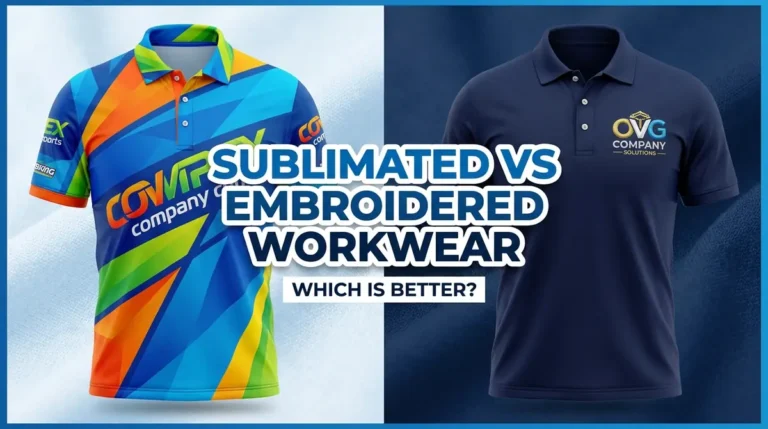
A 65/35 blend is not a failed sublimation shirt. It is simply a different visual result. BELLA+CANVAS, for example, describes its 65% polyester and 35% viscose fabric as producing a softer, more vintage sublimation look than 100% polyester. That makes the blend useful when muted color is intentional, not when a customer expects the same saturation as a white performance tee.
What Shirt Colors Work Best for Sublimation?
White is the safest choice because the garment does not add a color cast to the artwork. Standard sublimation does not print an opaque white base, so every colored shirt changes the visible result.
| Shirt color | What happens | Best use |
|---|---|---|
| White | Least interference with artwork colors | Photos, logos, exact color work |
| Off-white | A slight warm shift can show through light areas | Artwork that tolerates a warmer base |
| Light gray | Gray affects lighter colors and white areas stay gray | Muted or intentionally toned designs |
| Pastels | Garment color mixes visually with the sublimation dye | Color-coordinated artwork |
| Heather colors | Base color and fiber blend can both soften the print | Vintage and distressed aesthetics |
| Dark colors | Transparent dye has little visible contrast | Choose another decoration workflow |

For dark garments, do not force direct sublimation onto the wrong blank. Compare the fabric, color, maintenance, and workflow differences in our DTF vs sublimation guide.
I Want a Sublimation Shirt That Feels Like Cotton
A high polyester percentage does not automatically mean a slick athletic feel. Hand feel comes from the knit, yarn, fabric weight, finish, and garment construction as well as fiber content.
- 100% polyester can still feel soft. Spun-polyester and cotton-touch constructions can feel different from smooth performance interlock.
- 90 to 95% polyester blends are worth sampling when you want strong sublimation color with a softer or stretchier garment.
- 65% polyester blends often feel softer, but the trade-off is a more muted print.
Do not buy a case based on fiber percentage alone. Order or obtain one sample in the exact style and color, press your normal artwork, then evaluate color, opacity, feel, press marks, and sizing before approving it for customer work.
Current Shirt Blank Examples to Investigate
These are examples of currently listed fabric constructions, not personal test rankings. Verify the current supplier specification before ordering because colors, fabrications, and availability can change.
| Example | Current listed fabric | Why it is useful to compare |
|---|---|---|
| Sport-Tek ST350 | 3.8 oz, 100% polyester interlock | A straightforward performance-style 100% polyester blank with a broad size range |
| BELLA+CANVAS poly-viscose styles | 65% polyester, 35% viscose on the referenced poly-viscose fabrication | A softer fashion-oriented construction that illustrates the color-versus-feel trade-off |
The brand name is not the buying decision. Confirm the exact style, color, fiber label, size range, decoration guidance, and inventory before using any blank in production.
Shirt Weight and GSM: What It Changes
GSM describes fabric weight, not sublimation compatibility. Weight can affect opacity, drape, comfort, platen marks, and how the shirt handles heat, but polyester percentage and garment color remain the first selection filters.

| Fabric weight | What it can change | What to check |
|---|---|---|
| Lightweight | Drape, softness, opacity and tendency to show platen or paper marks | See-through risk, stretch, heat marks and supplier guidance |
| Midweight | Often balances opacity and everyday shirt feel | Polyester percentage, knit, seams and print area |
| Heavyweight | More structure and a heavier hand | Whether the exact fabric handles heat evenly without unwanted surface change |
Cotton, Blends, and Why the Print Looks Faded
Direct sublimation dye is designed to bond with polyester. In a poly-cotton shirt, the polyester fibers accept the dye while the cotton portion stays much lighter. As cotton content increases, the print usually looks more faded or heathered.

An ordinary 100% cotton tee is not a standard direct-sublimation blank. If cotton is required, use a compatible transfer layer or another garment-printing method instead of expecting the cotton fibers to behave like polyester.
Heat Tolerance and Press-Marking Risk
Two shirts with the same polyester percentage can react differently under heat. Fabric dyes, stretch fibers, finishes, seams, and knit construction can affect shine, platen marks, dye movement, or distortion.
- Read the current decoration or heat guidance for the exact blank.
- Test the exact shirt color you plan to sell, not only a white sample from the same style.
- Check for press marks, scorching, shine, ghosting, dye migration, and fabric distortion.
- Do not copy one shirt’s time, temperature, and pressure to every polyester garment.
For production settings after the blank is selected, use the heat press settings calculator and the blank supplier’s instructions as your starting references.
Blank-Selection Checklist Before You Buy
Use this checklist before buying a pack, case, or full size run:
- Confirm the exact style or SKU, not only the brand.
- Check the polyester percentage.
- Check every other fiber in the blend.
- Choose the garment color around the artwork.
- Inspect the knit, surface texture and opacity.
- Check seams, pockets, zippers and the uninterrupted print area.
- Read current manufacturer or distributor decoration guidance.
- Confirm the full size range you need.
- Check whether white and light colors stay in stock.
- Confirm you can reorder the same style later.
- Keep color lots consistent where practical for repeat customer orders.
- Calculate landed unit cost, not just advertised shirt price.
- Sample-press the exact style and color before approving a large order.
For broader apparel sourcing and shirt options, use the sublimation shirts guide.
Choose a Shirt by Use Case
| Use case | Prioritize | Avoid |
|---|---|---|
| Photo and full-color prints | White, smooth, high-polyester fabric with a clean print area | Dark fabric, low-poly blends, heavy texture |
| Athletic apparel | High-polyester performance fabric with the exact style tested for heat | Assuming every garment labeled “performance” uses the same fiber blend |
| Soft fashion tee | High-polyester soft-hand construction or a blend that meets the color expectation | Buying only by polyester percentage without sampling the feel |
| Vintage look | 65%+ polyester blend when a muted result is intentional | Promising photo-level saturation or exact brand colors |
| Youth shirts | Light high-polyester blank with predictable sizing and adequate print area | Reusing adult artwork size and placement without checking the youth garment |
| Bulk customer orders | Repeatable spec, full size run, inventory depth, color consistency and landed cost | Choosing from unit price alone |
After the blank is approved, standardize artwork size and position with the sublimation placement calculator. For file setup, use the sublimation T-shirt design template guide. For the full equipment and pressing workflow, use the sublimation setup for T-shirts guide.
Buying Sublimation Shirts for Customer Orders
For paid work, repeatability matters more than finding the cheapest blank once. A shirt that prints well but disappears from inventory, changes fabrication by color, or lacks the required size run can create more cost than a slightly higher unit price.
- Approve the exact sample: style, color and size family.
- Check restocking: make sure the supplier can support repeat orders.
- Track landed cost: include shipping and unavoidable order fees.
- Standardize production: keep the same blank, print profile and approved press process across the order.
Professional Sublimation Printing & Wholesale Custom Products
Looking for high-quality sublimation printing for apparel, drinkware, and promotional items? Subli Genius Print delivers vibrant color, sharp detail, and long-lasting results for businesses, brands, and resellers across the U.S.
Frequently Asked Questions
What shirts are best for sublimation?
White or very light 100% polyester shirts are the most predictable choice for vivid direct sublimation. High-polyester blends can work when you want a softer feel, while lower-polyester blends are better for intentionally muted or vintage results.
Is 100% polyester better than 65% polyester for sublimation?
For maximum color saturation and color-critical work, 100% polyester is the safer starting point. A 65% polyester blend usually produces a softer, more faded or heathered look because the non-polyester fibers do not accept sublimation dye in the same way.
Can you sublimate on 95% polyester?
Yes. A 95% polyester shirt can be a strong sublimation candidate. Check the remaining fiber, garment color, finish, and heat behavior, then test the exact style before a production run.
Can you sublimate a 50/50 shirt?
You can transfer sublimation dye to the polyester portion of a 50/50 blend, but the result is usually much more faded or distressed than 100% polyester. Use it only when that look is intentional.
What color shirts can you sublimate on?
White gives the most predictable color. Very light gray, pastels, and other light colors can work when the artwork can tolerate the base color showing through. Dark shirts are poor candidates for standard direct sublimation because the ink is transparent.
What BELLA+CANVAS shirts can be used for sublimation?
Check the current fiber specification for the exact BELLA+CANVAS style and color. The brand publishes sublimation examples for polyester-rich blends, including 65% polyester and 35% viscose fabrications, but those blends are intended to give a softer, more vintage-looking result than 100% polyester.
What sublimation shirts feel most like cotton?
Look beyond fiber percentage. Spun-polyester, cotton-touch, and high-polyester blends can feel softer than slick performance interlock. Sample the exact shirt because knit, yarn and finish can change the feel even when two blanks list similar fiber percentages.
Can you sublimate on dark shirts?
Standard direct sublimation is a poor fit for dark shirts because the dye is transparent and there is no white underbase. Use DTF, HTV, or another compatible transfer-layer workflow when the customer needs a dark garment.
Can you sublimate on 100% cotton?
Not as a standard direct-sublimation process. Ordinary cotton does not bond with sublimation dye like polyester. Cotton requires a compatible intermediate coating or transfer layer, or a different printing method.
What should I check before buying sublimation shirts in bulk?
Verify the exact SKU, polyester percentage, color, full size range, heat guidance, inventory depth, reorder availability, landed cost and a sample-press result. Approve the exact style and color before committing to a large customer order.
Choose the Blank Before You Tune the Print
The best sublimation shirt is not simply the one with the highest polyester number. Start with the required color result, then check polyester content, shirt color, feel, opacity, heat behavior, print area and reorder reliability. For vivid commercial work, a white or very light 100% polyester blank remains the safest baseline.

3 Comments