
How to Choose Canvas for Sublimation: Materials & Wall Art

For photo prints and wall art, choose canvas by fiber content, dye-receptive coating, print size and finished display. Standard art canvas is not automatically compatible with dye sublimation.
Check the product’s receiving surface and manufacturer heat instructions before buying. A white polyester canvas and a coated photo panel may require different handling even when both are called canvas.
Can You Sublimate on Canvas?
Yes, you can sublimate on canvas when its printable face contains suitable polyester or a coating made for dye sublimation. Ordinary untreated cotton or linen art canvas does not accept standard direct sublimation. A product advertised simply as primed, gessoed or paint-ready is not enough.
Photo art can be made on loose polyester canvas, factory-coated photo panels or approved specialty transfer layers. The method and finish matter because base color, woven texture and construction change the result.
Choose the product intended for the final artwork, then test its exact pressing and finishing instructions on one sample before producing a full-size piece.
Canvas Sublimation Compatibility Chart
Check fiber content and coating before choosing heat settings. This is a material comparison, not a universal time or temperature prescription.
| Canvas surface | Direct dye sublimation? | Important check |
|---|---|---|
| White polyester canvas | Usually, if rated for the process | Fiber label and supplier press method |
| Factory sublimation-coated canvas panel | Yes, on the specified face | Exact coating, backing and pressing steps |
| Untreated cotton or linen art canvas | No | Choose a different blank or approved transfer layer |
| Cotton canvas with standard artist gesso | Not verified by ordinary gesso | Proof of a dye-receptive receiving layer |
| Waxed or unknown coated canvas | Do not assume it works | Material and safe heat limits |
Pressing: Obtain temperature, time, pressure, transfer orientation and removal instructions for the actual SKU. Test one piece.
Canvas for Wall Art: Which Format Should You Buy?
Unstretched fabric, coated rigid panels and gallery wraps are different products. Their construction affects how the blank is pressed and how the finished art is mounted.
| Canvas format | Best fit | Check before ordering |
|---|---|---|
| Loose polyester canvas sheet | Photo art that will be framed or stretched after transfer | Fiber label, press clearance and finishing margin |
| Factory coated rigid canvas panel | Ready-to-display wall piece | Receiving face, backing material and approved press cycle |
| Pre-stretched gallery canvas | Wall art with a wrapped edge | Whether the manufacturer permits pressing while mounted |
| Untreated cotton artist canvas | Conventional painting or a separately approved transfer-layer project | Not suitable for direct dye transfer without a receiving layer |
For a gallery wrap, find out whether the design is pressed onto loose canvas before stretching. Do not place a wooden stretcher frame between flat heat-press platens unless the product and press makers explicitly permit that setup.
Canvas for Sublimation: Buying Checklist
| Check | Why |
|---|---|
| Fiber content or sublimation receiving coating | A fabric texture alone does not confirm it accepts the dye |
| White or light receiving surface | Sublimation dye is transparent, so the base affects colors |
| Usable print area | Platen coverage, margins and stretched edges limit the design |
| Texture and even coating | Deep weave or inconsistent coating can soften fine photo detail |
| Loose, rigid or stretched construction | Changes pressing and mounting sequence |
| Exact SKU’s press and cooling instructions | Avoids guessing heat and pressure for mixed materials |
For a first photo print, sample a single verified SKU before ordering panels in quantity. The sublimation blanks and substrates guide can help identify receiving materials.
Five Checks Before Choosing Canvas for Sublimation
1. Choose the right type of canvas
Canvas describes a woven construction, not a specific fiber. Canvas for sublimation should be sold as a compatible polyester textile or have an expressly dye-receptive coating. Choose texture and fabric weight only after checking the receiving layer.
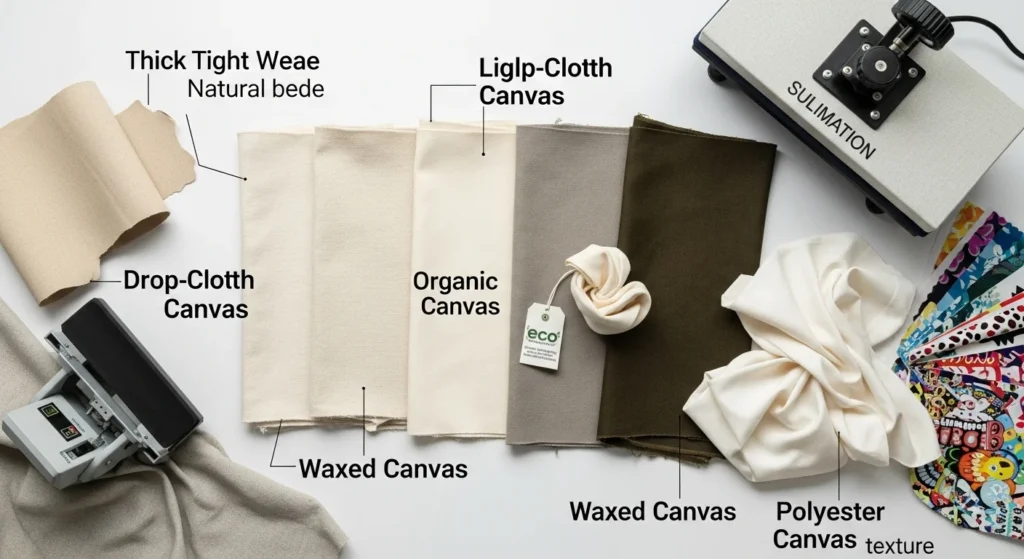
Duck canvas: Often cotton-based and tightly woven. Without compatible polyester fibers or a dye-receptive layer, it is unsuitable for standard direct sublimation. Fabric weight does not change this.
Drop-cloth canvas: Usually cotton utility fabric, often selected for painting or crafts. Its price and texture do not establish compatibility for dye sublimation.
Organic canvas: Organic cotton or hemp certification does not imply a sublimation coating. Use it for an appropriate alternative printing or painted-art method unless a transfer layer is documented.
Waxed canvas: Wax or unknown finish may soften or change under heat and interfere with dye transfer. Do not press it without explicit supplier compatibility guidance.
Polyester canvas: A sublimation-compatible polyester textile is the most direct fabric choice for printed wall art. Higher polyester content may support stronger dye uptake; durability outdoors or under UV light requires separate supplier evidence.
2. Check the color and coating of the canvas.
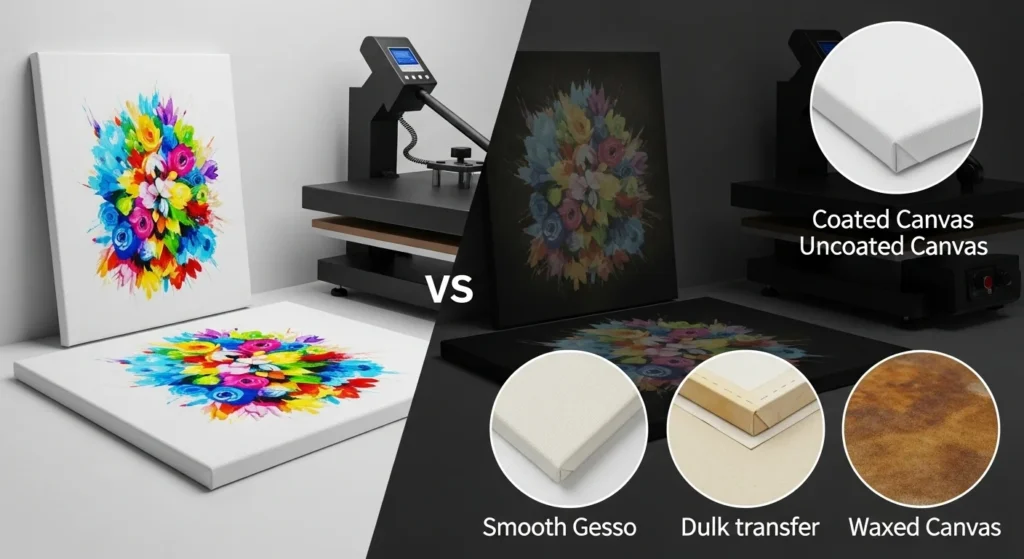
White or light canvas gives transparent sublimation colors a visible background. Dark canvas changes the artwork’s appearance. For photographs, choose a base that supports the intended color and texture; test skin tones, highlights and small details before bulk printing.
Factory sublimation-coated canvas can provide a dye-receptive surface, but ordinary gesso is a painting primer, not a verified sublimation coating. A smooth art-primer surface does not confirm dye bonding. Check the blank’s exact specification; Sawgrass explains how to verify coated products.
Waxed, oil-treated or unknown coated surfaces can interfere with transfer or react poorly to heat. Follow the coating manufacturer’s processing and safe-temperature limits. Do not experiment on a finished customer commission.
For a deeper dive into how coatings affect results, see our guide on Does Sublimation Coating Work?. Pair it with the right sublimation ink for long-lasting, sharp prints.
3. Test the canvas before printing
Test one piece from the exact canvas SKU and coating lot before a full-size photo. Record manufacturer settings and note print sharpness, color, texture, release behavior and any backing damage.
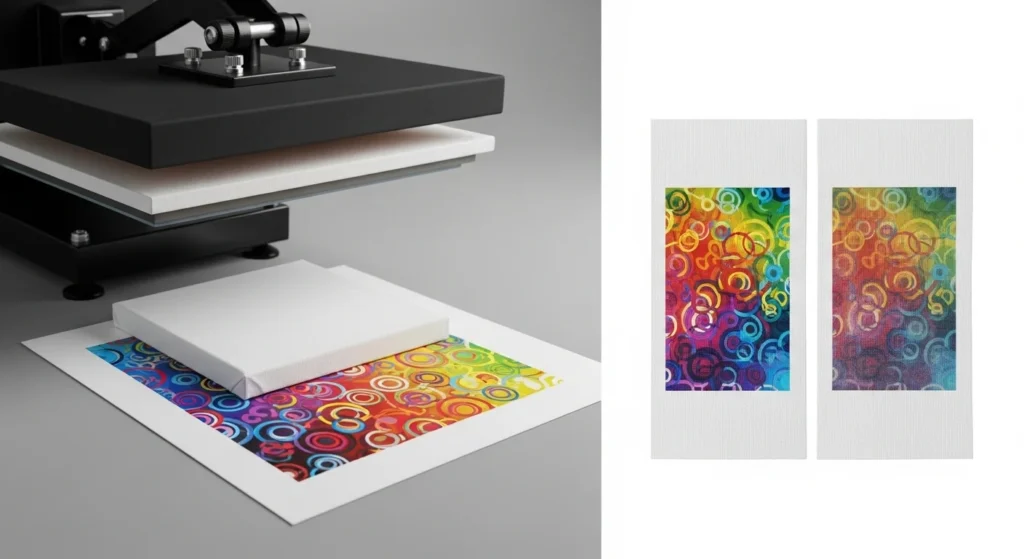
How to test a canvas for sublimation:
- Use a small swatch of the same loose polyester canvas, or a spare rigid panel of the exact SKU. Prepare a test transfer sized for the sample; do not cut through a coated photo panel.
- Print a sample design on the paper using your sublimation printer.
- Place the printed sheet face down on the canvas.
- Press with the time, temperature, pressure and protective stack specified for this canvas or transfer layer.
- Release the transfer according to the blank supplier’s hot-, warm- or cold-peel instructions; protect yourself from hot materials.
- Inspect the test print for fading, bleeding, smudges, or cracks.
Keep a labeled sample record. If a result is pale, check the receiving surface and printed transfer before changing one supplier-permitted variable. Use the heat press reference and test record for documenting settings.
4. Prepare the canvas for printing
Inspect the receiving face for lint, coating defects and any removable protective film. The correct preparation depends on the product; washing and steaming factory-coated wall-art panels can damage them.
Steps to prepare the canvas:
- Check cleaning requirements. Do not wash a coated panel or rinse it with vinegar unless its maker approves it. Remove lint from suitable polyester canvas when recommended.
- Check moisture and storage. Follow the supplier’s pre-press and storage instructions. Excessive heat can affect coatings, adhesives and backings.
- Handle wrinkles correctly. Pre-press only as directed. Do not steam, spray water or use an iron on unknown coatings.
- Plan mounting and edges. Confirm if trimming, stretching and mounting must take place after pressing, and keep wooden stretcher bars away from unapproved heat-press stacks.
Preparation protects the receiving layer and helps the transfer stay flat. Keep the blank maker’s instructions with the artwork and a record of the tested press cycle.
5. Print your design on the canvas
With your canvas prepped, it’s time to transfer the design. Follow these steps for a smooth sublimation print:
- Create your design
Use software like Photoshop, Illustrator, or CorelDRAW. Choose compatible colors, images, and fonts. Templates or online tools can speed up layout work. - Print on sublimation paper
Use a sublimation printer and mirror the design. Adjust resolution, print quality, and color mode for best results. - Secure the paper
Place the printed sheet face down on the canvas. Hold it in place with heat-resistant tape to prevent shifting. - Heat press the design. Use the exact receiving-surface or blank instructions for temperature, duration, pressure, orientation and release. No single 180 to 200°C range covers every polyester canvas, coating and laminating layer.
- Remove carefully
Open the press, peel the paper, and handle the canvas with gloves or tongs. Surfaces will be hot. - Cool and display. Follow the cooling instructions. Use only compatible framing, adhesive and protective finishes approved for the substrate.
Inspect the printed photo for consistent color, detail, ghosting or marks in the coating. Retain the tested settings and supplier SKU for future orders.
Additional tips to keep in mind:
- Canvas weight: Fabric weight may be measured in ounces per square yard. There is no verified universal 10 oz/yd² minimum for sublimation; compatibility depends on the fabric or receiving coating.
- Canvas texture: Canvas texture is also important to consider. For sublimation printing, you’ll want to choose a canvas with a smooth texture. It helps ensure that your image prints out clearly and without distortion.
- Canvas priming: A normal painting primer is not the same as a formulated sublimation-receiving layer. Use the product’s documented transfer method instead of assuming all primed art canvas accepts the dye.
Once you’ve found the perfect canvas for sublimation, you’re ready to start printing! Just follow the manufacturer’s instructions carefully to ensure you get the best possible results.
Canvas Alternatives for Sublimation
Canvas is popular, but it’s not the only option. Here are other surfaces that hold sublimation prints well:
1. Polyester Fabric
Polyester fabric works best for sublimation because the ink bonds with its fibers. It produces bright colors, sharp lines, and lasting results.
2. Metal Panels
Sublimation-ready aluminum photo panels come in gloss, matte, and other finishes. Check the exact panel’s coating, mounting options, and manufacturer display guidance before making fade-resistance claims.
3. Coated Wood
Untreated wood does not directly accept standard dye sublimation. For signs or plaques, choose a wood blank with a verified sublimation-receptive coating and follow that product’s transfer instructions. Do not assume a general-purpose craft spray is compatible.
4. Ceramic and Glass (with Coating)
Special coated ceramics and glass items are available for sublimation. Mugs, tiles, and ornaments are some popular choices.
👉 These alternatives give makers more freedom to match sublimation with the right surface.
Professional Sublimation Printing & Wholesale Custom Products
Looking for high-quality sublimation printing for apparel, drinkware, and promotional items? Subli Genius Print delivers vibrant color, sharp detail, and long-lasting results for businesses, brands, and resellers across the U.S.
FAQs
For a full walk-through of sublimation basics, from choosing supplies to pressing mugs, see our step-by-step guide at How to Do Sublimation.




One Comment