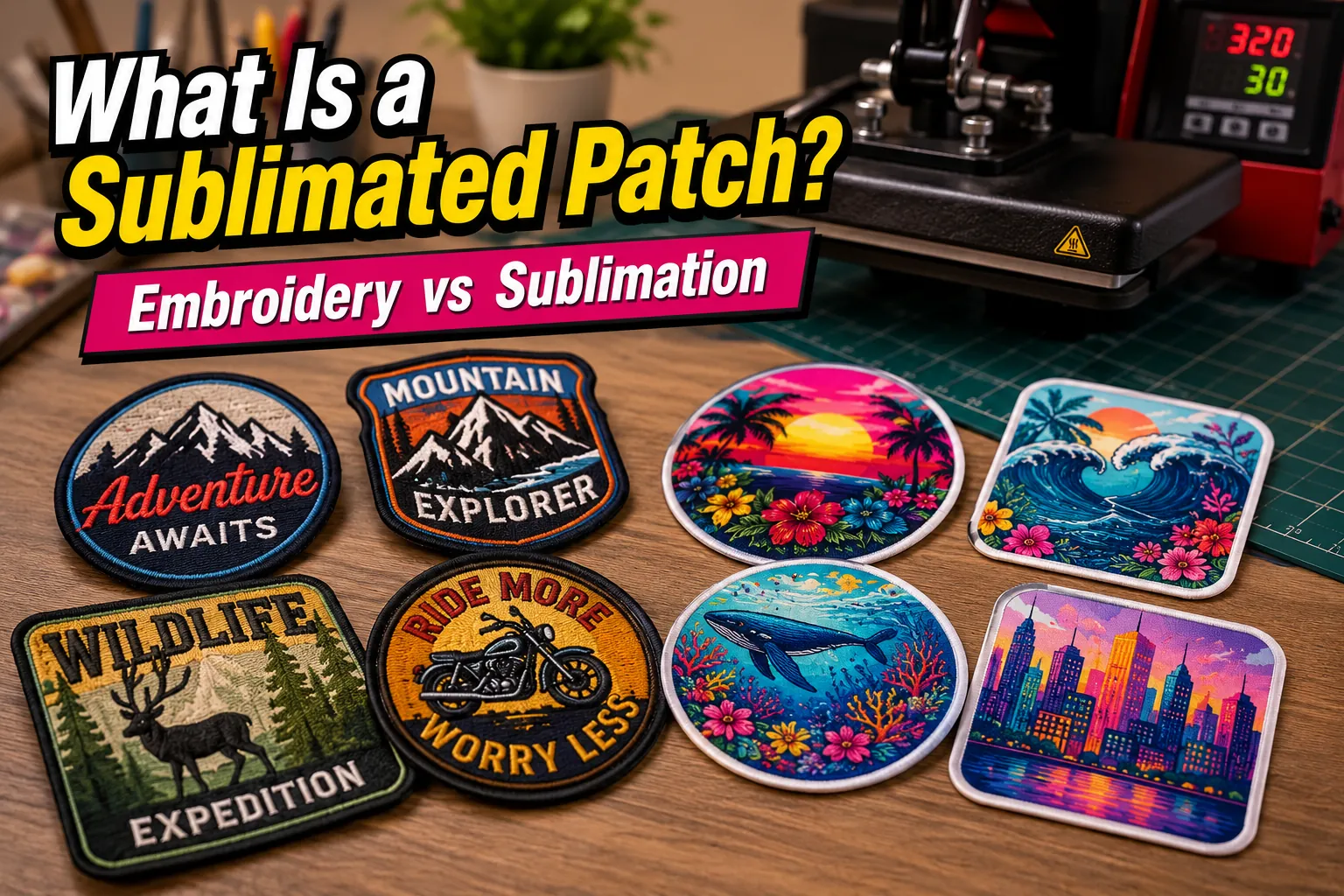
What Is a Sublimated Patch? Differences, Uses & Benefits

A sublimated patch is a custom patch made using sublimation printing instead of traditional stitching. The design is printed onto polyester-based material using heat and sublimation ink, creating a smooth, lightweight patch with sharp detail and vibrant color.
Sublimated patches are commonly used for sports uniforms, hats, tactical gear, branded apparel, and custom fashion projects because they reproduce complex artwork much more accurately than embroidery.
If you have ever wondered why some patches look photo-realistic while others have a raised stitched texture, the difference usually comes down to sublimation vs embroidery.
For a broader overview of the printing process itself, start with this what is sublimation printing guide.
What Does a Sublimated Patch Mean?
A sublimated patch is a polyester fabric patch printed using heat transfer sublimation, where sublimation ink turns into gas under heat and permanently bonds with the material.
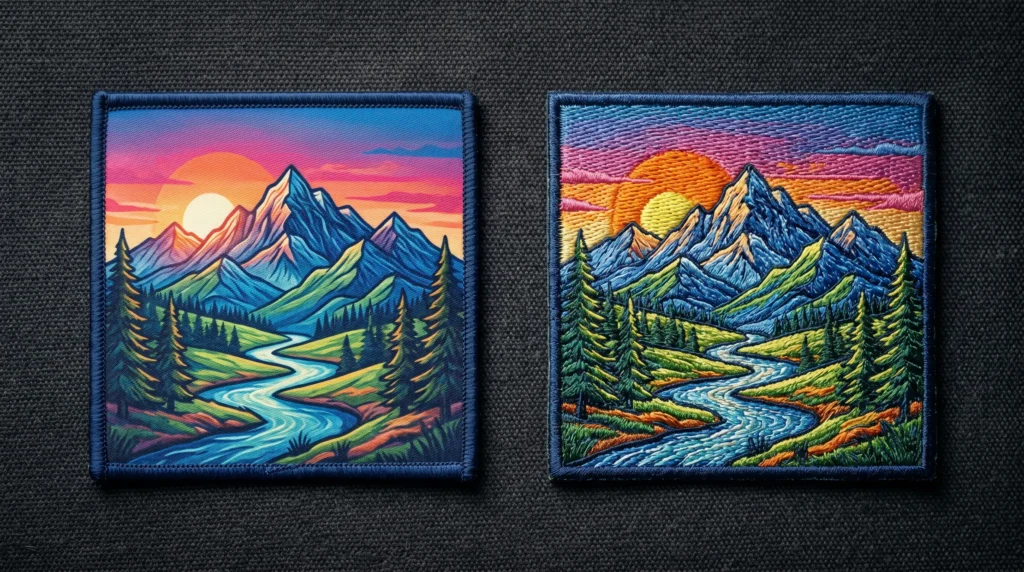
Unlike embroidery, the design is not stitched into the patch with thread. Instead, the artwork becomes part of the fabric itself.
This process allows:
- photo-quality graphics
- color gradients
- tiny text details
- complex logos
- lightweight patch construction
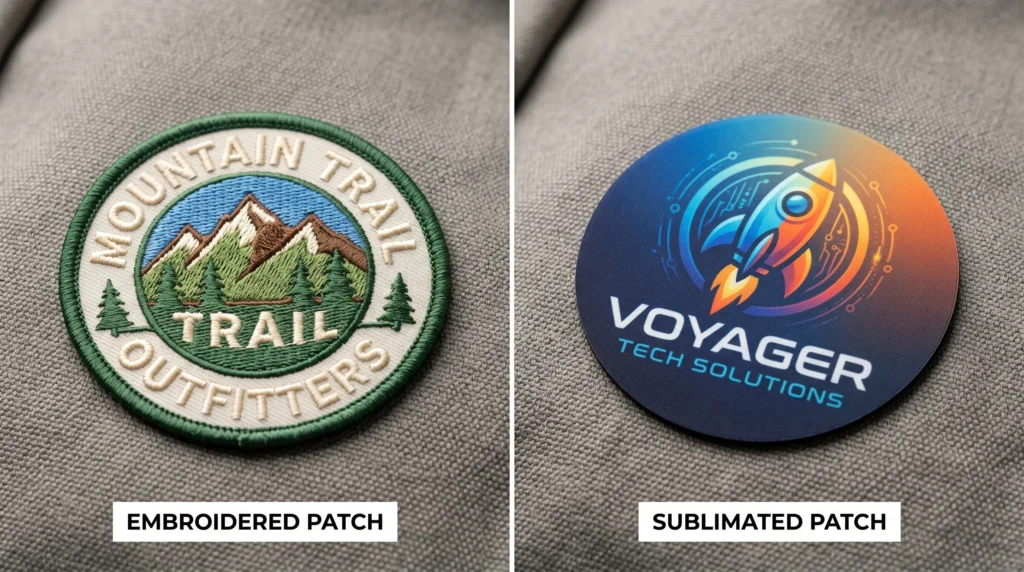
The final patch usually has a smooth surface instead of the raised texture found in embroidered patches.
Key Features of Sublimated Patches
Here are the main characteristics you will notice with sublimated patches:
- Smooth printed surface
- Bright full-color designs
- Lightweight feel
- Excellent small-detail reproduction
- No thread limitations
- Flexible patch shapes and finishes
A common sublimation mistake is expecting a sublimated patch to feel embroidered. The visual appearance can look similar from a distance, but the texture is completely different.
How Sublimated Patches Are Made
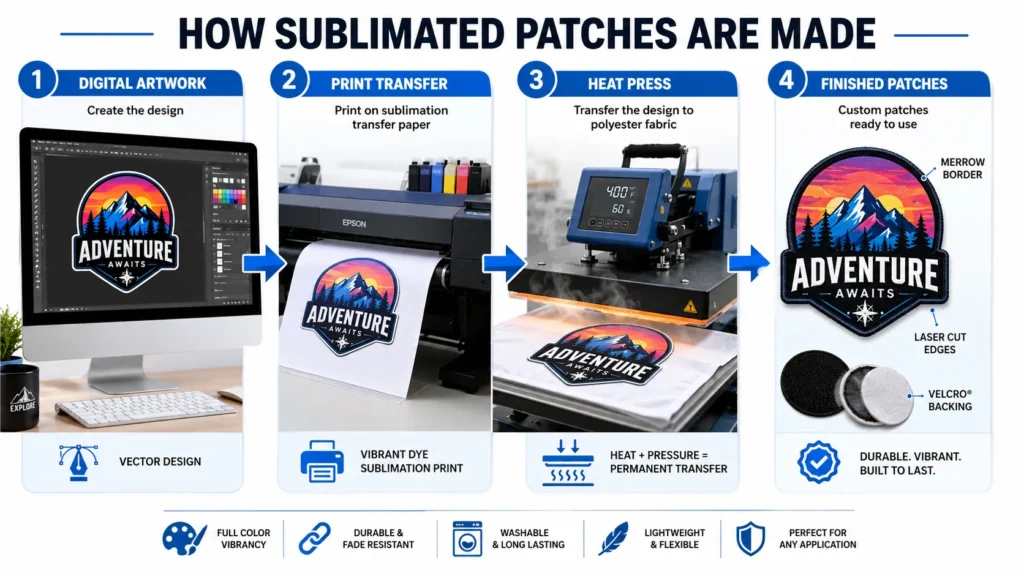
The sublimation patch process combines digital artwork preparation, sublimation transfer printing, and patch finishing techniques.
Step 1: Creating the Digital Design
The process starts with digital artwork.
Most manufacturers use:
- vector graphics
- high-resolution PNG files
- layered logo artwork
Sublimated patches work especially well for:
- gradients
- detailed illustrations
- camouflage patterns
- photographic elements
- small lettering
This is one reason sports teams and esports brands often prefer sublimation over embroidery.
Step 2: Printing With Sublimation Ink
The design is printed onto sublimation transfer paper using dye sublimation ink.
The artwork is mirrored before printing because the image flips during the heat transfer process.
Color accuracy matters heavily here. In most sublimation setups, proper color management helps preserve:
- logo consistency
- color vibrancy
- shadow detail
- skin tones
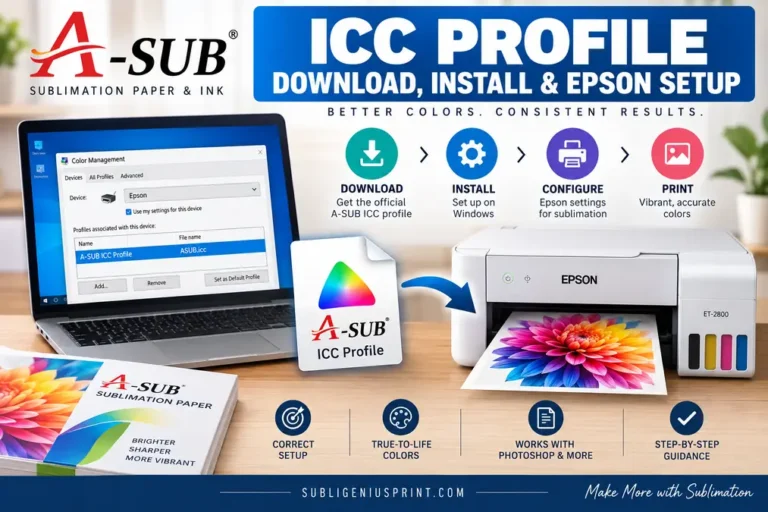
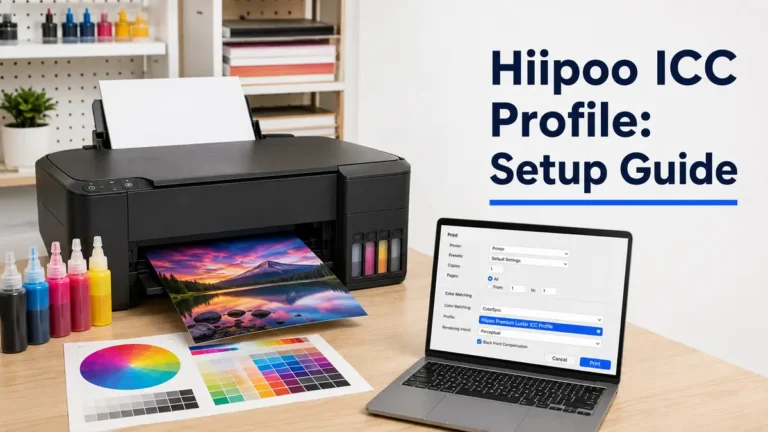
If color quality is important, review this guide on ICC profiles for sublimation printing.
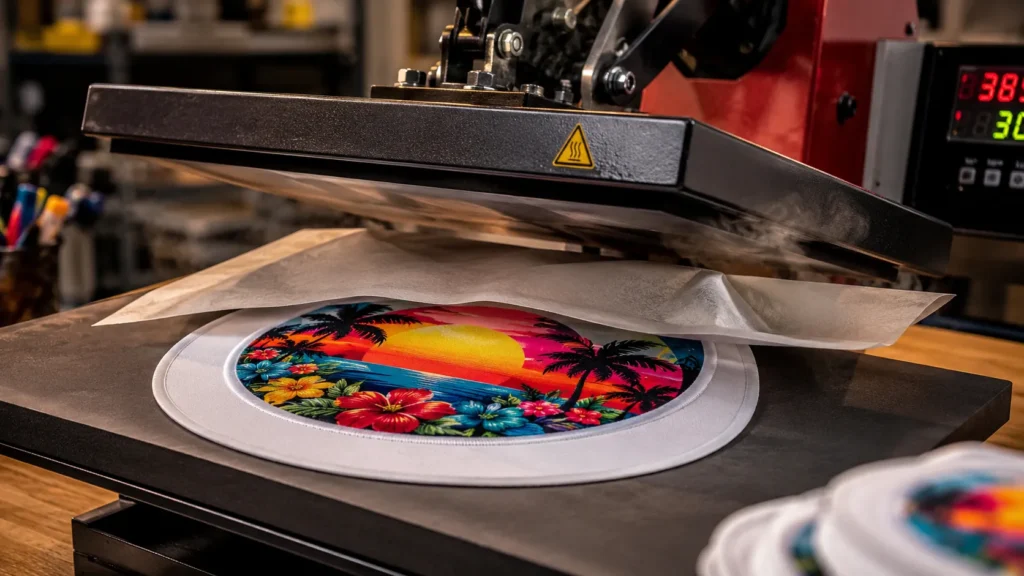
Step 3: Heat Press Transfer Process
The printed transfer paper is placed onto polyester patch material and pressed using heat and pressure.
Most sublimation transfers activate around:
385∘F to 400∘F
During pressing:
- sublimation ink turns into gas
- dye diffuses into polyester fibers
- the image permanently bonds to the patch material
This is why sublimated patches usually resist cracking and peeling better than surface vinyl prints.
You can learn more about temperature control in this sublimation heat guide.
Step 4: Cutting and Finishing the Patch
After printing, the patch is cut and finished.
Popular finishing options include:
- merrow borders
- laser-cut edges
- Velcro backing
- iron-on adhesive backing
- hook-and-loop backing
The finishing stage affects durability more than many beginners realize.
Cheap backing adhesives often fail before the printed patch itself wears out.
Sublimated Patch vs Embroidered Patch
This is the comparison most people search for.
Both patch styles work well, but they solve different design problems.
Visual Differences
| Feature | Sublimated Patch | Embroidered Patch |
|---|---|---|
| Surface | Smooth | Raised texture |
| Detail Level | Very high | Moderate |
| Color Gradients | Excellent | Limited |
| Small Text | Sharp and readable | Sometimes difficult |
| Traditional Look | Less traditional | Classic stitched look |
| Weight | Lightweight | Slightly heavier |
When Sublimated Patches Work Better
Sublimated patches are usually better for:
- detailed logos
- multicolor graphics
- sports branding
- photo-style artwork
- esports uniforms
- gradient-heavy designs
You may notice that sublimated patches preserve fine outlines and tiny lettering much better than thread embroidery.
When Embroidered Patches Work Better
Embroidery often works better for:
- military aesthetics
- classic uniform looks
- biker patches
- luxury branding
- textured patch designs
Some brands simply prefer the premium stitched appearance of embroidery.
Which Patch Type Lasts Longer?
Both patch styles can last years when made correctly.
However:
- embroidery may resist abrasion slightly better
- sublimation preserves color detail better
- low-quality patch backing can shorten lifespan for either style
For sports apparel examples, see these sublimated jerseys explained.
Sublimated Patch vs Woven Patch
Woven patches sit somewhere between sublimation and embroidery.
What Is a Woven Patch?
A woven patch uses thinner thread than embroidery to create finer detail while still maintaining a stitched appearance.
Unlike sublimated patches, woven patches are still made from thread construction rather than printed dye.
Main Differences Between Woven and Sublimated Patches
| Feature | Sublimated Patch | Woven Patch |
|---|---|---|
| Construction | Printed dye | Thread woven |
| Texture | Smooth | Slight texture |
| Fine Detail | Excellent | Very good |
| Color Gradients | Excellent | Limited |
| Stitch Appearance | No | Yes |
Which Patch Type Gives Better Detail?
Sublimated patches generally provide the highest image detail because there are no thread limitations.
Woven patches can still reproduce fine lines well, but they cannot match photographic sublimation quality.
What Are Sublimated Patches Used For?
Sublimated patches are popular because they work across many industries and apparel styles.
Sports Jerseys and Team Uniforms
Sports teams often use sublimated patches for:
- baseball jerseys
- hockey uniforms
- motocross apparel
- esports branding
- sponsor logos
Complex logos reproduce cleanly without heavy thread buildup.
Hats and Branded Apparel
Sublimated patches are also common on:
- trucker hats
- company uniforms
- promotional clothing
- lightweight jackets
The reduced thickness helps hats feel more flexible and comfortable.
Tactical and Morale Patches
Some tactical brands use sublimated patches because:
- they weigh less
- they reproduce camouflage well
- they handle detailed insignia cleanly
Velcro-backed sublimated morale patches are increasingly common.
Fashion and Streetwear
Streetwear brands often prefer sublimated patches for:
- artistic graphics
- anime-inspired designs
- gradient logos
- colorful branding
You can explore related apparel ideas in these sublimation design examples for shirts and jerseys.
Pros and Cons of Sublimated Patches
Advantages of Sublimated Patches
- Excellent color reproduction
- High-detail image quality
- Lightweight construction
- Smooth comfortable surface
- Great for complex logos
- Affordable for multicolor artwork
Disadvantages of Sublimated Patches
- Less textured than embroidery
- Polyester-based material requirement
- Traditional patch collectors may prefer stitching
- Poor-quality edge finishing can reduce durability
A common issue is choosing sublimation for designs that would actually benefit from raised embroidery texture.
Are Sublimated Patches Durable?
Yes. High-quality sublimated patches are generally durable and wash-resistant when produced correctly.
Because sublimation dye becomes part of the polyester fibers, the printed image usually does not crack like surface vinyl applications.
How Long Sublimated Patches Last
In most cases, sublimated patches can last for years with:
- proper washing
- quality polyester material
- strong patch backing
- correct heat pressing
Common Durability Problems
Most durability issues come from:
- weak adhesive backing
- poor heat application
- low-quality polyester fabric
- cheap edge stitching
The print itself is often more durable than the backing material.
How to Make Sublimated Patches Last Longer
To extend patch lifespan:
- Wash garments inside out
- Avoid excessive dryer heat
- Use gentle detergents
- Avoid aggressive scrubbing
- Follow manufacturer washing instructions
For more care guidance, review these sublimated product care tips.
Best Materials for Sublimation Patches
Material selection matters heavily in sublimation printing.
Polyester Fabrics
Polyester works best because sublimation dye bonds directly with polyester fibers.
This creates:
- strong color retention
- sharp graphics
- wash durability
- smooth transfers
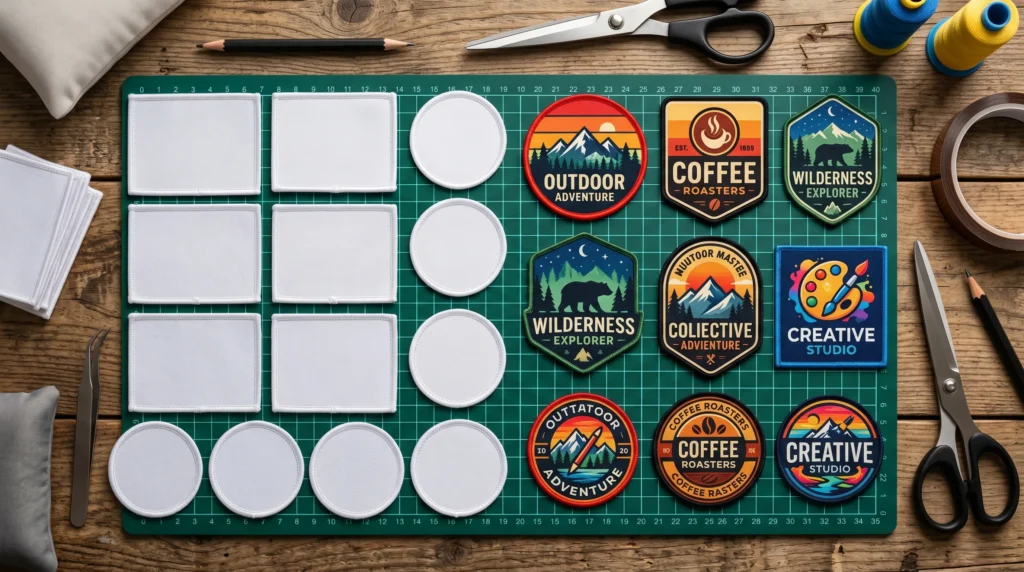
Sublimation-Compatible Patch Blanks
Popular patch materials include:
- polyester twill
- sublimation felt blends
- coated patch fabrics
- synthetic patch substrates
Choosing compatible sublimation blanks improves transfer consistency.
Materials That Do Not Work Well
Untreated cotton usually performs poorly because sublimation dye does not properly bond with natural fibers.
Low-polyester blends may also produce:
- faded colors
- weak transfers
- reduced vibrancy
This best fabrics for sublimation guide explains compatible materials in more detail.
You can also explore different sublimation blanks and substrates for patch production.
Common Mistakes When Ordering Sublimated Patches
Using Low-Resolution Artwork
Blurry artwork creates poor patch quality.
High-resolution or vector artwork produces cleaner edges and sharper details.
Choosing the Wrong Patch Backing
Different applications require different backings:
- Velcro for tactical use
- iron-on for apparel
- adhesive for temporary use
Ignoring Border Finish Options
Patch edge finishing affects:
- durability
- fraying resistance
- visual appearance
Laser-cut and merrow borders create very different looks.
Expecting Embroidery Texture
Sublimation focuses on image quality, not raised stitching texture.
Understanding this difference prevents disappointment.
Ordering Non-Polyester Materials
Sublimation transfers work best on polyester-compatible materials.
Cotton-based patch materials often produce weak color results.
Frequently Asked Questions
What does sublimated patch mean?
A sublimated patch is a printed polyester patch created using heat transfer sublimation instead of embroidery stitching.
What is the difference between sublimation and embroidery patches?
Sublimated patches use printed dye for smooth full-color graphics, while embroidered patches use stitched thread to create a raised textured design.
What is the difference between woven and sublimated patches?
Woven patches are thread-based with a flatter stitched appearance, while sublimated patches use printed dye for sharper image detail and color gradients.
What are the downsides of sublimation patches?
Sublimated patches do not have the traditional textured feel of embroidery and usually require polyester-compatible materials for best results.
Can sublimated patches be ironed on?
Yes. Many sublimated patches include heat-activated adhesive backing for iron-on application.
Are sublimated patches waterproof?
Most sublimated patches are water-resistant during normal washing, but durability depends on material quality and backing construction.
Do sublimated patches crack or peel?
The printed design itself usually does not crack because the dye bonds into the fabric. However, low-quality adhesive backing may peel over time.
Can you wash sublimated patches?
Yes. Most sublimated patches are washable when proper garment care instructions are followed.
Quick Recap:
Sublimated patches are a strong option when you need detailed graphics, full-color artwork, and lightweight patch construction.
They work especially well for sports uniforms, modern branding, tactical patches, and complex logos that embroidery cannot reproduce cleanly.
The best patch type ultimately depends on what matters most to you:
- image detail
- texture
- durability
- traditional appearance
- application method
If you want a broader understanding of dye sublimation printing workflows, this complete sublimation printing guide is a helpful next step.