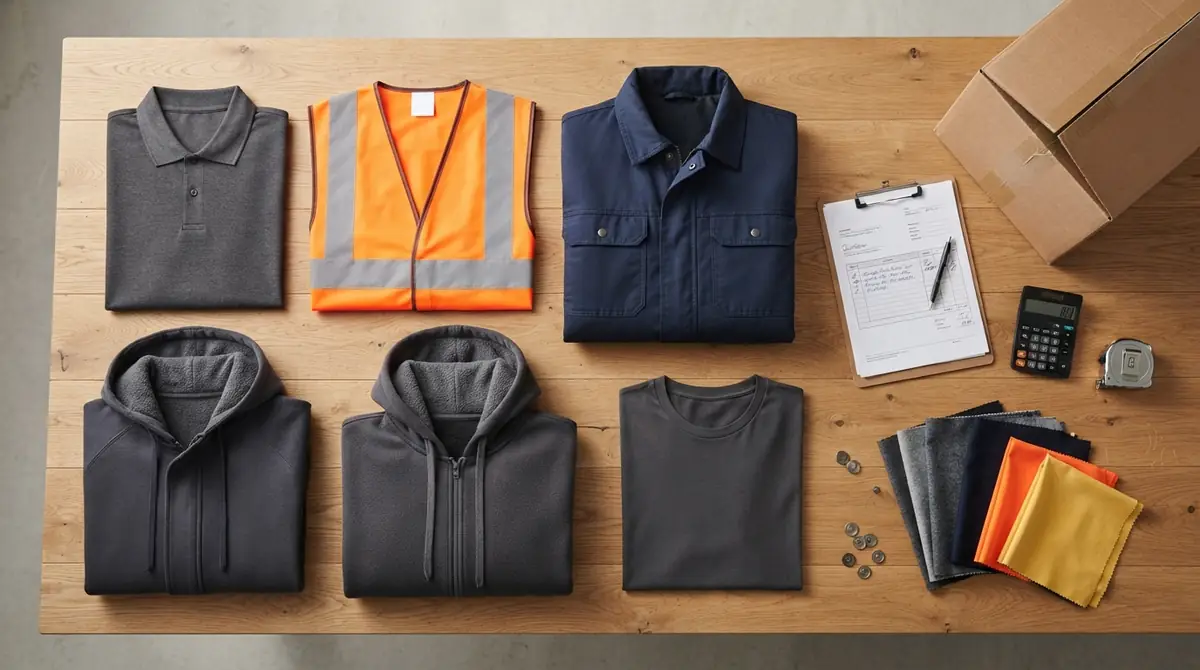
Minimum Order Quantities for Custom Workwear: What to Expect

Introduction
Minimum order quantities (MOQs) are one of the first things you’ll encounter when ordering custom workwear. Whether you’re buying branded uniforms, high-visibility clothing, polo shirts, or jackets, most manufacturers require you to meet a minimum order before production begins.
The required quantity can vary depending on the garment, decoration method, and supplier. Understanding how MOQs work helps you budget more accurately, compare suppliers, and avoid unexpected costs.
In this guide, you’ll learn what to expect from custom workwear minimum order quantities, the factors that affect them, and practical ways to reduce your costs while finding the right supplier.
Quick Answer
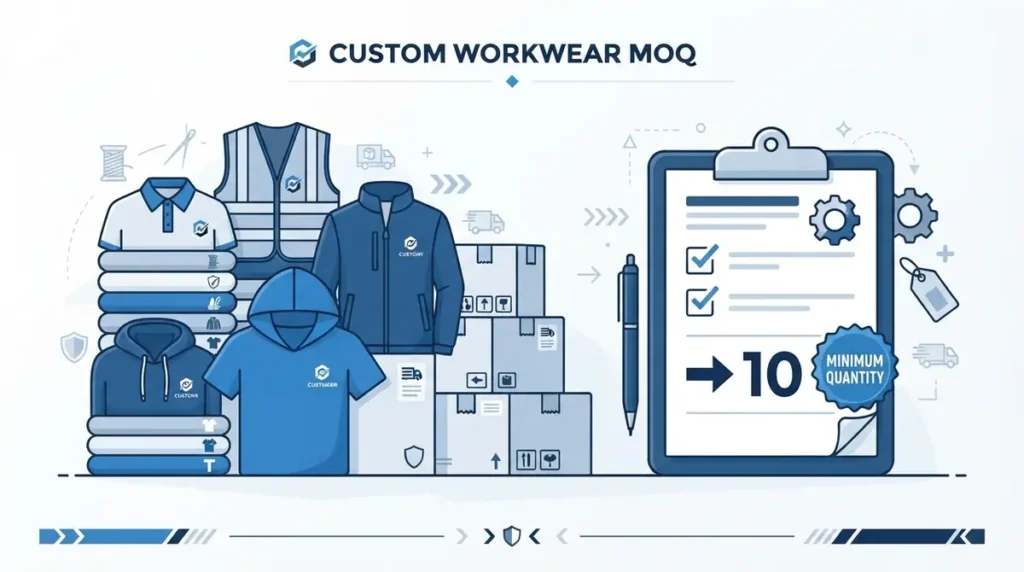
Most custom workwear suppliers have minimum order quantities ranging from 10 to 100 pieces, depending on the product and customization involved. Screen printing often requires higher MOQs than embroidery or direct-to-film (DTF) printing because of setup costs. If you need a smaller order, some suppliers offer sample runs, flexible MOQs, or stock garments with fewer customization options.
What Is a Minimum Order Quantity (MOQ)?
A minimum order quantity (MOQ) is the smallest number of items a manufacturer or supplier requires you to purchase in a single order. It helps cover production, setup, labor, and material costs, making each order profitable for both the supplier and the buyer.
For custom workwear, MOQs may apply to:
- Total garments in an order
- Individual garment styles
- Specific colors or sizes
- Decoration methods such as screen printing or embroidery
It’s also important to understand the difference between an MOQ and a minimum order value. An MOQ is based on the number of items you purchase, while a minimum order value requires you to spend a certain amount regardless of the quantity ordered.
Knowing how a supplier defines its minimum order requirements makes it easier to compare quotes and choose the best option for your business.
Typical Minimum Order Quantities for Custom Workwear
Minimum order quantities vary by supplier, garment type, and customization method. While every manufacturer has its own policies, the ranges below are common across the custom workwear industry.
| Workwear Item | Typical MOQ |
|---|---|
| T-Shirts | 10–25 pieces |
| Polo Shirts | 10–25 pieces |
| Hoodies & Sweatshirts | 10–25 pieces |
| Hi-Vis Safety Clothing | 25–50 pieces |
| Jackets | 10–25 pieces |
| Corporate Uniforms | 25–100 pieces |
These quantities are general guidelines. Some suppliers accept smaller orders, while others require larger volumes to qualify for custom production.
T-Shirts and Polo Shirts
Basic workwear items like T-shirts and polo shirts usually have the lowest minimum order quantities. Since these garments are widely available and easy to customize, many suppliers accept orders starting at 10 to 25 pieces.
Hoodies and Jackets
Hoodies, fleece garments, and jackets often have similar MOQs, but specialty fabrics, premium brands, or seasonal products may require larger orders.
Hi-Vis Safety Workwear
High-visibility clothing typically has higher minimums because it must meet specific safety standards and often includes reflective materials or specialized fabrics. Many suppliers require orders of 25 pieces or more.
Corporate Uniforms
Custom uniforms with embroidered logos, personalized names, or multiple garment styles usually require higher minimum order quantities. If your order includes several products or extensive customization, expect the supplier to discuss minimum quantities during the quotation process.
Before placing an order, always confirm whether the MOQ applies to the entire order, each garment style, or each design, as this can significantly affect your final costs.
What Affects Minimum Order Requirements?
No two suppliers use the same minimum order policy. Several factors determine how many pieces you must order before production begins.
Decoration Method
The printing or decoration process has a major impact on the MOQ.
- Screen printing often requires higher minimums because of setup time and screen preparation.
- Embroidery may allow smaller orders, although complex designs can increase costs.
- Direct-to-Film (DTF) printing is a good option for short production runs because it has lower setup requirements.
- Sublimation printing is often suitable for small orders when using polyester garments, but requirements vary by supplier.
Garment Type
Standard items like T-shirts and polo shirts are usually available with lower MOQs because they’re stocked in large quantities. Specialty workwear, flame-resistant clothing, waterproof jackets, and high-visibility garments may require larger orders due to limited inventory and higher production costs.
Customization Level
The more customization you request, the higher the minimum order may be. Features that can increase MOQs include:
- Multiple logo locations
- Individual employee names
- Custom labels
- Unique color combinations
- Special packaging
Simple designs on stock garments generally require fewer pieces than fully customized uniforms.
Material Availability
If the supplier needs to order specific fabrics, colors, or garment styles from a manufacturer, they may require a larger order to justify the purchase.
Supplier Policies
Every supplier sets its own minimum order requirements based on production capacity, inventory, and business model. Some specialize in large corporate orders, while others cater to small businesses with more flexible MOQs.
Before requesting a quote, ask how the supplier calculates its minimum order quantity. Understanding their policy upfront can help you compare suppliers and avoid unexpected requirements later.
Can You Order Below the MOQ?
Yes, but it depends on the supplier and the type of customization you need. While many manufacturers advertise a standard minimum order quantity, some are willing to accept smaller orders under certain conditions.
Ask About Sample Orders
If you’re testing a new supplier or product, ask whether they offer sample orders. Although the price per garment is usually higher, a sample lets you evaluate the quality before placing a larger order.
Choose Stock Garments
Suppliers often have more flexibility when decorating garments they already keep in stock. Using standard colors and styles may allow you to order fewer pieces than fully custom products.
Pay a Setup Fee
Some suppliers will reduce the MOQ if you’re willing to cover the setup costs. This is common for screen printing, where preparing screens takes time regardless of the order size.
Combine Sizes and Colors
Instead of ordering the minimum quantity for each size or color, ask whether the supplier allows mixed sizes and colors within the same design. This helps you meet the MOQ without ordering more garments than you need.
Discuss Your Future Order Plans
If you expect to place repeat orders, let the supplier know. Many manufacturers are more willing to lower their minimum order requirements for customers who show long-term potential.
Smaller orders may cost more per garment, but they can still be a practical option for startups, small businesses, or companies ordering workwear for a new team. The key is to discuss your requirements early and ask whether the supplier offers flexible MOQ options.
How to Reduce Your Minimum Order Quantity
If a supplier’s minimum order quantity is higher than you need, there are several ways to negotiate a smaller order without significantly increasing your costs.
Combine Multiple Garments
Ask if you can mix different garment styles, sizes, or colors to meet the minimum order quantity.
For example, instead of ordering:
- 25 polo shirts
You may be able to order:
- 10 polo shirts
- 10 T-shirts
- 5 hoodies
Using the same logo or design across multiple products can help you reach the supplier’s MOQ.
Simplify Your Design
Complex designs often require more setup time and production costs. Choosing a simple logo, fewer print colors, or a single decoration location may allow the supplier to accept a smaller order.
Order Standard Products
Stock garments are generally easier for suppliers to customize than fully bespoke workwear. Selecting popular colors and standard sizes can improve your chances of qualifying for a lower MOQ.
Build a Long-Term Relationship
If you expect to place regular orders, let the supplier know. Many manufacturers are willing to offer flexible minimum order quantities to customers who demonstrate long-term purchasing potential.
Compare Multiple Suppliers
Not every supplier has the same minimum order policy. Request quotes from several companies and compare:
- Minimum order quantity
- Price per garment
- Decoration options
- Setup fees
- Shipping costs
A supplier with a slightly higher unit price but a lower MOQ may be the better choice for small businesses or first-time orders.
MOQ vs. Price: Is Ordering More Worth It?
In many cases, increasing your order quantity can lower the cost per garment. Manufacturers often offer volume discounts because larger production runs reduce setup and handling costs.
For example:
| Order Quantity | Example Cost Per Garment |
|---|---|
| 10 pieces | Higher |
| 25 pieces | Lower |
| 50 pieces | Even lower |
| 100+ pieces | Best wholesale pricing |
However, the lowest unit price isn’t always the best value. Before increasing your order, consider:
- Do you have enough storage space?
- Will you use all the garments?
- Does the lower price offset the extra inventory cost?
- Could styles or sizes change before you use the stock?
If you’re confident you’ll need additional workwear in the future, ordering more can reduce your long-term costs. If demand is uncertain, a smaller order may be the safer investment, even if the price per garment is slightly higher.
How to Choose a Supplier Based on Their MOQ
A low minimum order quantity may seem attractive, but it shouldn’t be the only factor when choosing a custom workwear supplier. The best supplier offers the right balance of pricing, quality, flexibility, and service.
Compare More Than the Minimum Order
Request quotes from several suppliers and compare:
- Minimum order quantity
- Price per garment
- Setup fees
- Decoration options
- Production time
- Shipping costs
A supplier with a slightly higher MOQ may offer lower overall costs if their pricing and shipping are more competitive.
Check Product Quality
Before placing a large order, ask for samples whenever possible. Inspect the fabric quality, stitching, print durability, embroidery, and sizing consistency. A higher-quality garment can provide better value than choosing the cheapest option.
Ask About Reorders
Many businesses order additional uniforms throughout the year. Ask whether repeat orders require the same MOQ or if smaller quantities are allowed after the initial production run.
Review Production Lead Times
If you need workwear quickly, production time can be just as important as the MOQ. Confirm how long manufacturing, decoration, and shipping will take before placing your order.
Read Customer Reviews
Look for reviews that mention:
- Product quality
- Delivery reliability
- Customer service
- Print consistency
- Accuracy of completed orders
Positive feedback from other businesses can help you choose a dependable supplier.
Consider Long-Term Value
The lowest MOQ isn’t always the best choice. A reliable supplier that delivers consistent quality, competitive pricing, and dependable service can save your business money over time.
I would also improve one earlier section
Instead of ending Typical Minimum Order Quantities with only a table, add a short subsection:
Why Do Minimum Order Quantities Vary?
Explain that MOQs change because of:
- Decoration method
- Setup costs
- Garment availability
- Supplier capacity
- Seasonal demand
Common MOQ Mistakes to Avoid
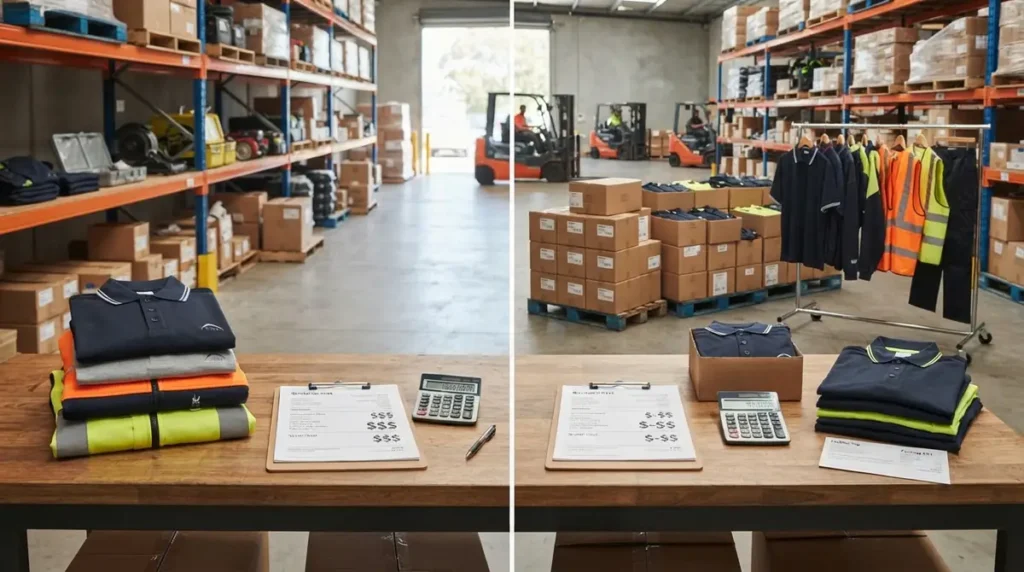
Minimum order quantities can affect both your budget and inventory. Avoid these common mistakes to keep your custom workwear orders cost-effective.
Ordering More Than You Need
Buying extra garments to reach a lower price per item may seem like a good deal, but unused inventory ties up cash and takes up storage space. Order quantities that match your current needs and expected growth.
Focusing Only on the MOQ
A low minimum order quantity doesn’t always mean the best value. Compare the total cost, including:
- Setup fees
- Shipping charges
- Decoration costs
- Production time
- Product quality
Not Asking How the MOQ Is Calculated
Some suppliers apply the MOQ to the total order, while others require a minimum quantity for each garment style, color, or design. Clarify the policy before approving a quote to avoid unexpected costs.
Ignoring Reorder Policies
If you plan to reorder workwear regularly, ask whether future orders will have the same MOQ. Some suppliers reduce minimum quantities for repeat customers after the initial production setup.
Choosing Price Over Quality
The cheapest supplier isn’t always the best option. Consistent garment quality, reliable delivery, and responsive customer service are just as important as meeting a minimum order requirement.