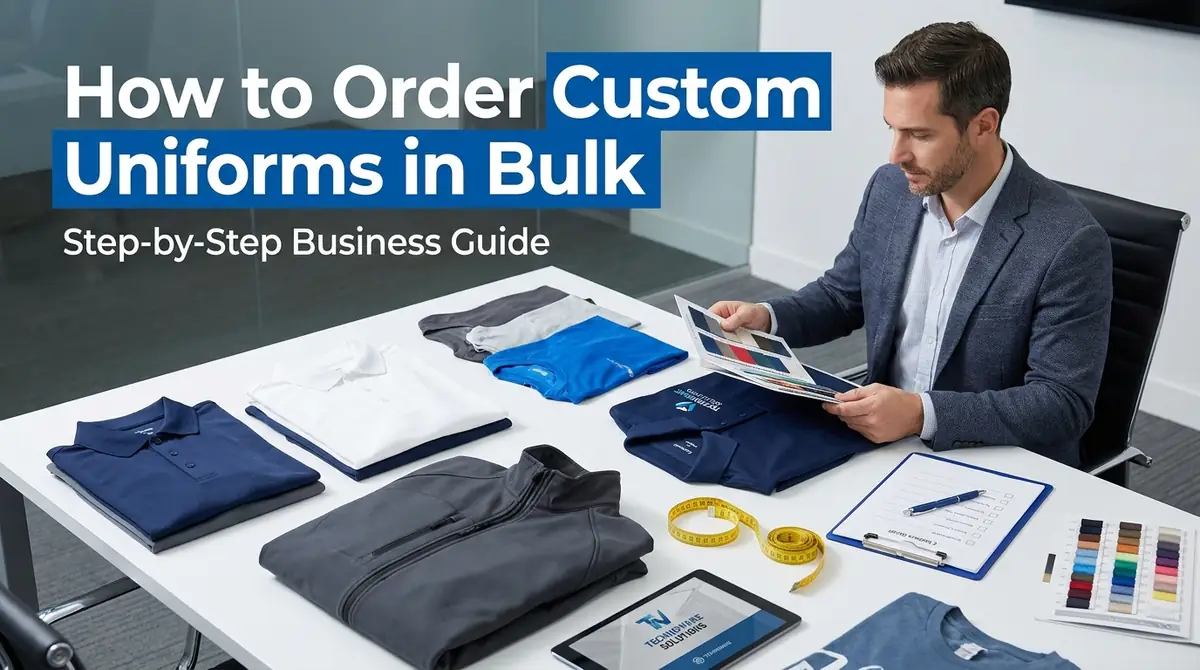
How Businesses Should Order Custom Uniforms in Bulk (Sep-by-Step)

Ordering custom uniforms in bulk can save your business time, money, and hassle but only if you plan the process carefully.
Whether you’re outfitting a small team or hundreds of employees, the right decisions early on can help you avoid sizing issues, inconsistent branding, production delays, and unexpected costs.
A successful bulk uniform order isn’t just about choosing shirts with a logo. You’ll also need to consider fabric, decoration method, employee roles, quantities, future hiring, and supplier reliability.
Our guide to sublimation printing explains how professional apparel decoration works and what makes it different from other methods.
Why Bulk Uniform Planning Matters
Taking time to plan before placing an order can prevent expensive mistakes later.
A well-organized ordering process helps your business:
- Maintain a consistent professional appearance
- Reduce ordering errors
- Stay within budget
- Improve employee comfort
- Simplify future reorders
- Keep branding consistent across every department
Without proper planning, businesses often encounter problems such as:
- Incorrect sizes
- Low-quality garments
- Delayed delivery
- Inconsistent logo placement
- Running short on uniforms for new employees
Investing a little extra time before placing a bulk order can lead to smoother production and better long-term value.
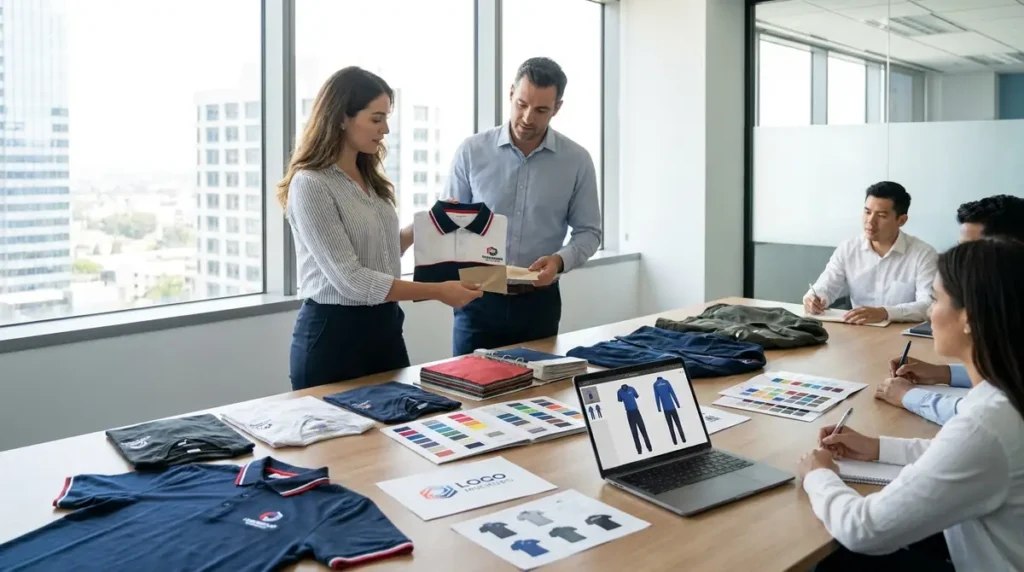
Step 1: Define Your Uniform Requirements
Before choosing garments or requesting quotes, identify exactly what your team needs.
Consider the following questions:
What type of work do employees perform?
Different jobs require different types of uniforms.
Examples include:
- Office staff
- Warehouse employees
- Construction crews
- Hospitality teams
- Delivery drivers
- Retail associates
- Healthcare professionals
Will uniforms be worn indoors or outdoors?
Outdoor workers often benefit from:
- Moisture-wicking fabrics
- UV protection
- Lightweight materials
- High-visibility apparel
Indoor teams may prioritize:
- Professional appearance
- Comfort
- Easy maintenance
Are there any safety requirements?
Some industries require uniforms with features such as:
- Hi-vis colors
- Reflective elements
- Flame-resistant materials
- Durable workwear fabrics
What are your branding goals?
Think about how your uniforms should represent your company.
Decide whether you need:
- Small embroidered logos
- Large printed graphics
- Employee names
- Department identification
- Multiple logo placements
- Consistent brand colors
Answering these questions first makes it much easier to choose the right garments and decoration method.
If you’re planning polyester uniforms with vibrant branding, reviewing the best fabrics for sublimation can help you choose garments that deliver the best print quality.
Step 2: Choose the Right Garment
The garment itself has just as much impact as the decoration.
Select clothing based on your employees’ daily tasks, working conditions, and comfort requirements.
T-Shirts
Best for:
- Warehouses
- Events
- Promotional teams
- Manufacturing
- Outdoor work
Benefits:
- Lightweight
- Affordable
- Comfortable
- Easy to replace
Polo Shirts
Ideal for:
- Retail
- Hospitality
- Corporate staff
- Customer-facing employees
Benefits:
- Professional appearance
- Comfortable for everyday wear
- Suitable for embroidery or printing
Hi-Vis Apparel
Recommended for:
- Construction
- Road crews
- Warehousing
- Logistics
Provides improved visibility while maintaining company branding.
Hoodies and Sweatshirts
Suitable for:
- Cooler environments
- Outdoor workers
- Delivery teams
- Seasonal uniforms
Jackets
Great for businesses needing durable outerwear with long-term branding.
Popular choices include:
- Softshell jackets
- Waterproof jackets
- Fleece jackets
- Insulated work jackets
If your uniforms include hoodies or outerwear, you may also find our guide to the best hoodies for sublimation helpful when selecting compatible garments.
Caps and Hats
A practical addition for:
- Landscaping
- Construction
- Outdoor services
- Promotional events
Matching hats help create a consistent company image.
Step 3: Select the Best Decoration Method
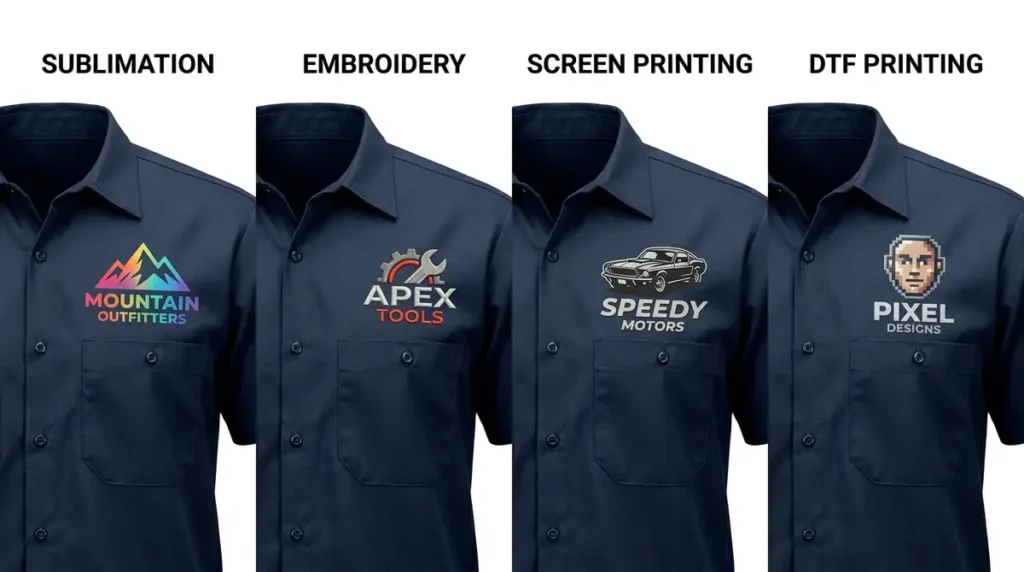
Choosing the right decoration method is just as important as selecting the garment itself. Your decision should depend on your logo, fabric, budget, and the environment where employees wear the uniforms.
The most common options include sublimation, embroidery, screen printing, and direct-to-film (DTF) printing. The SERP research consistently highlights comparing decoration methods as a key part of the buying process.
Sublimation
Sublimation is ideal for polyester garments and full-color designs.
Best for:
- Sports uniforms
- Construction shirts
- Hi-vis apparel
- Event staff
- Delivery uniforms
Advantages:
- Unlimited colors
- Lightweight finish
- No cracking or peeling
- Excellent for large graphics
- Easy employee personalization
Embroidery
Embroidery creates a stitched logo with a premium appearance.
Best for:
- Polo shirts
- Jackets
- Hats
- Corporate uniforms
- Hospitality apparel
Advantages:
- Professional look
- Long-lasting stitching
- Suitable for many fabric types
- Great for small logos
Screen Printing
Screen printing works well for large production runs with simple artwork.
Best for:
- Promotional T-shirts
- Event apparel
- Staff uniforms
- Bulk cotton garments
Advantages:
- Cost-effective for high volumes
- Durable finish
- Bold solid colors
DTF (Direct-to-Film)
DTF printing is a flexible option that works on a wide range of fabrics.
Best for:
- Small to medium orders
- Cotton garments
- Mixed fabric uniforms
- Detailed logos
Advantages:
- Vibrant colors
- Fine detail reproduction
- Works on multiple fabric types
Step 4: Decide Where Your Logo Should Go
Logo placement affects both visibility and the professional appearance of your uniforms.
The most common placements include:
Left Chest
The most popular option for businesses.
Suitable for:
- Polo shirts
- Button-down shirts
- Jackets
- Fleeces
Provides a clean and professional appearance.
Full Back
Ideal for businesses that need high visibility.
Common for:
- Construction companies
- Landscapers
- Delivery services
- Event staff
Large back logos improve brand recognition from a distance.
Sleeves
Sleeve branding is commonly used for:
- Secondary logos
- Website addresses
- Department names
- Sponsor logos
Employee Names
Adding names helps customers identify staff while giving uniforms a more personalized appearance.
Common placements include:
- Right chest
- Below the company logo
- Sleeve
- Back of the garment
Step 5: Get Accurate Employee Sizes
Sizing mistakes are one of the most common causes of wasted money in bulk uniform orders. The SERP research identifies incorrect sizing as a frequent issue businesses face.
To improve accuracy:
- Ask each employee for their preferred size.
- Use the supplier’s official size chart.
- Request sample garments if possible.
- Consider different fits for men and women.
- Order a few extra pieces in the most common sizes.
Avoid guessing sizes based on previous uniform brands, as sizing can vary between manufacturers.
Step 6: Calculate Quantities
Ordering the correct quantity helps avoid expensive reorders while ensuring every employee has enough uniforms.
When planning quantities, consider:
- Current employees
- New hires expected within the next few months
- Seasonal workers
- Replacement garments
- Spare inventory
Many businesses provide each employee with multiple uniforms to reduce laundry frequency and maintain a professional appearance throughout the workweek.
If you’re unsure whether your order meets a supplier’s minimum purchase requirements, our guide to minimum order quantities for custom workwear explains how MOQs affect pricing and production.
A simple planning table can help:
| Employee Type | Recommended Quantity |
|---|---|
| Full-time staff | 3–5 uniforms |
| Outdoor workers | 4–6 uniforms |
| Office staff | 2–4 uniforms |
| Part-time staff | 2–3 uniforms |
| Seasonal employees | Based on contract length |
Ordering a small percentage of extra uniforms can also save time and shipping costs when your team grows.
Step 7: Set Your Budget
A well-planned budget helps you compare suppliers fairly and prevents unexpected costs later.
Instead of focusing only on the price per garment, calculate the total project cost.
Include expenses such as:
- Garment cost
- Decoration method
- Logo setup or digitizing fees
- Employee personalization
- Shipping charges
- Taxes (if applicable)
- Rush production fees
- Future reorder costs
For large businesses, it’s often worth requesting quotes from multiple suppliers before making a decision.
Businesses ordering large quantities can often lower their costs by applying proven strategies from our guide on negotiating wholesale pricing with apparel manufacturers.
Budget Planning Example
| Cost Item | Example |
|---|---|
| Garments | 100 Polo Shirts |
| Decoration | Embroidery or Sublimation |
| Logo Setup | One-time fee (if applicable) |
| Personalization | Employee names |
| Shipping | Standard or Express |
| Spare Uniforms | 5–10% extra |
Remember that the lowest quote isn’t always the best value. Consider garment quality, production time, and customer support alongside the price.
Step 8: Request Samples Before Ordering
Ordering a sample before placing a large order can help you avoid costly mistakes.
A sample allows you to evaluate:
- Fabric quality
- Color accuracy
- Logo placement
- Print or embroidery quality
- Stitching
- Garment fit
- Overall appearance
If multiple departments will wear different uniforms, request a sample for each garment style.
It’s much easier to make changes before production begins than after hundreds of uniforms have been manufactured.
Step 9: Choose a Reliable Uniform Supplier
Your supplier plays a major role in the success of your bulk order.
Look for a company with experience producing uniforms similar to yours.
When comparing suppliers, consider:
Experience
Choose a supplier that regularly produces workwear for businesses rather than occasional promotional apparel.
Decoration Options
A good supplier should clearly explain which decoration method best suits your logo, garment, and budget.
Turnaround Time
Ask questions such as:
- How long does production take?
- Can they meet your deadline?
- Do they offer rush services?
Minimum Order Quantity (MOQ)
Some suppliers require minimum order quantities, while others accept smaller runs.
Make sure their requirements align with your business needs.
Customer Reviews
Read reviews to learn about:
- Product quality
- Communication
- Delivery reliability
- Problem resolution
Reorder Process
Ask whether your artwork and sizing information will be saved for future orders.
This can make repeat purchases faster and more consistent.
A documented print shop workflow is another sign of a well-organized supplier, helping reduce production errors and keep large uniform orders on schedule.
Step 10: Review Artwork Before Production
Never approve production without reviewing the final artwork proof.
Even a small mistake can affect every garment in the order.
Before giving approval, check:
- Company logo
- Brand colors
- Employee names
- Job titles
- Spelling
- Logo placement
- Garment color
- Size information
Share the proof with anyone responsible for branding before production starts.
Taking a few extra minutes to review the artwork can prevent expensive reprints and production delays.
Pro Tip: Keep a Master Uniform File
Many businesses make repeat orders throughout the year.
Maintain a file that includes:
- Approved logo files
- Brand color codes
- Decoration specifications
- Garment styles
- Employee sizing records
- Supplier contact details
- Previous order quantities
Keeping everything in one place makes future orders quicker, more accurate, and easier to manage.
Common Bulk Uniform Ordering Mistakes
Even experienced businesses can run into problems when placing large uniform orders. Avoiding these common mistakes can save time, reduce costs, and help ensure your employees receive uniforms that meet your expectations. The uploaded SERP research highlights planning errors and sizing issues as recurring concerns for bulk apparel orders.
Ordering Without a Plan
Placing an order before defining your requirements often leads to unnecessary expenses and inconsistent uniforms.
Before requesting a quote, decide on:
- Garment types
- Decoration method
- Logo placement
- Quantity needed
- Delivery deadline
Choosing the Wrong Fabric
Not every fabric is suitable for every decoration method.
For example:
- Polyester is ideal for sublimation.
- Cotton is commonly used for screen printing.
- Embroidery works on a wide variety of fabrics.
Choosing the correct garment first will help you achieve better print quality and longer-lasting uniforms.
Guessing Employee Sizes
One of the biggest reasons for costly exchanges is incorrect sizing.
Instead:
- Collect sizes directly from employees.
- Use the supplier’s size chart.
- Request sample garments when possible.
- Order a few spare uniforms in common sizes.
Focusing Only on Price
The cheapest quote may not provide the best value.
Compare suppliers based on:
- Garment quality
- Decoration quality
- Production time
- Customer support
- Warranty or replacement policy
A slightly higher-quality uniform often lasts longer, reducing replacement costs over time.
Forgetting Future Growth
Many businesses order only enough uniforms for current employees.
Consider ordering extras for:
- New hires
- Seasonal staff
- Replacements
- Damaged garments
This helps maintain consistent branding without placing another order immediately.
Bulk Uniform Ordering Checklist
Use this checklist before approving your order.
| Checklist Item | Complete |
|---|---|
| Defined uniform requirements | ☐ |
| Selected the correct garments | ☐ |
| Chosen the best decoration method | ☐ |
| Confirmed logo placement | ☐ |
| Collected employee sizes | ☐ |
| Calculated quantities | ☐ |
| Set a realistic budget | ☐ |
| Requested product samples | ☐ |
| Compared multiple suppliers | ☐ |
| Approved final artwork proof | ☐ |
| Ordered spare uniforms | ☐ |
| Confirmed production timeline | ☐ |
Keeping a checklist helps ensure nothing is overlooked before production begins.
Frequently Asked Questions
What are the most common issues with bulk apparel orders?
The most common issues include incorrect sizes, poor-quality garments, inconsistent logo placement, delayed production, and ordering too few uniforms. Careful planning and reviewing artwork proofs can help prevent these problems.
How many uniforms should each employee receive?
The ideal number depends on the job role. Many businesses provide three to five uniforms for full-time employees, while physically demanding or outdoor roles may require additional garments.
How long does a bulk uniform order take?
Production times vary depending on the supplier, garment availability, decoration method, and order size. Always confirm estimated turnaround times before placing your order.
What information should I send to a uniform supplier?
Most suppliers will request:
- Company logo
- Garment styles
- Color preferences
- Size breakdown
- Quantity required
- Logo placement
- Employee names (if needed)
- Delivery deadline
Providing complete information upfront helps avoid delays.
Can I reorder matching uniforms later?
Yes. Many suppliers keep your approved artwork and production files, making repeat orders quicker and more consistent. Ask your supplier whether they retain your artwork and order history.
What is the best decoration method for company uniforms?
There isn’t a single best option. Sublimation is well suited for polyester garments and full-color graphics, while embroidery offers a premium look for polos, jackets, and corporate uniforms. The right choice depends on your fabric, branding goals, and budget.