How to Vet a Sublimation Transfer Paper Supplier Before You Order

A bulk order of the wrong paper does not just cost you the paper. It costs the ink you printed on it, the blank you pressed it onto, and the hours you spend explaining a late order to a customer.
Most of that damage happens before anyone presses a single sheet, at the moment a shop chooses a supplier without checking whether the paper actually matches the job.
This guide walks through a practical way to vet a sublimation transfer paper supplier before you commit to an order.
It is built for print shop owners and operators who need a repeatable process, not a rundown of which paper brand is “best.”
Quick Summary
Before ordering from a new supplier, confirm the paper is genuinely sublimation-ready, check that it matches your ink and printer setup, request a sample or small test batch, and review the supplier’s reputation and return policy.
Skipping any one of these steps is usually where print shop mistakes and reprints start.
Why Vetting a Supplier Matters
Skipping supplier vetting rarely shows up as one dramatic failure. It shows up as dull colors on a finished mug, a transfer that will not release cleanly from a shirt, or a batch of paper that behaves differently from the last one you ordered. Each of these problems wastes ink, blanks, and press time on jobs that have to be redone.
For a hobbyist printing a handful of gifts, a bad batch of paper is annoying. For a print shop running production orders, it is a direct hit to margin and a risk to customer relationships. The more volume you run, the more a five-minute vetting step saves in avoided reprints.
What “Sublimation-Ready” Actually Means
Sublimation paper and heat transfer paper are not the same product, even though some suppliers use the terms loosely in product listings.
Sublimation paper uses a coating designed to hold dye sublimation ink on the surface until heat and pressure turn it into a gas that bonds with polyester or a polymer coating.
Heat transfer paper works differently, often relying on an adhesive layer or a different release mechanism built for a separate printing method entirely.
When a listing says “transfer paper” without specifying sublimation compatibility, treat that as a question to ask, not an assumption to make.
Our sublimation paper vs heat transfer paper comparison breaks down the coating and release differences in more detail if you want the full picture before you start vetting suppliers.
Before You Contact a Supplier
Know Your Volume and Use Case
A crafter printing occasional gifts can absorb a bad sheet of paper without much consequence. A shop filling wholesale orders cannot. Before reaching out to any supplier, get clear on how much paper you go through in a month and how much risk a failed batch would create for your current orders.
This matters because your tolerance for risk changes how thorough your vetting process needs to be. A shop scaling toward larger orders should treat supplier vetting the same way it treats negotiating wholesale pricing with apparel blank manufacturers, as a recurring business decision rather than a one-time purchase.
Know Your Printer and Ink Setup
Paper does not perform in isolation. It performs as part of a system that includes your printer, your ink, and your heat press settings. Before you ask a supplier anything, write down your printer model, your ink brand, and the settings you currently use so you can compare that information directly against what the supplier tells you.
If you are still refining your own settings, our guide on sublimation printer settings is a useful reference point before you introduce a new paper variable into the mix.
The Supplier Vetting Checklist
Ask for Proof It’s True Sublimation Paper
A legitimate sublimation paper supplier should be able to answer basic technical questions without hesitation.
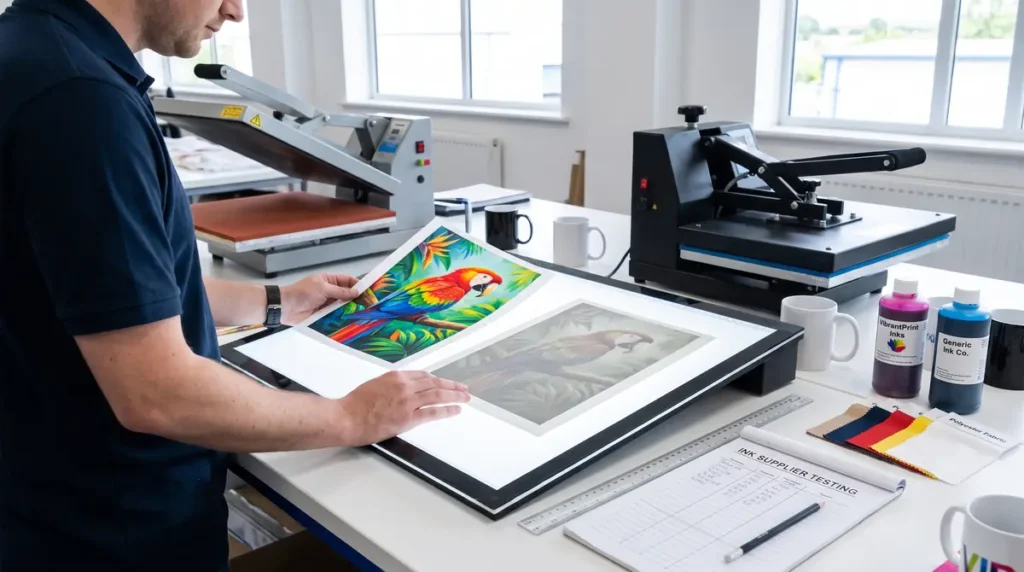
Ask what coating the paper uses, what release temperature range it is designed for, and whether it has been tested specifically for dye sublimation ink rather than pigment or dye-based inkjet ink used for other transfer methods.
If a supplier cannot answer these questions, or answers vaguely, that is a signal to keep looking. Suppliers who genuinely sell sublimation-specific paper are usually familiar with these details because their customers ask about them regularly.
Confirm Ink and Printer Compatibility
Paper and ink need to work together, and not every combination performs the same way. Ask whether the supplier has tested their paper with common sublimation ink brands and with converted or dedicated sublimation printers similar to yours.
This is also a good moment to check your own setup. If you use multiple ink brands or are considering a switch, our breakdown of what happens when you mix different brands of sublimation ink explains why compatibility questions belong at the top of your checklist, not an afterthought after the paper arrives.
Request a Sample or Small Test Batch
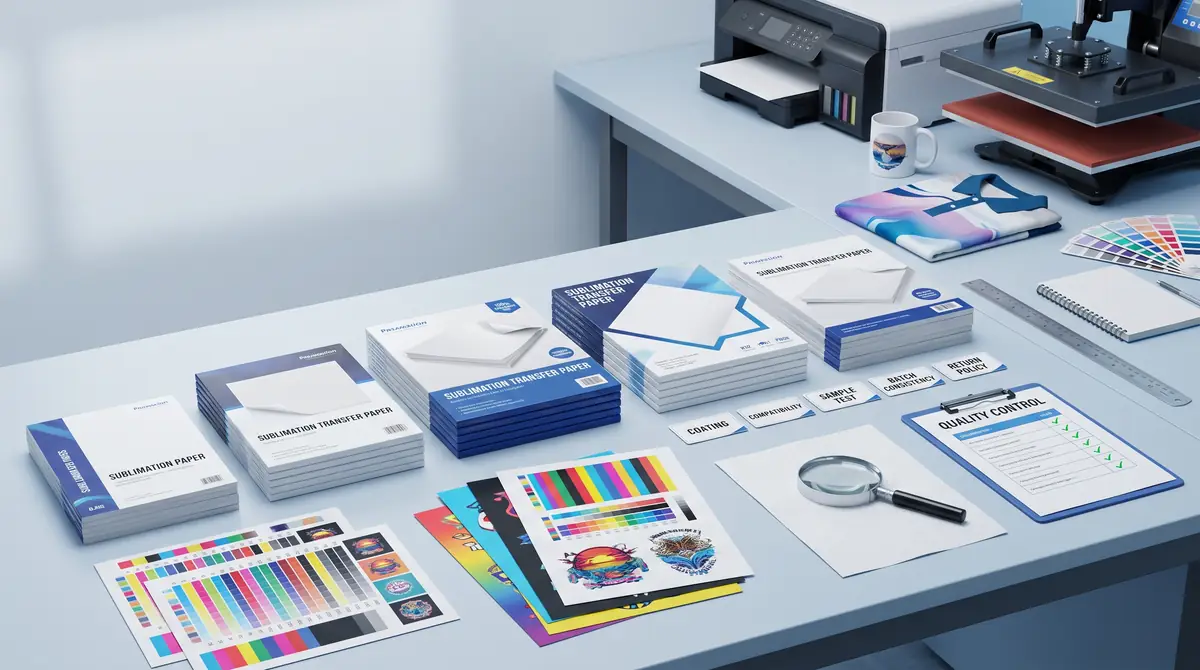
Before placing a bulk order, request a sample pack or the smallest available quantity and run a real test print. Check color accuracy against your usual output, watch how cleanly the transfer releases from the paper backing, and note how long the print takes to dry compared to your current paper.
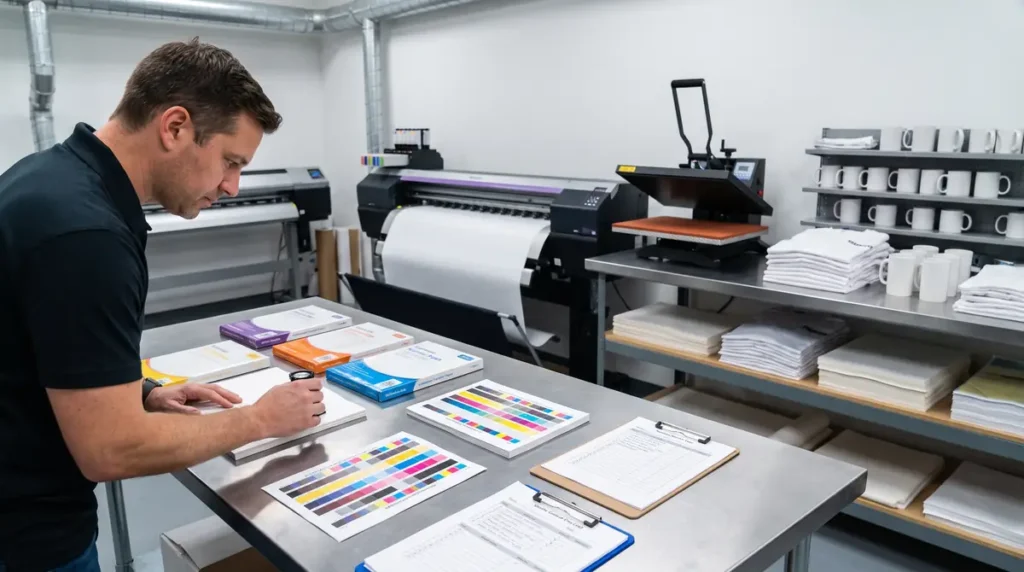
Treat this test the same way you would treat any other quality control step in production. A few test sheets cost far less than discovering a problem in the middle of a 500-unit order.
Check Supplier Reputation and Track Record
Look at how a supplier responds to questions before you buy anything. A supplier willing to answer specific technical questions about coating, compatibility, and batch consistency is generally more reliable than one that only points you to a generic product description.
Reviews can help, but read them for specific, repeatable complaints rather than overall star ratings. A pattern of comments about inconsistent batches or slow shipping tells you more than a general rating number.
Review Return and Replacement Policies
Even a well-vetted supplier can occasionally ship a bad batch. Before ordering in bulk, confirm what happens if the paper does not perform as expected: whether the supplier offers replacements, credit, or a return window, and what proof they require.
Having this answer before a problem happens saves time and frustration if you ever need to use it.
Common Mistakes That Lead to Bad Supplier Choices
Assuming All “Transfer Paper” Is Sublimation Paper
This is the single most common mistake shops make when sourcing a new supplier. Sublimation paper and generic transfer paper are built for different processes, and a listing that uses the word “transfer” does not guarantee sublimation compatibility. Always confirm the coating and intended ink type directly with the supplier before ordering.
Skipping the Test Print Before a Bulk Order
It is tempting to order in bulk right away to save on shipping or unit cost, especially when a price looks attractive. Skipping the test print step removes your only chance to catch a problem before it is baked into hundreds of sheets.
Ignoring Ink Compatibility Until After Ordering
Some shops only think about ink and paper compatibility after a print comes out dull or the transfer will not release properly.
By then, the paper has already been purchased and the problem has already reached a finished product. Confirming compatibility before you order removes this risk entirely.
Best Practices for Repeat Orders
Vetting a supplier once does not mean the relationship is set permanently. Paper formulations can change between batches, even from suppliers you have used successfully before.
Re-test a sample whenever a supplier changes their formulation, packaging, or manufacturing location, and keep a simple internal log of which batches performed well.
A short record showing supplier name, batch or order date, and print quality notes takes a few minutes to maintain and saves significant time the next time you need to make a sourcing decision.
This kind of tracking fits naturally alongside a broader print shop production checklist if you already use one for daily operations.
Download free PDF file printable: Sublimation Transfer Paper Supplier Vetting Checklist
Frequently Asked Questions
Where can I buy reliable sublimation transfer paper?
Look for suppliers with a proven reputation, consistent customer reviews, clear technical documentation, and sample ordering options. Testing the paper yourself is the best way to confirm it meets your quality standards.
Should I order samples before buying in bulk?
Yes. A sample order lets you evaluate print quality, transfer performance, and compatibility with your printer before making a larger investment.
How do I know if sublimation paper is high quality?
High-quality paper has a consistent coating, dries quickly, feeds smoothly through the printer, and transfers ink evenly without excessive bleeding or ghosting.
Does premium sublimation paper make a noticeable difference?
In many workflows, premium paper can improve consistency, reduce wasted prints, and produce sharper transfers. The actual improvement depends on your printer, ink, substrate, and production process.
Can the same supplier provide paper for different printers?
Many suppliers offer products compatible with multiple printer models, but compatibility varies. Always verify that the paper has been tested with your specific printer and sublimation ink.
What is the biggest mistake buyers make when choosing a supplier?
Many buyers focus only on price. Long-term value usually comes from consistent quality, dependable inventory, responsive support, and reliable shipping rather than the lowest cost per pack.