Sublimation vs HTV: Which Is Better for Your Projects?

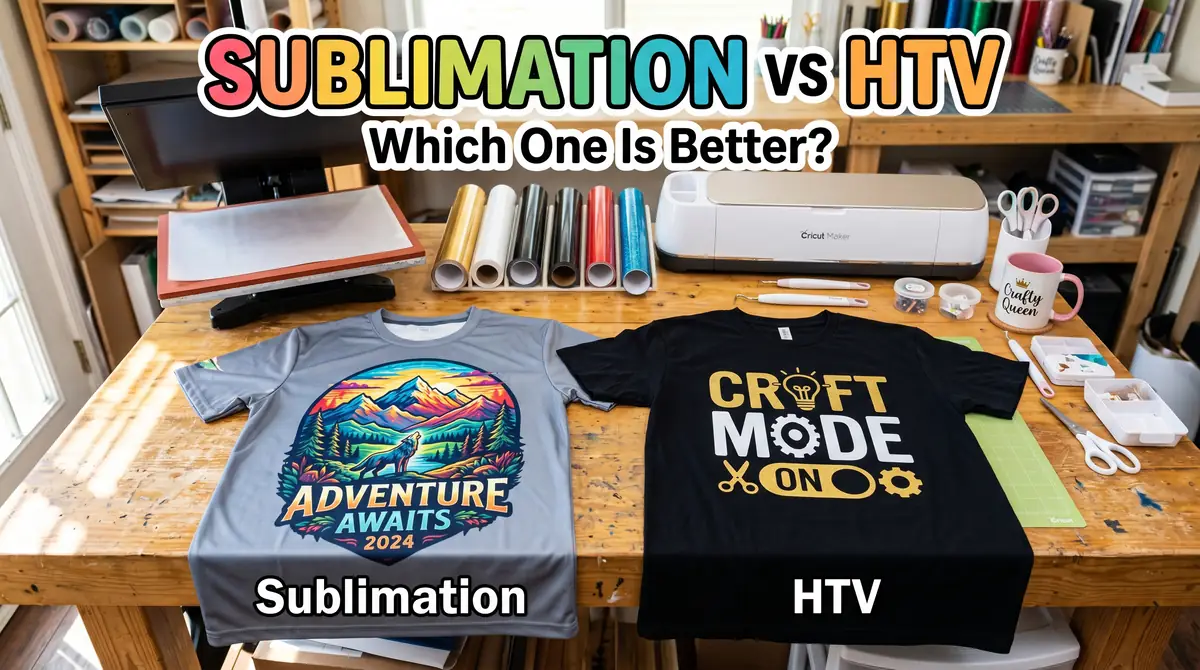
Sublimation and HTV both create custom apparel and crafts, but they work very differently. Sublimation permanently dyes polyester materials, while HTV adds a heat-pressed vinyl layer on top of fabric.
If you want soft, full-color, long-lasting designs on polyester, sublimation is usually the better choice. If you work with cotton, dark shirts, or simple custom graphics, HTV often makes more sense.
The best option depends on your materials, budget, design style, and the type of products you want to make.
What Is Sublimation Printing?
Sublimation printing uses heat to turn sublimation ink into gas. That gas bonds directly with polyester fibers or polymer-coated blanks.
Instead of sitting on top of the material, the design becomes part of it.
That is why sublimation prints feel smooth and do not crack or peel over time.
If you are completely new to the process, this beginner sublimation printing guide explains how the full workflow works.
How Sublimation Works
The basic sublimation workflow looks like this:
- Print the design using sublimation ink
- Place the transfer on the blank
- Apply heat and pressure with a heat press
- The ink turns into gas and bonds with the material
Most sublimation setups use temperatures between 385°F and 400°F depending on the substrate.
Best Materials for Sublimation
Sublimation works best on:
- White polyester shirts
- Polyester blends with high polyester content
- Polymer-coated mugs
- Tumblers
- Aluminum photo panels
- Sublimation blanks
For the best results, polyester content usually needs to be at least 65%, although 100% polyester produces the most vibrant colors.
You can learn more about compatible fabrics in this polyester sublimation guide.
Where Sublimation Struggles
Sublimation also has limitations.
It does not naturally work well on:
- Dark fabrics
- 100% cotton
- Untreated materials
- Non-coated hard blanks
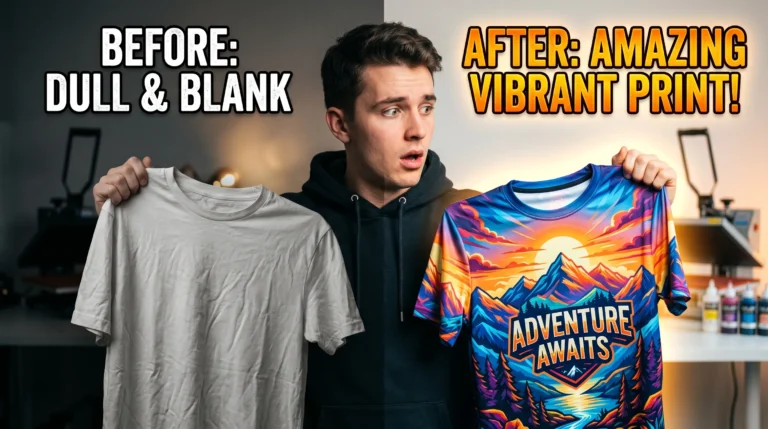
A common beginner mistake is trying to sublimate directly onto black cotton shirts. The ink becomes nearly invisible because sublimation ink does not print white.
What Is HTV (Heat Transfer Vinyl)?
HTV stands for Heat Transfer Vinyl. It is a thin vinyl material that gets pressed onto fabric using heat and pressure.
Unlike sublimation, HTV sits on top of the material instead of bonding into it.
This makes HTV extremely flexible for different fabrics and colors.
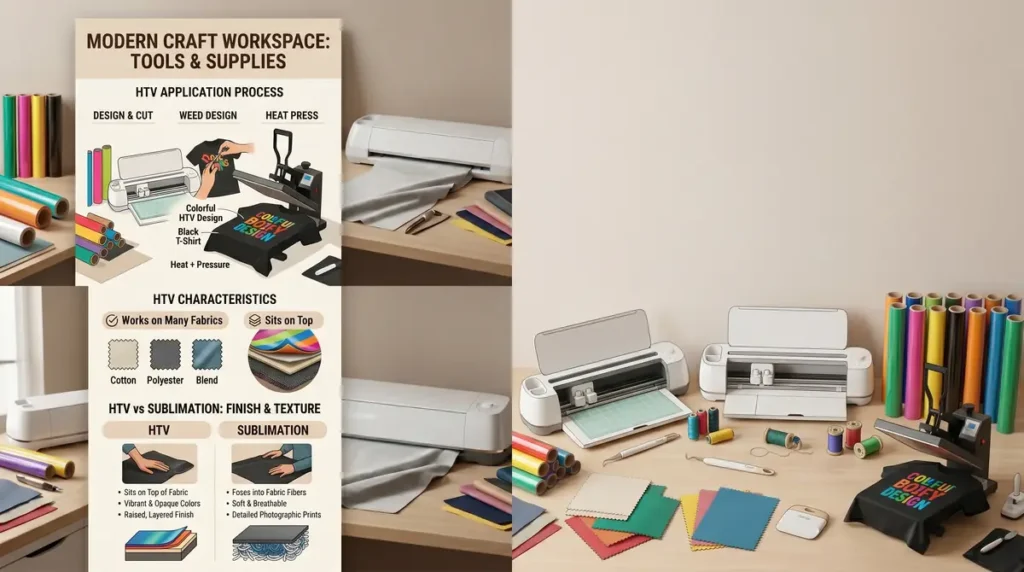
How HTV Works
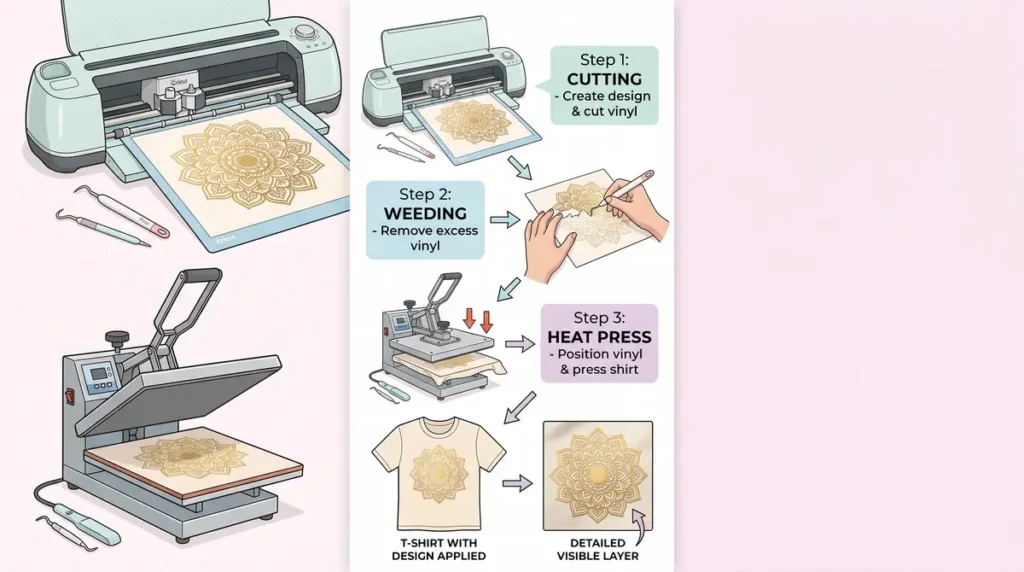
The HTV process usually involves:
- Cutting a design with a Cricut or Silhouette machine
- Removing excess vinyl through weeding
- Heat pressing the design onto fabric
The final design forms a visible layer on the garment.
Best Materials for HTV
HTV works well on:
- Cotton shirts
- Polyester
- Cotton-poly blends
- Canvas bags
- Hoodies
- Dark garments
This versatility is one reason many beginners start with HTV before moving into sublimation.
Common HTV Limitations
HTV also comes with tradeoffs.
Common issues include:
- Cracking after repeated washing
- Peeling edges
- Thick texture on shirts
- Reduced breathability
Low-quality vinyl and incorrect pressing temperatures usually make these problems worse.
Following proper heat press temperature settings for sublimation and HTV helps reduce transfer failures.
Sublimation vs HTV: Key Differences
Print Feel and Texture
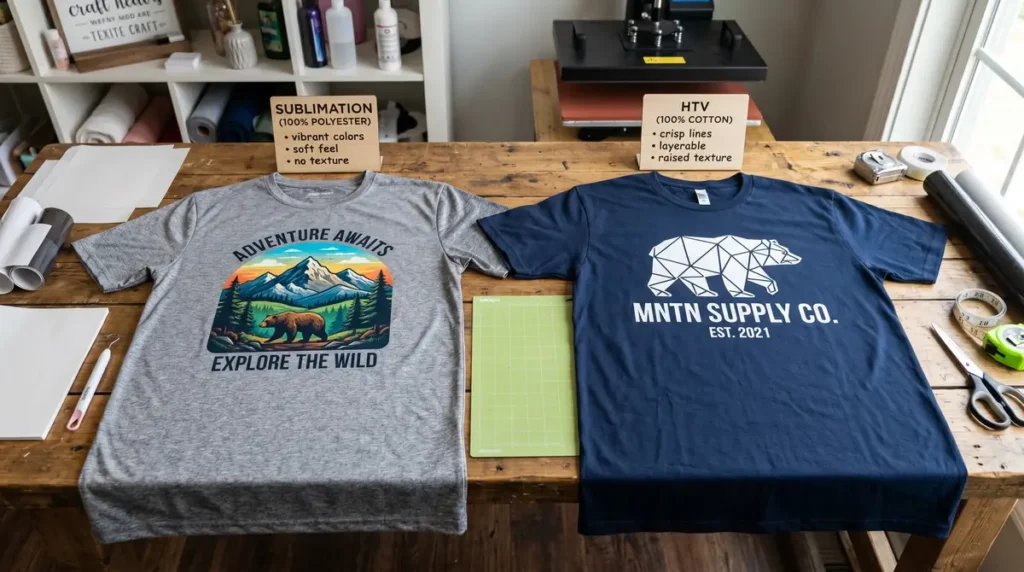
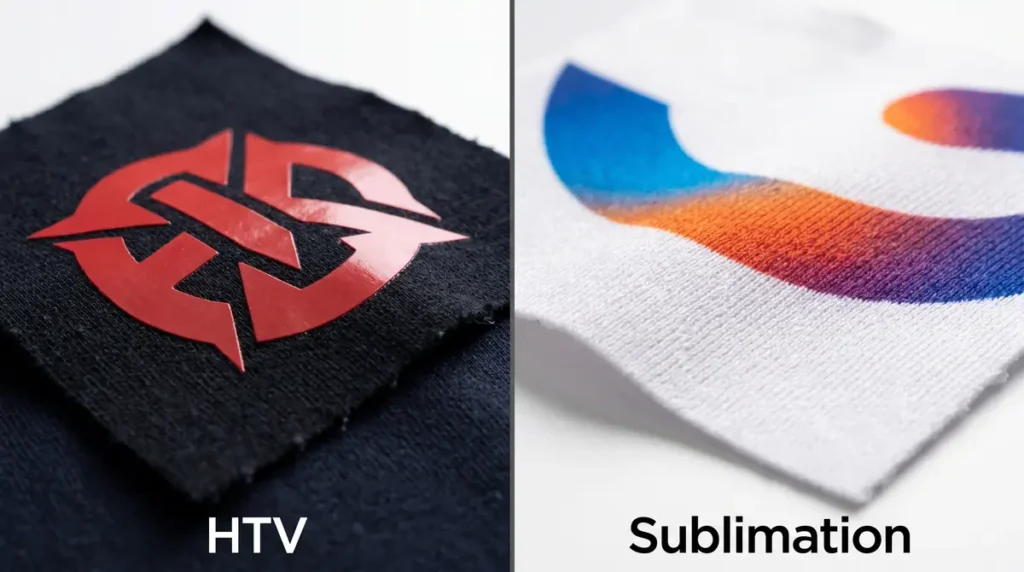
- Sublimation has almost no texture because the ink becomes part of the fabric.
- HTV creates a raised vinyl layer you can physically feel.
- For lightweight athletic shirts, sublimation usually feels more comfortable.
- For bold graphics or lettering, HTV often looks sharper.
Durability and Wash Resistance
Sublimation generally lasts longer than HTV.
Because sublimation dye bonds into polyester fibers, the print usually lasts as long as the garment itself.
HTV eventually wears down because the vinyl layer experiences friction, stretching, and repeated washing.
A common sublimation advantage is that there is no surface layer to peel away.
Fabric Compatibility
This is one of the biggest differences.
Sublimation works best on:
- White polyester
- Light-colored polyester blends
- Coated hard surfaces
HTV works on:
- Cotton
- Dark fabrics
- Polyester
- Blends
- Canvas
If you mainly make cotton T-shirts, HTV is often the easier option.
Color Vibrancy
Sublimation handles:
- Photos
- Gradients
- Complex graphics
- Full-color artwork
HTV works better for:
- Bold text
- Simple logos
- Team names
- Layered solid-color graphics
Photo-quality prints are much easier with sublimation.
Startup Cost
HTV has a lower startup cost.
A basic HTV setup may only require:
- A Cricut or Silhouette cutter
- Vinyl sheets
- Heat press
Sublimation usually requires:
- Sublimation printer
- Sublimation ink
- Sublimation paper
- Heat press
- Polyester blanks
That makes sublimation more expensive upfront.
Production Speed
For complex full-color designs, sublimation is usually faster.
HTV becomes time-consuming when you need to:
- Weed detailed designs
- Layer colors
- Align multiple vinyl pieces
For simple one-color graphics, HTV can still be very efficient.
Learning Curve
HTV is generally easier for beginners.
Sublimation has more technical variables like:
- ICC profiles
- Color correction
- Material compatibility
- Moisture control
- Heat consistency
Many beginners accidentally create dull prints because of incorrect color management or pressing settings.
Sublimation vs HTV Comparison Table
| Feature | Sublimation | HTV |
|---|---|---|
| Best Fabric | Polyester | Cotton & blends |
| Works on Dark Shirts | No | Yes |
| Feel on Fabric | No texture | Raised texture |
| Durability | Extremely long-lasting | Moderate |
| Best for Photos | Excellent | Limited |
| Startup Cost | Higher | Lower |
| Beginner Friendly | Moderate | Easy |
| Best for Small Details | Excellent | Good |
| Layering Colors | Easy | More difficult |
Is Sublimation Better Than HTV for T-Shirts?
It depends on the shirt type and design style.
When Sublimation Is Better
Sublimation is usually the better choice for:
- Sports jerseys
- Polyester performance wear
- Full-color prints
- Soft-feel shirts
- All-over prints
This is why sublimation dominates custom athletic apparel.
When HTV Is Better
HTV works better for:
- Cotton shirts
- Dark garments
- Team names and numbers
- Small custom batches
- Bold logo designs
HTV is also easier when customers want highly personalized names or single-shirt orders.
Hybrid Workflows People Use
Many crafters combine both methods.
Common hybrid workflows include:
- Sublimation on glitter HTV
- Sublimation HTV for dark shirts
- Printable HTV workflows
These methods allow sublimation-style prints on cotton and dark fabrics.
You can learn more in this guide on sublimation HTV workflows.
Related reading:
Which Lasts Longer: Sublimation or HTV?
Sublimation lasts longer in most cases.
Why Sublimation Lasts Longer
The design becomes part of the material itself.
That means:
- No peeling
- No cracking
- No raised edges
A properly pressed sublimation print can stay vibrant for years.
Why HTV Eventually Wears Out
HTV relies on adhesive bonding.
Over time:
- Washing weakens the adhesive
- Stretching stresses the vinyl
- Heat exposure damages edges
Higher-quality HTV lasts much longer than cheaper vinyl, but wear is still expected eventually.
Real-World Durability Expectations
In most setups:
- Sublimation often outlasts the garment
- HTV usually lasts 40–60 washes before visible wear appears
Proper garment care also matters.
These sublimated product care tips help extend print life.
Sublimation vs HTV for Beginners
Choose Sublimation If You:
- Want photo-quality prints
- Plan to sell mugs or tumblers
- Prefer soft-feel apparel
- Want long-lasting full-color designs
Choose HTV If You:
- Mainly use cotton shirts
- Have a smaller budget
- Want a simpler learning curve
- Focus on text or simple graphics
Basic Startup Cost Comparison
Typical HTV Setup
- Entry-level cutter
- Basic heat press
- Vinyl starter pack
Estimated beginner budget: lower upfront investment.
Typical Sublimation Setup
- Sublimation printer
- Sublimation paper
- Sublimation ink
- Heat press
- Polyester blanks
Estimated beginner budget: moderate upfront investment.
If you are starting from scratch, reviewing the best sublimation printers for beginners can help you avoid expensive setup mistakes.
Common Beginner Mistakes
Many beginners accidentally:
- Sublimate on dark cotton
- Use incorrect press temperatures
- Buy low-quality vinyl
- Skip color profile setup
- Press with uneven pressure
This sublimation troubleshooting guide helps fix many of these common issues.
Sublimation vs HTV for Small Businesses
Profit Margins
Sublimation usually scales better for:
- Tumblers
- Mugs
- Sportswear
- Full-color products
HTV often works better for:
- Personalized names
- One-off custom shirts
- Local team apparel
- Quick custom orders
Best-Selling Product Types
Popular sublimation products include:
- Tumblers
- Mugs
- Polyester shirts
- Mousepads
- Metal photo panels
Popular HTV products include:
- Cotton shirts
- Hoodies
- Tote bags
- Sports uniforms
- Team jerseys
Which Scales Better?
For larger production runs, sublimation is usually faster and more efficient.
For highly personalized single-item orders, HTV remains extremely practical.
If you plan to sell products online, this sublimation business guide explains common beginner business mistakes and setup decisions.
Common Questions About Sublimation and HTV
Can You Use Sublimation on Cotton?
Not directly.
Sublimation ink needs polyester fibers or polymer coatings to bond correctly.
However, many people use sublimation HTV as a workaround for cotton shirts.
Can Sublimation Replace HTV Completely?
No.
HTV still works better for:
- Dark garments
- Cotton apparel
- Simple custom text
- Fast personalized orders
Both methods remain useful for different projects.
Is Printable HTV the Same as Sublimation?
No.
Printable HTV prints onto vinyl material that gets heat pressed onto fabric.
Sublimation permanently dyes polyester fibers instead.
Which Is Cheaper Long Term?
That depends on production volume.
Sublimation often becomes cheaper for high-volume full-color printing.
HTV can stay more affordable for small custom orders.
Can You Combine Sublimation and HTV?
Yes.
Many creators combine both methods for:
- Dark shirt printing
- Layered effects
- Glitter backgrounds
- Cotton sublimation projects
Frequently Asked Questions
Is sublimation more durable than HTV?
Yes. Sublimation usually lasts longer because the ink bonds into the material instead of sitting on top of it.
Does HTV work on polyester?
Yes. HTV works on polyester, cotton, blends, and many other fabrics.
Why does HTV crack after washing?
Cracking usually comes from low-quality vinyl, incorrect press settings, or excessive heat during washing and drying.
Can sublimation work on black shirts?
Not directly. Sublimation ink does not print white, so it struggles on dark fabrics unless you use special sublimation HTV methods.
What is better for mugs: sublimation or HTV?
Sublimation is usually better for mugs because the design becomes permanent and dishwasher-resistant on coated surfaces.
Which method is best for Cricut users?
HTV is often easier for Cricut beginners, but Cricut users also commonly use sublimation for full-color projects.
Quick Summery
Sublimation and HTV solve different problems.
Sublimation is usually the better choice for vibrant, permanent, full-color designs on polyester and coated blanks. HTV is better for cotton apparel, dark fabrics, and simple personalized graphics.
A lot of small businesses eventually use both methods because each one fills a different production need.
The best choice comes down to your materials, budget, design style, and the types of products you want to create.