Do Print Shops Need General Liability Insurance? What It Covers

Running a print shop means more than producing quality products. Customers visit your location, delivery drivers come and go, equipment operates daily, and employees handle valuable customer property. Even a small accident can lead to expensive legal claims.
General liability insurance helps protect print shops from many of these everyday risks. While it isn’t legally required for every business, many landlords, customers, and commercial contracts expect you to carry it before they’ll work with you.
If you’re starting a new print business or reviewing your current coverage, here’s what you need to know before choosing a policy.
What Is General Liability Insurance for a Print Shop?
General liability insurance protects your business when someone claims your operations caused bodily injury, property damage, or certain advertising-related injuries. It also helps pay legal defense costs if you’re sued over covered incidents.
For most print shops, it serves as the foundation of a business insurance plan.
Typical situations include:
- A customer slips inside your shop.
- Your staff accidentally damages a client’s property.
- A visitor is injured while picking up an order.
- Your business faces a lawsuit involving advertising or copyright issues.
If you’re building systems for a growing shop, it’s also worth creating a consistent production process. Our guide on how to create a print shop workflow can help reduce operational mistakes before they become costly.
Do Print Shops Really Need General Liability Insurance?
For most print shops, yes. While many states don’t legally require general liability insurance, operating without it can expose your business to significant financial risk.
You should strongly consider coverage if you:
- Operate a retail storefront
- Welcome customers into your facility
- Lease commercial space
- Attend craft fairs or trade shows
- Deliver or install printed products
- Work with commercial clients
- Hire employees
Many commercial landlords require proof of liability insurance before signing a lease. Some corporate customers also require vendors to carry minimum liability limits before awarding contracts.
Home-based print shops often assume homeowners insurance provides enough protection. In many cases, business-related claims require separate business insurance, so it’s important to review your policy carefully.
What Does General Liability Insurance Cover?
General liability policies focus on third-party claims rather than damage to your own business property.
Customer Injuries
If someone is injured while visiting your shop, your policy may help cover:
- Medical expenses
- Legal costs
- Settlements
- Court judgments within policy limits
Example:
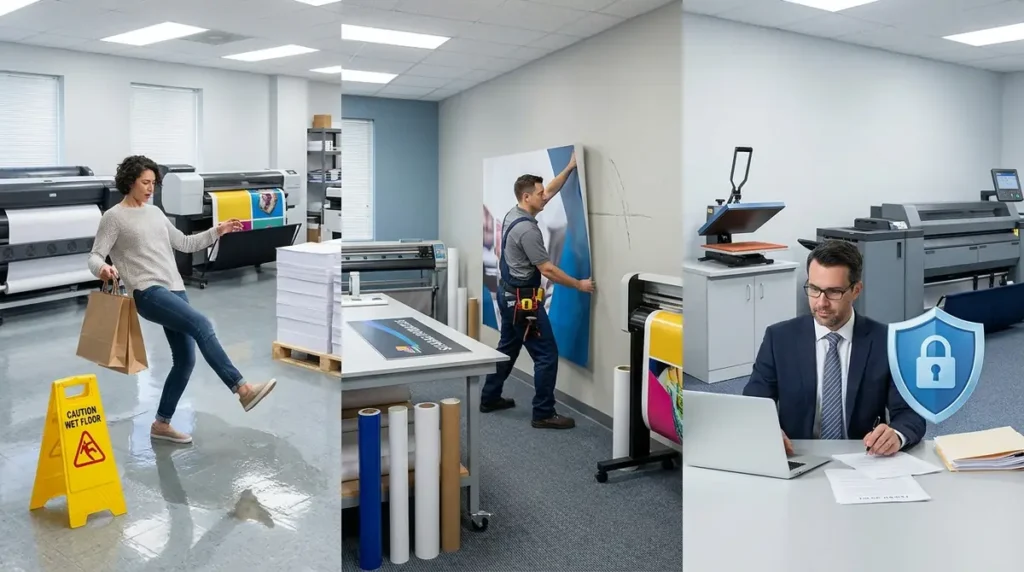
A customer slips on a wet floor while collecting a custom banner and suffers a broken wrist. Your insurance may help cover medical bills and legal expenses if you’re found responsible.
Property Damage
Print shops regularly handle customer property during installation or delivery.
Coverage may apply if your business accidentally damages:
- Office walls during sign installation
- Customer flooring while moving equipment
- Personal property during service work
Not every situation is covered, so reviewing policy exclusions is important.
Advertising Injury
General liability often includes protection against claims involving advertising activities.
Examples include:
- Copyright infringement
- Trademark infringement
- Defamation
- Libel
- Slander
These claims are less common than physical injury claims but can still become expensive to defend.
Legal Defense Costs
Even if a lawsuit has little merit, defending your business can be costly.
General liability insurance often helps pay for:
- Attorney fees
- Court costs
- Investigation expenses
- Approved settlements
For many small businesses, legal defense alone can justify maintaining coverage.
What General Liability Insurance Does NOT Cover
General liability insurance is important, but it doesn’t protect against every business risk. Understanding its exclusions helps you decide whether you need additional policies.
| Not Covered | Insurance That Usually Covers It |
|---|---|
| Employee injuries | Workers’ compensation insurance |
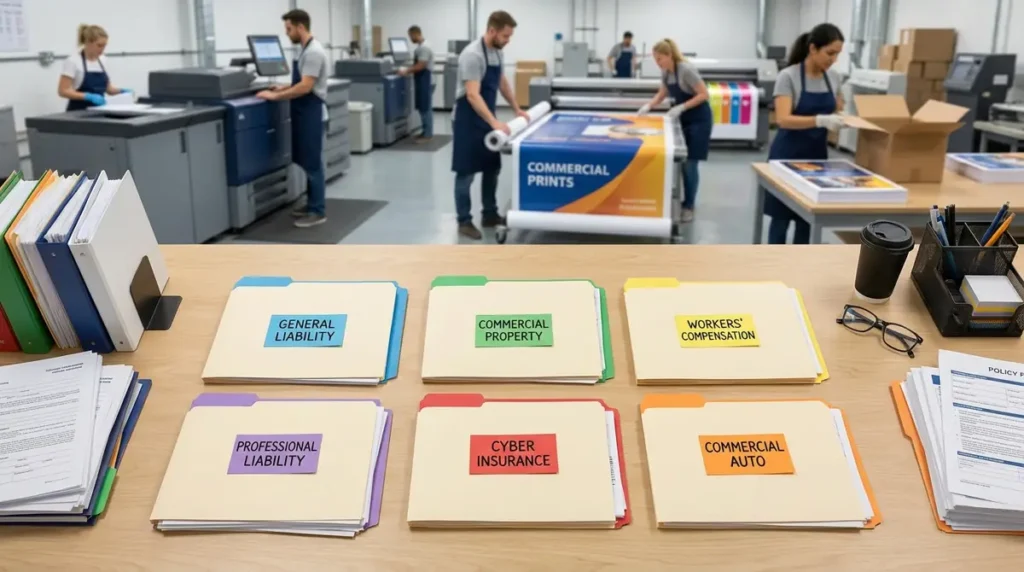
| Damage to your building or equipment | Commercial property insurance |
| Printing mistakes or missed deadlines | Professional liability (Errors & Omissions) |
| Company vehicles | Commercial auto insurance |
| Data breaches or cyberattacks | Cyber liability insurance |
| Intentional damage or illegal acts | Not covered by insurance |
Before buying a policy, ask the insurer to explain the exclusions in plain language. Knowing what isn’t covered is just as important as understanding what is.
Employee Injuries
If an employee is hurt while operating a heat press, cutting equipment, or large-format printer, general liability insurance normally won’t pay for medical expenses or lost wages.
Workers’ compensation insurance is designed for workplace injuries and is required in many locations once you have employees.
Professional Mistakes
General liability doesn’t cover financial losses caused by professional errors.
Examples include:
- Printing the wrong artwork
- Delivering incorrect quantities
- Missing an important production deadline
- Sending products with customer information printed incorrectly
These situations may fall under Errors and Omissions (E&O) or professional liability insurance.
Equipment Breakdown
Commercial printers, DTG machines, UV printers, embroidery machines, and heat presses are expensive to repair or replace.
If your equipment fails because of a mechanical or electrical problem, general liability insurance typically won’t cover those repair costs.
Commercial Vehicles
If your business owns delivery vans or service vehicles, accidents involving those vehicles require commercial auto insurance rather than general liability coverage.
Cyber Incidents
Many print shops store:
- Customer artwork
- Payment information
- Business contracts
- Online order details
General liability insurance usually doesn’t cover data breaches, ransomware attacks, or other cyber incidents.
Common Liability Risks Print Shops Face
Print businesses encounter liability risks in ways many new owners don’t expect.
Some common examples include:
- A customer trips over extension cords while visiting your showroom.
- A delivery employee slips on an icy walkway outside your building.
- Your installation crew accidentally damages a client’s office wall while mounting signage.
- A trade show visitor is injured at your exhibition booth.
- Marketing materials unintentionally use copyrighted images or protected logos.
Most claims are unpredictable. Even businesses with excellent safety procedures can face lawsuits or legal expenses.
One practical way to reduce risk is by following a consistent production and safety process. Our print shop production checklist can help standardize daily operations and reduce avoidable mistakes.
General Liability vs Other Types of Print Shop Insurance
General liability is only one part of a complete insurance strategy.
| Insurance Type | Covers | Best For |
|---|---|---|
| General Liability | Customer injuries, property damage, advertising injury, legal defense | Every print shop |
| Commercial Property | Buildings, printers, inventory, furniture | Shops with physical equipment or inventory |
| Business Owner’s Policy (BOP) | General liability plus commercial property | Small to medium-sized print businesses |
| Workers’ Compensation | Employee injuries and lost wages | Businesses with employees |
| Professional Liability (E&O) | Printing mistakes, professional errors, missed deadlines | Shops producing custom work |
| Commercial Auto | Business vehicle accidents | Shops making deliveries or installations |
| Cyber Liability | Data breaches, ransomware, customer information | Businesses accepting online orders |
For many small print shops, a Business Owner’s Policy (BOP) combines general liability and commercial property insurance into one package, making it a practical starting point.
How Much Does General Liability Insurance Cost?
There isn’t one standard price because premiums depend on several business factors.
Insurance providers typically evaluate:
- Annual revenue
- Number of employees
- Type of printing services offered
- Business location
- Claims history
- Coverage limits selected
- Whether customers visit your shop
- Installation or delivery services offered
Businesses with higher-risk operations generally pay more than home-based businesses with limited customer traffic.
How Much Coverage Does a Print Shop Need?
Many small print shops start with $1 million per occurrence and $2 million aggregate coverage limits because these limits commonly satisfy landlord and customer contract requirements. The right amount depends on your business size, contracts, assets, and overall risk exposure.
You may want higher limits if you:
- Work with large commercial clients
- Install signs or graphics on customer property
- Attend multiple trade shows each year
- Operate several business locations
- Handle high-value commercial projects
Review your coverage annually. As your revenue, equipment, and customer base grow, your insurance needs often change as well.
How to Choose the Right General Liability Insurance Policy
The cheapest policy isn’t always the best choice. Compare coverage, exclusions, and the insurer’s experience with small businesses before making a decision.
Compare Multiple Quotes
Insurance companies calculate risk differently, so premiums and coverage can vary.
When requesting quotes, compare:
- Coverage limits
- Deductibles
- Policy exclusions
- Legal defense coverage
- Optional endorsements
- Annual premium
Getting at least three quotes makes it easier to identify policies that provide good value without sacrificing important protection.
Read the Exclusions Carefully
Every policy has exclusions.
Review the policy documents and ask questions about anything that isn’t clear, especially if your shop:
- Installs signs
- Makes deliveries
- Attends trade shows
- Uses subcontractors
- Stores customer property
A small exclusion today could become an expensive surprise later.
Consider Bundling Policies
Many insurers offer a Business Owner’s Policy (BOP) that combines general liability and commercial property insurance.
Bundling can simplify policy management and may reduce your overall insurance costs compared to purchasing separate policies.
Review Coverage Every Year
Your insurance needs will likely change as your business grows.
Review your policy if you:
- Purchase new equipment
- Move to a larger facility
- Hire employees
- Add installation services
- Increase annual revenue
- Begin serving larger commercial customers
An annual review helps keep your coverage aligned with your current operations.
Common Mistakes Print Shop Owners Make
Many insurance claims become more expensive because of assumptions made before a problem occurs.
Buying Only the Lowest-Priced Policy
A low premium may also mean lower coverage limits or important exclusions.
Instead of comparing price alone, compare the protection each policy provides.
Assuming Home Insurance Covers Business Activities
Homeowners insurance usually has limits on business-related claims.
If you run a print shop from home, verify what business activities are covered and where separate business insurance is needed.
Ignoring Customer Contract Requirements
Many commercial clients require vendors to carry minimum liability limits before awarding contracts.
Without proof of insurance, you could lose valuable business opportunities.
Waiting Until After an Incident
Insurance is designed to protect against future events.
Once an accident or lawsuit occurs, it’s generally too late to purchase coverage for that claim.
If your shop is expanding, it’s also a good time to review your operational systems. Our guide to order tracking for sublimation print businesses can help improve organization as your customer base grows.
Frequently Asked Questions
Is general liability insurance legally required for print shops?
Not always. Many jurisdictions don’t legally require it, but landlords, lenders, and commercial clients often require proof of coverage before leasing space or signing contracts.
Does general liability insurance cover damaged customer orders?
Usually not. Damage resulting from printing errors, production mistakes, or missed deadlines is generally handled through professional liability (Errors and Omissions) coverage rather than general liability insurance.
Does general liability insurance cover employees?
No. Employee injuries are typically covered by workers’ compensation insurance, not general liability insurance.
Can a home-based print shop buy general liability insurance?
Yes. Many insurers offer policies designed for home-based businesses. This can provide protection that a standard homeowners policy may not include for business activities.
Is a Business Owner’s Policy better than standalone general liability insurance?
For many small print shops, a Business Owner’s Policy is a practical option because it combines general liability and commercial property insurance into one policy. The best choice depends on your business size, equipment, and level of risk.
How much liability coverage should a small print shop carry?
Many small businesses begin with $1 million per occurrence and $2 million aggregate limits, although your required coverage depends on customer contracts, leased property requirements, and your overall risk exposure.