Can You Use Parchment Paper for Sublimation? What It Can and Cannot Do

You’re mid-project, you’ve run out of sublimation paper, and there’s a roll of parchment paper sitting right there in the kitchen drawer. It’s tempting to just grab it and keep going.
Here’s the thing: parchment paper isn’t a simple yes or no answer. It depends entirely on what job you’re asking it to do. Printing a design is one thing. Protecting your heat press is another. Shielding a heat transfer vinyl project is a third. Parchment paper handles some of these fine and fails badly at others.
Instead of giving you one blanket answer that only covers part of the question, this guide walks through each use case on its own, so you know exactly when parchment paper works and when it’s going to cost you a ruined blank.
Quick answer:
- Printing a sublimation design: No.
- Protective paper during pressing: Works, but butcher paper is more consistent.
- Heat transfer vinyl (HTV) projects: Yes.
Parchment Paper vs. Sublimation Paper vs. Butcher Paper: What’s Actually Different
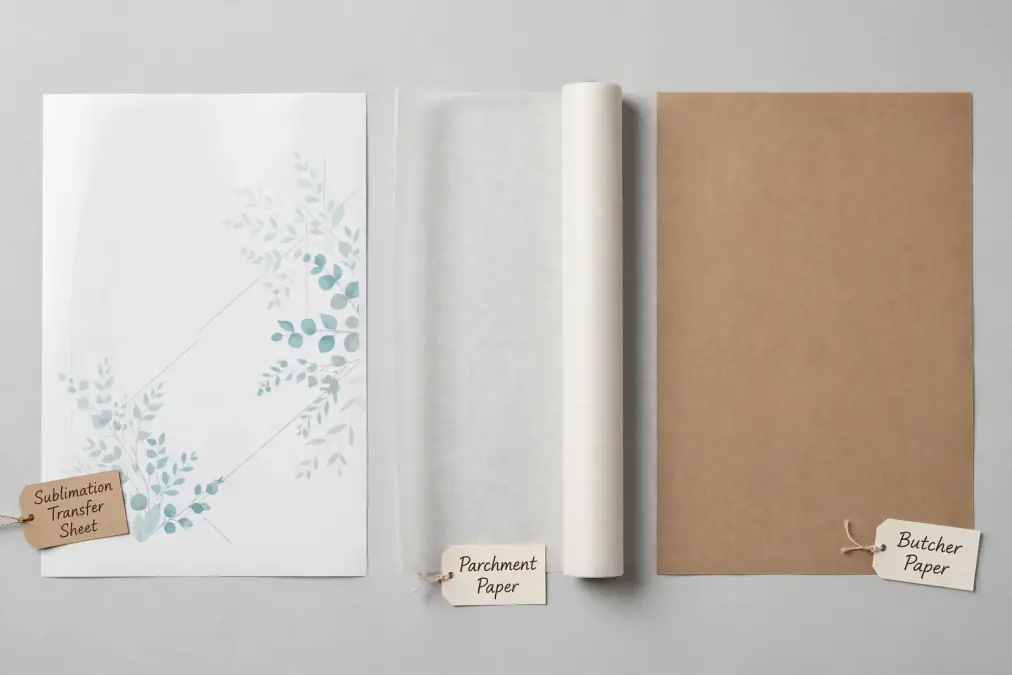
Every answer in this guide comes back to one fact: these three papers are built for completely different jobs, even though they can look similar sitting in a drawer.
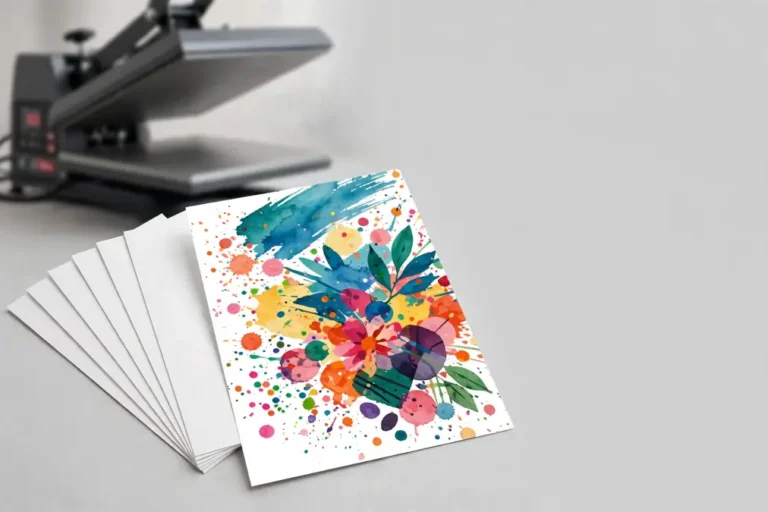
Sublimation paper has a special ink-receptive coating on one side, usually a fine silica layer that holds sublimation dye in place after printing.
When heat hits that coating, the ink converts from a solid to a gas and moves into the polyester fibers or coated surface underneath.
Without that coating, there’s nothing for the ink to grip onto while printing or release during pressing. Our guide to how sublimation paper works covers that coating in more detail if you want the full picture.
Parchment paper is coated too, but with silicone instead. That coating makes it non-stick and moisture-resistant, which is exactly what you want when baking, but it behaves very differently under a heat press. Silicone doesn’t absorb ink, and it can trap moisture against whatever it’s pressed onto.
Butcher paper has no coating at all. It’s plain, uncoated paper, which makes it breathable and mildly absorbent.
That’s why it’s the usual recommendation for catching stray ink during sublimation pressing: it lets moisture escape instead of trapping it against your design.
Can You Print Sublimation Designs on Parchment Paper?
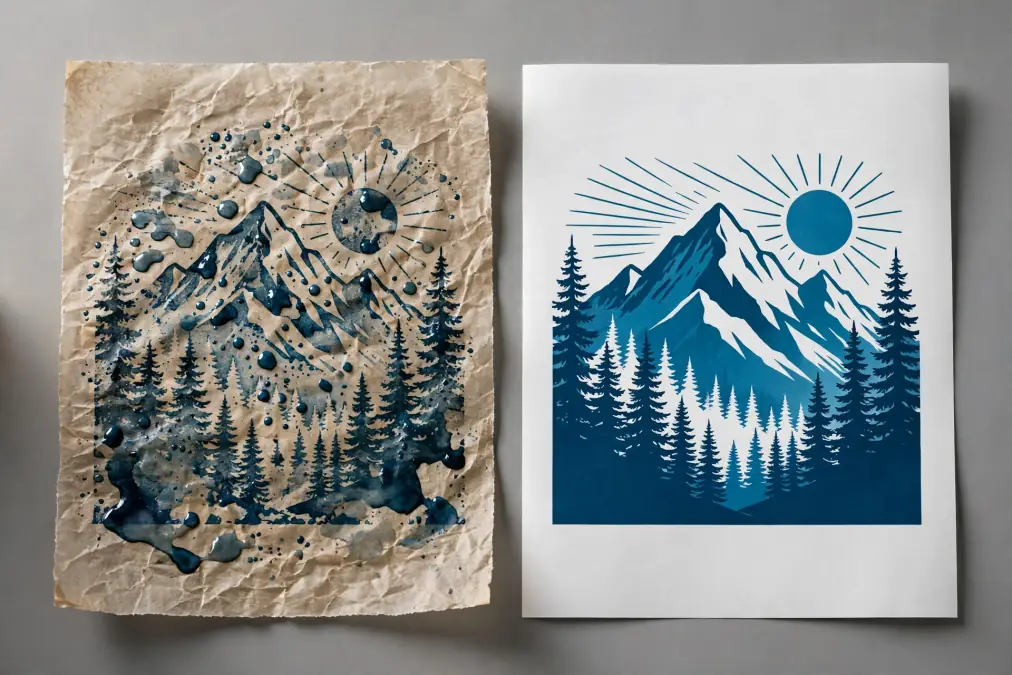
No. Parchment paper’s silicone coating is close to the opposite of what sublimation ink needs. Sublimation ink has to soak into a receptive coating so it can convert to gas and release evenly under heat.
Silicone actively resists that kind of absorption, so ink printed onto parchment paper tends to bead, smear, or sit on the surface instead of settling in.
In practice, that usually means a patchy, incomplete image straight out of the printer, before you’ve even reached the heat press. Whatever ink does stay put transfers unevenly, since there’s no coating designed to release it in a controlled way.
This is closely related to a question that comes up just as often: can you print sublimation ink on regular white copy paper? The answer is also no, but for a different reason. Copy paper has no coating at all, so it absorbs ink like a sponge and holds onto most of it.
Whatever does transfer during pressing usually looks faded and washed out, since the ink spread into the paper fibers instead of sitting ready to release.
Parchment paper and copy paper fail the same test in different ways. One resists the ink, the other soaks it up.
Neither has the coating that makes an actual transfer possible. If you’re comparing paper options and want something built for the job, our sublimation paper comparison covers what to look for instead.
Can You Use Parchment Paper as Protective Paper During Pressing?
This is where the answer gets more situational. Protective paper, sometimes called blowout paper, sits above or below your design during pressing to catch any ink that bleeds past the edges and to keep it off your heat press platen.
It solves a real problem: uncontained ink can transfer onto your next project or leave a permanent mark on your press.
Parchment paper works for this in a pinch. Its non-stick surface keeps ink from sticking to it directly, and plenty of people use it this way without issue.
That said, several experienced sublimation users specifically avoid it for this job, and the reasoning is worth knowing. Parchment paper’s silicone coating traps moisture against the fabric or blank underneath it, and sublimation is sensitive to trapped moisture.
It can cause uneven color, ghosting, or a faint texture pressed into your design from the parchment itself. Butcher paper, being uncoated and breathable, doesn’t have this problem, which is why it’s the more consistent default for regular production work.
If you only have parchment paper on hand for one project, it’s a reasonable stand-in. If you’re pressing regularly, butcher paper is the safer habit to build. For a full breakdown of protective paper types and when each one makes sense, see our guide to sublimation protective paper.
Butcher Paper or Parchment Paper for Sublimation?
If you’re deciding between the two for a protective layer, butcher paper is the better default. Here’s the comparison side by side:
| Factor | Butcher Paper | Parchment Paper |
|---|---|---|
| Coating | None, uncoated | Silicone |
| Moisture handling | Breathable, releases moisture | Can trap moisture |
| Best for | Regular sublimation pressing | Occasional backup, HTV projects |
| Cost | Inexpensive, treat as disposable | Similar cost, often already on hand |
Parchment paper isn’t a bad option, it’s a secondary one. Keep it as a backup for when you’re out of butcher paper rather than your primary choice.
Whichever one you use, run a quick test press first if you haven’t used that combination before. A test costs you one blank instead of an entire order.
Can You Use Parchment Paper for HTV?
Yes, and this is a genuinely different situation from sublimation pressing. Heat transfer vinyl works by melting an adhesive layer onto fabric under heat and pressure, not by converting ink into a gas the way sublimation does.
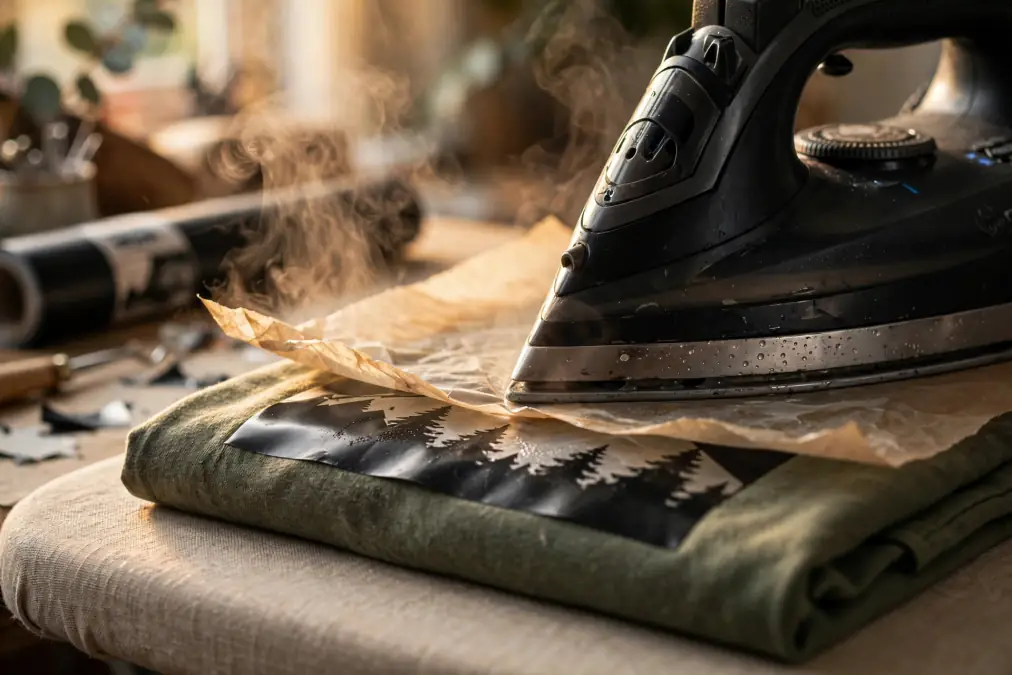
Parchment paper’s silicone coating protects the vinyl and your iron or heat press platen from direct contact, similar to how a Teflon sheet works, and it holds up fine at typical HTV pressing temperatures.
The moisture-trapping concern that applies to sublimation doesn’t really matter here, since HTV isn’t relying on vapor escaping evenly through a coated surface. That’s the core reason the same paper gets a different recommendation depending on which process you’re using it for.
Sublimation and HTV are related crafting methods, but they work in fundamentally different ways, and our comparison of sublimation vs. HTV lays out exactly where those differences matter for choices like this one.
If you’re using parchment paper for HTV, place it between your iron or heat press and the vinyl itself, not between the vinyl and the fabric.
Use plain, unbleached parchment rather than a printed or waxed variety, and avoid pressing directly on the same spot of parchment longer than your project needs, since prolonged high heat can still discolor it over time.
What to Use If You Don’t Have Sublimation Paper
For printing an actual design, there isn’t a good substitute. Sublimation paper’s coating is doing specific chemical work that plain paper, parchment paper, and most household alternatives can’t replicate. If you’re out, the project waits until you have paper that’s actually built for it.
For protective paper during pressing, you have more flexibility. Butcher paper is the most consistent option. Parchment paper works as a backup with the moisture caveat covered above.
A Teflon sheet is another option if you already own one, though it comes with its own trade-off: Teflon can act as a heat barrier, lowering the actual temperature that reaches your project by 10 to 20 degrees even when your press display shows the correct setting.
If you go this route, it’s worth taking a minute to confirm your heat press is hitting the temperature it claims, since that gap is easy to miss until a transfer comes out underdeveloped.
Wax paper is worth ruling out entirely. It’s coated in actual wax, and that wax melts under heat press temperatures, which ruins the paper, your project, and potentially your press platen.
Frequently Asked Questions
What can you not sublimate on?
Sublimation only works on polyester fabric or polymer-coated surfaces. Cotton, most natural fibers, and uncoated hard surfaces like plain wood or untreated metal won’t hold a sublimation transfer, since there’s nothing in the material for the ink to bond with.
What kind of paper can I use for sublimation?
Dedicated sublimation transfer paper is the only paper built to hold and release sublimation ink correctly. Brands vary in weight and coating quality, but the coating itself is non-negotiable.
What can I use for sublimation if I don’t have butcher paper?
Parchment paper works as a backup protective layer, though it can trap moisture more than butcher paper does. A Teflon sheet is another option, but expect to run your press slightly hotter to compensate for its insulating effect.
What can I use instead of sublimation paper?
Nothing replicates its coating closely enough to produce a usable transfer. Plain paper and parchment paper both fail for different reasons: one absorbs too much ink, the other resists it.
Can you reuse parchment paper for sublimation?
If you’re using it as protective paper, you can generally reuse a sheet a few times until it’s visibly stained or worn, since it isn’t the sheet holding your printed design. It’s not something you print sublimation ink onto and reuse, since it was never meant to hold a printed transfer in the first place.
Which Paper for Which Job
Parchment paper has a real place in a sublimation workflow, just not the place people usually expect. It can’t replace sublimation paper for printing, and it’s a secondary choice at best for protecting your press.
Where it actually earns a permanent spot in your supply drawer is HTV projects, where its non-stick, heat-resistant coating does exactly what it’s meant to do. Keep butcher paper as your default for sublimation pressing, and save the parchment paper for vinyl.