How Women Are Turning Sublimation into Income: Hobby to Hustle

Turning sublimation from a hobby into a profitable business is possible with the right equipment, realistic pricing, and a clear plan for finding customers. You don’t need a large investment or years of experience to get started.
Many successful sellers begin with a few products, learn what their market wants, and grow steadily by reinvesting their profits.
Focus on creating quality products, building trust with your customers, and improving your skills over time. Small, consistent steps often lead to long-term success.
If you’re ready to start your own sublimation business, explore our beginner-friendly guides on choosing the right sublimation printer, calculating profitable prices with our Sublimation Pricing Calculator, and discovering the best-selling sublimation products to help you build a business that can grow from a creative hobby into a reliable source of income.
Can women make money with sublimation?
Yes. Many women start with a small home setup and grow a profitable side business by selling personalized products like tumblers, shirts, mugs, and gifts. A basic setup usually costs between $500 and $1,500, and consistent sales often come from local customers, Etsy, social media, and repeat buyers.
How Much Does It Cost to Start a Sublimation Business?
One of the biggest questions beginners ask is, “How much money do I need to get started?” The good news is that you don’t need a large investment to begin selling sublimation products.
Many successful home-based businesses start with a basic setup and expand as orders increase. Instead of buying every machine and blank available, focus on the equipment you need to produce a few high-demand products consistently.
| Item | Estimated Cost |
|---|---|
| Sublimation printer | $250 to $600 |
| Heat press | $150 to $500 |
| Sublimation ink | $40 to $100 |
| Sublimation paper | $20 to $50 |
| Blank products | $100 to $300 |
| Design software | Free to $25/month |
| Miscellaneous supplies | $50 to $150 |
A realistic beginner budget falls between $600 and $1,500, depending on the equipment you choose and how much inventory you purchase upfront.
Start Small and Reinvest Your Profits
You don’t need to launch with dozens of products.
Many successful sellers begin with just two or three items, such as:
- Tumblers
- T-shirts
- Mugs
These products have consistent demand, require relatively low startup costs, and give you the opportunity to learn the production process before expanding your catalog.
As your profits grow, reinvest them into additional equipment, higher-quality blanks, or new product lines instead of taking on unnecessary debt. This approach keeps your business financially stable while allowing you to grow at a sustainable pace.
If you’re looking for profitable ideas to add next, check out these 5 Best Selling Sublimation Products to see which items continue to perform well for both new and experienced sellers.
How Sublimation Turns a Creative Hobby Into Income
Sublimation works because it sits right between creativity and practicality. You get to design, but you’re also producing something people already buy and use.
Most women don’t start thinking business. They start thinking they could make something better or more personal.
Understanding how the sublimation process works helps that shift happen faster because you know why prints last, why colors stay vibrant, and why customers come back.
Why Sublimation Fits Women-Led Side Businesses So Well
Sublimation doesn’t demand a warehouse or big upfront risks. You can grow it around your real life.
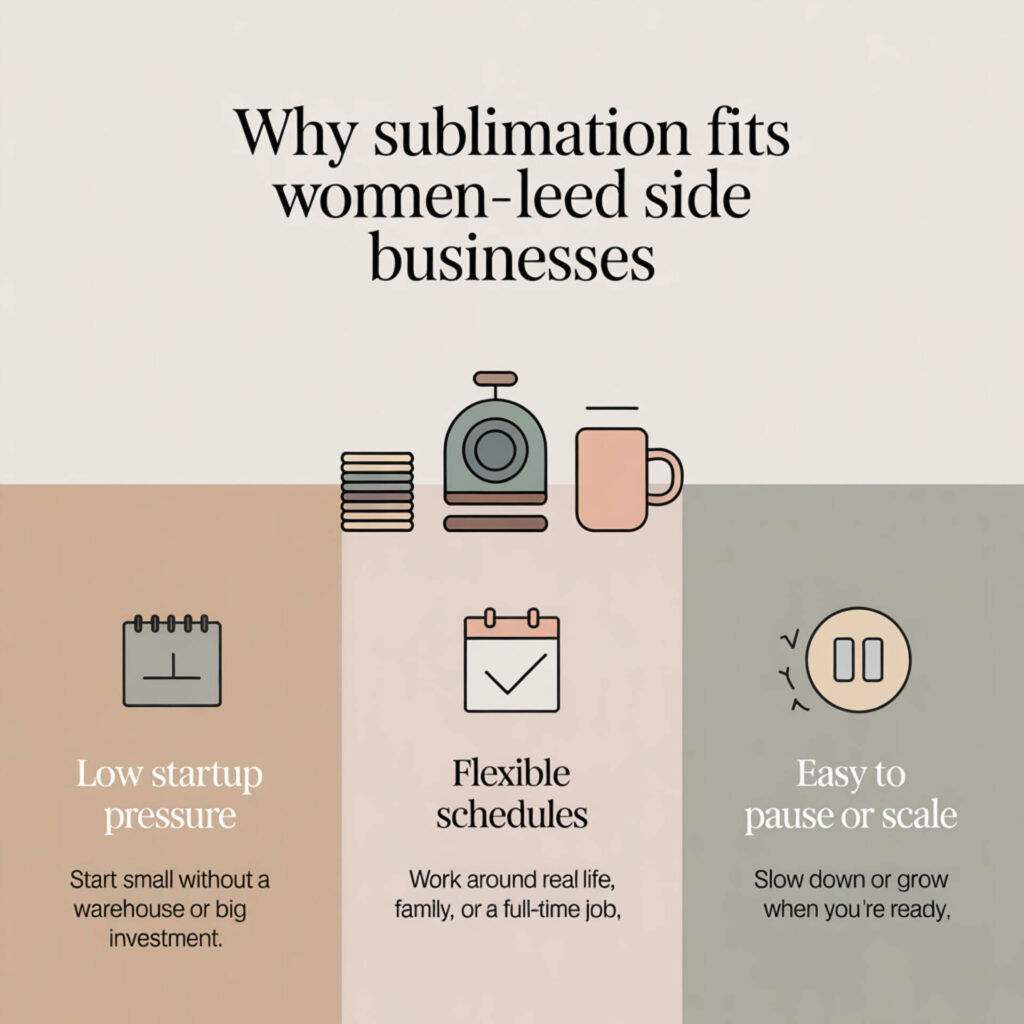
What makes it work so well:
- Low startup pressure
- Flexible schedules
- Easy to pause or scale
Once you understand the real benefits of sublimation printing, it’s easier to trust that slow growth is still progress.
Getting Started Without Feeling Overwhelmed
Most beginners think they need everything on day one. You don’t.
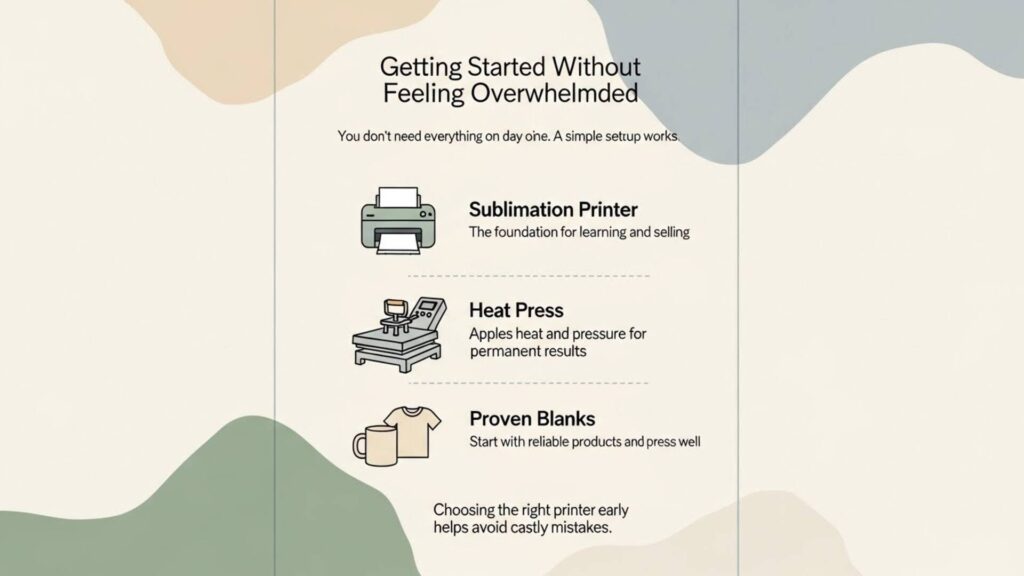
A basic setup is enough to start learning and selling:
- A sublimation printer
- A heat press
- A few proven blanks
Knowing what kind of printer is needed for sublimation helps avoid expensive mistakes early on.
Learning by Doing Instead of Overthinking
Perfect prints don’t come first. Momentum does.
Early mistakes usually involve color, pressure, or timing. That’s normal. What matters is recognizing patterns and adjusting.
Learning about common sublimation printing mistakes helps you recover faster without killing motivation.
Products That Sell Well When You’re Just Starting
Some products move faster than others, especially when you’re new.
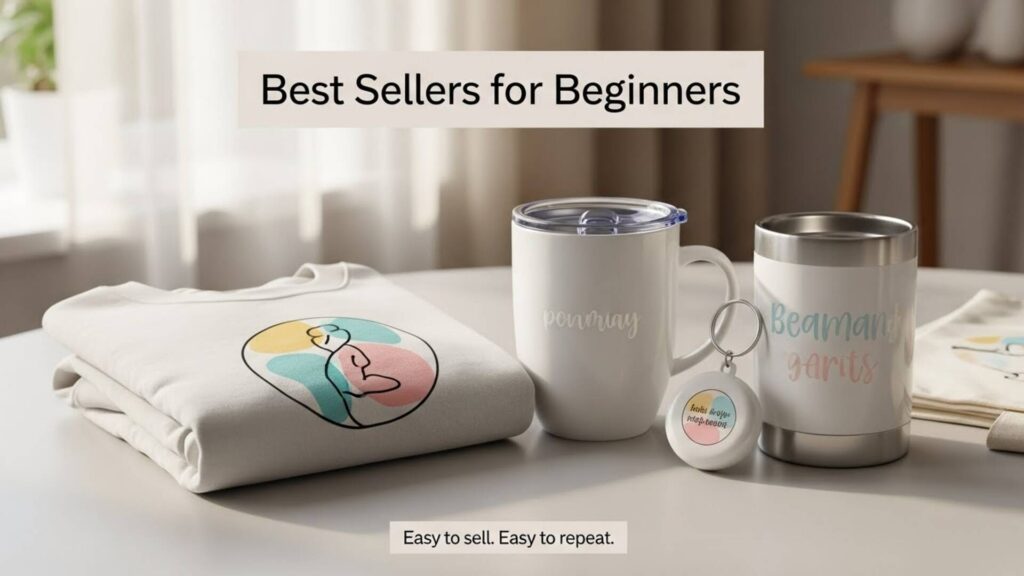
Beginner-friendly sellers usually include:
- T-shirts and sweatshirts
- Mugs and tumblers
- Simple personalized gifts
Choosing reliable sublimation blanks and substrates matters more than complex designs at this stage.
Matching Products to Your Lifestyle
Not every order is worth the stress.
Before committing to certain products, ask yourself:
- Can I batch this easily?
- Does it fit my available time?
- Will I enjoy repeating it?
Understanding what shirts are best for sublimation printing helps avoid refunds and reprints.
Turning Creativity Into Your First Real Orders
First customers rarely come from ads. They come from visibility and trust.
What usually works:
- Sharing progress photos
- Showing finished pieces
- Talking about the process
Seeing how sublimation boosts creativity and efficiency explains why casual sharing converts better than polished marketing.
Building Trust Without a Big Audience
People don’t buy because you’re perfect. They buy because you’re consistent.
Behind-the-scenes content, honest progress, and small wins build trust quickly. Knowing the fundamentals of sublimation printing basics helps maintain quality as orders increase.
Pricing, Profit, and the Reality Check
Underpricing is one of the most common mistakes, especially when the work feels fun.
Costs often forgotten:
- Ink and paper
- Test prints
- Time and replacements
Using a simple sublimation cost estimator helps protect profit without overcomplicating pricing.
When and How to Raise Prices
Raising prices feels uncomfortable until demand stays strong.
Signs it’s time:
- Orders feel rushed
- You’re booked out
- You’re turning people away
Knowing how long sublimation prints stay vibrant helps justify pricing because durability matters to buyers.
Growing From Side Income to Steady Hustle
Scaling doesn’t always mean bigger machines. It usually means smoother systems.
Growth often looks like:
- Better order tracking
- Fewer custom exceptions
- Clear boundaries
Understanding the future of sublimation helps you upgrade only when it actually makes sense.
Real-Life Scenarios Women Relate To
Many women grow slowly and intentionally.
A common path:
- Weekend orders
- Monthly side income
- Selective growth
Seeing real-life examples of sublimation in daily life shows that steady progress still counts.
Common Myths That Hold Women Back
Some beliefs stall progress more than lack of skill.
Common ones:
- The market is too crowded
- I’m not creative enough
- I need a huge following
Is Sublimation Right for You?
Before investing more, ask yourself:
- Can I commit a few focused hours weekly?
- Am I okay learning through trial and error?
- Do I want flexible income, not instant scale?
If yes, sublimation isn’t just a hobby. It’s a path.
The Quiet Advantage Most Women Don’t Realize They Have
Many women already have the hardest business skill without labeling it as one.
They notice details. They listen to feedback. They remember what someone liked last time.
In sublimation, that translates directly into better products and repeat orders. A small color tweak, a name spelled exactly right, or packaging that feels thoughtful often matters more than complex designs.
That attention to detail becomes a competitive edge, especially in custom work where customers want to feel seen.
A Simple Reality Check Before You Call It a Failure
Most sublimation side hustles don’t fail. They stall.
Common reasons:
- Selling inconsistently
- Posting only when motivation hits
- Treating orders like favors instead of transactions
The fix usually isn’t new equipment. It’s routine.
Even two set production days per week creates momentum and removes decision fatigue. That consistency is what turns a hobby into something reliable.
What “Success” Actually Looks Like in the First Year
Success rarely looks like quitting a job in six months.
For most women, it looks more like:
- Supplies paying for themselves
- Extra income covering bills or savings
- Confidence saying “yes” to paid orders
That early phase matters. It builds proof, not pressure.
Seeing sublimation as a long game instead of a fast win reduces burnout and keeps creativity alive.
The Emotional Side No One Talks About
Selling something you made can feel personal.
A declined order, a pricing pushback, or a complaint can hit harder when your creativity is involved. That’s normal.
What helps:
- Clear policies
- Firm pricing
- Remembering feedback isn’t rejection
Separating your worth from the product makes growth possible without losing joy.
A Quick Self-Assessment That Saves Time and Money
Before scaling up, answer honestly:
- Do you enjoy repeating designs?
- Can you handle small deadlines?
- Are you okay saying no sometimes?
If most answers are yes, sublimation fits your lifestyle better than many other creative businesses.
If not, adjusting product types or order volume usually solves the problem.
Why Slow Growth Is Often the Smartest Growth
Fast growth feels exciting but slow growth is sustainable.
Women who scale gradually:
- Learn systems naturally
- Avoid inventory waste
- Keep quality high
This is why many profitable sublimation businesses look small from the outside but run smoothly behind the scenes.
Check 5 Real Ways Women Profit With Sublimation guide
FAQs
Can I really make money with sublimation, or is it just a hobby?
Yes, many women start sublimation as a hobby and turn it into steady side income once they price correctly and sell consistently.
Do I need a big following to sell sublimation products?
No, most first sales come from local circles, repeat buyers, and word of mouth, not large audiences.
Is it okay if I start sublimation with basic equipment?
Absolutely. A simple printer, heat press, and a few blanks are enough to get started and learn.
How long does it usually take to see income from sublimation?
Some see small sales in weeks, but consistent income usually builds over a few months with regular effort.
Can I run a sublimation business from home?
Yes, many women run profitable sublimation setups from small home spaces without dedicated studios.
What’s the biggest mistake beginners make with sublimation?
Underpricing their work and treating orders like favors instead of real business transactions.